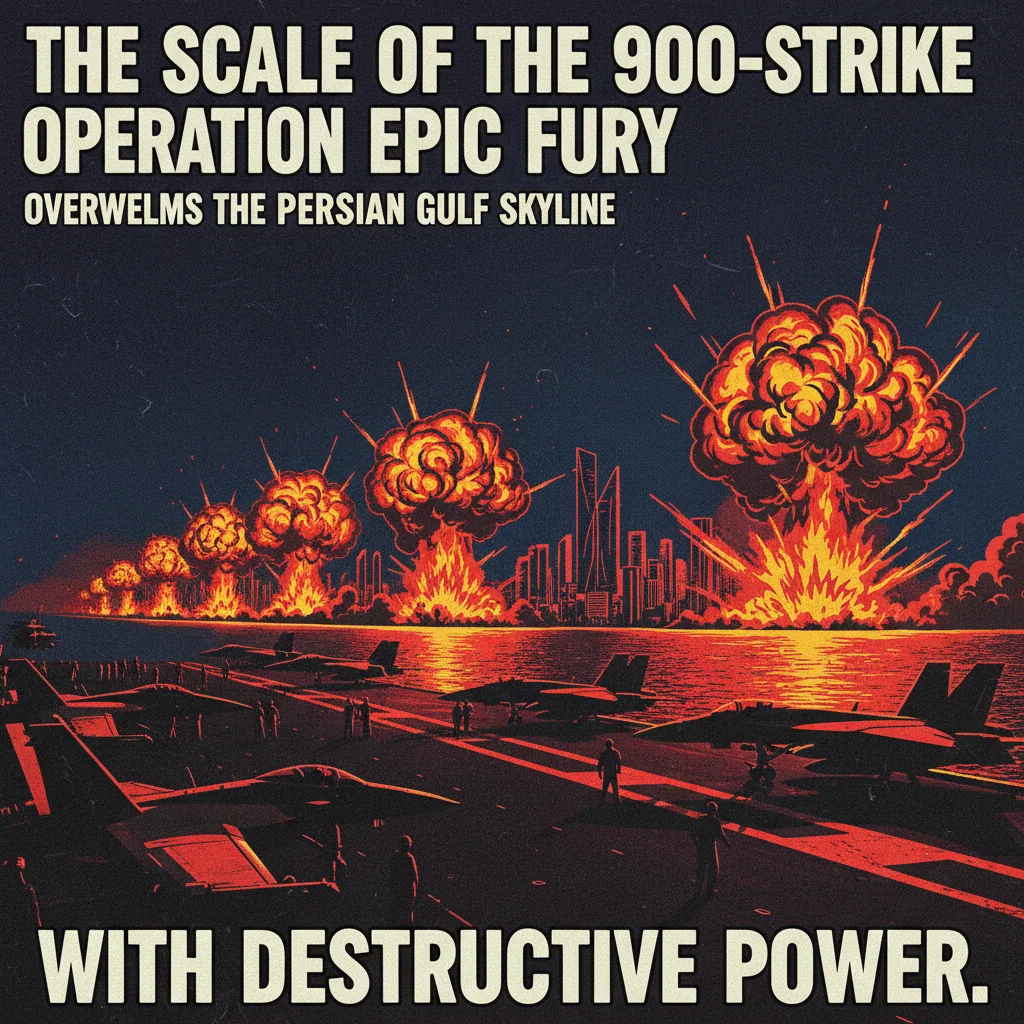
Israel votes on October 27, 2026. The United States holds its congressional midterms on November 3. The US-Israel elections are separated by seven days — and they are the first allied votes held simultaneously inside a direct shooting war, making their shared calendar an operational planning horizon rather than a constitutional coincidence.
The Calendar Coincidence That Is Not a Coincidence
In November 1944, Franklin Roosevelt ran for a fourth term while American forces were still dying in the Ardennes and the Pacific. The comparison flatters everyone who reaches for it now — two democracies, two wartime votes, one alliance. It breaks almost immediately.
Roosevelt faced no allied election one week after his own. No joint strike package sat on a Pentagon shelf awaiting the result. The symmetry in 1944 was domestic. The symmetry in 2026 is structural, and it is different in kind.
Both votes fall inside an active war with Iran that began in February 2026, a conflict that has already reorganised energy markets and forward-deployed hardware across three theatres. This is the first time both allies have held major elections simultaneously during a direct shooting conflict. That seven-day interval is not merely a scheduling curiosity — it is a variable in the military planning itself.
The Israeli ballot is also the first general election since the October 7, 2023 attacks reshaped every question Israeli politics knows how to ask. Who failed, who is owed an accounting, and who is permitted to lead the next phase — those three questions sit underneath every polling number.
The war with Iran did not suspend them. It compressed them, and made the electoral calendar an operational fact rather than a constitutional formality.
Ask the small question first: who is the borderland here, and who is the empire? In this interval of seven days, the answer is not obvious. That is precisely the problem.
The Knesset Floor: Sixty-One Seats and No Clear Path to Them
Israel's parliament holds 120 seats. A governing coalition requires 61. That arithmetic has defeated four successive attempts at stable government since 2019, and current polling suggests the fifth will fare no better.
Neither the pro-Netanyahu bloc nor the loose coalition of parties opposed to him commands a reliable path to the majority. The number 61 is not a target; it is a wall.
The 3.25 percent electoral threshold sharpens the problem. Parties that fall below it contribute nothing to the count but drain votes from their ideological neighbours. In a wartime parliament where smaller factions have splintered over the conduct of operations against Iran, the wasted-vote risk is structural, not incidental.
A party that polls at 3.1 percent on election morning can flip the arithmetic of an entire bloc by dusk.
Then there is the Arab vote. Arab-Israeli citizens represent roughly twenty percent of the electorate, and turnout projections ahead of October 27 are running at historic levels, driven by West Bank violence and the direct human cost of the Iran campaign on Israeli Arab communities.
Where that vote consolidates, and whether it flows toward parties willing to sit in a government with Eisenkot's Yashar, will determine which bloc reaches the threshold first — or whether neither does.
Israel's fifth election in four years did not create this fragmentation. It confirmed it as the baseline condition. Deadlock is not the malfunction; it is the operating state. What changes in wartime is the cost of running it.
The Indispensable Man and the General Who Disagrees
Netanyahu's campaign argument is simple and familiar: only he can manage Trump. After decades of cultivating the relationship, after the photo-ops and the shared postures on Iran, he presents himself as the untranslatable asset, the one Israeli leader Washington will take a call from at any hour.
The corruption charges pending against him are not his argument's refutation, he insists. They are a distraction engineered by his enemies.
The charges are not decorative, however. They constrain which coalition partners will sit with him after the vote, and smaller parties understand this perfectly. Leverage is the correct word.
Each potential partner knows that a prime minister under active prosecution needs them more than a clean one would, and they price accordingly.
Gadi Eisenkot's answer to the indispensability argument is implicit in his biography. A former IDF Chief of Staff does not need to explain his security credentials. The Yashar party was built on a single counter-premise: that military judgment, not diplomatic proximity to one foreign leader, is the load-bearing wall of Israeli security.
Whether the electorate reads it that way is a separate question, but the structural argument is clean.
Trump has not endorsed Netanyahu. The studied ambiguity deserves attention. A public endorsement from Washington would have been a gift to Likud, usable in every swing district where the Trump relationship is the article of faith.
Its absence is not neutrality in the passive sense. It is a signal whose meaning Likud's coalition partners are now reading carefully, each adjusting the price of their support upward as they read. Netanyahu campaigned on the relationship. The relationship has so far declined to campaign for him.
The elections are not merely a democratic ritual occurring in wartime. They are a planning horizon.
The Strike Window: What the US-Israel Elections Are Actually Protecting
The calendar, read plainly, is an operational document. US and Israeli officials have developed plans for military strikes against Iran to be executed after the American midterms on November 3. The elections are not merely a democratic ritual occurring in wartime. They are a planning horizon.
Picture the machinery this requires. Two chains of command, two sets of authorisation codes, two governments whose continuity must overlap precisely when the trigger is to be pulled.
If Israeli voters on October 27 produce the parliamentary deadlock the polls suggest — neither bloc reaching 61 seats — the interval between their election and the American one becomes a lame-duck corridor stretching across the most sensitive days in the joint operational calendar. A caretaker government in Jerusalem coordinates with a White House counting midterm results in Washington. The mechanism still runs. The question is who is actually holding it.
The US State Department continues to manage regional stability efforts regardless of what either capital produces on its respective voting day. That continuity is real. But diplomatic stability management and operational command are not the same instrument, and treating them as interchangeable is the kind of category error that governments make in the hours before something goes wrong.
There is one structural fact that limits the damage either election can do: under the separation of powers, Trump's foreign-policy prerogatives, including strike orders, remain largely insulated from midterm outcomes. Congress controls appropriations, not the command authority.
Whatever the midterms return, the strike authority sits where it sat before the first ballot was cast. The elections protect the window by making the decision irreversible before the window closes.
The American Fault Line: Three Hundred Billion Dollars and a Question Forming
Three hundred billion dollars, adjusted for inflation. That is the cumulative weight of US economic and military assistance to Israel since 1946 — sixty-three billion of it in weapons purchases alone. The figure is not a scandal; it is the sediment of eight decades of bipartisan consensus, built through Democratic and Republican administrations alike, through Suez and Oslo and every ceasefire that did not hold.
The consensus is now being measured. Establishment Democratic candidates across several competitive districts face progressive challengers who have made unconditional support for Israel the central charge.
The Jerusalem Post reads the November 3 midterms as a canary for 2028, not a policy lever for 2026, and that distinction matters more than the wire copy usually concedes. Congress does not redirect a defence memorandum of understanding in a single cycle; what the midterms can do is register, for the first time with electoral precision, how far the fault line has actually moved.
Two pressure vectors are pulling in opposite directions, and the party has not yet chosen between them. Twenty major donors have contributed roughly 2.8 billion dollars to the current US election cycle, AIPAC's institutional weight behind most of them.
Against that sits a progressive base that has watched eight months of conflict and concluded that "bipartisan" is another word for "unavailable for review." The donors can move money; the base can move primaries.
Chatham House states it plainly: whatever November produces, US policy toward Israel will not transform immediately. Trump holds foreign policy as an executive prerogative, and midterm arithmetic does not reassign that.
The fault line is real. What is still unclear is whether it runs through the Democratic coalition or beneath the entire alliance — and those are different cracks in different walls.
The Diesel Aside, and the One Marker Worth Watching
There is a deal running underneath this week's cable that no election analyst has yet placed on the same page as the strike-window reporting. Trump has reportedly agreed with Putin to return Russian diesel to the global market. That agreement, if it holds, links European energy security and Middle East military coordination through the same two decision-makers in Washington and Moscow.
Small nations on both continents find themselves, again, in the load-bearing position they did not choose.
The structural geometry is not subtle. Washington and Moscow negotiate energy flows while Jerusalem and Tehran exchange ordnance, and the countries exposed to both pressures — the Baltic states, the Gulf adjacencies — have no seat at either table. This is what regional deterrence looks like when the deterring parties are also settling their own bilateral accounts.
Watch the coalition declaration in Jerusalem by November 4. Not the vote count — the coalition named. If Israel's governing bloc cannot be confirmed before the American midterms conclude, the strike-window planning loses its political anchor, and every assurance given in the preceding weeks becomes provisional.
The US-Israel elections have already fixed one coordinate: the seven days between October 27 and November 3 are not a gap between two domestic schedules. They are the seam where allied command authority and democratic continuity are expected to hold at the same moment. That is the one date worth marking. Everything else is decorative.