The Eight-Hour Road from Barquisimeto
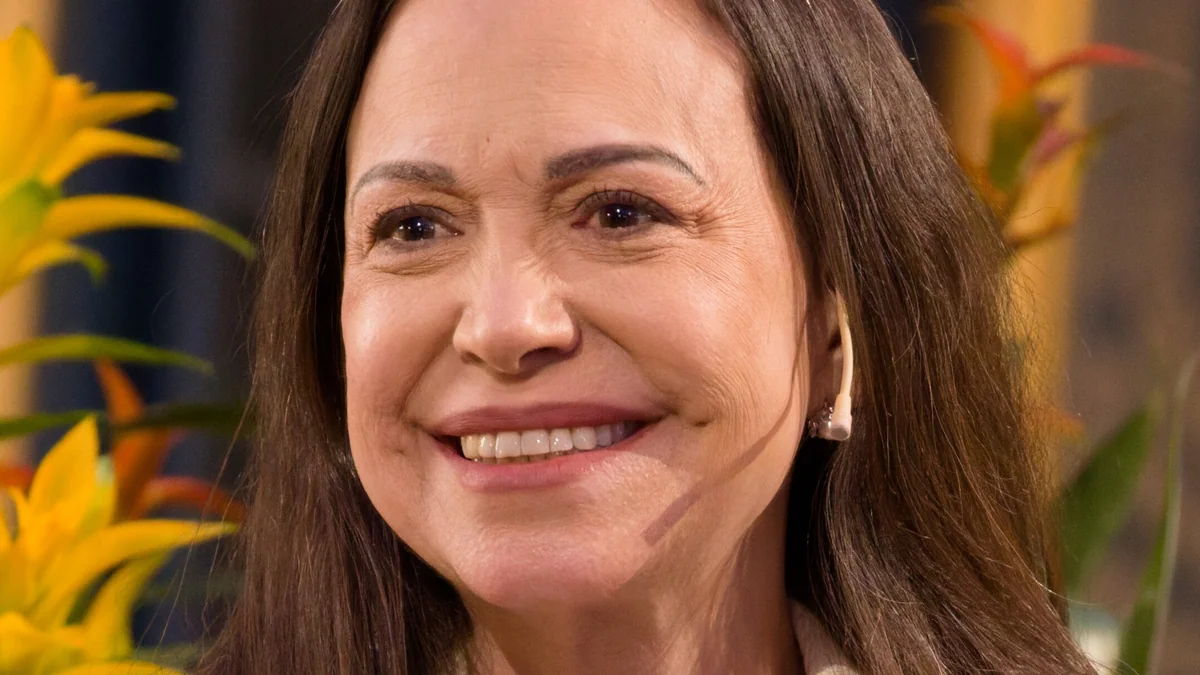
María Corina Machado's return to Venezuela on October 25, 2026 was framed, in the photographs, as a liberation. The architecture behind it was something else.
In February 1990, Aung San Suu Kyi was under house arrest when her party won 81 percent of Myanmar's parliamentary seats. The generals noted the result and announced that the election had been, unfortunately, inconclusive. The comparison is imperfect - but the structure it describes is not.
On Sunday, October 25, 2026, María Corina Machado crossed back into Venezuela after ten months in exile. Her first appearance was at the Sanctuary of the Divine Shepherdess in Barquisimeto, Lara state - a Catholic site whose name, in the circumstances, does a quantity of political work. From there, the 220-mile passage to Caracas took eight hours, not because the roads were bad but because they were full.
Tens of thousands lined the route. That is a number, but it is also an argument. Crowds at this scale do not appear by party logistics alone; they appear because people choose to stand in the road, which in Venezuela has not always been a safe choice.
The entry route itself says something. Air and sea approaches were reportedly blocked; the most plausible path ran through Colombia by land. If that is accurate, someone on both ends allowed it. A border crossing of this visibility is not a bureaucratic oversight - it is a decision, taken by people with the authority to take it, for reasons that will matter in the sections that follow.
Her first words on Venezuelan soil were four: "I am here. With you." The brevity was precise. Everything unresolved - the election date, the legal bans, the oil arithmetic behind Washington's patience - remained unresolved. But she was present, and presence, in this story, is the load-bearing fact.
How Maduro Fell — and the Price of Machado's Return
Nicolás Maduro was deposed by U.S. military action in January 2026. What the public record confirms is the outcome; what it does not yet explain is the mechanism - the chain of command, the legal instrument, the precise moment someone in Caracas decided not to resist. Regime change by external force leaves paperwork, and Venezuela's paperwork is still incomplete.
Delcy Rodríguez stepped into the vacancy. Former vice-president, longtime Maduro ally, now acting president - her survival is the more instructive fact. The figurehead fell; the architecture remained. What Washington secured was not the dismantling of the chavista state apparatus but its reorientation, underwritten by an energy agreement covering 65 billion barrels of Venezuelan crude.
The Nobel Peace Prize, awarded to Machado on October 10, 2025, altered the calculus for those who had kept her disqualified and exiled. International insurance is the accurate word. The prize did not move Rodríguez on its own, but it raised the cost of continued obstruction - a cost measured in diplomatic exposure, not in conscience. Regimes respond to costs; that is the load-bearing wall.
Marco Rubio attributed the return to U.S.-supported reconciliation talks. Read against what Washington was actually negotiating - the 65 billion barrels, the interim government's survival, the sequencing of elections - the word "reconciliation" is doing considerable work. The deal that brought Machado home is not separable from the deal that kept Rodríguez in the Miraflores Palace. Both were written in the same negotiation, and the question of which clause is binding will determine everything that follows.
The deal that brought Machado home is not separable from the deal that kept Rodríguez in the Miraflores Palace.
Sixty-Five Billion Barrels and the Shape of Washington's Priorities
The energy agreement is the load-bearing wall. Everything else is moulding — pull it and nothing falls. When the Trump administration endorsed Delcy Rodríguez as interim president rather than pressing immediately for a Machado-led caretaker government, the 65 billion barrels of Venezuelan crude reserves were not incidental to that calculation. They were the calculation.
Washington's backing of Rodríguez has been explicitly coupled to oil production continuity. The interim government inherited Maduro's energy infrastructure and, crucially, the contractual architecture that licenses U.S. companies to operate within it. A rapid transfer of power to Machado, however legitimate electorally, would introduce renegotiation risk that the agreement's architects were not prepared to absorb.
This is the structural tension the Barquisimeto crowds cannot dissolve. Washington holds two interests that do not naturally align: an ideological stake in the democratic leader its secretaries of state have praised, and an economic stake in the arrangement that the democratic leader's ascent would disrupt. Rubio attributed Machado's return to U.S.-supported reconciliation talks, which is accurate as far as it goes. What it does not describe is who controls the election calendar, and why.
Petro-diplomacy has a record in resource states. The pattern is not that democracy is cancelled outright; the pattern is that it is scheduled at a tempo comfortable to the investor rather than the electorate. Angola in the late 1990s, Kazakhstan through its entire post-Soviet sequence, Iraq after 2003 - in each case the extraction agreement was signed before the constitutional framework was settled. Venezuela in late 2026 rhymes with that sequence closely enough to warrant attention, and loosely enough that the outcome is not predetermined. The barrel count is public. The election date is not.
The Ban That May or May Not Have Been Lifted
In June 2024, the Venezuelan Supreme Tribunal issued a 15-year inhabilitación against Machado - a formal disqualification from holding or seeking public office. The instrument was not symbolic. It was the architecture of exclusion, built precisely to survive a change of government.
On October 21, 2026, four days before her return, political bans on opposition candidates were reportedly lifted. No decree has entered the public record. The Financial Times reported the development; the Venezuelan state has not confirmed it in any document available for independent verification. There is a meaningful difference between a rumour and a right, and in Venezuelan constitutional practice, the difference has historically mattered at exactly the moment you needed the right to be real.
The Inter-American Court of Human Rights has for years issued mandates requiring Venezuela to restore Machado's political rights. The Supreme Tribunal has for years declined to treat those mandates as binding domestic law. That gap has not been formally closed. What has changed is the political atmosphere around it - which is not the same thing as a legal instrument.
Edmundo González Urrutia remains in Madrid. He contested the July 2024 presidential election alongside Machado's campaign, survived the fraud, and has pledged to return soon. His return is the other half of an equation that Machado's arrival alone cannot complete. Two leaders in exile are a coalition; one leader returned to a country whose courts have not yet confirmed she is legally permitted to run is a different kind of story.
The Numbers Rodríguez Cannot Ignore
Sixty-one percent. In a country that has not conducted a credible election in years, an AtlasIntel favorability figure of that magnitude is not a polling curiosity. It is a structural fact, the kind that arrives before any negotiation and sits at the table whether invited or not.
The hypothetical matchup is starker still: Machado at 52 percent, Rodríguez at 19. That gap is not a prediction of any election - it is a constraint on what the acting president can safely offer. Post-authoritarian transitions where the incumbent enters a competitive ballot trailing by thirty-three points do not tend to produce incumbents. Chile 1988, Serbia 2000, Ukraine 2004: in each case the numbers were known before the vote was held, and the regimes that chose confrontation over managed exit fared worse than those that negotiated the terms of their own departure.
Machado's demand that Rodríguez schedule presidential elections puts those figures formally on the table. The ask sounds procedural. It is not. An election calendar forces Rodríguez to decide whether she is an interim steward completing a transition or a candidate - and the polling leaves no ambiguity about which role the Venezuelan public has already assigned her. The comparison that matters is not between Machado and Rodríguez as individuals, but between a government with a legitimacy deficit and a population whose preferences have been recorded, cleanly, in public numbers. Somewhere a spreadsheet was quietly updated, and Rodríguez's advisers have read it.
Watch the Decree, Not the Photographs
The photographs are not the evidence. Tens of thousands in the streets, eight hours on the road from Lara to Caracas, a Nobel laureate at 61 percent favorability against an acting president who polls at 19 percent - these are real numbers, and they are not the question. The question is what Rodríguez's government publishes in the official gazette before year-end.
As of October 25, 2026, no formally promulgated electoral roadmap with a fixed date exists in the public record. The Financial Times reported on October 21 that political bans on opposition candidates had been lifted, but no decree has been published. Machado's 15-year inhabilitación, issued by the Supreme Tribunal in 2024, remains formally unrescinded on any document this desk has located. A ban that vanishes in a press briefing and reappears in a courtroom is not a lifted ban; it is a suspended instrument.
The one thing that would change this read: a published Supreme Tribunal ruling, carrying case number and date, formally rescinding the inhabilitación under Machado's name. Watch also the gazette. If the final electoral decree carries a firm date, Rodríguez conceded something real. If it carries conditional language - elections "when conditions allow," or a timeline "to be determined" - then "transitional" has again become the permanent condition, and the photographs of Machado's return to Venezuela will have been the ceremony arranged to justify the delay. The crowds were not decorative. The decree will tell us whether the transition is.