Japan's MMX mission — Martian Moons eXploration — launched on October 20, 2026, to investigate Phobos and Deimos, Mars's two anomalous moons. The 4,480-kilogram spacecraft carries hardware from JAXA, NASA, CNES, DLR, and ESA, bound for Mars orbit with a sample return window of July 2031.
Two Lumps of Rock That Have No Business Being There
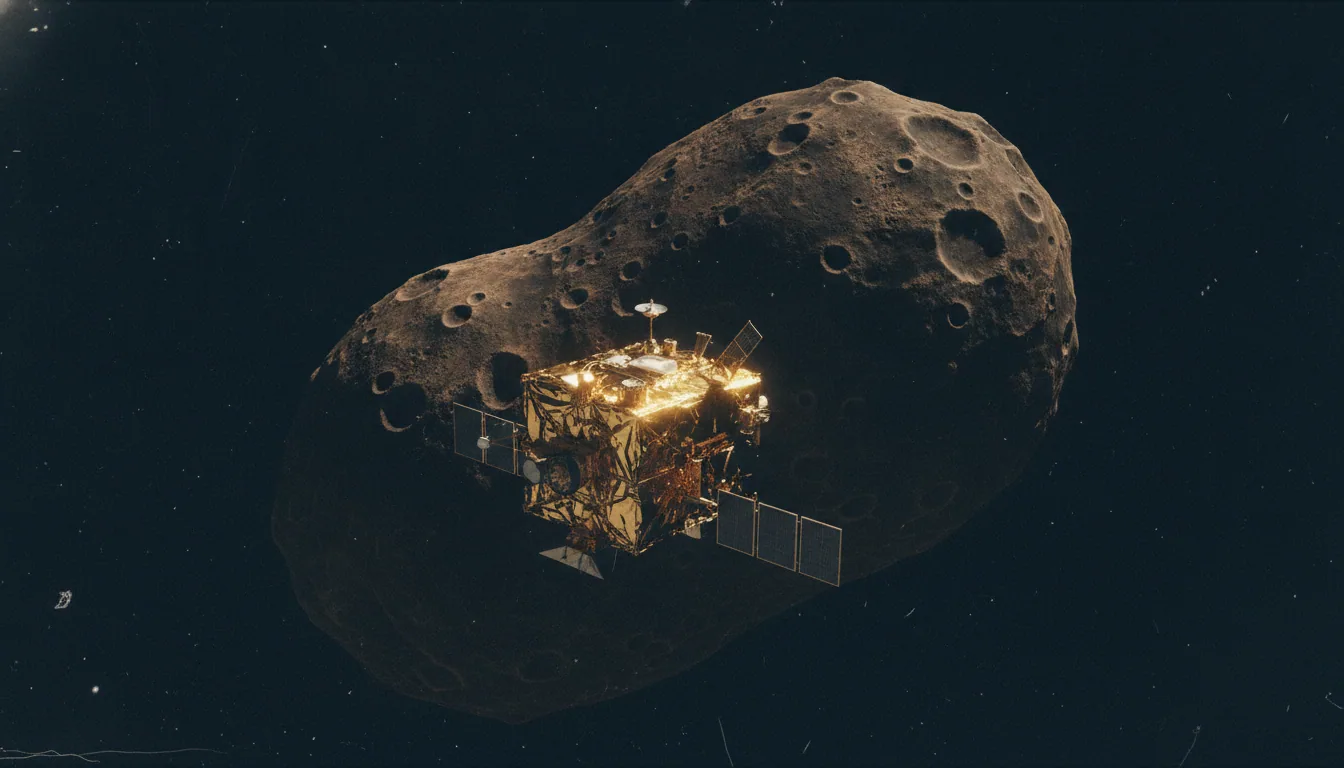
Look at Phobos long enough and something starts to nag at you. It is the wrong shape, lumpy and cratered like a discarded potato. It is the wrong color, darker than asphalt, darker than most asteroids we know.
It orbits so close to Mars that it rises in the west and sets in the east, lapping the planet three times a day. And it is small, just 22 kilometers across, barely large enough to hold its own gravity together. A moon like this raises an immediate, awkward question: what exactly are you doing here?
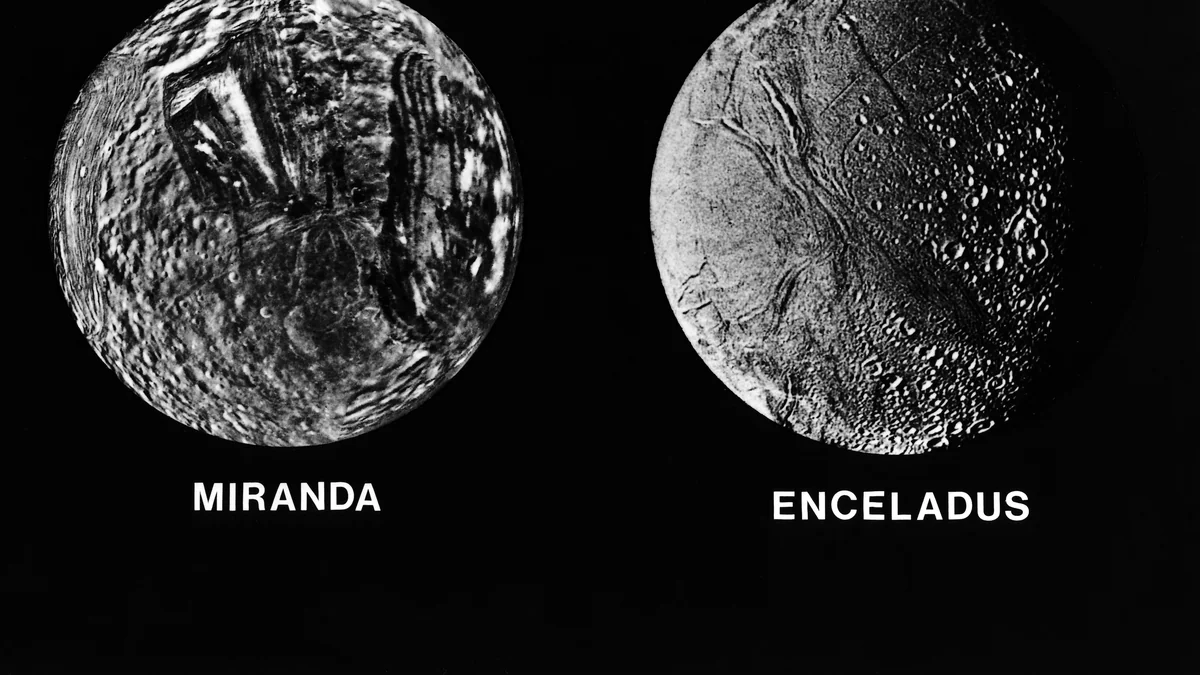
Deimos, the outer moon, is no less peculiar. Two tiny, irregular, pitch-black bodies circling a terrestrial planet, and nobody can agree on where they came from. One camp says they are captured asteroids, wanderers from the outer belt that strayed too close and got caught.
The other camp says Mars was struck by something enormous billions of years ago and the moons are the rubble that never came back down. Both hypotheses have good arguments. Neither is settled.
The question of Phobos and Deimos is, in the plainest sense, still open.
Here is something else. Phobos is falling. It spirals inward at 1.8 meters per century and in roughly 50 million years it will either disintegrate into a ring or slam into the surface of Mars.
The clock is running, though on a timescale that makes the whole of human history look like a coffee break.
Three times the Soviets and then Russia pointed a spacecraft at Phobos — Phobos 1, Phobos 2, Phobos-Grunt — and three times the mission failed before anything useful could happen. The surface remains untouched, the question unanswered, the moon still falling.
Japan's MMX Lifted 4,480 Kilograms Off Tanegashima This Morning
At 04:41 JST on October 20, 2026, a Mitsubishi H3-24L rocket ignited its engines on the southern tip of Tanegashima island and began carrying Japan's most ambitious interplanetary probe into the predawn sky. The payload weighed approximately 4,480 kilograms at liftoff — heavier than a fully loaded city bus — reflecting five years of mission design and nearly 578 million USD of investment. Funding came primarily from the Japanese government, with instruments contributed by NASA, CNES, DLR, and ESA.
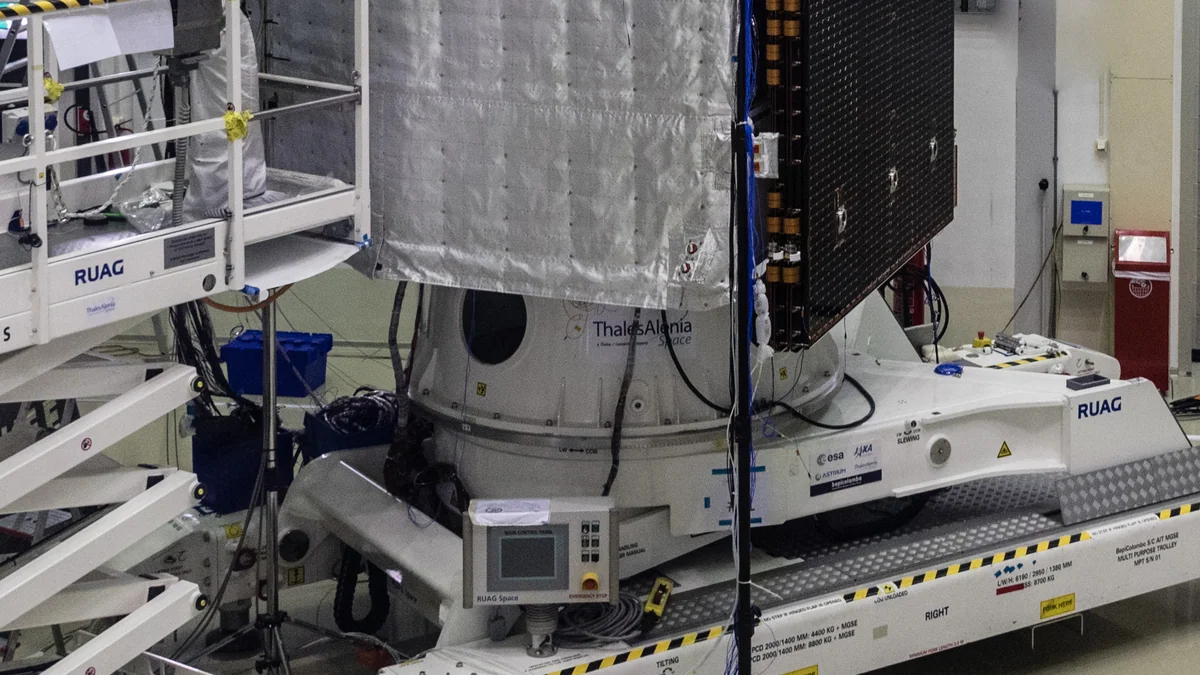
The spacecraft is not a single monolithic machine. JAXA designed the Martian Moons eXploration probe as three distinct modules, each carrying a specific responsibility. The propulsion module does the heavy work of navigation: getting the probe to Mars, maneuvering it into close proximity with Phobos, and eventually pushing the return vehicle back toward Earth.
The exploration module carries the science payload — the cameras, spectrometers, and sampling hardware that will interrogate the moon's surface. The return module, sealed and protected throughout the journey, has one job: survive re-entry and land intact at Woomera, Australia, in July 2031 with its cargo of Phobos regolith.
Three modules, five years, one target no larger than a city. The budget figure looks enormous until you set it beside the question it is trying to answer — what, exactly, are those two strange moons, and where did they come from? At 578 million dollars, that is cheap for a question that old.
The probe is now accelerating toward Mars. The long wait begins.
Nine Months to Mars, Then the Harder Part Begins
Nine months is a long time to coast through interplanetary space, but arriving is not the hard part. MMX is scheduled to slip into Mars orbit in August 2027, and what follows is not a sprint to the surface but something more deliberate: roughly two years of watching, measuring, and deciding before anything touches down on Phobos.
That patience has a purpose. The actual landing site cannot be chosen from Earth. Close-range mapping in 2027 and 2028 will reveal the surface in enough detail to pick a spot that is flat enough, firm enough, and scientifically interesting enough to justify the risk.
Until the probe gets there, the maps we have are good guesses, not answers.
At 578 million dollars, that is cheap for a question that old.
While the orbits tighten around Phobos, the probe will also make flyby passes of Deimos, the smaller, more distant moon, gathering remote-sensing data from a body we know even less about. Two mysteries for the price of one mission. ESA, meanwhile, keeps the whole enterprise connected to Earth through its deep-space tracking network, providing navigation support that extends the mission's reach beyond what any single agency could sustain alone.
The interplanetary cruise is, in a sense, the easy part. It follows gravity and mathematics, and those are reliable. What happens after orbit insertion depends on what the probe actually finds, and that is where the real decisions begin.
Meet Idefix: The Rover That Moves at One Millimeter Per Second
Before the main probe ever touches Phobos, something smaller goes first. A 25-kilogram scouting rover named Idefix — built jointly by CNES in France and DLR in Germany, making it the first European rover to operate anywhere in the Martian system — will be released onto the surface to test the ground ahead. Think of it as sending a careful foot forward before committing your full weight.
Its top speed is one millimeter per second. Hold that number for a moment. A sleepy garden snail moves roughly two thousand times faster.
But Idefix is not being cautious out of timidity — it is being precise out of necessity. Phobos has a surface gravity about one two-thousandth of Earth's, which means a rover moving at anything resembling a normal pace would simply bounce off the ground and drift into space. The deep, loose regolith doesn't help: pushing too hard against such a soft surface achieves nothing good.
Picture trying to walk across a freshly settled snowdrift in a place where you weigh less than a feather. Every motion has to be deliberate, every contact with the surface almost conversational. Idefix will creep across Phobos at that single cautious millimeter per second, measuring, photographing, and probing — feeding engineers exactly the data they need to refine where the main probe sets down.
What it learns will also reach well beyond this mission. How a vehicle moves on a small, low-gravity body is one of the unsolved practical problems of planetary exploration, and Idefix is the first real field test we have ever attempted.
Ten Grams, and What Those Ten Grams Might Contain
Ten grams is roughly the weight of two sugar cubes. It is also the minimum target for everything the MMX mission is ultimately about.
Sample collection on Phobos is scheduled for 2029, after the probe has spent two years mapping, scanning, and selecting the right patch of surface. The tool that will do the actual collecting is a pneumatic sampling system provided by NASA, a design proven on asteroid missions: it fires a short burst of gas into the regolith, kicks up the loosened material, and captures what rises. No drilling, no scooping against gravity that barely exists.
The technique is almost gentle.
Before the sampler fires, NASA's MEGANE instrument will have already done its homework. MEGANE — Mars-moon Exploration with GAmma-rays and NEutrons — scans the surface for the characteristic signatures of specific elements, turning gamma-ray and neutron emissions into something like a chemical inventory. Think of it as reading a label before opening the package.
Here is where the comparison with every earlier sample-return mission snaps into a different frame. The Hayabusa probes brought back asteroid material, which was remarkable. But Phobos sits close enough to Mars that ancient meteorite impacts have been blasting Martian rock off the planet for billions of years, and a measurable fraction of that debris has settled on the moon.
Scientists expect the Phobos regolith to contain genuine Martian material. Those two sugar cubes of grey dust might arrive at the laboratory in Woomera already carrying pieces of another world inside them, and no dedicated Mars sample-return mission has returned anything yet.
Australia, July 2031: When the Sample Capsule Lands and the Real Work Starts
Five years after leaving Tanegashima, a small capsule will arc through the Australian sky and drop into the desert near Woomera. At that moment, the MMX mission will have done something no mission has done before: returned physical material from the Martian system to a laboratory on Earth, ahead of any dedicated Mars sample-return effort. JAXA's Hayabusa missions proved this kind of delivery is possible, first from Itokawa, then from Ryugu.
The Martian neighborhood is a different proposition entirely.
The scientists waiting at Woomera will know what they have. What they will not immediately know is what it means. Those ten grams could contain regolith that formed on Phobos itself, material ejected from Mars by ancient impacts, or some layered mixture of both.
The exact fraction of Martian-origin grains is genuinely unknown, because nobody has yet measured how deep Phobos's dust goes or how well its surface has preserved anything over billions of years.
Here is the strange part. The sample may not settle the origin question. It may sharpen it into something stranger, a new anomaly demanding a new mission.
That is not a failure. That is precisely how science has always worked: each answer a sharper question, the horizon moving as you walk toward it. The MMX mission, now accelerating away from Earth, is the latest bet placed on that principle.