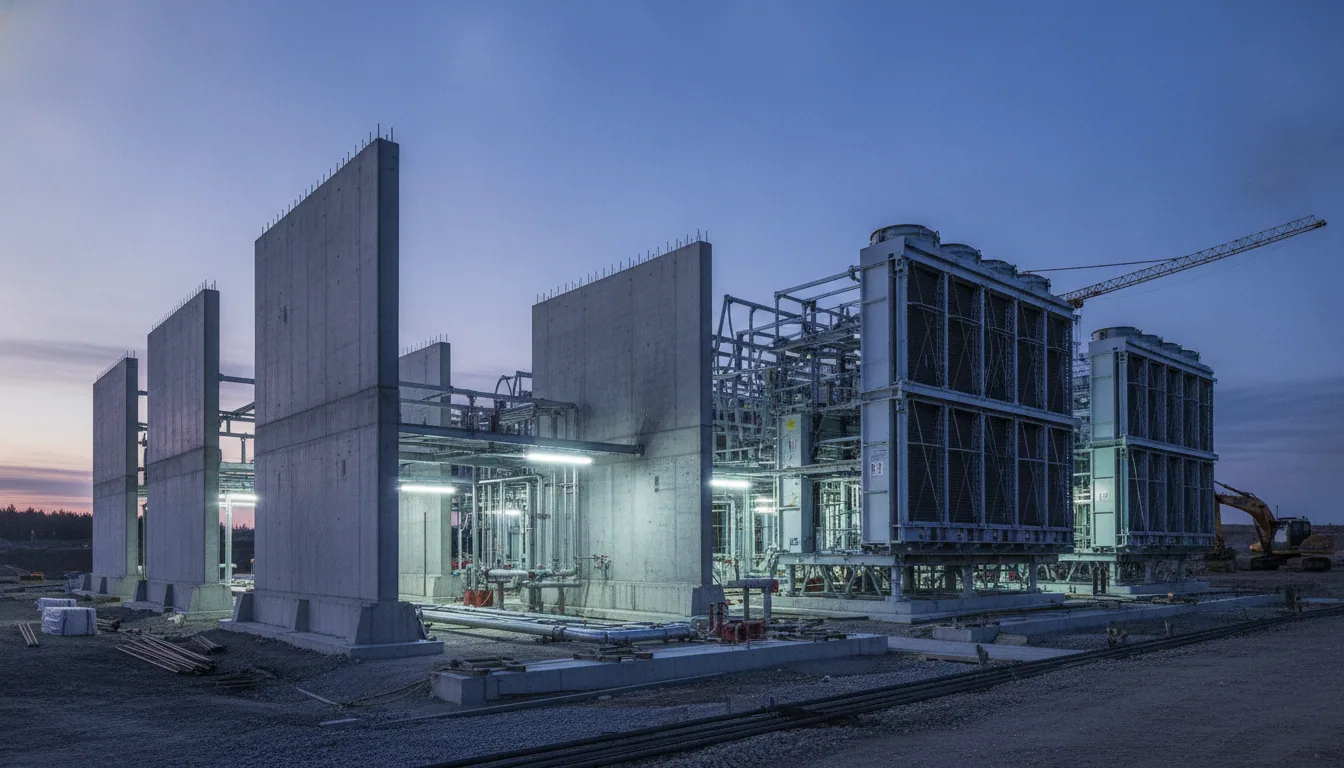
In October 2026, the Strait of Hormuz closure triggered a structural realignment of global capital. Brent crude hit $110 per barrel, causing a $1 trillion technology equity sell-off in a single session. This pivot exposed the dependency of digital growth on physical energy infrastructure, shifting investment from software multiples back to hydrocarbon and nuclear assets.
Investors saw the Oil vs Tech: The 2026 Market Pivot as a forced recognition that digital expansion cannot outrun the constraints of physical energy supplies. The world's most consequential chokepoint is barely 33 kilometres wide, yet it commands global energy markets with leverage no central bank can replicate. When military conflict sealed the strait, the consequences were immediate and measurable. The trajectory to this threshold was a warning that markets chose to read as temporary until the Saudi East-West Pipeline was disabled.
Current disruptions arrived against a backdrop of depleted global inventories sitting 509 million barrels below previous annual levels. History rhymes, but the 2026 crisis suggests a longer structural realignment rather than a temporary price spike. The question for policymakers is whether they are pricing a fleeting disruption or the first act of a permanent shift in how physical scarcity impacts growth.
A Trillion Dollars Erased: Analyzing the Oil vs Tech: The 2026 Market Pivot
The most capital-efficient sector in modern history lost more than $1 trillion in market value on October 16, 2026. This collapse proves that growth equity valuations were priced for a world where physical constraints effectively did not exist. The Nasdaq 100's 2.50% drop was the market's confession that software scaling is tethered to the reality of the grid.
Capital did not evaporate during this session; it rotated toward physical security. While the Philadelphia Semiconductor Index shed 3.8%, the Energy Select Sector SPDR Fund rose significantly as investors repriced the risk premium attached to scarcity. The market finally did the arithmetic on a supply contraction that was nearly double the size of the projected demand softening.
The IEA data suggests that a demand contraction of 2.6 mb/d against a supply contraction of 5.8 mb/d produces exactly what October 16 delivered. When a supply-demand gap of this magnitude collides with a closed Strait of Hormuz, the tail risk becomes the base case. Investors who once ignored the physical foundation of the internet were forced to acknowledge that bits cannot replace barrels.
Energy assets that were once dismissed as stranded are now being priced as strategic.
Crack Spreads and the Return of Physical Margins
While algorithmic traders were repricing the Nasdaq, the physical economy printed its best margins in years. Diesel crack spreads peaked above $110 per barrel in September 2026, representing extraordinary profitability for any refiner with crude access. ExxonMobil's valuation climb to $735.95 billion signals a structural rerating of hydrocarbon infrastructure that capital had previously fled.
The signal from equity markets is unambiguous: the XLE posted a 53% year-to-date return by October 2026. This is not a cyclical bounce but a fundamental reassessment of the value of physical commodity infrastructure. For European buyers, the assumption of a fungible global energy market where supply gaps resolve themselves no longer holds.
The geopolitical architecture is also shifting eastward, as seen in Russia's TNF 2026 forum focusing on Asian markets. This reorientation of energy technology toward the East is not a temporary diplomatic maneuver. Decision-makers can no longer afford to act as though the old economy ever truly left the stage.
Hyperscalers as the New Global Energy Buyers
The low-frequency hum of cooling systems in modern data centers represents a massive physical weight on the electrical grid. US data centers are projected to consume 580 TWh in 2026, accounting for 12% of total national generation. Generative AI has rewritten load requirements overnight, forcing tech giants to secure guaranteed baseload power that renewables alone cannot provide.
This reality led Microsoft to sign a 20-year contract to restart the Three Mile Island nuclear reactor. Amazon and Meta followed suit, committing billions to nuclear-related capacity and advanced reactor development. These are vertical integration strategies by companies that have realized the public grid cannot be trusted to solve their specific energy risks.
As hyperscalers effectively become shadow utilities, they reshape energy markets through private treaty. In the Estonian context, this raises a sharp question about the leverage a small, grid-dependent economy retains. The competition for digital infrastructure investment is now inseparable from the competition for energy sovereignty.
The Failure of Traditional Policy Tools
Central banks were designed to cool demand, not to reopen a blockaded maritime strait. When inflationary pressure originates from a military blockade cutting 13 million barrels per day, interest rate hikes become an ineffective tool. A rate increase does little to change global oil supply or the massive infrastructure spending plans of tech giants.
Today's shock is supply-side, geopolitically locked, and compounded by a new class of energy consumer that does not respond to rate signals. Hyperscalers building AI infrastructure at projected capital expenditures of $800 billion annually are not deferring construction because borrowing costs rise. The mismatch between institutional tools and structural causes has become a primary risk for market stability.
The EU's Carbon Border Adjustment Mechanism (CBAM) also faces exposure as raw energy price volatility dwarfs embedded carbon costs. Gartner warns that enterprise AI revenue may not justify infrastructure costs, risking $3.5 trillion in write-downs by 2030. Europe must confront whether its regulatory architecture was built for the economy that existed, not the one now emerging.
Strategic Realignment in the European Context
Global investment in the energy transition is hitting $2.36 trillion, yet Europe remains a net importer of both energy and the digital infrastructure replacing it. Russia's pivot toward Asian markets signals a deliberate reorientation of supply chains away from Western buyers. Small open economies face a double-edged sword, dependent on tech-sector growth while exposed to soaring energy import costs.
The EU Carbon Border Adjustment Mechanism adds a third pressure layer as carbon costs become embedded in every imported carbon-intensive good. At €82.32 per tonne of CO2 equivalent, the cost of doing business is rising alongside energy prices. Strategic planners can no longer treat energy resilience and digital infrastructure as separate silos of investment.
The choice is no longer between the green transition and the digital frontier. European institutions must design instruments fast enough to fund both before the next physical shock makes the choice irrelevant. Navigating the Oil vs Tech: The 2026 Market Pivot requires a total reassessment of how capital is allocated in a world defined by scarcity.