
The Weapon Russia Already Used
In the winter of 2021, before the first shell crossed the Ukrainian border, Moscow ran a quiet experiment in diesel export policy: it simply stopped certifying gas transit contracts. No declaration, no ultimatum. A bureaucratic non-renewal. Europe noticed by February, when storage curves began to bend the wrong way. The lesson was filed and mostly forgotten. What is happening now with diesel is the same instrument, scaled and sharpened.
Russia extended its ban on diesel, marine fuel, and gasoil exports until October 31, 2026, with a comprehensive fuel export prohibition running through January 31, 2027. The stated rationale shifts by week - domestic supply, harvest demand, refinery maintenance. The real architecture is simpler. At the Valdai Forum, Vladimir Putin linked resumption of full fuel supplies to the lifting of Western sanctions. That is the load-bearing wall. Everything else is moulding.
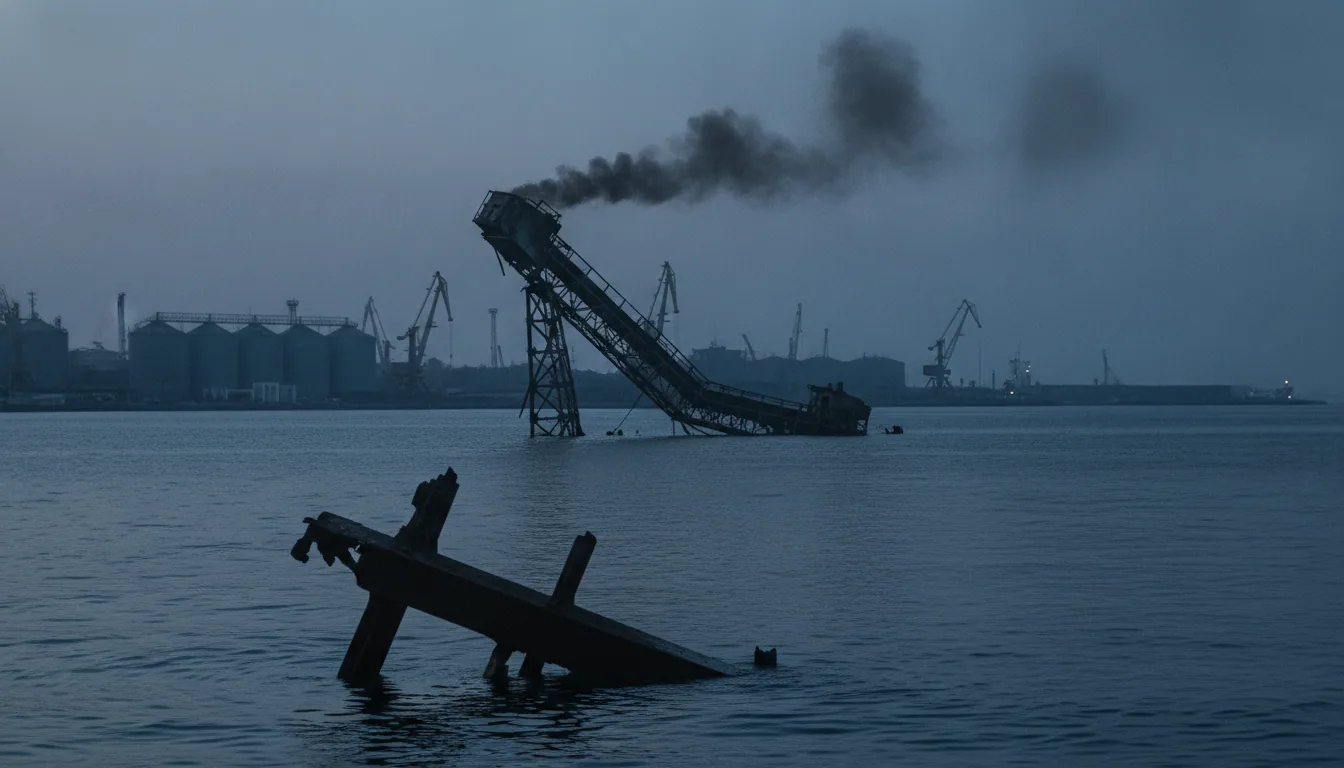
The reason Moscow can barely run this lever cleanly is structural. Ukrainian drone strikes have disabled more than 45 percent of Russian nominal refining capacity. Russia's Black Sea diesel and gasoil shipments fell to zero in the week ending September 24, 2026. The empire that built three decades of foreign policy on energy exports was, by 2026, importing fuel from India and Belarus to cover its own harvest demand. There is a particular kind of strategic embarrassment that no communiqué bothers to name.
So the weapon exists, and Moscow is still reaching for it, even as the barrel runs low. What matters now is not Russian capacity. It is whether Washington, watching that precedent from the wrong side of the desk, has drawn the obvious conclusion - or the disastrously tempting one.
Why Washington Is Tempted to Restrict Diesel Exports
US retail diesel reached $6.53 per gallon in late September 2026. That is not an abstraction for the November midterms; it is a number that appears on the receipt of every trucker, farmer, and heating-oil customer between now and election day. Numbers that appear on receipts are, in American politics, load-bearing facts.
The scale of what is being contemplated is not small. The United States is the world's largest diesel exporter, moving between 1.2 and 1.5 million barrels per day. Restraining that flow would represent one of the more consequential unilateral interventions in the global refined-products market since the Arab embargo. Treasury Secretary Scott Bessent has already supplied the political framing: US farmers, truckers, and businesses should not be left carrying the burden - a sentence designed to make keeping exports sound like an act of charity toward foreigners.
The pressure is not arriving only from the White House. Louisiana Governor Jeff Landry proposed a state-level 90-day ban, which is the kind of move a politician makes when he believes the federal administration is moving too slowly toward something he thinks is popular. Trump has been plainer still. "I've said let's not send out the diesel" is not a policy document, but it is a direction. Bessent translated it into diplomatic language for European capitals, urging allies to release their strategic reserves immediately - a signal that Washington was already managing expectations about what comes next.
Ask the small question first: who is the borderland here, and who is the empire? The answer, in a market this concentrated, is anyone who buys American diesel and cannot easily replace it. That list is longer than the administration's public framing suggests.
The Refinery Does Not Take Orders
The political argument assumes a valve. Turn the handle, diesel stays home, prices fall. The refinery does not know that argument. Gulf Coast refiners currently export between 1.2 and 1.5 million barrels per day, and the pipeline infrastructure and storage capacity required to absorb that volume domestically do not exist. This is the load-bearing wall the ban's proponents have quietly walked past.
The physical constraint is not the only one. Refineries do not produce diesel in isolation. They process crude into a slate of products, and the ratios are determined by chemistry and equipment, not by a policy memo from Washington. If export restrictions make distillate production less attractive, refiners adjust that slate, pulling output toward gasoline and away from diesel.
The result is the central mechanical irony of the proposal: a fuel export ban designed to lower diesel prices at the pump could reduce gasoline output and raise gasoline prices at the same pump. Louisiana Governor Jeff Landry called a state-level version of this ban common sense. It is not obvious that the refining system agrees. The administration is weighing a measure whose first-order effect is politically legible, but whose second-order effects run through chemistry, pipe diameter, and storage tank capacity. Those variables do not appear on a midterm map.
Two great powers reaching for the same instrument in the same season is not a coincidence. It is the 2026 energy order showing its load-bearing wall.
The Borderland Below the Rio Grande
Mexico imports more than forty percent of its diesel from the United States. Not from a diversified basket of exporters, not from a regional pool with redundant suppliers - from one country, across one border, along supply lines that were never built to be questioned. When Washington debates the ban, Mexico does not appear in the argument. It sits in the ledger as a foreign destination, a line to be cut.
The mechanism that follows is not complicated. Higher Mexican transport costs move north. Mexico is a major agricultural supplier to the United States - produce, grain, perishables crossing the same border in the opposite direction. The diesel export restriction that was designed to lower prices at the American pump arrives back at the American grocery shelf a season later, wearing different clothes. The Washington debate does not name this. It rarely does with borderlands.
The radius extends further than the obvious neighbours. A US ban would shift refinery output patterns globally, and analysts have calculated that Indonesian refined fuel prices would rise by 1.82 percent as a result. Not catastrophic by the unit, consequential at scale in a country of two hundred million consumers. Indonesia did not vote in the American midterms. It does not appear in Jeff Landry's formulation that American farmers and truckers should not carry the burden. Someone, as a rule, carries it.
Europe Conducts Calls on a Thursday
On October 1, 2026, representatives of the European Commission, Germany, France, Italy, Britain, and Ireland held a coordinating call. The subject was reserve releases. The meeting had not been scheduled a week earlier.
A follow-up coordination meeting convened the next day, October 2, to work through the mechanics - which stocks, how much, how fast. The exact volume of European strategic diesel holdings has not been disclosed, which is itself a kind of answer about how comfortable governments are with what those numbers show.
Compare this to the 2022 oil price shock, when the IEA coordinated a reserve release of 60 million barrels in a single announced tranche. That release came with public figures, a declared timeline, and a named mechanism. Thursday's call produced a readout. The contrast is not incidental.
Scott Bessent's instruction to European partners was precise in its direction and vague in its burden-sharing: "accelerate delivery on their existing commitments and make additional supplies immediately available." Washington was asking its allies to absorb a cost Washington itself was considering imposing. The asymmetry is worth sitting with.
UK diesel at 199.79p per litre - against 142.38p the previous year - translates the geopolitics into something a haulier in Leeds or a grain farmer in Lincolnshire can read on a pump display. A forty percent price increase in twelve months is not a market signal. It is a political fact, and European governments know their electorates are reading it the same way Washington is reading $6.53 a gallon. The scramble is symmetrical. The exposure is not.
One Number, One Verdict
The October 2 coordination meeting is the marker. Not the Thursday call, not Scott Bessent's public statement, not Trump's remark that he has said "let's not send out the diesel." Those were signals. What the Friday meeting must produce, if the coordination is real, is a number: a quantified, publicly committed volume of reserve releases, attributed to named governments, with a timeline. A communiqué without that number is not a policy. It is a holding pattern with a press release attached.
The arithmetic underneath is not complicated. The United States ships between 1.2 and 1.5 million barrels per day. European reserves exist in undisclosed volumes. Neither figure is secret; both are auditable. If Friday's meeting produces only language, the conclusion is structural, not diplomatic: Washington has pulled the diesel export lever without agreeing to a net, and the cost distributes itself downward - toward Mexico at 40 percent import dependency, toward Indonesia at a 1.82 percent price rise, toward every economy that held no seat in either room. Two great powers reaching for the same instrument in the same season is not a coincidence. It is the 2026 energy order showing its load-bearing wall. Watch for the number. Its absence tells you everything the communiqué will not.