
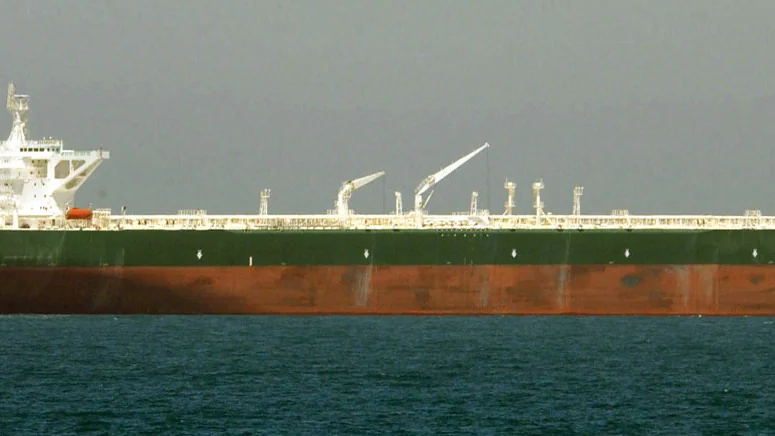
Greek tankers carried 26.4 million barrels of Russian crude in July 2026 — the largest monthly volume in three years and more than a third of Russia's total seaborne oil exports. Greek shipping companies have earned at least $3.8 billion from Russian oil and gas transport since 2023, operating within the exemptions built into the G7's $60-per-barrel price cap.
In May 2025, a Russian vessel stopped the Greek tanker Green Admire in the Baltic Sea shortly after it had cleared Sillamäe, on Estonia's northeastern coast. Estonia's Transport Authority described the incident as a show of force in an ongoing trade war. It was that — and it was also a geography lesson. The structural logic of a sanctions regime designed in Washington and Brussels runs, in practice, through Estonian waters. The people who designed it do not live there.
That is the small question. The large one — who profits, and by what mechanism — has been answered quietly in the shipping databases for three years.
Sixty Dollars: What the Ceiling Was Actually Built For
Sixty dollars a barrel. The G7 wrote that number onto paper in December 2022 as a cap intended to compress Russia's war revenues. The number is pleasingly round, politically convenient, and in practice largely fictional.
A Western shipowner may carry Russian crude only if the declared price falls below sixty dollars. The compliance mechanism trusts the documents submitted by the shipping company itself, not an independent audit. If the paperwork says fifty-eight dollars, the tankers sail.
In July 2026, owners affiliated with G7 and EU countries used that opening with such consistency that their share of Russian oil exports reached 36.2 percent — the highest figure since the restrictions came into force. Greek vessels alone moved 26.4 million barrels of Russian crude that month. The price cap does not suppress Russia's revenues. It defines who gets to earn a share of them.
The Names Behind the Numbers
Dynacom Tankers has earned an estimated $915 million from Russian oil shipments. This is not a leak in the system; it is documented business income, visible in corporate accounts and vessel-tracking databases. George Prokopiou's second company, Dynagas, operates 27 gas tankers, a third of them built for Arctic ice conditions.
The Onassis Group's revenue from Russian transport reaches $404 million; Stealth Maritime and Polembros Shipping have each cleared over $200 million. These are companies with named ships and specific contracts, not abstract market participants. The Arc7 class vessels are engineered for the Yamal LNG project and sail no other routes. A specialised fleet is a long-term commitment, and long-term commitments generate their own logic.
Old Tanker, New Owner, Zero Accountability
Roughly 70 percent of Russia's oil exports now move through the shadow fleet — old, uninsured, often anonymously owned vessels operating outside Western regulatory reach. This is not a peripheral phenomenon; it is functioning infrastructure.
Greek owners sell their ageing tankers to shelf companies, which fold the vessels into the shadow fleet. The Greek shipping business continues with newer hulls; the old tanker continues carrying Russian crude without Western oversight. China doubled its Russian oil intake to 1.13 million barrels a day by June 2022, and the shadow fleet expanded to meet that demand. Sold-off Greek tonnage filled the list.
Mid-ocean transfers are standard practice in this system: declared origin and price are adjusted in the paperwork at sea. When a Greek company sells a tanker, its liability ends with the sale agreement. The new owner in Oman or Gabon is not subject to G7 requirements. Somewhere a spreadsheet was quietly updated.
The Twenty-First Package and One Condition
The EU's 21st sanctions package stalled in July 2026 on Athens's demands. Greece requested a twelve-month transition period and volume limits for LNG tankers serving Russia's Arctic projects. If the EU closes that door without a transition, a substantial portion of Dynagas's specialised fleet has nowhere to sail.
Ukraine added several Greek shipping companies to a list of war supporters; it later removed them under pressure from other governments. A moral document became a trading card. Washington advised against striking tankers, preferring stable global fuel prices to sanctions coherence. Vice-President J.D. Vance defended the pump price, not the architecture.
Some load-bearing walls are not in Brussels; they are in Washington. The 21st package eventually passed, but its operative content lives in the directive's precise wording — and precise wording is where everything is decided.
Sillamäe and Who Is the Borderland
Latvia and Lithuania have systematically reduced Russian transit through their ports to minimise exposure to incidents of the Green Admire kind. Estonia sits at the intersection of port revenues and allied pressure, a familiar geometry for a small state on the eastern littoral. The message sent in the Baltic that May was not addressed to Athens.
Shipping economics has its own logic, and small states meet its consequences without the insulation that size provides. The great powers that designed the price cap and the great power that stopped the tanker are both writing their interests onto Estonian coastal charts. The public debate in Tallinn about what that costs has not caught up with the event.
Read One Word in the Final Text
Greece's demand for a twelve-month transition is not a technical adjustment. It is a signal that economic interests can override common sanctions policy when pressed hard enough. If that precedent holds, the next member state will ask for a longer carve-out still.
Dynagas's fleet continues carrying Russian LNG, servicing Russia's Arctic ambitions through the Yamal project. Political rhetoric and commercial incentives run in opposite directions — reliably, and without embarrassment.
Watch one distinction when the final directive text is published: whether the LNG restrictions are framed as an obligation or a recommendation. If the text says should, the tankers keep sailing through the Arctic ice, and this story will be back on your screen before winter. The real price of the Greek tanker trade in Russian crude will not appear in any G7 press release. It will appear in a single verb.