The Presidium at Half Past One
The attack on Ukraine's National Academy of Sciences on September 28, 2026, killed at least two people, destroyed a 19th-century landmark in central Kyiv, and confirmed a structural shift in Russia's air campaign that no defensive adjustment has yet closed. At 13:30 on a Monday, in full afternoon light, when the building was occupied.
Guernica was a market day. Dresden was a night. The timing of a strike on a civilian building is not incidental — it is the argument. At 13:30 on Monday, September 28, 2026, a jet-powered drone hit the presidium of the National Academy of Sciences of Ukraine in central Kyiv, when the building was occupied.
At least two people died inside. One was Nataliia Bukalo, an aide who had worked alongside Volodymyr Horbulin, the architect of Ukraine's post-independence security doctrine and space programmes. The presidium itself is a 19th-century landmark in the Shevchenkivskyi district, the square kilometre of Kyiv that contains the highest density of diplomatic, educational, and cultural institutions in the capital. It is not a facility anyone mistakes for a logistics depot.
Roughly 100 firefighters and 25 rescue vehicles were deployed to manage the fire that followed. The scale of the emergency response is its own ledger entry: this was not a small strike on a peripheral target. Across Ukraine that day, at least ten people were reported dead from the wider drone wave.
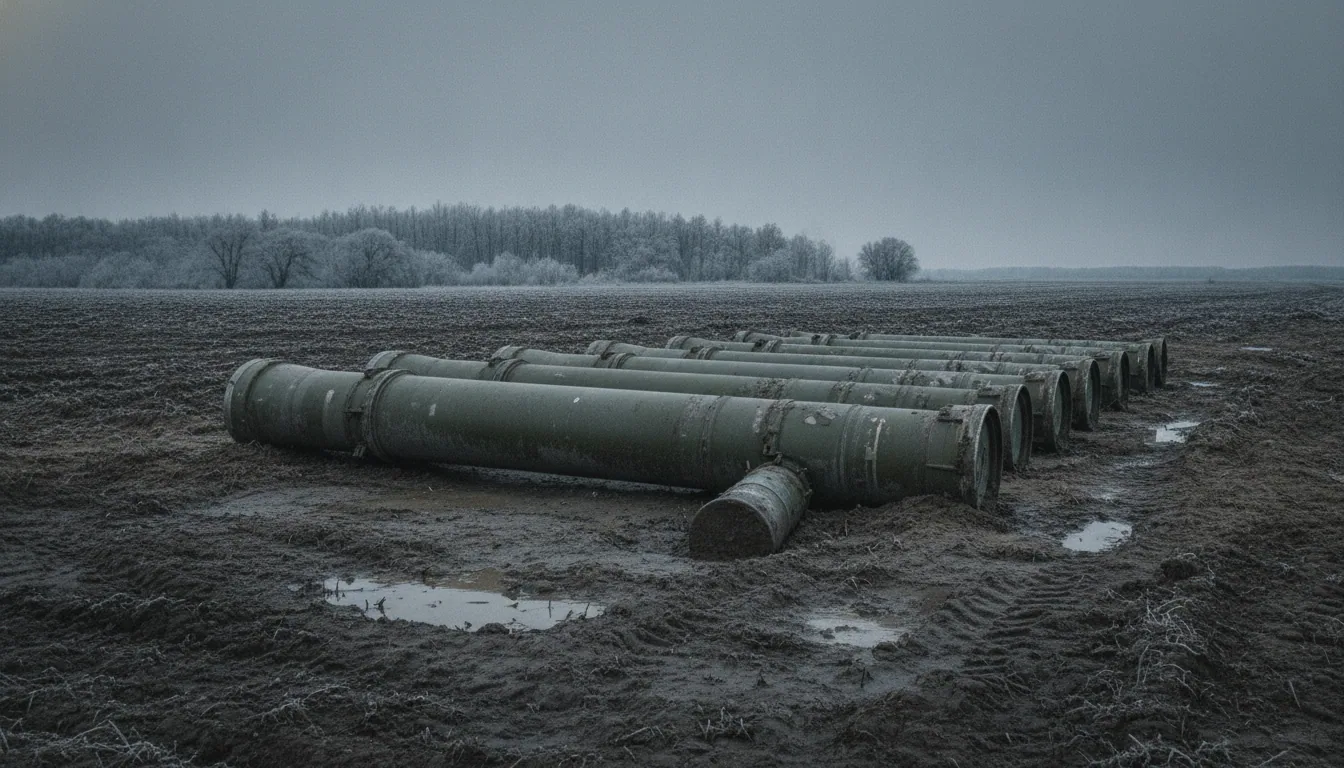
The day's total was 120 drones. Ninety of them were jet-propelled, faster and harder to intercept than the propeller-driven Shaheds that defined the war's earlier tempo. The interception rate for the jet models was 57 percent. That number will carry more weight later in this article. For now, the plain fact is sufficient: at half past one on a Monday, a building that has housed Ukrainian science for over a century was burning, and two people who had gone to work that morning did not come home.
The Man in the Building, and What the Building Stood Beside
Volodymyr Horbulin survived. That single sentence carries more weight than it might appear to. Horbulin is not a ceremonial academician; he is the architect of Ukraine's post-independence missile doctrine, the man who designed the security frameworks that Ukraine built after 1991 and then, fatally, partially dismantled under foreign pressure. His aide, Nataliia Bukalo, did not survive. The distinction between those two outcomes — luck, geometry, a corridor rather than a window — is precisely the kind of distinction that targeting analysts study afterward.
Whether Horbulin was the intended object or merely a man who happened to be in a presidium that was the intended object is not yet established by the public record. Both readings are serious. A strike that kills his aide and injures him is either a near-miss at a high-value symbolic target, or a reminder that jet-propelled drones at 57 percent interception rates scatter consequences without surgical control.
The geography of the site sharpens both possibilities. The Academy presidium stands in the Shevchenkivskyi district, close to the German Embassy and the National Opera — the densest concentration of diplomatic and cultural fabric in the capital. Striking there does not require a manifesto; the coordinates speak. Ukraine's institutional scientific memory, its living security architect, its diplomatic neighbourhood, and a 19th-century building that predates the Soviet state: all of it compressed into a single strike zone. Ask the small question first: who is the borderland here, and who is the empire? The answer does not require translation.
Ninety Jets: The Arithmetic of a Falling Interception Rate
Of the 120 drones Russia launched against Ukraine on September 28, roughly 90 were jet-propelled models. That ratio is the headline inside the headline.
Standard Shahed drones run on propellers. They are slow enough, at roughly 180 kilometres per hour, that Ukrainian air-defence crews have had years to calibrate against them. Jet-powered variants move significantly faster, and the gap between detection and intercept narrows toward zero. Ukrainian drone commander Robert Brovdi has noted the difference in practical terms: the reaction window compresses, and the crew either has the solution ready before the target arrives or does not have it at all.
The reported interception rate for the jet-powered drones on September 28 was 57 percent — meaning that of every hundred jet drones fired, 43 reach something. Against the slower propeller fleet, Ukraine's interception rates have run considerably higher. The drop is not a rounding error; it is a structural shift in the balance of the exchange, and the Academy building is part of the 43 percent.
Zelenskyy acknowledged the gap without dressing it. New interceptors are being actively tested, he said; effectiveness is not yet sufficient. That is a careful formulation from a man who chooses his words in public under pressure, and it deserves to be read as written. "Not yet" is load-bearing. It confirms that the current defensive architecture has a ceiling the Russians have now located.
The arithmetic, for now, favours the attacker. How long that holds depends on what "not yet" delivers.
Cutting the Capital's Nerves: The Infrastructure Layer Beneath the Smoke
The Academy burned. Three kilometres away, the MiroHost data centre took a strike. The Ukrtelecom offices went down within the same window.
By early afternoon, Kyiv's internet topology had begun to collapse inward. Customers of Domonet, Kievnet, and Faust reported outages in quick succession, each provider's silence a small node going dark on a map that, in aggregate, describes something closer to a blackout than a bad afternoon for connectivity. The simultaneity was not coincidence. It was the point.
The Dobrobut private medical centre in central Kyiv was struck and set ablaze. A hospital burning is not a side effect of a strike on a military target nearby. There is no military target nearby. The fire was the target's consequence.
The fog of a communications strike is not metaphorical — it is a practical condition, measurable in the gap between first reports and verified totals. The injury figures for the day's Kyiv strikes range from three to twenty-four, a range that is itself a product of what happened to the communications infrastructure: when the networks go down, the count comes in fragments, hours late, in pieces that do not yet add up.
This was the sixth day of a rolling campaign against economic, digital, and medical infrastructure. The Academy, MiroHost, Ukrtelecom, Dobrobut — these are not four separate stories. They are four nodes in a single operation whose purpose is to sever the capital from its own nervous system: the ability to communicate, to treat, to record, to know what is happening while it is happening.
What Moscow Says It Is Doing — and the Colder Word Underneath
The Russian Defence Ministry's account was tidy: strikes on data centres and military-related sites. The communiqué did not name a 19th-century presidium building, a scientific library, or an aide to a retired academician. The gap between that verb — targeted — and the target that was actually burning deserves a moment's attention.
Dmitry Peskov's formulation was less surgical and therefore more honest. "Ukraine will have to pay a price for the actions that have taken place in recent months. That is happening right now." Parse that slowly. There is no claim of military necessity, no gesture toward proportionality. Price is a commercial word — it implies a ledger, a creditor, a debtor. When a spokesman reaches for a word that open, he is not describing a discrete operation; he is describing a logic.
Foreign Minister Andrii Sybiha named that logic directly: Russia is deliberately expanding the boundaries of what it believes the world will tolerate. The precedent argument is worth taking seriously here, though not uncritically. Every escalation in this war has been met with revised tolerances, revised red lines, revised definitions of what constitutes a civilian target. The Academy is not the first cultural institution struck — it will not, on present evidence, be the last. The Ministry's communiqué and Peskov's price metaphor are not contradictions; they are the decorative and the load-bearing parts of the same sentence.
The Ministry's communiqué and Peskov's price metaphor are not contradictions — they are the decorative and the load-bearing parts of the same sentence.
The Wider Reckoning: What Neighbouring States Are Watching
The Small Nation's Ledger: What Moldova Is Watching
Maia Sandu does not need to publish a threat assessment. The numbers do it for her. On September 28, 90 of 120 drones launched were jet-propelled; the interception rate held at 57 percent. A borderland government reads that gap — 43 percent getting through — and converts it into a single, cold question: where does the tolerance boundary now sit, and how far are we from it?
Moldova shares no front line with Ukraine, but it shares the map. Every escalation in target selection — energy grids, then hospitals, then the bombing of Ukraine's Academy of Sciences, then telecommunications trunks — extends what Sybiha called "the boundaries of what Russia believes the world will tolerate." Chisinau watches each extension the way a tenant watches a fire move through adjacent apartments: abstractly, until it is not abstract. The 57 percent interception figure is not a Ukrainian statistic; it is a regional one.
The watch-marker is specific and checkable. Zelenskyy said on September 28 that new interceptors are being actively tested, with details still to be refined. When Ukraine's air-defence command publishes the first operational interception-rate figure for those new systems — whether that number sits above or below 75 percent — every government on Russia's western flank will know whether the technological advantage Moscow purchased on Monday was permanent or merely a season. If it holds below 70, Moldova's ledger gets heavier. That is the number to watch, and it is the question the attack on Kyiv's scientific institution left hanging over the entire region.