The critical shortage of Ukrainian air defense reached a tipping point in August 2026, as global Patriot PAC-3 interceptor stocks fell from 2,300 to 800 units. Strategic diversions to the Middle East have left Ukrainian cities vulnerable to ballistic missiles, necessitating a shift toward domestic drone production and regional security alliances.
Ukraine is navigating a critical shortage of air defense capacity that has rendered the ballistic shield over Kyiv effectively non-functional against hypersonic and high-volume Russian strikes. In 1991, I watched the Soviet order dissolve from a desk in Moscow where the telephones simply stopped ringing. Power is usually just a function of a working circuit or a full magazine. The arc from that collapse to the current failure in Kyiv reveals a singular truth: an empire's promise is only as thick as its current inventory.
The silence over the Kyiv region on August 5, 2026, was of this terminal variety. It was the mathematical silence of a spent supply. The wire says the city suffered a tactical lapse, but the original reality is colder: the ballistic umbrella has folded. Not a single one of the 24 ballistic missiles or four hypersonic Kinzhals fired that day was intercepted.
Seventeen people died because the ledger of the Patriot PAC-3 system finally hit zero. This was a certainty, not a surprise. On August 1, the defense managed to stop only one out of 27 ballistic targets. We are watching the visible evaporation of a city's survival in real-time.
The capital remains proficient at swatting away cheap drones, but that is merely decorative molding. The load-bearing wall was the ballistic shield, and it has buckled. The price of a coffin remains lower than the price of the interceptor that might have prevented its use.
The Geography of Diversion: Why the Critical Shortage of Ukrainian Air Defense Is Growing
The wire says the shortage in Kyiv is a matter of manufacturing delays. The original reality says something colder: diversion. When the war with Iran began in February 2026, the logic of the global supply chain was rewritten to protect the Gulf.
Kyiv was no longer the primary account in the ledger of great-power security. I have watched this pattern of strategic drift before from desks in Sarajevo and Brussels. Before the Gulf flared, U.S. Patriot missile stocks sat at a pre-war level of 2,300 units.
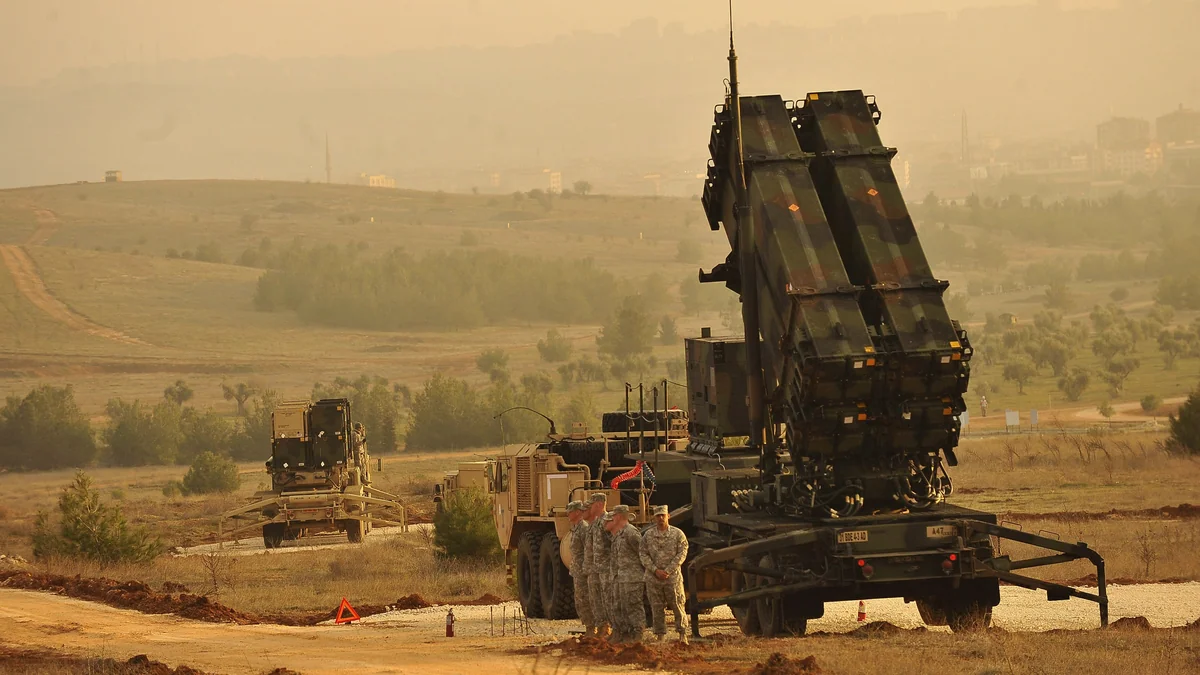
Today, the global inventory has declined to approximately 800 units. Interceptors meant for the Dnieper were diverted to the Strait of Hormuz to shore up American interests. Moscow reads these logistical ledgers as clearly as any analyst.
In July 2026, Russia launched a record 126 ballistic missiles against Ukrainian targets. This was more than double the volume recorded in June. Each Iskander-M launched serves to drain the remaining PAC-3 interceptors.
Domestic production is the only load-bearing wall for a small nation when the great-power supply chain snaps.
The New Siege: Euphemisms for Thirst
In the vocabulary of the Kremlin, the term "special military infrastructure" now includes the taps in a Kyiv kitchen. Prime Minister Denys Shmyhal has noted a shift in Russian targeting from the electricity grid to urban water supply systems. This is the logic of the siege, where the absence of water becomes the city's primary clock.
The delivery mechanism has changed alongside the target. Russia now deploys the Geran-4, a jet-powered drone managed at a lower command level than traditional ballistic missiles. This permits a persistent, high-frequency attrition that drains the last Western interceptors while great powers debate the next shipment.
Watching the water pressure drop in a high-rise is a dread that requires no translation. For a small nation, the borderland is the distance between a civilian and a working pipe. If the interceptors do not arrive, the answer to who gets sold is found in the weight of a plastic jerrycan carried up ten flights of stairs.
High Stakes and Low Altitude: The Drone Pivot
The math of the air shield has become a ledger of terminal absurdity. To trade a million-dollar Patriot interceptor for a Shahed drone, essentially a flying lawnmower, is a recipe for strategic bankruptcy. Kyiv has learned this arithmetic the hard way while the Western magazines sit dangerously empty.
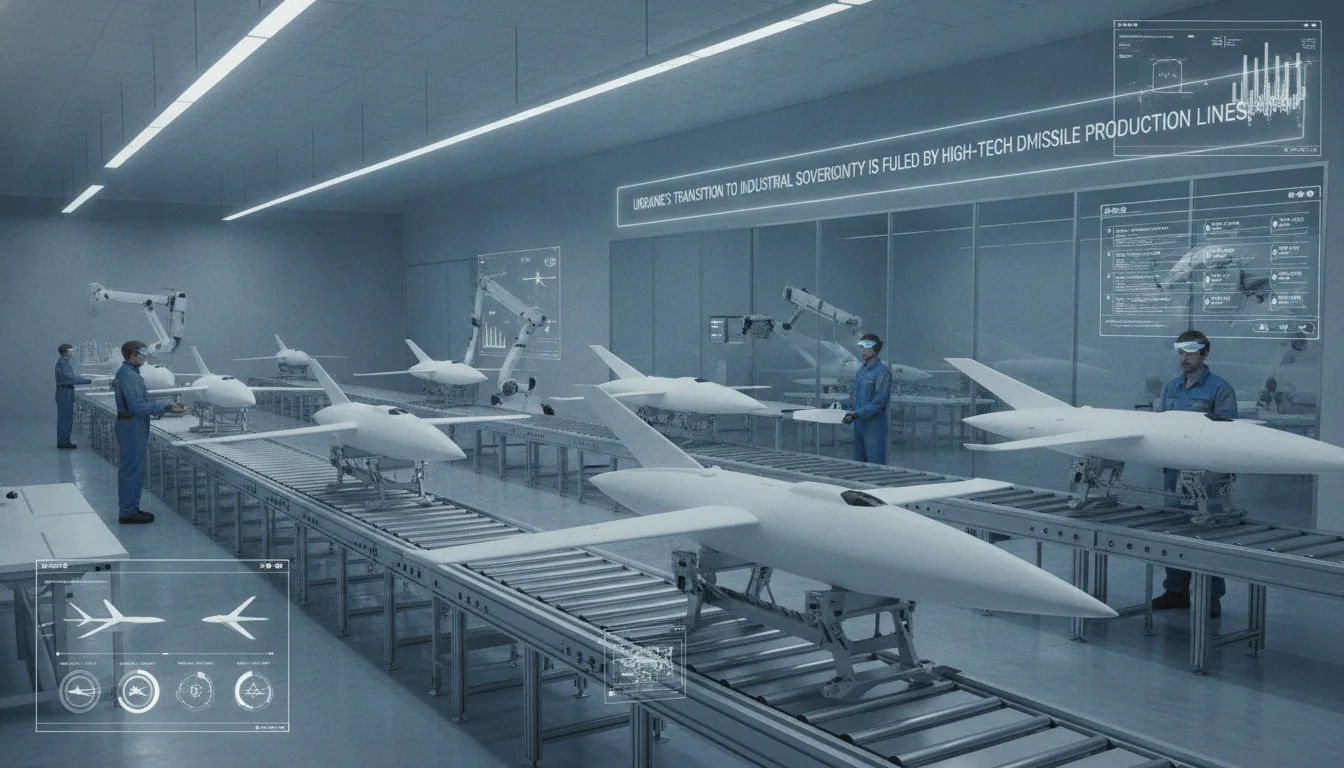
In 2025, Ukraine produced 100,000 interceptor drones to protect its remaining ballistic missiles for higher-priority targets. The wire says the defense is holding, but the original reports suggest something colder: a desperate pivot to the low and slow. Domestic production is the only load-bearing wall for a small nation when the supply chain snaps.
On the outskirts of the capital, the frontline now resembles a high-tech garage workshop. Mobile units mount radar and Hellfire missiles onto civilian Ford chassis to hunt the new jet-powered Geran-4 drones. These rigs serve as the frantic, tactical jury-rig of the abandoned.
The Friction of Sovereignty: Trump and the License Problem
I have heard this promise before: 1991, Moscow. It failed then for the reason it will fail now—the belief that security can be a gift rather than a right. On July 28, 2026, President Zelensky requested a "winter package" of 300 Patriot missiles from Donald Trump.
The wire says the two leaders discussed "strengthening" the air shield. The original communiqué says something colder: "retention."
Donald Trump is hesitant to grant licenses for local Patriot missile production in Ukraine, citing the risk to American technology security.
To a superpower, an advanced missile system is a proprietary asset that must be protected. To the person on the small-nation floor, it is the only thing preventing a missile from hitting a municipal water main. This is the friction of the borderland, where survival is treated as a trade secret.
The Small-Nation Floor: Templates for the Abandoned
Estonia's PURL initiative allocated 21 million euros for Ukrainian air defense and ammunition in 2026. This is the distinct logic of the small-nation floor, where a consistent commitment acts as the load-bearing wall for a crumbling European security architecture. An empty sky over Kyiv is eventually an empty sky over Tallinn, no matter what the great powers decide.
Other neighbors are beginning to read the map with similar sobriety. Sweden and Denmark ordered Tridon Mk2 air defense systems worth 292 million dollars in February 2026 to fill the vacuum. Project Freyja aims to deliver a domestic ballistic defense system by mid-2027 to replace the fading superpower's guarantee.
If the Polish MiG-29s do not arrive before the next milestone in June 2027, the shift in European defense is merely decorative molding. The evidence forces us to conclude that small nations are building a shield because they can no longer trust the umbrella. The critical shortage of Ukrainian air defense is not just a tactical crisis, but a final lesson in the precarious nature of borrowed security.