What the Record Now States: The UN Mission's Finding
the commission reports that define the U.S.-Iran conflict legal fallout have a particular grammar. They arrive with calibrated legal language, hedged by "reasonable grounds" and "credible evidence," and they restate things that governments already know but have declined to say aloud. On September 17, 2026, the UN Independent International Fact-Finding Mission on Iran published its finding: reasonable grounds to believe the United States committed war crimes in two airstrikes conducted during Operation Epic Fury.
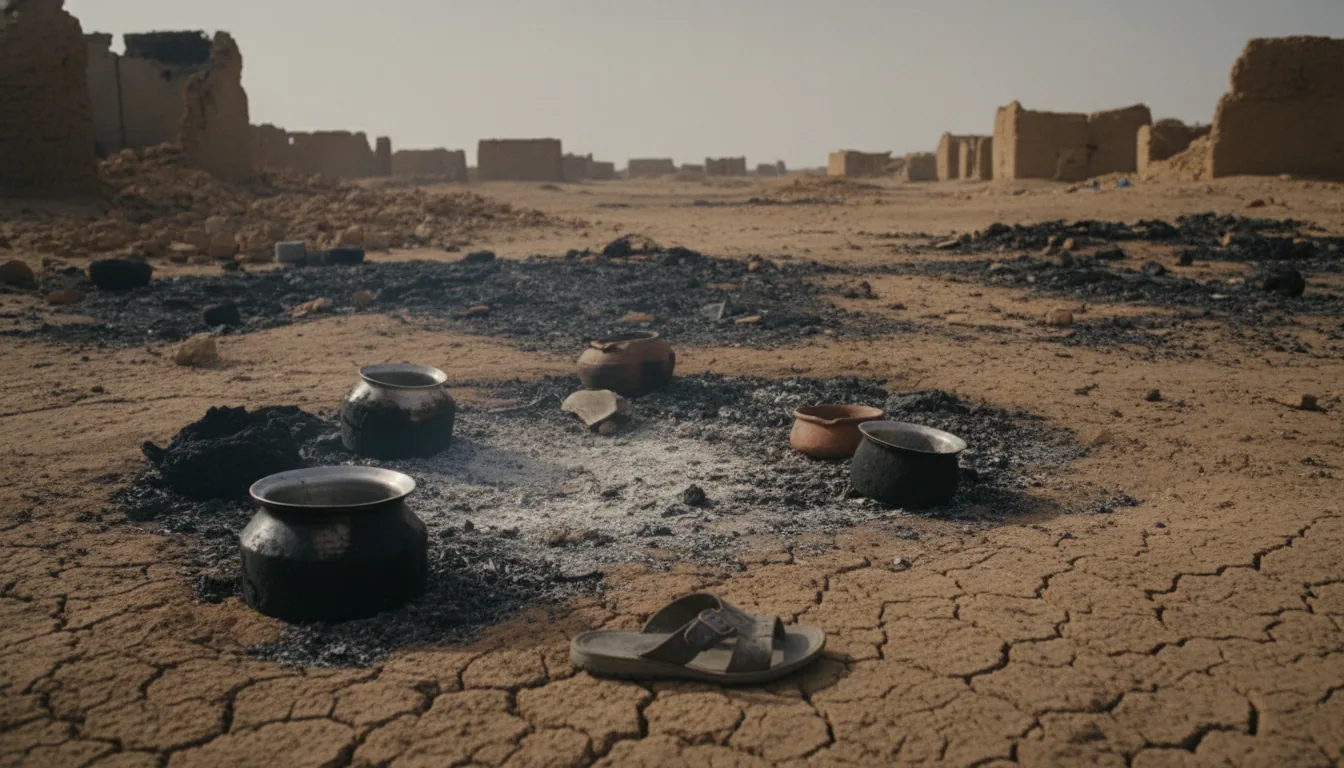
One of those strikes hit a school in Minab. Between 80 and 100 children were killed. The U.S. government has not claimed responsibility for that strike. The silence is not an oversight; silence, at this level, is a legal posture.
The International Commission of Jurists classified the February 28 attacks, the opening night of Operation Epic Fury, as a grave violation of the UN Charter. That language is not decorative. "Grave violation" carries specific weight in international humanitarian law, and the Commission did not use it loosely. By April 2026, HRANA had documented 1,606 verified civilian deaths; the Minab children are counted within that figure.
The mission's findings carry a symmetry that neither Washington nor Tehran will advertise. The same report accuses the Iranian government of crimes against humanity in its suppression of domestic protests. Two states, two findings, one document. The architecture of mutual accusation is now formal and on the record.
Read the mandate first, before the press release. The mission was established to investigate Iran's treatment of its own people. That it returned findings against the United States as well tells you something about the scope of what February 28 produced. A document built to look inward ended up looking both ways.
The Campaign and Its Ledger: Operation Epic Fury
Operation Epic Fury began on February 28, 2026. That date is the opening line of the ledger, and the ledger is already long.
The campaign, launched jointly by U.S. and Israeli forces, targeted Iranian infrastructure across a broad front. By April 2026, HRANA had verified 1,606 civilian deaths — a floor figure, not a ceiling, drawn from what investigators could confirm under active wartime conditions. The full count of the displaced, the wounded, and the missing remains outside the record.
The single entry that has drawn the most scrutiny is the strike on a school in Minab. Between 80 and 100 children were killed. The U.S. has not claimed responsibility. The gap between those two facts — a school, a body count, a silence from the command that ordered the strike — is precisely what the UN Independent International Fact-Finding Mission was established to fill, and what its finding of reasonable grounds for war crimes begins to address.
The targeting logic behind the campaign was not obscure. Donald Trump stated publicly that Iranian bridges and power plants would be struck if ships were targeted in the Strait of Hormuz. That is a doctrine, stated in advance, tying infrastructure destruction to maritime deterrence. When the lawyers reach for the principle of distinction — the requirement to differentiate military objectives from civilian objects — they will find the doctrine already on the record, in Trump's own words, before the first bomb fell.
The question is not whether a theory of the campaign exists. It does. The question is whether the theory, stated plainly, constitutes a lawful targeting framework or its opposite.
Five Operations and the Law They Left Behind: The Blockade Architecture
Five distinct blockade-style operations were simultaneously active by spring 2026, each invoking a different legal authority. Taken separately, each had arguable grounding in existing frameworks. Taken together, they were, as one academic analysis put it, "collapsing distinct legal authorities into a single blockade framework" — and that collapse is the practical problem for anyone moving cargo through the Persian Gulf or beyond.
Iran closed the Strait of Hormuz on March 2, 2026, four days after the first U.S. strikes. The closure followed established Iranian doctrine, rehearsed in exercises and threatened publicly for years. For the roughly twenty percent of global oil supply that transits the Strait, the closure was not a legal abstraction.
The more consequential shift came six weeks later. On April 16, CENTCOM expanded its naval blockade to claim global visit-and-search rights over sanctioned vessels. That is a significant legal step. Peacetime interdiction operates under one body of law, with consent requirements and port-state protocols. Belligerent right of visit and search operates under the laws of naval warfare, with no such constraints. CENTCOM moved from the first category to the second without a formal declaration of war, and without clear congressional authorisation. The gap between those two legal regimes is where third-party shipping now sits.
Ask the small question first: who is the borderland here? For a Greek tanker operator, a South Korean refiner, or an Omani trading house, the answer is the same. They did not choose this conflict. They are now subject to boarding rights derived from a war that has no agreed legal name, under five overlapping authorities that nobody has reconciled.
The Courts as Alternate Front: Reciprocal Litigation in the Billions
Consider the arithmetic of a Tehran courtroom. In the months before Operation Epic Fury, an Iranian judge ordered the United States government to pay fifty billion dollars in damages for the 2020 assassination of Qasem Soleimani. No one expects the transfer. Everyone intends to cite the number.
That is how legal war works when diplomacy has already left the building. The judgment is unenforceable, the jurisdiction contested, and somewhere a spreadsheet was quietly updated. The figure joins a growing ledger of reciprocal claims that have replaced negotiation as the primary form of bilateral communication between Washington and Tehran.
The American side runs its own parallel arithmetic. In the Southern District of New York, a $318 million settlement over the 650 Fifth Avenue skyscraper — Iranian state property folded into decades of terrorism judgments — moved quietly through the courts. Twenty new cases were filed against Iran under the Foreign Sovereign Immunities Act in 2024 alone. The statute was designed for narrow sovereign-immunity exceptions; it has become, in practice, a sanctions instrument with a docket number.
Tehran answered in kind. In June 2024, the Iranian judiciary issued a 164-page indictment naming 73 American officials. It is, functionally, the mirror image of the FSIA machinery: equally unenforceable against its named targets, equally permanent in the record, equally available for citation at the next round of negotiations that may never occur.
The case the wire does not cover sits at the edge of this ledger. A Tehran court ordered $6.7 billion for Iranian patients suffering from epidermolysis bullosa — a rare, severe skin condition — whose treatment was severed by sanctions. The plaintiffs are not a government or a military command. They are people whose medication stopped arriving. The court found a cause. The money will not move. The record, however, will hold.
The legal ghost of a deal does not dissolve on the day the press release goes out.
The Diplomatic Architecture, Stripped: Snapback and the Treaty Residue
In August 2025, France, Germany, and the United Kingdom triggered the JCPOA snapback mechanism, reimposing UN sanctions effective September 28. The escalation ladder was procedural, methodical, and fatal to what remained of the nuclear framework. By the time Operation Epic Fury launched in February 2026, the diplomatic architecture had already been reduced to rubble by paperwork.
Compare this to 2015. The JCPOA was never a treaty, strictly speaking — it was a political commitment, which is precisely why the U.S. withdrawal in 2018 was so clean, legally speaking, and why the E3 snapback was so available. A formal treaty leaves courts in its wake; a political deal, once torn, leaves mostly silence. The 1955 Treaty of Amity is the instructive contrast: Washington announced its withdrawal in 2018, treated the burial as complete, and discovered that ICJ jurisdiction survives over claims originating while the treaty was active. The legal ghost of a deal does not dissolve on the day the press release goes out.
What remains when three frameworks collapse in sequence — JCPOA, Treaty of Amity, functioning diplomatic channels — is not a vacuum. It is a residue: competing courts, contested jurisdiction, and live ordnance. The snapback reimposed sanctions; the strikes followed; the suits proliferated. Architecture, once stripped to its load-bearing walls, shows exactly what was decorative all along.
The Borderland Question: What the U.S.-Iran Conflict Legal Fallout Holds
The post-1945 legal order was built on two load-bearing walls: the prohibition on aggressive force, and the protection of civilians as a distinct legal category. Everything else — the snapback provisions, the treaty residue, the FSIA dockets — is moulding. The Minab finding tests the first wall directly. When a UN fact-finding mission records reasonable grounds to believe that 80 to 100 children died in a single strike, and the responsible command has not been named in public record, the Principle of Distinction is not merely under strain — it is structurally implicated.
The small-nation question sits beneath the Strait of Hormuz. The 1,606 verified civilian deaths counted by HRANA through April 2026 belong to Iranians. But twenty percent of the world's seaborne oil transits that chokepoint, and the economies absorbing the price shock have no seat at the table in Washington, in Tehran, or at the ICJ. They are the borderland. They always are.
Watch the UN fact-finding mission's final mandate renewal vote. If the Human Rights Council extends it with a clear attribution mandate, the accountability architecture holds its load-bearing wall. If the resolution softens "shall investigate" to "may consider," the moulding will be all that remains — and the Minab school will join a long list of findings where the full weight of the U.S.-Iran conflict legal fallout was preserved in the record and declined by the system that was built to pursue it.