Defective Bulb, Leaking Hull, Burning Hold: The Philippine Record That Precedes Every Reform
In 2023, investigators examining a Philippine ferry fire established that the blaze aboard the MV Lady Mary Joy 3 had begun with a defective light bulb. The proximate cause was correct. The systemic one went unrecorded in the headline.
That is the pattern the Philippine record keeps producing: a small mechanical failure cited, a durable structural failure quietly filed away. Eight months before the MV June Aster fire, the MV Trisha Kerstin 3 sank in January 2026, killing 65 people. The interval between a major casualty event and the next round of reform announcements has, across decades, remained reliably short. So has the interval before the next disaster.
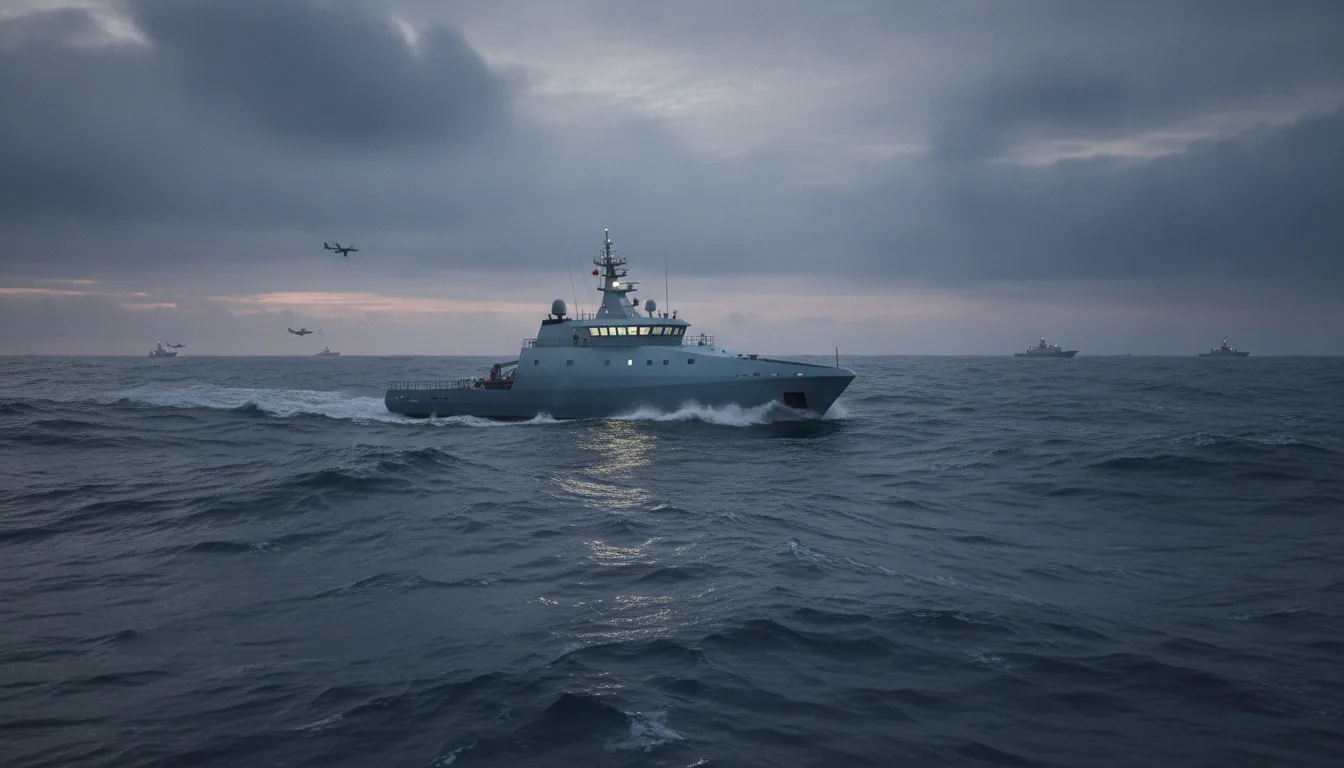
On the evening of September 9, 2026, at approximately 6:45 p.m., the MV June Aster caught fire in waters off Coron, Palawan, while making passage from Manila. Five people are confirmed dead. Between 86 and 87 remain missing. The vessel carried 134 people on its official manifest - 117 passengers and 17 crew - and initial survivor accounts place the fire's origin in the cargo hold. The same structural vulnerability, a different vessel, a different year.
Two major casualty events within nine months of a reform cycle is not a coincidence requiring explanation. It is the cycle. The Philippine archipelago runs on inter-island ferries; the ferries run on aging hulls and thinner margins than any regulator's spreadsheet acknowledges. A defective bulb, a leaking hull, a burning hold - each investigation names the instrument and stops there, which is precisely what allows the instrument to change while the structure holds.
The MV June Aster fire is not the exception the reform announcements will soon describe it as. It is the most recent output of a system that has been producing the same output, with periodic intervals, for the better part of three decades. The question is not what went wrong on September 9. The question is what the record shows was never fixed.
A Manifest of 134, a Rescue of 43: When the Headcount Becomes the Crisis
The official manifest for the MV June Aster listed 117 passengers and 17 crew: 134 persons, documented, named, theoretically searchable. By the morning of September 10, 2026, 43 survivors had been accounted for. Five were confirmed dead. The arithmetic leaves roughly 86 people unresolved.
That gap is not merely a tragedy. It is a structural problem with a well-documented genealogy in Philippine maritime operations. Manifest discrepancies between the paperwork a vessel carries and the bodies actually aboard have systematically hampered rescue efforts across multiple incidents. When a name is not on the list, search coordinators cannot cross-reference it. A rescue operation without a reliable headcount is not a rescue operation in any meaningful sense - it is a sweep of open water with no defined perimeter.
The deeper question the inquiry must confront is whether 134 was ever the real number. The Philippine ferry system has a pattern of unlisted passengers: persons who board through informal arrangements, who pay at the gangway rather than the counter, who exist nowhere in the vessel's record until the vessel is gone. Ask the small question first: if the actual number aboard exceeded 134, the missing count grows, and no agency will ever be able to close it. The investigation's first obligation is not the fire's origin. It is the manifest's integrity.
Read that document carefully. If the inquiry confirms 134 as the true count, the rescue's scope is bounded and the accounting, however painful, is possible. If the number is higher, the gap between what the paperwork said and what the sea received becomes the crisis within the crisis - and the accountability question shifts from a vessel to a system.
The MV June Aster fire is not the exception the reform announcements will soon describe it as. It is the most recent output of a system that has been producing the same output, with periodic intervals, for the better part of three decades.
The Architecture of Rules: What the Certificates Said and What the Vessel Did
The framework, on paper, is not thin. SOLAS sets the international floor: minimum standards for fire detection, lifesaving equipment, crew competency. Domestic law is supposed to sit on top of that floor, not beneath it. The question is whether the Philippine enforcement apparatus connects to the convention in practice or merely in the text of its own circulars.
In March 2026, the Philippine Coast Guard and MARINA reaffirmed the No Statutory Documents, No Sail policy. Original certificates required; proof of filing no longer accepted as a substitute. The message was precise: the paper must be present, valid, and inspected before the vessel moves. Weeks later, on April 10, 2026, a memorandum of agreement designated the PCG as lead agency for criminal enforcement of maritime violations, not merely administrative flagging.
Republic Act 12021, the Magna Carta of Filipino Seafarers, followed early in the same year. It standardised training requirements in alignment with the STCW Convention, closing, on paper, the gap between international competency standards and what Filipino crews are actually certified to perform. Three reforms in less than four months: the architecture looked reinforced.
The MV June Aster was cleared to sail. That fact sits at the centre of every question the investigation must now answer. Which certificates were valid, which were absent or expired, and who signed the departure authorisation are not procedural details. They are the load-bearing wall. Read point one in the eventual report: if the vessel sailed with a compliant clearance, the policy failed at inspection. If it sailed without one, the policy was bypassed. Either finding describes a system where the rules exist and the outcome occurred anyway, and no further decoration is required.
A Japanese Loan and Five New Ships: The Limit of What Capital Can Build
Somewhere in the Department of Transportation's project files, a line item reads ¥64.38 billion - the Japanese loan underwriting the Maritime Safety Capability Improvement Project. The sum is not trivial. It is the kind of number that appears in a press release alongside words like "partnership" and "commitment." Five new 97-meter Multi-Role Response Vessels are under construction on the strength of it, each one designed for the work the Philippine Coast Guard needs most: enforcement patrols, search operations, the retrieval of people from burning water.
Picture the vessels as they will look when finished: grey hulls, clean decks, every navigation instrument current. That is the visible architecture of reform. What they cannot carry is the answer to why a cargo hold catches fire in the first place - whether from bad wiring, unsecured freight, or something no manifest ever recorded.
Hardware addresses response. It does not address the port-clearance officer who signs the document, the operator who loads the hold, the passenger who boards without a name on any list. The five ships will arrive after the MV June Aster investigation concludes. Their relevance belongs to the next disaster, not this one.
There is also a structural question beneath the logistics. When essential safety infrastructure depends on a foreign loan to exist at all, the archipelago's ability to hold its own operators to account becomes, in some small measure, contingent on a creditor's continued goodwill. That is not a complaint about Japan. It is an observation about what it means to need external capital to build the minimum.
Somewhere a spreadsheet was quietly updated. The vessels remain under construction.
The Philippine Ferry Fire Inquiry: One Document to Watch
The PCG and MARINA have launched a formal Marine Safety Investigation into the MV June Aster fire. That is the procedurally correct thing to do, and it tells us very little yet. Every major inter-island vessel casualty of the past three decades has generated a formal investigation. The question is not whether the inquiry opens, but what it is permitted to find.
The April 2026 memorandum of agreement, which designated the PCG as the lead agency for criminal enforcement of maritime violations, is now tested at scale for the first time. Admiral Ronnie Gil Gavan and MARINA Administrator Sonia Malaluan signed a framework; the June Aster is the first serious examination of whether that framework has load-bearing walls or decorative moulding. The MOA's value will be measured not in its language but in its outputs.
The central question the investigation must answer is straightforward: were the MV June Aster's port-clearance documents valid when the vessel departed Manila, and if so, who signed them? The March 2026 reaffirmation of the No Statutory Documents, No Sail policy means there is a paper trail, or there is not. Both outcomes are revealing. One traces the failure to enforcement; the other traces it to forgery or omission at the clearance desk.
Here is the marker to watch. When the investigation's findings are published, read the determination section for two things: whether it names the specific certificate gap, and whether it names the official who authorised clearance. A finding of mechanical cause, fire originating in the cargo hold, cause undetermined, closes the paper file on this Philippine ferry fire without closing the enforcement question. It is the administrative equivalent of the word "should" in a ceasefire agreement, and what it means is that the next manifest will also read 134, the next rescue will also count 43, and this story will be back before the end of the sailing season.