Shortly After Midnight on August 31
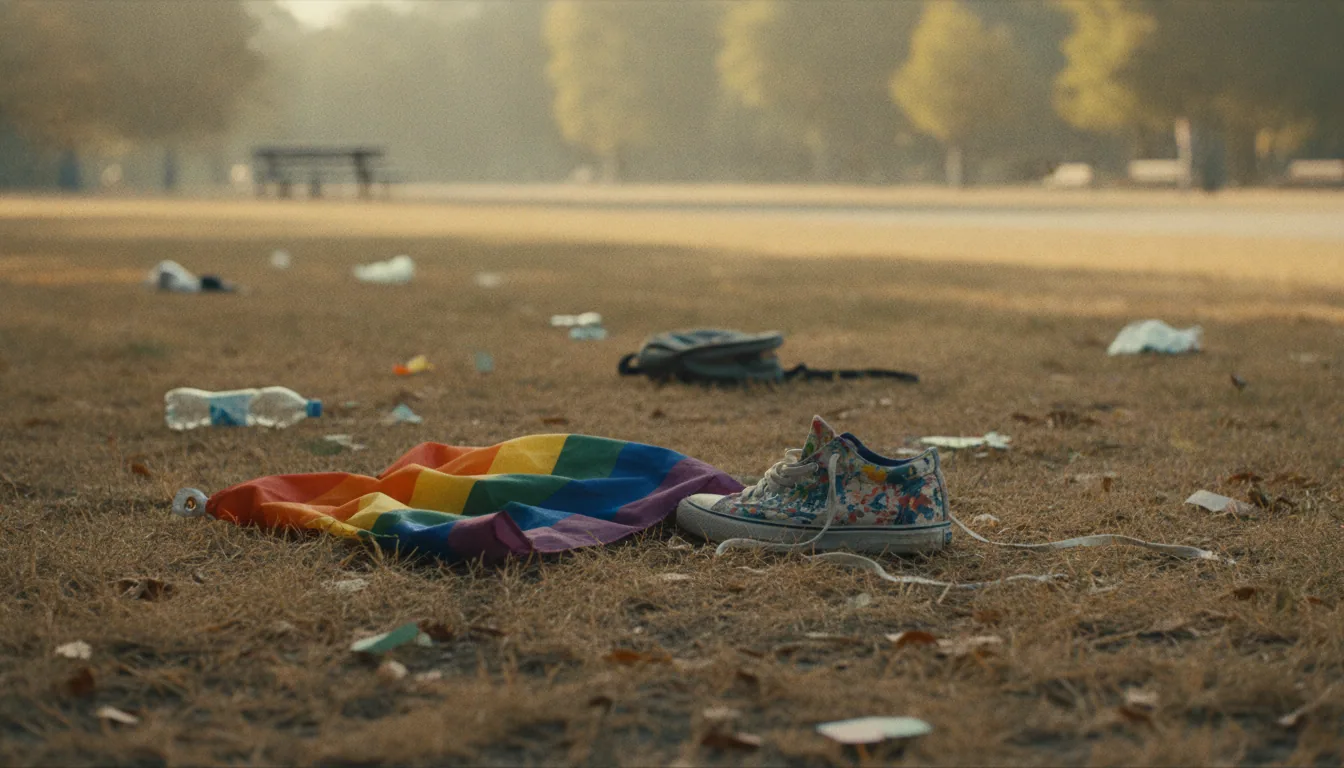
Shortly after midnight on a Monday, two men walked out of a Tucson gay bar and did not come home. Vincent Anthony Siqueiros, 42, and Cameron Davis Capara, 33, were shot in the parking lot of Venture-N near 6th Avenue and Speedway Boulevard. They had never met their killer before that night.
The man who confronted them in that parking lot was Ousman Ceesay, 44. Police say he had no known prior ties to either victim. He approached them, opened fire, and three people were dead before the sun came up — Siqueiros, Capara, and Ceesay himself, who died later at a local hospital from a gunshot wound. His death is being treated as a suicide.
Three fatalities. One night. One parking lot outside a neighborhood bar.
What makes this more than a violent crime on a Monday morning is what investigators found afterward. Ceesay did not wander into that parking lot by accident. The evidence points toward a man who had made a decision, and Venture-N was part of it. That comes in the next section.
For now, the facts stand on their own and they are heavy. Two men in their thirties and forties, killed by a stranger who had specifically placed himself in front of a business that exists because queer people needed somewhere to go.
Tucson Police Chief Monica Prieto called bias-based crimes "especially heinous." That is the careful language of law enforcement. What it means in plain terms is this: Siqueiros and Capara were targeted not for anything they did, but for who they were and where they chose to spend their evening.
That distinction matters enormously. It is the difference between a tragedy and a threat.
The Note in His Pocket
When investigators searched Ousman Ceesay after the shooting, they found a handwritten note. On it: a list of LGBTQIA+ businesses and locations in Tucson. Not one address. Multiple.
That piece of paper changed everything about how police understood what had happened in the parking lot of Venture-N. A violent incident became a documented, premeditated attack on a community. Ceesay had no known prior connection to Vincent Anthony Siqueiros or Cameron Davis Capara. He hadn't chosen them. He had chosen the category they belonged to.
The Tucson Police Department opened a formal hate crime investigation on the basis of this evidence. Police Chief Monica Prieto called bias-based crimes "especially heinous." That is the official language. What it means in practice is that investigators now had to ask a harder question: who else was on that list.
They didn't release the full contents of the note. What the public doesn't know is which other bars, community centers, or gathering places Ceesay had written down. That uncertainty is its own kind of threat.
TPD responded by increasing patrols around other LGBTQIA+ establishments across the city. The logic is straightforward: when a suspect carries a target list, every address on it is a potential crime scene. Standard tactical response, yes. But for the people who run those bars and community spaces, it means opening the door on a Tuesday night and watching a patrol car idle outside.
The note didn't create the danger. It made it legible.
It is the difference between a tragedy and a threat.
Venture-N: The Gay Bar That Was More Than a Bar
Venture-N is a leather and Levi's neighborhood bar. That description might sound narrow, but it isn't. For decades, it has been one of the fixtures of Tucson's queer community — a place with its own regulars, its own rituals, its own weight.
The Southern Arizona AIDS Foundation put it plainly: "Places like Venture-N are more than businesses. They are places where people find friendship, chosen family, safety, and belonging." That is not marketing language. That is what a bar becomes when the people inside it have nowhere else to be fully themselves.
Southern Arizona Senior Pride added that the community deserves to gather, celebrate, and live openly without fear. For older queer Tucsonans especially, bars like this one were often the first place they ever found that freedom. Some of them have been coming for thirty years.
Tucson Queerstory, a local history project, called the attack "heartbreaking and infuriating" — and they named the specific weight of it, the fact that this violence was added to a history that already carries enough. That framing matters. Venture-N is not an abstraction. It is a particular address, a particular community, decades of particular Friday nights.
Both Southern Arizona Senior Pride and the Southern Arizona AIDS Foundation are now leading the community response, helping to organize what comes next. That is what community organizations do when the institutions feel distant — they show up with practical answers to an unbearable question.
Vincent Anthony Siqueiros was 42. Cameron Davis Capara was 33. They were in a parking lot outside a bar they trusted. That trust was not naive. It was built over a long time, by many people, one night at a time.
Fifty-Eight Times and Counting
August 31 was not the first time Arizona's LGBTQ community buried its dead after a targeted attack. It was the latest entry in a count that has reached at least 58 documented acts of anti-LGBTQ hate across the state over the past four years.
Fifty-eight. That is not a statistic from a distant country. That is Arizona, where two years ago a plot against Phoenix Pride was foiled before it could become a massacre. The Tucson shooting is not an outlier. It is a data point in a pattern that advocates and law enforcement have been watching accumulate, incident by incident, across the region.
Mayor Regina Romero did not reach for careful language when she condemned the shooting. She called it a "direct and devastating attack on our LGBTQ+ community, another senseless act of gun violence." That word — devastating — is the honest one.
Two men left a neighborhood bar and did not go home. A community that had already learned to count its losses was asked to count again.
There is something specific about a bar parking lot at midnight. It is not a protest, not a parade, not a public statement. It is just the end of an ordinary night out. The choice of that moment, that place, those men, tells you something about the intent: to reach people precisely when they believed they were safe, in a space they had trusted for years.
Tucson Police Chief Monica Prieto called bias-based crimes "especially heinous." The number 58 explains why.
What Calling It a Hate Crime Actually Does
Arizona law allows hate crime sentencing enhancements — stiffer penalties added on top of base charges because the crime targeted someone for who they are. In this case, that mechanism is moot. Ousman Ceesay died at the hospital. There will be no trial, no sentencing, no courtroom moment where the label is formally applied by a judge.
So why does the designation still matter?
Because it changes what happens next. The hate crime classification shapes how the Tucson Police Department allocates resources — which is why officers are now patrolling other LGBTQIA+ establishments across the city. That is standard tactical doctrine when a target list is recovered: you treat every business on it as a live threat until proven otherwise.
The classification also determines how the August 31 shooting enters public data — the kind of records that GLAAD cites when it documents those 58 anti-LGBTQ hate acts in Arizona over four years. The numbers in that count come from official designations. Remove the label and the shooting disappears from the ledger.
Chief Monica Prieto called bias-based crimes "especially heinous." That phrase is not just sentiment. It is official language that signals to advocacy organizations and legislators what category of harm they are dealing with. It opens the conversation about resourcing, about policy, about what Arizona chooses to count and therefore what Arizona chooses to address. The designation is not justice. But without it, the path to any justice gets longer.
Candles on September 2
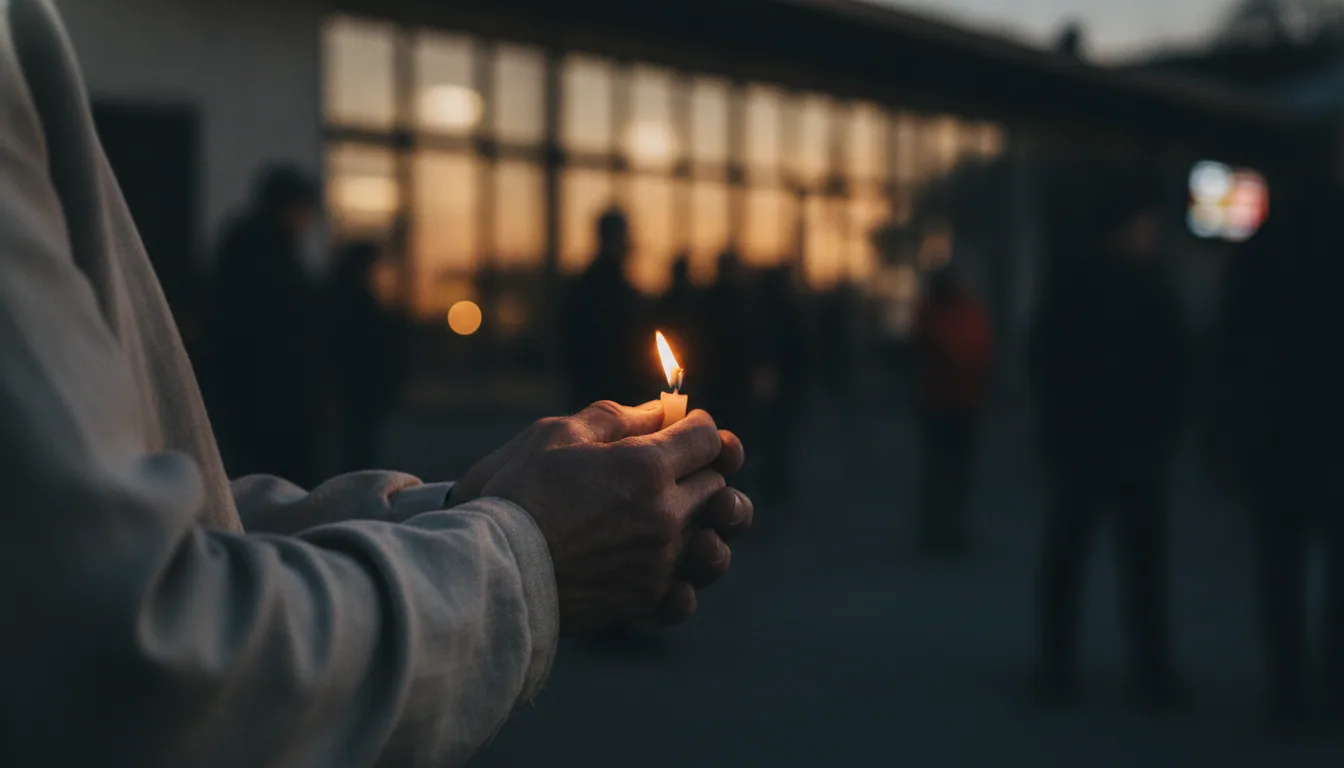
On the evening of September 2, 2026, people gathered in Tucson with candles. That is the simplest fact, and in some ways the most important one.
The vigil was organized by Tucson Queerstory, the Southern Arizona AIDS Foundation, and Southern Arizona Senior Pride — three organizations that have spent years building and defending what Venture-N always represented. Their presence on the organizer list is not incidental. These groups carry the memory of every attack before this one, and they keep showing up anyway.
The vigil is mourning, yes. It is also a statement. LGBTQIA+ people will continue to gather, publicly, in their own spaces, even when those spaces appear on a suspect's target list. Especially then.
Since the Tucson gay bar shooting, police have increased patrols around LGBTQIA+ establishments across the city. Arizona has recorded at least 58 anti-LGBTQ hate acts over the past four years. Patrol increases are a response; they are not a solution.
The longer work is policy: better coordination between advocacy organizations and local authorities when threats are identified, security funding for community spaces that cannot afford it, and hate crime reporting systems that actually capture what is happening.
Vincent Siqueiros was 42. Cameron Capara was 33. The candles were lit. The door stays open.