For the First Time Since 1948, the Lights Will Go Out
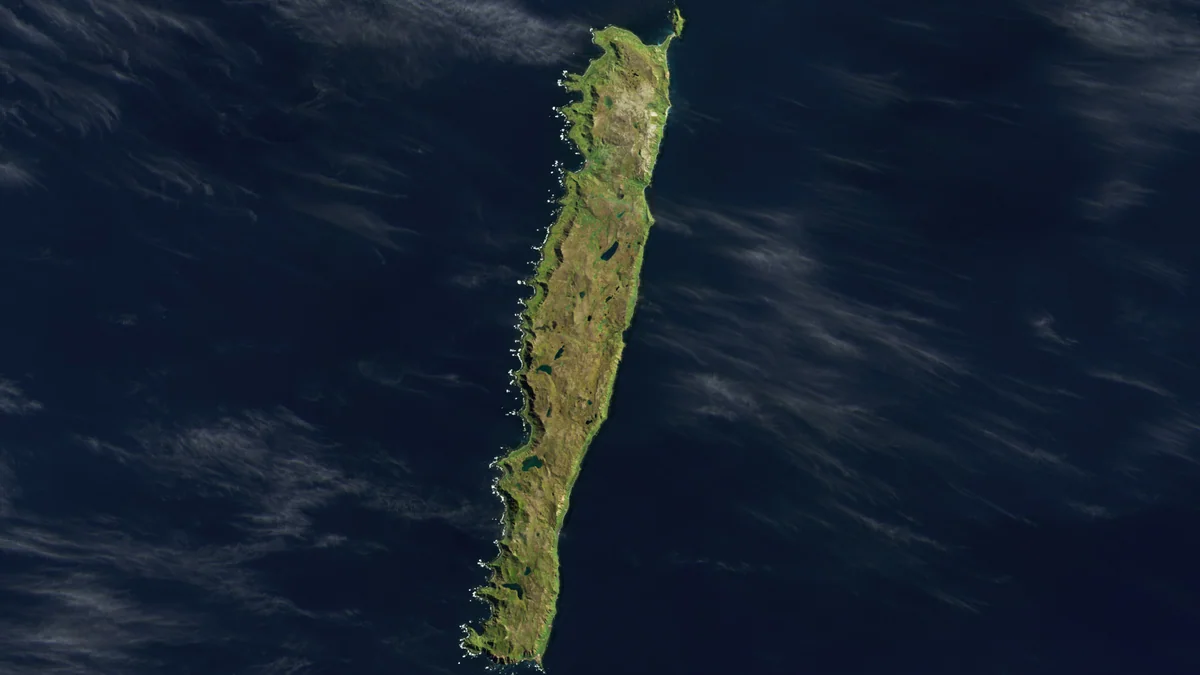
Sometime in October 2026, 24 scientists and support staff will board the icebreaker RSV Nuyina and sail away from Macquarie Island. The generators will keep running for a while. Then, for the first time since 1948, the station will be empty.
The Australian Antarctic Division has ordered this Antarctic bird flu evacuation as a preemptive withdrawal — before any confirmed outbreak on Macquarie Island. The virus has not yet arrived. The decision to leave comes first.
Seventy-eight years of continuous human presence — through Antarctic winters, equipment failures, and the full parade of geopolitical upheaval the rest of the world managed to produce during that time — and none of it interrupted the streak. What breaks it now is not a mechanical failure or a budget crisis.
That distinction matters. This is not an evacuation in the emergency sense, not people scrambling for the last helicopter out. The AAD frames it explicitly as protective.
The risk being managed is not H5N1 infecting the researchers. It is something harder to quantify and easier to underestimate: the psychological cost of trained observers watching a catastrophe they are powerless to stop, in one of the most remote places on Earth.
Macquarie Island hosts an estimated 4 million seabirds and 100,000 seals. The breeding season peaks between September and November, exactly when the RSV Nuyina will be making its return journey with everyone aboard.
The station, built to help humanity understand a wild and poorly-known corner of the planet, will stand vacant precisely when that corner is about to change most violently. The lights going out is the least of what will be lost.
The Virus That Learned to Walk South
H5N1 is not a new pathogen, and its arrival in Antarctic waters is not a surprise. The strain at the center of this story, designated 2.3.4.4b, has been moving southward along migratory flyways for years. It is a slow, documented geographic advance that epidemiologists have been tracking with the particular dread of knowing exactly what is coming and being unable to stop it.
Birds carry it. They follow ancient routes. The routes lead south.
The evidence trail is grim reading. Between 2023 and 2024, approximately 53,000 southern elephant seals died on South Georgia, a British territory at the northern edge of the Antarctic convergence zone. On Heard Island, an Australian sub-Antarctic territory, 13,000 seal pups perished in a single season — the 2025/26 breeding year.
In some affected colonies, mortality rates reached 90%. These are not preliminary estimates. They are counted bodies.
The first confirmed cases on the Antarctic mainland were recorded on February 24, 2024. That date marks not a beginning but a threshold — the moment a slow advance became a crossing. From the Arctic to the North Atlantic, down through South America's coastlines, across the sub-Antarctic islands, and now onto the continent itself.
The trajectory is linear, the logic is migratory, and the timeline is compressed in a way that leaves very little room for preparation. The question was never whether 2.3.4.4b would reach Macquarie Island. The question was always when, and what would be left when it did.
What the Numbers From the North Tell Us About Macquarie's Bird Flu Risk
The officials planning the Macquarie Island evacuation did not reach for models or projections. They reached for a body count.
On Heard Island, about 1,500 kilometres to the west, more than 13,000 seal pups died during the 2025/26 season. On South Georgia, a British territory near the tip of South America, roughly 53,000 southern elephant seals died between 2023 and 2024.
In the worst-affected colonies, mortality reached 90 percent — nine animals in ten. That is not a bad season. That is a colony reshaped in weeks.
These numbers are the evidence base that Australian Antarctic Division officials are working from. South Georgia and Heard Island are not hypothetical worst cases. They are the data.
When scientists project what H5N1 will likely do on Macquarie Island, this is what they are extrapolating from.
The practical implication is worth stating plainly: Macquarie Island hosts roughly 100,000 seals. A 90 percent mortality event would leave 90,000 of them dead. The 4 million seabirds nesting there face their own unknown but potentially similar odds.
The numbers from South Georgia and Heard Island do one more thing. They tell us this is not a disease that kills gradually, giving populations time to thin. It moves through dense, immunologically naive colonies with speed.
The September-to-November breeding season, when animals pack together in exactly the tight clusters a virus needs, is already underway. The clock that matters is biological, not bureaucratic.
Four Million Birds and the Wrong Season to Get Sick
Picture Macquarie Island in October. Every flat scrap of shoreline is occupied. Royal penguins pack the beaches shoulder to shoulder, a living carpet of black and white that extends as far as a person can see.
Behind them, elephant seals haul themselves into loose, heaving piles, their breath fogging the cold air. The island holds an estimated four million seabirds and a hundred thousand seals. In spring they are not spread across the landscape — they are stacked on top of each other.
That density is the point. The September through November breeding season is when Macquarie's animals are most alive — nesting, competing, nursing, calling. It is also when a respiratory virus could not ask for a better set of conditions.
An infected bird sneezes into a crowd of ten thousand. The next morning the crowd is still there.
Here is the biology that makes this genuinely alarming rather than merely dramatic. Antarctic wildlife evolved in near-total isolation from influenza. There were no infected migratory waterfowl passing through, no seasonal flu cycles, no accumulated immunity built generation by generation.
These animals have no immunological memory of H5N1. To their immune systems, the virus is not a familiar threat to be managed. It is a complete stranger.
Epidemiologists have a term for this condition: immunological naivety. In practice it means the animals have no partial defense — no antibodies that recognize a fragment of the pathogen, no immune cells primed to respond fast. When mortality rates in affected colonies elsewhere have climbed to ninety percent, that is not a shocking outlier — given the biology, it is closer to what the math predicts.
The Psychosocial Case for Looking Away
The official reason for the evacuation is not infection. No one expects H5N1 to jump from a penguin to a person in any straightforward way. The stated risk is psychosocial — a clinical compound word that means, stripped to its core: we are not sending people to watch this.
That framing is worth pausing on, because it is genuinely unusual. Science has a long tradition of requiring its practitioners to observe without intervening. Field biologists document predation they could theoretically stop; epidemiologists record outbreaks in populations they cannot fully protect.
The discipline of witnessing is built into the job. What the Australian Antarctic Division is acknowledging, quietly but unmistakably, is that witnessing has a limit. That limit is a colony of 100,000 seals dying at 90% mortality while 24 people stand on the shore with clipboards.
Compare that with the response at South Georgia, where British Antarctic Survey researchers documented 53,000 elephant seal deaths across 2023 and 2024 — a catastrophe recorded, largely, by scientists who stayed. The difference between then and now is scale, density, and the speed at which Macquarie Island's breeding season would compress the dying into a matter of weeks.
There is no modern precedent for an official body using psychosocial harm as the primary operational reason to shutter a research station that has run continuously since 1948.
There is no modern precedent for an official body using psychosocial harm as the primary operational reason to shutter a research station that has run continuously since 1948. The decision is a quiet admission: that bearing witness is an occupational hazard, and that some forms of knowledge carry a cost that an employer has a duty to measure. Where exactly the duty to document ends and the duty of care begins is a question the evacuation raises without answering.
Science in the Dark: What We Will Not Know
The machinery that exists to watch this crisis is genuinely impressive. IAATO and COMNAP have implemented strict bio-security protocols across the region, designed to slow the human-assisted movement of the virus from site to site. Bio-surveillance is coordinated through the Antarctic Wildlife Health Network under SCAR, pooling observations from multiple national programs into something approaching a coherent picture.
The system was built for exactly this kind of emergency.
The problem is that its sharpest eyes are being removed at the worst possible moment.
October is peak breeding season on Macquarie Island — precisely when the virus, if it arrives, will move fastest through four million densely packed birds and 100,000 seals. The 24 researchers who would have counted carcasses, sampled tissue, logged transmission rates, and tracked which species fell first will instead be aboard the RSV Nuyina, heading north. What is left is a monitoring gap at the center of the event.
Remote sensing can count bodies from orbit; it cannot distinguish which species died first, or in what sequence, or why one colony survived while another collapsed entirely.
Three things remain unknown as of early September 2026: whether any Macquarie species are already infected, when the station will be reoccupied, and what the absence costs research that has nothing to do with bird flu at all — the climate records, the meteorological baselines, the geological monitoring that has run continuously since 1948. A disease outbreak is the headline. The quieter loss is everything else that simply stops being measured.
We still don't know what a fully naive population looks like when H5N1 moves through it at scale. Macquarie Island might have told us — but this Antarctic bird flu evacuation ensures the question goes unanswered. Now the data will have a hole in it where the answer should be, and we will spend years trying to reconstruct what nobody was there to see.