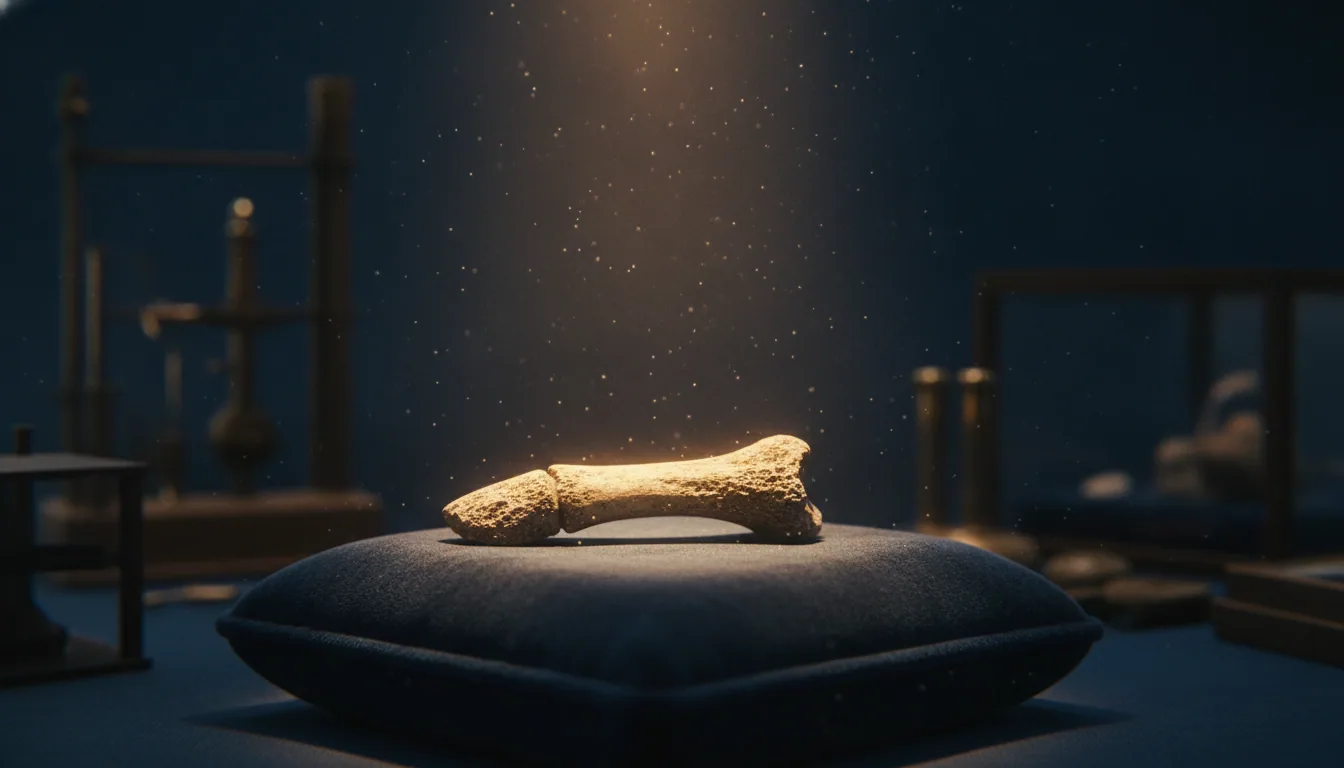
Mummy DNA and the history of smallpox are linked through 500-year-old remains found in Chile’s Camarones Valley. These naturally mummified bone fragments provided the first direct molecular proof of the variola virus spreading from the Old World to the New World, predating many historical records.
Genetic sequencing of these Chilean remains confirms that smallpox reached the Americas via indigenous trade networks long before conquistadors arrived in the region. In the Camarones Valley of northern Chile, the parched earth held onto this secret wrapped in soft camelid wool for nearly five centuries. It was a discovery that relied on a perfect stroke of environmental luck.
These individuals, a woman and a young man, were buried together with modest grave goods. They likely died during the same sudden outbreak, their lives cut short by a force they could not see. Because of the extreme aridity, their bodies underwent natural mummification, preserving their stories in a way that humid climates never allow.
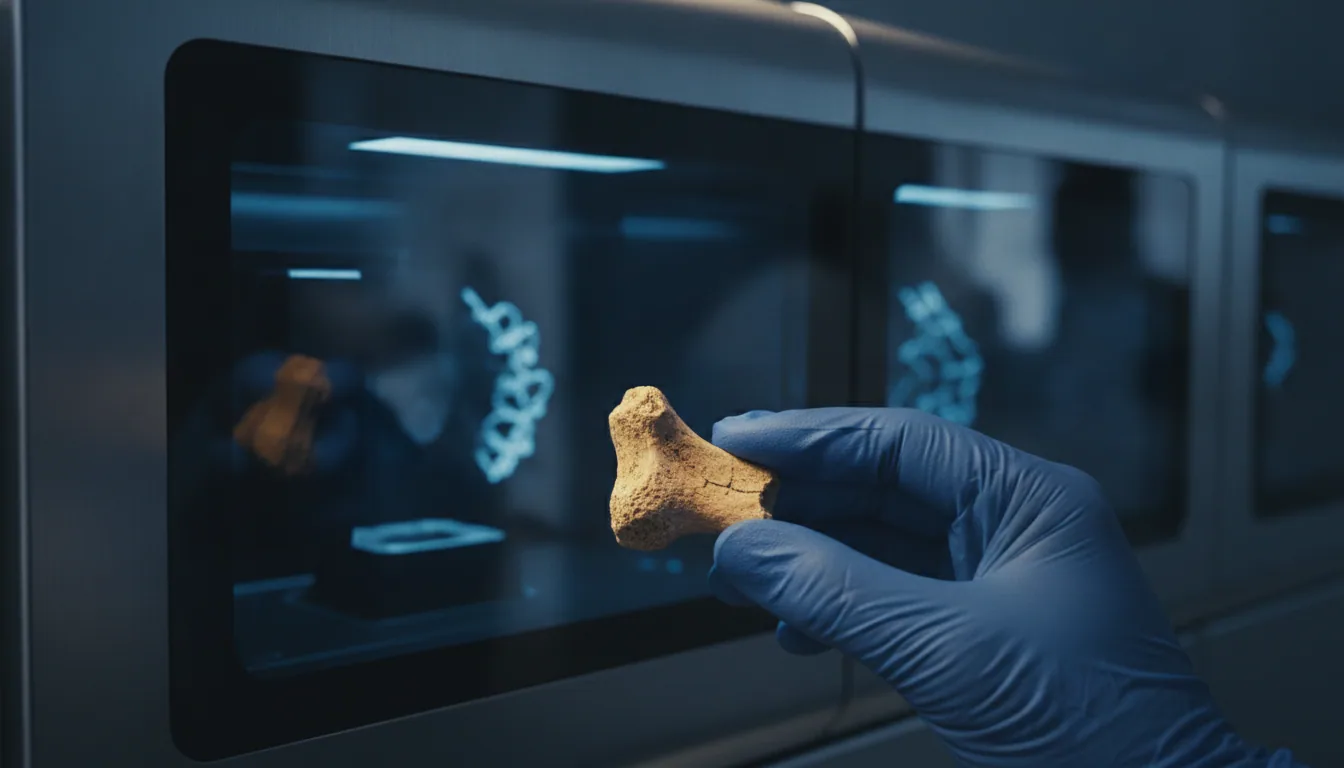
When geneticists analyzed these remains, they found a hitchhiker. They recovered the genomic signature of the variola virus, the microscopic blueprint for smallpox. This clear molecular record dates the infection between 1492 and 1631.
To someone standing in this valley in the early 16th century, this sickness would have been indistinguishable from magic. We have long had historical accounts of how European contact devastated the Americas, but we now have physical proof. It is the first direct molecular link between Old World pathogens and the tragic collapse of New World populations.
How Mummy DNA and the History of Smallpox Rewrite Colonization
For centuries, the story of how smallpox reached the Americas lived in ink-stained archives and old maps. Now, we can read it in the actual genetic code of its victims. This study in the journal Science provides the first direct molecular proof of the variola virus being carried across the ocean.
These individuals lived at the Camarones site, a vast distance from where the first Spanish ships dropped anchor. The virus likely spread through indigenous trading networks that existed prior to European contact. It was a silent passenger that moved through the mountains faster than the conquistadors themselves.
Smallpox eventually killed roughly 90 percent of indigenous people in the Americas following European contact. Imagine nine out of every ten people in your life simply vanishing. Geneticist Constanza de la Fuente Castro explains that this tragedy is written into biological evidence we can finally recover.
While the Spanish were charting coastlines, the virus was already dismantling the Inca and Aztec worlds from the inside out. The genomic data identifies an extinct lineage of the virus, an evolutionary cousin to the strains we later eradicated. It acted as a molecular scout for the conquest.
This tiny strand of DNA explains more about the fall of empires than any military history.
The Shifting Timeline: From Vikings to Modern Strains
If you look at the face of Pharaoh Ramses V, you see the unmistakable pockmarks of a killer. However, when we look at the actual DNA, the family tree starts to look very different from the mirror of history. DNA from Viking-age remains confirms the virus circulated in Europe a full millennium before our modern version emerged.
These were not the same viruses that the World Health Organization eventually wiped out. They were distant, older cousins who had their own journey before vanishing. A 2016 study of a Lithuanian child mummy used a molecular clock to suggest the common ancestor of all modern strains appeared as late as 1588.
This creates a gap between the Viking strains and the 20th-century virus. The recovered Chilean genomes provide the missing bridge. They belong to a now-extinct lineage that sits evolutionarily between those medieval European versions and the modern strains we remember.
We are looking at a history of biological replacements rather than one single, unchanging enemy. The smallpox that devastated the Inca was a specific branch that is no longer with us today. It suggests the virus we know is just the final winner of a very long game of musical chairs.
The Mystery of the Pharaoh’s Skin
Pharaoh Ramses V died in 1145 BC, but his preserved skin shows a pattern of raised, yellow-tinged pustules. To a modern doctor, these look like the unmistakable calling card of smallpox. While the visual evidence seems like a smoking gun, the genetic record remains stubbornly silent.
Science operates on two levels here: clinical diagnosis and molecular signatures. We have the pockmarks, but we lack the ancient DNA, or aDNA, which is the biological fingerprint of the killer. Our current genomic clock suggests the version of smallpox we know today might be much younger than the Egyptian dynasties.
Perhaps the DNA has simply degraded in the desert heat, or maybe the Pharaoh fought an ancient ancestor we haven't identified yet. Until a lab sequences a sample from that era, the Pharaoh’s skin remains a bridge we cannot yet cross. The universe keeps its secrets for those willing to keep digging.
The Scale of the Invisible War
Before the World Health Organization declared smallpox eradicated in 1980, it was a monster hiding in plain sight. In those eighty years alone, the variola virus killed an estimated 300 million people. This is as if the entire population of the United States was deleted from the world.
We often think of history as a series of kings and treaties, but for the victims in northern Chile, the real world war was microscopic. In Estonia, the last case was recorded in 1937, meaning this ghost still walked the earth within a single human lifetime. Smallpox stayed in blankets and breathed through the air, claiming one-third of everyone it touched.
We look at these Chilean mummies and see a tragic, distant event, but the genomic data reveals an apex predator that shaped our modern world. It is about respecting the invisible power that once decided which civilizations survived and which ones simply faded into the dust.
The Last Vials and the Open Horizon
The year 1980 stands as a rare, clean milestone when we hunted a predator to extinction with the power of the vaccine. Today, the live virus exists in only two high-security locations: the CDC in the United States and the Vector Institute in Russia. It remains frozen in vials, a biological ghost kept under lock and key.
We still do not know the full story of its origins. While we have evidence from Viking burials and Chilean mummies, the pockmarked face of Ramses V remains a silent anomaly. Because ancient DNA from that era has not been recovered, we cannot yet prove if the Pharaoh’s scars were made by the same killer.
We have managed to wipe the disease from the face of the Earth, yet its deepest history remains hidden. As researchers continue to explore mummy DNA and the history of smallpox, the next discovery will eventually reveal how this long human adventure truly began.