Cape Verde's debut at the 2026 World Cup represents a significant shift in international visibility. By qualifying for an expanded 48-team tournament, the archipelago demonstrated how sporting success converts into diplomatic recognition, using global attention to project national identity and secure soft-power gains on the world stage.
Cape Verde's football miracle and small-state diplomacy proved that an expanded World Cup field offers small nations a rare opportunity to transform athletic performance into a tool for international engagement.
A first time at the table
Trinidad and Tobago qualified for the 2006 World Cup and the hemisphere celebrated for a week. Then the tournament came, and the hemisphere forgot. The lesson was not that small nations should stay home—it was that the door had to be open long enough to matter.
FIFA's expanded 48-team format for 2026 is exactly that: a structural decision that widened the entrance before anyone specific walked through it. Cape Verde walked through it. The expanded field enabled the debut, and the debut then had to be earned.
What followed inside the country was harder to quantify but not hard to see. The Guardian reported what the wire summary could only gesture at: the flag now visible everywhere across Cape Verde. Visibility is the primary prize.
Goal.com ran a feature under the headline "We've already won," which is not naivety—it is the small-state logic applied with precision. The scoreline comes second, and the calculation is already correct before the knockouts begin.
The score, and what the score does not settle
Argentina 3-2, extra time. The bare result tells you who advanced and almost nothing else.
Argentina surrendered their lead twice before finally killing the match in extra time. Twice the defending world champion conceded parity to a country that had never before played a World Cup match. This shape says Cape Verde forced a reckoning that a 3-2 does not quite erase.
A defending champion carries a particular weight into every knockout game. The expectation is not just that they win but that they impose. For ninety minutes, Cape Verde declined to be imposed upon.
Visibility is the primary prize.
Vozinha was central to that fact. A goalkeeper who keeps a match alive against a side of Argentina's quality is embodying the logic of the entire campaign. Read the sequence for the truth.
Cape Verde's Football Miracle and Small-State Diplomacy: The 48-Team Effect
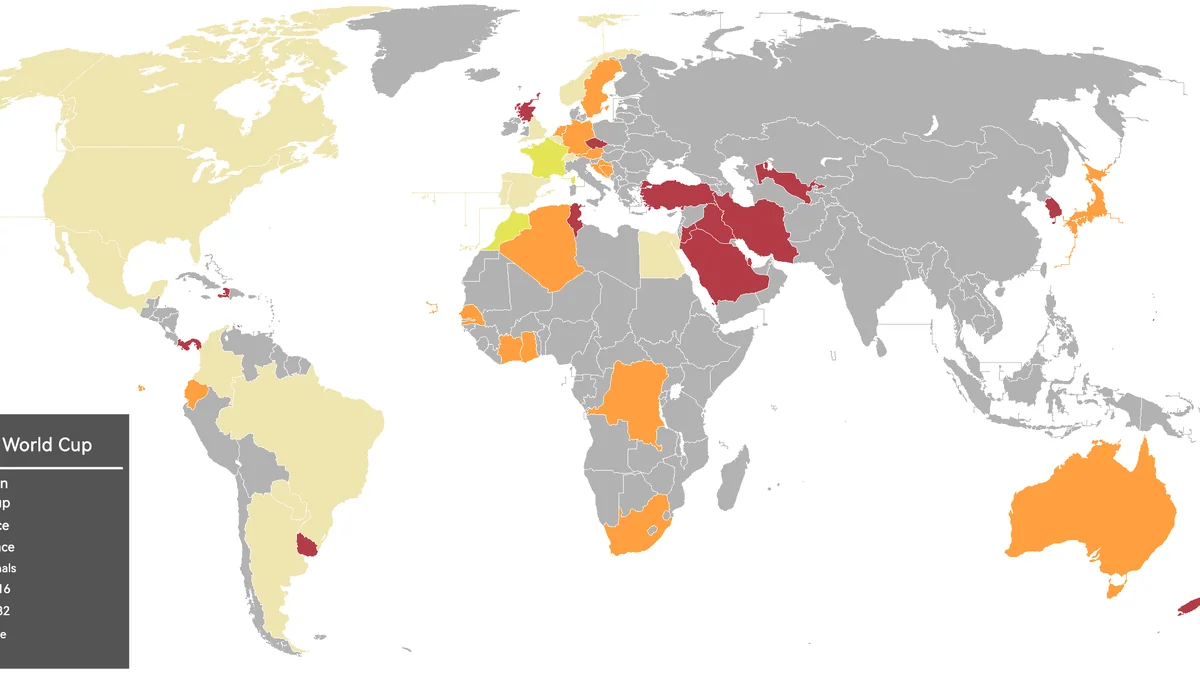
The expanded format is not generosity. FIFA's move to forty-eight teams was a commercial and political calculation, and the arithmetic happens to benefit small states. More slots mean more flags in the group-stage draw.
Canada ran the same pattern one tournament ahead and the mechanism is visible. A domestic mobilisation and a diaspora suddenly engaged create an international press presence. The visibility was the result, not the scoreline.
The simultaneity on 3 July 2026 is worth noting without overstating. The Guardian profiled the impact at home while Goal.com published its feature on minnows on the same date. This convergence is what saturation looks like when a small nation briefly occupies the attention economy's centre lane.
The harder question is what comes after the cameras leave. Footballing visibility can convert into tourism interest, diaspora remittance flows, and diplomatic name recognition. The conversion rate depends on whether a government moves while the window is open.
The narrative economy, as explained from Tallinn
Andres Must wrote his Äripäev piece from a specific angle. An Estonian journalist watching a small Atlantic island nation advance through a 48-team bracket is not simply a neutral observer. He is reading a case study.
Must's argument is structural. The sporting result matters, but it no longer travels alone. What moves through the global attention economy now is the player story—the goalkeeper's name, the captain's origin, the weight of a debut.
A country with limited conventional diplomatic reach has always depended on moments of disproportionate visibility. Estonia learned this. Small states which understand this dynamic can shape it.
The story assembled itself into shares and columns. A goalkeeper whose name became searchable across a dozen languages is a structural shift in how attention converts to recognition.
The flag and the file
Two stories ran through Postimees Sport on those same days. One followed the flag: the debuts, the goals, the noise in Praia. The other was quieter and considerably harder to file alongside the first.
Ryan Mendes, Cape Verde's captain, is under investigation by New Zealand Police in connection with an alleged incident from March. The World Cup campaign and the investigation overlapped entirely. Soft power is reputation at scale.
The comparison that sharpens this is Iceland in 2016. That campaign produced a clean story: small nation, Viking clap, no complicating file running in parallel. Cape Verde's tournament offered a similar moment, but with a captain whose legal exposure no amount of planning accommodates.
A single figure's legal shadow does not cancel the nation's story, but it does complicate the currency. The Mendes file is one line that does not disappear when the referee blows the final whistle.
One marker to watch
Cape Verde's debut ended 3-2 to Argentina, twice having led, before losing in extra time. That scoreline tells a structural story: a first-time qualifier held the defending world champion to the edge of elimination.
Whether that visibility converts into anything durable is the question no tournament celebration can answer. Small states generate the moment; sustaining it requires institutional follow-through.
The final whistle in North America marks the beginning of a longer bureaucratic game. Cape Verde's football miracle and small-state diplomacy provides a blueprint for how a country with limited resources can briefly command the centre lane of the attention economy. Success is no longer measured solely in goals, but in the durability of the footprint left behind.