From the Small-Nation Floor: Morocco's Rise Before the Tournament Began
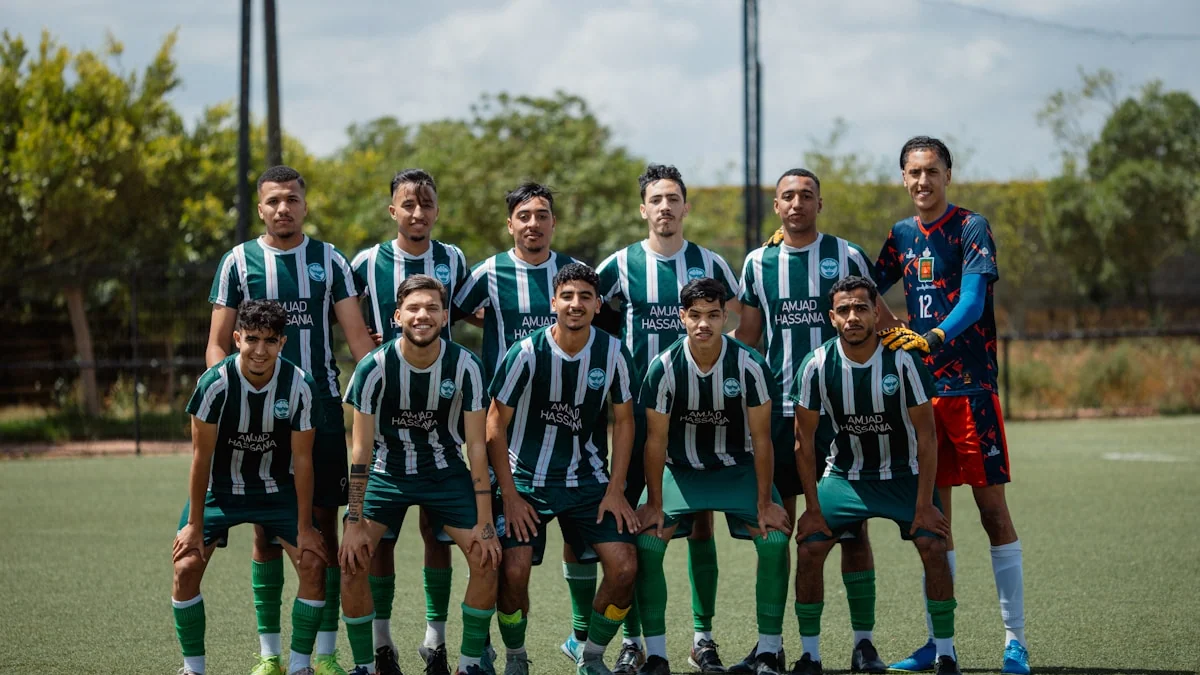
The 2022 World Cup semi-final bracket contained what the football press mostly filed under sentiment: Africa had finally arrived. Morocco's rise in world football, however, was never a sentiment story. What happened in Qatar was not a cultural moment. It was a structural rupture — the moment a footballing borderland announced, in cold competitive arithmetic, that it was no longer one.
Ask the small question first: who is the borderland here, and who is the empire? In global football the answer has been fixed for a century. Europe and South America decide; everyone else participates. Morocco entered the 2026 World Cup ranked sixth in the FIFA world rankings — one place above the Netherlands at seventh — carrying a 34-match unbeaten run across competitive fixtures. These are not marketing figures. They are the ledger lines of a programme that has been building since before Qatar.
The 2022 semi-final appearance, followed by a fourth-place finish after losing the third-place match to Croatia, is the baseline. Not the ceiling. Fourth place at a World Cup is where most of Europe's serious footballing nations have spent their careers dreaming. Morocco got there once and apparently decided to treat it as a floor. That is the structural shift worth watching — not the emotion of the moment, but the arithmetic of repetition.
Whether 2026 confirms the rupture or merely extends the anomaly is precisely what this tournament will settle. The 34 matches are behind them. The evidence accumulates.
Seventy-Two Minutes of Dutch Certainty
Wout Weghorst entered the pitch in the 71st minute. One minute later, Cody Gakpo scored. The substitution had the look of a margin — a Dutch coach making the decisive move, a striker arriving and immediately changing the weight of the match. Ronald Koeman would later say he would do everything the same way. The scoreline suggested he was right.
He was not right for long.
Morocco's response was not panic and not a rush of substitutions. It was possession. In the second half and through extra time, they held the ball at reported stretches of 84%, a figure that belongs to a team managing a lead, not chasing one. The Netherlands had scored and then found themselves watching the ball circulate through Moroccan feet with a patience that the clock was not obviously rewarding. This is the structural detail worth pausing on: Morocco did not equalise by luck of constant pressure.
They equalised by one delivery. Chemsdine Talbi crossed in the 90th minute plus one. Issa Diop headed it home. A single set-piece delivery, the right man arriving at the right angle, and seventy-two minutes of Dutch certainty dissolved into a shared scoreline.
The 1-1 at the final whistle is the load-bearing fact of this match. Morocco did not win the ninety minutes. They survived them, which is a different thing and, against the seventh-ranked side in world football, not a lesser one. Somewhere in Amsterdam a post-match analysis was quietly reframing "nearly won" as "again lost to penalties."
The Lottery That Is Not Entirely a Lottery
Penalty shootouts are called lotteries by those who lost them. The record resists this framing. The Netherlands converted two of five kicks; Morocco converted three. That is not variance — that is a pattern laid on top of another pattern.
This was the Netherlands' third consecutive World Cup elimination by penalties: in 2014 against Argentina, in 2022 against Argentina again, and now in 2026 against Morocco. At some point the word "lottery" becomes a form of self-protection.
The shootout contained its own internal logic. Bart Verbruggen had made a genuine save against Soufiane Rahimi in extra time, which was composure functioning correctly on the Dutch side. Then Achraf Hakimi, Morocco's captain and the player you would least want to miss, hit the post. A team can absorb a captain's miss only if the architecture below him holds. It held.
Ismael Saibari stepped up last and scored the decisive penalty — the same player who had scored in all three of Morocco's group-stage matches. He did not look like a man discovering pressure for the first time. Composure in a shootout is not distributed randomly across squads. It tends to cluster in teams that have been in these moments before and have built a culture around finishing what they started.
The practical point is structural, not romantic. Morocco have now built that culture across competitive football, not one lucky night. The Dutch have now demonstrated, across three consecutive tournaments, that they have not. Watch the conversion rate in Morocco's next shootout, if there is one — if the number holds around three of five or better, this is a squad attribute, not fortune.
Houston: The Match That Was Supposed to Be a Rest
Four days after the Netherlands, Morocco walked into NRG Stadium in Houston to face Canada. The round of 16, July 4. The scoreline that came back was 3-0, which is not a scoreline that admits interpretation. You can parse a 1-0. A 3-0 is a document.
Ismael Saibari had scored in each of Morocco's three group-stage matches — the tournament's most consistent performer, building toward something rather than simply accumulating. He arrived in Houston already carrying that weight, and Houston confirmed it. His group-stage record was not a streak. It was a pattern.
Jesse Marsch, Canada's coach, told the press afterward that Canada had outplayed Morocco. This is what losing coaches say. The scoreboard said 3-0, and the scoreboard is the only document in football that cannot be revised by a press conference. Marsch is not wrong that coaches must believe in their own systems to function — but belief is not evidence, and three goals are three goals.
The significance of Houston is precisely that it was not dramatic. The Netherlands match was a test; Canada was confirmation. A team that wins ugly, then wins clearly, is not getting lucky. It is a team that has found different ways to win, which is what tournament football requires. Watch the sequence: group stage, round of 32, round of 16. The line runs only one direction.
African football has moved, and Morocco is the structural proof, not the exception.
The Regragui Model: What the 34-Match Run Is Actually Built On
Walid Regragui was appointed Morocco head coach in August 2022, six weeks before the Qatar tournament opened. The timing looked reckless. It produced the finest African World Cup campaign in history. That appointment is the load-bearing wall. Everything that followed, including the current 34-match unbeaten run, is built on the decision, not on the players' individual talent, though the talent is genuine.
The formula is not a mystery. Defensive organisation comes first, positional discipline second, and individual expression only within that frame. Compare this to how most African national programmes have historically been assembled: around a constellation of European-league stars expected to improvise cohesion in a few training days. Regragui inverted the logic. The stars exist, but they serve the shape.
The squad's European geography is something the continent's federations would rather not discuss at length. Nearly every first-choice player is developed in a French, Spanish, Dutch or Belgian club system. Morocco is, in practice, harvesting the European football infrastructure and redirecting its output southward across the Mediterranean. That pipeline does not diminish the achievement; it explains why the Moroccan football ascent is reproducible.
Then there is the soft question. A single source reports that Morocco were awarded the 2023 Africa Cup of Nations title administratively, after a cabinet decision reversed the on-pitch result against Senegal. CAF's formal position on that claim is not established in the available record, and a contested administrative title tells us nothing reliable about continental standing. The 34-match run does. Watch that number, not the trophy.
The Load-Bearing Wall: What the Quarter-Final Will Actually Tell Us
Two top-ten European sides exited the 2026 tournament early. That is not noise. The Netherlands entered ranked seventh in the world; they converted two of five penalties and went home. Something structural is shifting in the map of world football, and Morocco — ranked sixth, highest of any non-European, non-South American side in the field — are the clearest evidence of it.
The honest distinction is this: a 34-match unbeaten run across competitive fixtures is not variance. Penalty shootouts contain variance. A defensive shape that holds 84% possession in stretches of extra time against a side of the Netherlands' quality does not. That is the load-bearing wall. Tournament luck is the moulding. Pull the moulding and nothing falls; remove the tactical discipline Regragui has built since August 2022 and there is no run to explain.
The 2022 semi-final could be read as an anomaly. Back-to-back knockout runs against European top-ten opposition, with a 3-0 demolition of Canada between them, cannot. African football has moved, and Morocco is the structural proof, not the exception.
Ask the small question first: who is the borderland here, and who is the empire? Watch one marker in the quarter-final. Not the scoreline, but whether Morocco's defensive block holds its shape against a side that presses high. If it does, the evidence forces a conclusion the wire has not yet caught up to: Morocco's rise in world football is a watershed, not a footnote.