
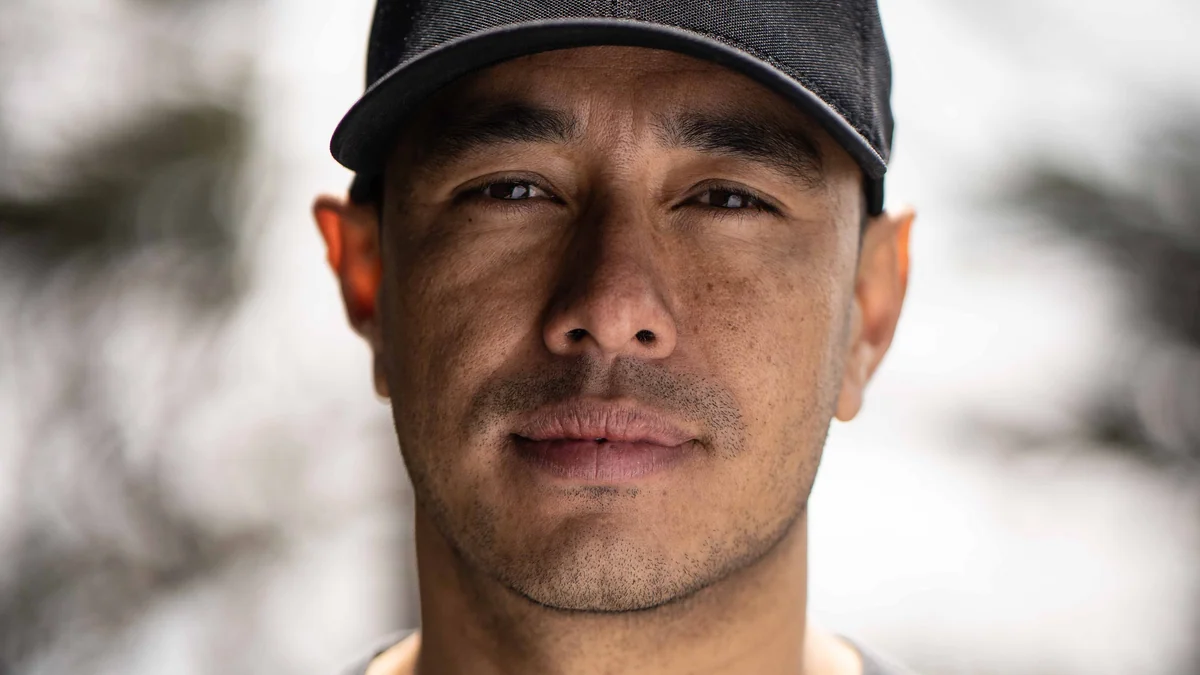
Nirmal Purja, the record-breaking Nepali mountaineer, died on July 30, 2026, following a massive avalanche on Broad Peak’s west ridge. The 43-year-old founder of Elite Exped was attempting his third "14 Peaks" rotation when GPS telemetry confirmed a fatal loss of altitude at 6,579 metres.
The Nirmal Purja death report confirms that the Elite Exped team was caught in high-altitude snow displacement between camps two and three, resulting in no survivors. This narrow corridor is the gateway to the upper reaches of the world's 12th-highest mountain. Broad Peak stands at 8,051 metres, a jagged sentinel that does not acknowledge the requirements of a commercial schedule.
The Telemetry of a Descent
In January 1991, I watched the Soviet television signal flicker and die in Vilnius as the tanks moved on the press centre. It was a binary collapse. Telemetry is the only honest witness when an order breaks.
At approximately noon local time on Thursday, July 30, 2026, the GPS trackers for the Elite Exped team on Broad Peak provided a similar verdict. The screens displayed a rapid, vertical loss of altitude. No human descent is that fast; it was the digital footprint of a massive avalanche.
Nirmal Purja was 43. He was a man who transitioned from the British Army’s Brigade of Gurkhas to a global entrepreneur. He treated the eight-thousanders as a problem of military logistics and sheer willpower.
This was the core of his operation. When that conviction met the reality of the ridge, the result was a matter of physics rather than ambition. Somewhere a spreadsheet was quietly updated as the pings stopped.
Other expeditions had already abandoned the mountain. They cited heavy snowfall and high avalanche danger as non-negotiable markers. They saw the warning signs as a hard stop.
Purja’s model relied on a different calculation. The assumption that a logistics-heavy surge can bypass the geography of the high Karakoram proved fatal. I have heard this promise before, and it failed for the same reasons.
Analyzing the Nirmal Purja Death Report and the Soldier's Ledger
Before he was a global brand, Nirmal Purja was a function of the British state. He spent sixteen years in the service of the Crown, first in the Brigade of Gurkhas and then the Special Boat Service (SBS). The Gurkhas are a classic study in the small-nation floor.
Since the 19th century, the British Empire has imported the labor of mountain peoples to secure its borders. Purja followed this well-worn track from the hills of Nepal to the elite units of the Royal Navy. It is a path for those whose sovereignty is often traded for a pension and a passport.
In 2018, Queen Elizabeth II awarded him an MBE. It is the decorative moulding of the British honours system, a formal nod to a man whose utility had been proven in the shadows. At forty-three, Purja was no longer a soldier but an entrepreneur of risk.
The wire says he was a record-breaker, but the reality is something colder. He was a disruptor of a colonial-era sport. Purja replaced the slow, romanticized slog of the European explorer with military logistics and raw speed.
His 2019 "Project Possible" campaign climbed all fourteen eight-thousanders in six months and six days. The previous record was seven years.
He did not wait for the mountain to grant permission, but simply overwhelmed it.
For decades, the Western climber was the protagonist, and the Sherpa was the background furniture. Purja inverted the structure. He took the high-speed tactics of a special forces raid and turned the Karakoram into a theatre of efficiency.
This was the load-bearing wall. He proved that with enough logistics, the mountain could be treated like a target package. The old guard of the Alps never quite forgave the efficiency of the man from the small nation.
Elite Exped and the Sovereign Climber
Purja did not just climb mountains; he reorganized the economy of the Himalayas. For a century, the Sherpa was a footnote in a Westerner's memoir, a silent porter in a colonial hierarchy.
Through Elite Exped, Purja and his partners reclaimed the brand by turning support staff into owners. High-altitude mountaineering is no longer an imperial playground, but a sovereign industry where the Westerner is merely the client.
The "Hat Trick" campaign was the ultimate expression of this commercial momentum. Purja was attempting to summit all fourteen eight-thousanders for a third time. The demand for a record-breaking narrative eventually outpaced the physical reality of the terrain.
The company confirmed that no members of the expedition survived. Among the dead were professionals like Pur Bahadur Gurung and Nima Sherpa. These men were no longer buried in the small print of a British report but were the owners of the risk.
This loss is the tragic confirmation that the era of Nepali invisibility has ended. Purja proved that a small nation can seize the means of its own myth-making. The mountain took back its silence.
The Cost of the Commercial Push
The snow on Broad Peak does not negotiate. By late July 2026, the Karakoram had issued its warnings through heavy accumulation and shifting slopes. Most expeditions read the ledger of risk and began their descent.
Purja’s team did not turn back because his model relied on momentum. To stop is to let the overhead of a global operation consume the profit. While others packed their tents, the Elite Exped group pushed toward the west ridge.
Among the dead was Nadhira Al Harthy, a pioneer who carried the Omani flag. Beside her was Mallory Geis, a 39-year-old American from San Antonio making her first 8,000-metre attempt. The mountain does not care about the trajectory of a career.
Pur Bahadur Gurung, known as Yukta, and Nima Sherpa were the structural support of the enterprise. In the small-nation floor of the Himalayas, these men are the currency of the climb. They are the labor that makes the record-breaking brand a reality.
The drive that pushed this team into the slide is a mechanical pressure. When the plan demands a result, the physical reality of the ground becomes a secondary concern. The original data says something colder than tragedy: a scheduled risk that reached its expiry date.
The Recovery in Skardu
Today, extraction is a matter of state-backed logistics and telemetry. Tahir Khan, a police official in Gilgit-Baltistan, helped coordinate the mechanics of the aftermath. By August 1, 2026, the victims had been transported to Skardu and Islamabad.
This was a high-definition operation using military helicopters and drones to map the debris. In the 1990s, the death of a climber was a footnote. Now, the Alpine Club of Pakistan acts as the final arbiter of the record.
Purja’s death creates a vacuum in the structure of the Himalayan economy. He spent sixteen years as a soldier for the British crown before building his own firm. He did not ask for Western permission; he sold the West his expertise.
The tragedy on Broad Peak tests the resilience of this Nepali-led model. The mountain remains indifferent to the "Hat Trick" campaign or the honours awarded to Purja. Watch the upcoming August report from the Alpine Club of Pakistan for the final Nirmal Purja death report and the potential mandate for hard turnarounds.