The NASA telescope rescue operation is a $30 million mission designed to save the Swift Observatory from crashing into Earth's atmosphere. By using a robotic craft to boost its orbit, NASA aims to extend the telescope's life by ten years and preserve its critical gamma-ray burst data.
This NASA telescope rescue operation relies on a robotic servicer named Link to catch the 1,600-kilogram telescope and push it back to its original 600-kilometre altitude. Right now, a spacecraft is falling. Not dramatically, but steadily, a few hundred metres of altitude every day, dragged downward by the whisper of atmosphere that clings even at the edge of space.
The telescope doing the falling is still working. Its instruments are sharp, its mirrors intact, and its data is essential for high-energy astrophysics. It is not broken; it is simply running out of sky.
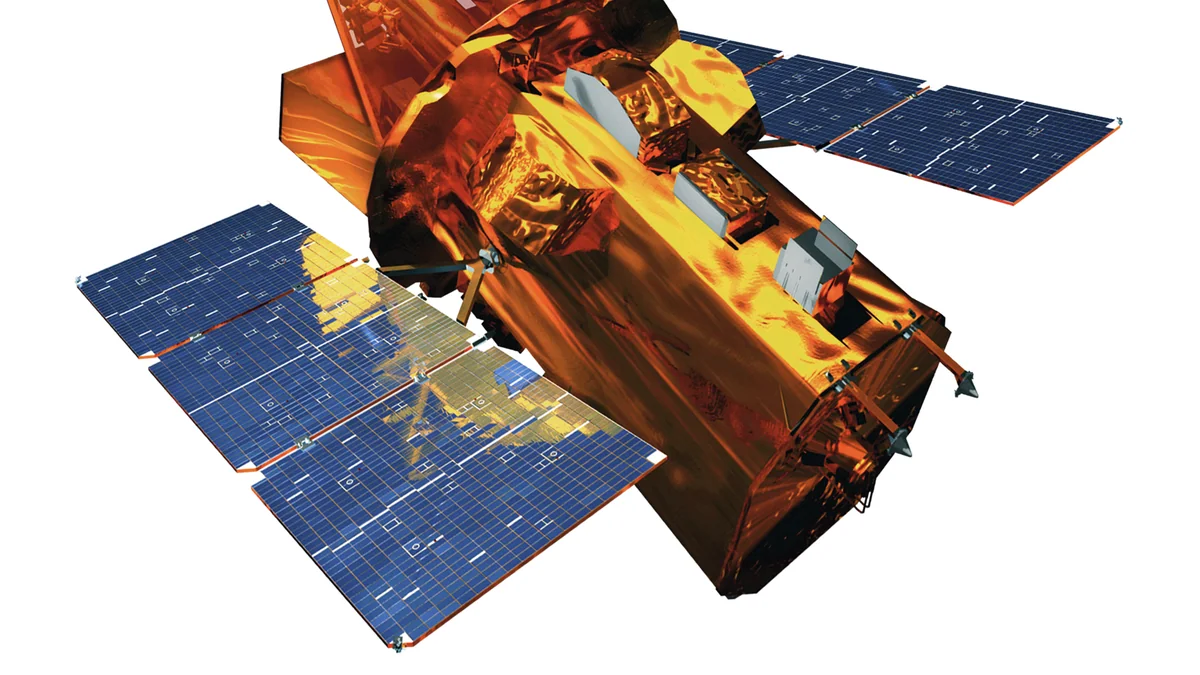
The Neil Gehrels Swift Observatory sits today at roughly 360 kilometres above Earth. For context, the International Space Station orbits at about 420 kilometres. Swift is skimming the ceiling of the residual atmosphere where atmospheric drag has become a critical problem.
Twenty years of cosmic explosions: why Swift is worth saving
Swift launched in November 2004 with a single-minded purpose: catch gamma-ray bursts in the act. These are the most violent explosions in the universe, releasing more energy in seconds than the Sun will emit in ten billion years. Before Swift, astronomers were perpetually too late to see them happen.
Swift changed that by carrying three co-aligned telescopes that could swivel toward a burst within a minute. This automated system has logged more than 1,400 gamma-ray bursts over two decades. It is currently the essential early-warning system for astrophysics worldwide.
Since the recovery mission was confirmed, scientific observations have been suspended to keep the spacecraft oriented for Link's arrival. The plan is to restore full science operations by September 2026. This follows one cautious, necessary pause in a twenty-two-year service record.
The sun did this — and why a NASA telescope rescue operation is now urgent
The sun runs on an 11-year cycle that directly affects satellite orbits. During solar maximum, the sun throws out radiation that heats Earth's upper atmosphere, causing it to expand. Satellites in low orbit suddenly find themselves wading through thicker air.
Swift was never built to be grabbed.
This resistance is cumulative, stealing a little momentum with every single orbit. Solar activity in 2024 and 2025 ran much hotter than expected, accelerating Swift's orbital decay beyond initial models. Without intervention, the trajectory points to an uncontrolled re-entry in October 2026.
This crisis was not caused by a design flaw or aging hardware. It was caused by the star at the centre of our solar system having a more energetic year than predicted. The sun didn't care about Swift's mission; it just did what stars do.
Link: a refrigerator with three robot arms
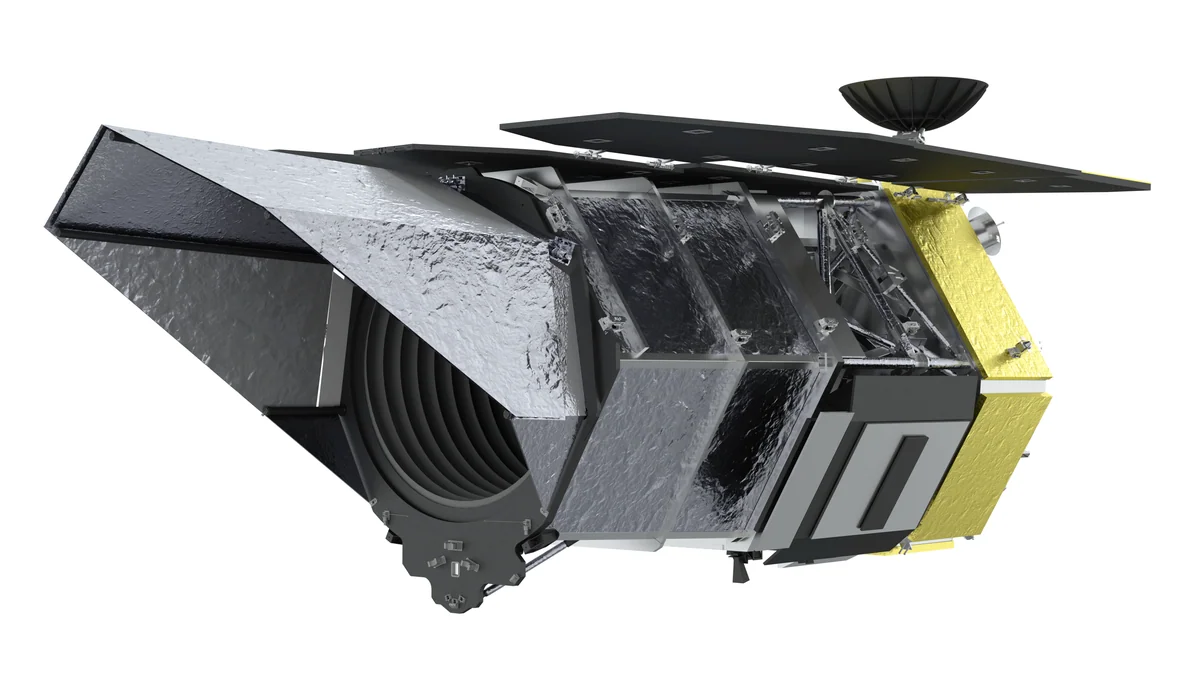
NASA is betting thirty million dollars on a spacecraft roughly the size of a kitchen appliance. In September 2025, the agency awarded Katalyst Space Technologies a contract to build Link, a robotic servicer. Link must find Swift and match its velocity of eight kilometres per second.
Link carries three robotic arms fitted with specialized grippers. These are designed to find purchase on a structure that was never meant for space surgery. The engineering audacity of this mission is a milestone for orbital servicing.
On 3 July 2026, Link left Earth via a Pegasus XL rocket launched from an aircraft over the Pacific. This air-launch method allows the rocket to skip the thickest drag of the lower atmosphere. It is a cost-effective trick for a mission with a fixed budget.
One month to intercept, then a long slow push uphill
Link has approximately one month to close the gap with its target. This orbital rendezvous is a careful ballet of adjusting velocities to match a machine that cannot slow down to help. If the geometry is off by a small margin, the intercept window closes forever.
Link uses ion thrusters, which are highly efficient but incredibly gentle. They work by accelerating individual charged particles to extreme speeds. While a chemical thruster is a sprint, an ion thruster is a year of morning runs.
The orbit-raising process will take several months of patient pushing. Ion propulsion is the only viable option at this scale for such a significant altitude change. If the grippers hold, Swift will get at least ten more years to watch the universe explode.
The first time — and probably not the last
This mission represents the first time a commercial spacecraft has attempted to move a US government satellite not designed for servicing. There is no docking port and no instruction manual for this encounter. The success of this intercept could rewrite the economics of space hardware.
NASA is already considering a similar rescue for the Hubble Space Telescope. Hubble faces its own orbital decay timeline in the early 2030s. Swift, then, is the crucial dress rehearsal for future missions.
The NASA telescope rescue operation demonstrates that we are finally learning to take care of the machines we have. If Link succeeds, it proves that spacecraft do not have to be disposable. We are moving from a "launch and leave" era to one of active stewardship in orbit.