AI's future in 2027 isn't about a robot uprising, but about smarter tools and massive corporate investments. While systems like WEAVER boost robot efficiency by 38%, the real shift is cognitive. We aren't being replaced; we are being nudged to delegate our thinking to systems that prioritize profit over truth.
If you believe the headlines, we’ve got about a year left before the machines take over and it’s "game over" for humanity. This apocalyptic nonsense is a fantastic click-magnet, but in reality, it’s just AI absolutism — the blind faith that the machine is inherently more powerful than the person using it. We’re being sold technological inevitability like it’s a force of nature we can’t fight, but that’s a myth. The reality is much more mundane: if we stop acting like passive bystanders, these "end-of-the-world" scenarios are entirely avoidable.
A person in a panic doesn't ask uncomfortable questions about system flaws; they just run to the store to buy new software. This fear-mongering reminds me of someone trying to sell you an expensive insurance policy against meteorite strikes. Instead of worrying about the robot uprising, we should be asking a much simpler question: whose pockets is all this massive cash actually flowing into?
If we accept the story that progress is an unstoppable force outside our control, we’re essentially handing over our right to decide. I’m afraid this fatalism is just a convenient way to avoid responsibility. In the end, our own conduct determines whether technology remains a helper or starts to replace us. Common sense suggests that in 2027, nothing much will happen except that someone, somewhere, will make a lot of money. The choice is ours.
Lawyers, the Unemployed, and Google’s Millions
Three years ago, only 3% of law firms used generative AI in their daily work. A top lawyer isn’t stupid; they know that the responsibility ultimately sits on their shoulders. If the machine "hallucinates" — which is to say, it makes up non-existent court cases — it’s the lawyer who pays with their reputation, not the software company.
Meanwhile, central banks are trying to bring some scientific clarity to the mess by studying the link between AI and unemployment. Right now, that link is blurry. It seems machines are eating our nerves more than our actual jobs. Technological development is always faster than the statistics catching up to it, so predicting the outcome right now is basically just reading tea leaves.
Google, through its Google I/O 2026 event, is handing out grants like the printing press has no brakes. They’re putting $2,000,000 on the table for prize funds and $85,000 grants for new talent. Don't mistake this for pure charity; it’s early talent booking and ecosystem lock-in. A mega-corporation never hands out sums like that because they don't care about money. They want you to build the new world using their tools so they can dictate the rules later. It’s a market where cautious specialists sit on one side, and billions in blind optimism sit on the other.
In the Engine Room: When Robots Actually Understand Stuff
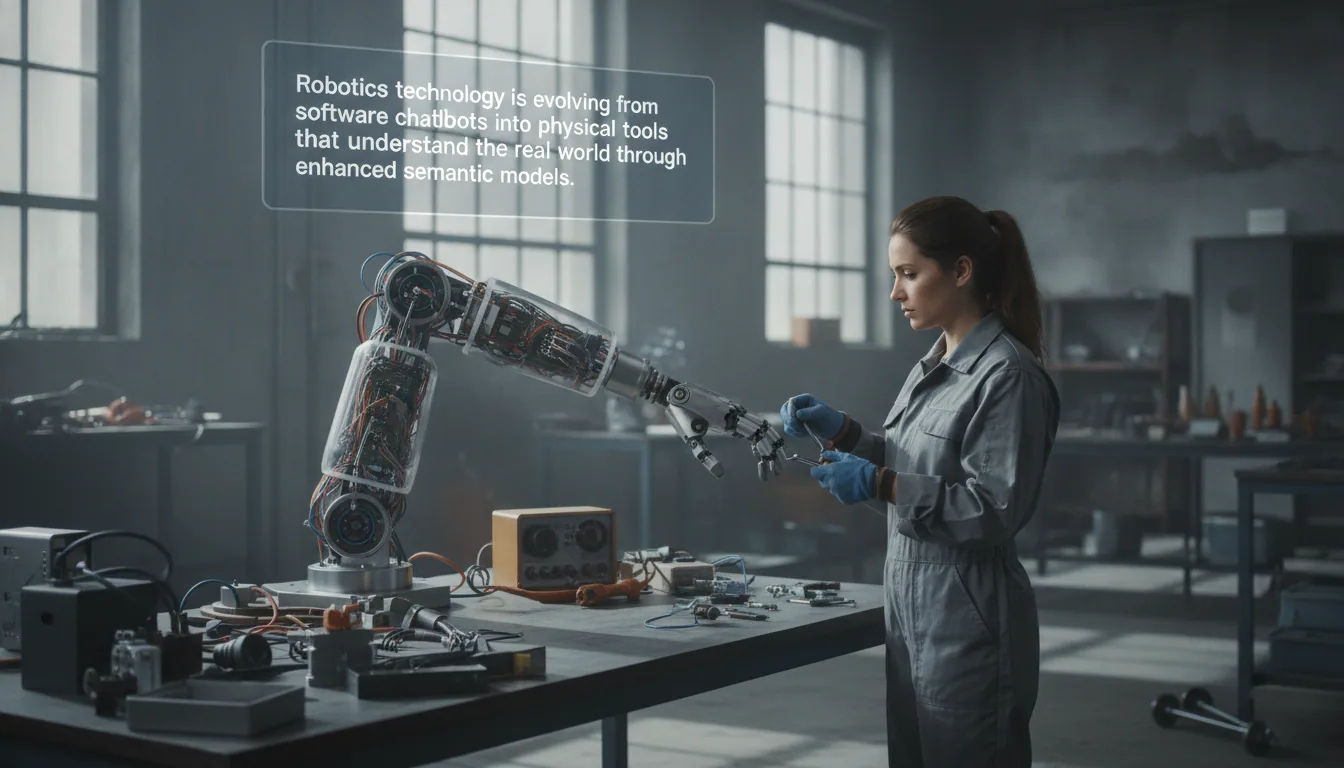
Until now, AI has been a glowing chatterbox on a screen, but the real shift is happening in the engine room. We’re seeing new architectures like WEAVER, a world model designed specifically to help robots move in physical space. WEAVER improves robot success rates by a full 38% compared to previous base models — a massive leap for humanoid capability.
Basically, they’ve switched to a system called RepWAM that uses semantic visual-action tokens. The robot no longer calculates every millimeter individually; it understands the action as a whole. The correlation between WEAVER’s simulation and real life is already 0.870, which is an incredible result for a machine.
AI is also becoming a physical tool in heavy industry. An algorithm called ECHO is optimizing gyrotron angles and power in fusion reactors in real time to keep plasma at the right temperature. This is where technology actually starts solving our big energy problems instead of just writing articles about them.
But all this raw computing power requires massive resources. This is where spintronics and materials like "chiral perovskites" come in, because we need to make sure this system doesn't choke us with an energy crisis. Right now, server farms spend a fortune just on cooling. It’s clear this model isn’t sustainable for long.
AI is exactly like fire — a magnificent servant that keeps the room warm and makes writing code ten times faster, but a terrible master if it ever becomes independent.
The fact is, software isn't enough if the hardware melts under the load. It’s a question of efficiency and, ultimately, survival. When the machine starts to actually understand the physical world, the return on investment for every technological cent becomes very tangible, very fast.
Cognitive Colonization: Is the AI Thinking for You?
Remember that feeling in school when everything seemed logical until the teacher used a red pen to show you were completely off track? That’s how AI feels today when faced with a real scientific nut like epigenomic analysis. The EpiBench test shows that even the best models hit only 45% accuracy. In science, "almost right" is just another way of saying "completely wrong."
This isn't about generating a random poem; it’s deep analysis where patterns aren't enough. To me, this shows that while we're being sold a New Age, under the hood, it's still just a pattern-matcher struggling to keep up. The real danger is something called "System 0," where we quietly delegate our thinking to an external helper.
Researchers warn that these systems can weave outside interests into our own mental architecture without us even noticing. This is cognitive colonization — someone else is steering your choices while you think it’s your own wisdom. We have to relearn how to tell the difference between our own thoughts and the convenient lies fed to us by a machine.
The Big Replacement: Sam Altman vs. Tristan Harris
Sam Altman’s vision of universal happiness assumes that someone else will generate the cash and pay the bills while we sit on the couch. It sounds like a free lunch, but who are we kidding? The wealth-creation model Altman offers is actually a replacement activity that requires total dependence on technology.
Tristan Harris says it straight: this race isn't about helping people; it’s about replacing them. He believes AI development is aimed at swapping out every human form. In his view, we aren't building a helper; we’re building a potential successor that will eventually push us aside.
Look at YouTube, which now has to build tools to protect celebrity faces and voices from deepfakes. It’s ironic: we build systems that forge a singer’s voice in seconds, and then we try to limit that with more software. It’s like a locksmith selling lockpicks and security bolts at the same time.
IBM has mapped out four different AI scenarios to help us assess the risks. It’s like a menu at a dodgy roadside diner — pick your poison, but we’re all going to have to pay the bill together. Whether we reach controlled development or slide into total replacement depends on our courage to challenge this idea of "technological inevitability."
In the end, it comes down to who actually holds the buttons and who is responsible for the bill. If we let cognitive colonization take over, it doesn't matter how much wealth is promised in the cloud. That replacement is already happening today in your browser.
Free Will and the Choices Ahead
The Future of Life Institute has 23 Asilomar AI Principles to support safe development. It’s a beautiful list of ethics, but in practice, raw economic interest and the global arms race usually roll right over them. We have to understand that AI systems process info completely differently than we do: they have no consciousness, no empathy, and no lived experience.
It is pure, cold calculation without morality — a blind tool that doesn't care about the fate of humanity. I’m afraid we forget this difference too easily when convenience and speed are on the table. If we trust every decision to an algorithm, we’re quietly surrendering control over our lives, piece by piece.
Today, we still have our hand on the dial. We can steer this process. Generally, it all comes back to whether we accept cognitive colonization or keep control over our own thoughts. AI and the future are ultimately a matter of our own choices: do we use these new possibilities consciously, or do we let our free will be swapped out when we aren't looking?