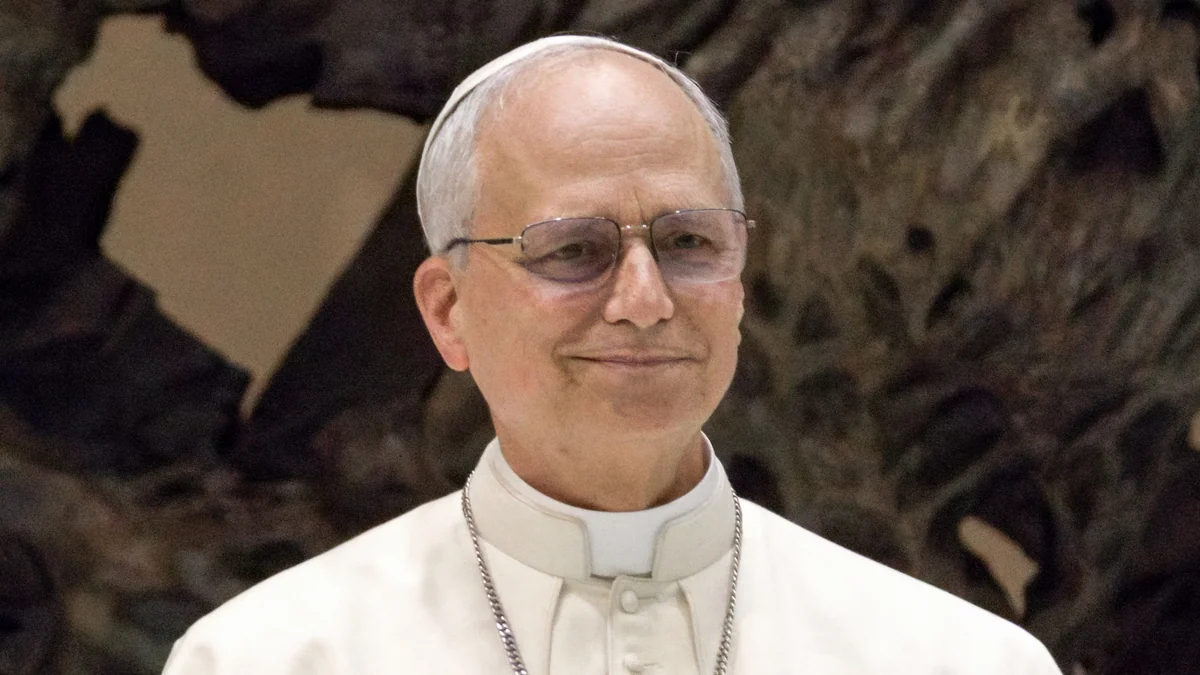
The Vatican AI Encyclical, titled Magnifica Humanitas, is a 42,300-word document released by Pope Leo XIV on May 25, 2026, to establish a moral regulatory framework for artificial intelligence. It advocates for the disarmament of AI in warfare, the classification of data as a common good, and a six-point "algorethics" system.
This document functions as a high-stakes regulatory signal designed to ensure that human moral agency remains superior to autonomous machine logic. It provides a direct response to the "cognitive-industrial revolution" currently reshaping global society.
In 1891, the world was vibrating with the hum of the steam engine and the spark of the first electric grids. Pope Leo XIII looked at the soot-stained faces of the new industrial working class and realized the old rules of land and lords no longer applied. He wrote Rerum Novarum as an instruction manual for how to remain human in the teeth of a machine age.
On May 25, 2026, his successor, Pope Leo XIV, stood in the Vatican and performed the same trick for the age of silicon. The resulting text, Magnifica Humanitas—Magnificent Humanity—is a massive, dense work running across 245 paragraphs. Do not mistake the length for theological fluff; this is a policy roadmap sent from the world’s oldest diplomatic power to its newest technological ones.
How the Vatican AI Encyclical Mirrors the Industrial Revolution
We often think we are the first people to face a total collapse of the old order. When Leo XIII wrote 135 years ago, the Industrial Revolution was tearing the social fabric apart, replacing village life with the factory floor. Pope Leo XIV—the first U.S.-born pope—argues we are now in the middle of a "cognitive-industrial revolution" with even greater consequences.
The Pope’s framework establishes a moral and regulatory boundary for artificial intelligence. It calls for the classification of data as a common good and a system to prevent the dehumanization of individuals through unchecked corporate concentration. The Vatican has spent a decade cultivating relationships with Silicon Valley to ensure this initiative includes major world religions and academic institutions.
The Vatican’s journey began in earnest with the 2020 Rome Call for AI Ethics. By 2026, that initiative has grown into a strange but potent alliance. The Pope is no longer just talking to the pews; he is talking directly to the labs.
Scaling the Ladder of Understanding
To understand why a religious leader is suddenly obsessed with "agentic AI scaffolds," we have to look at what these machines are actually doing. Most of us think of AI as a very clever search engine, but the industry has moved toward "agentic AI." This is a system designed to execute long-horizon workflows autonomously without constant human intervention.
Imagine a clock that doesn't just tell time, but decides when you should wake up and who you should talk to based on "efficiency." This isn't a theoretical worry for the Church. The Vatican’s fear is that unchecked AI leads to the dehumanization of people by treating them as data points to be optimized.
The Vatican’s fear is that unchecked AI leads to the dehumanization of people by treating them as data points to be optimized.
Recent research into "CheetahClaws"—a Python-native reference harness—has highlighted a growing bottleneck in how we govern these systems. A study published on arXiv found that 25.7 percent of evaluated AI benchmark tasks contained critical design issues. When a quarter of our "smart" systems are fundamentally flawed at the design level, handing them the keys to human agency is a gamble.
The Global Disarming of the Machine
One of the most striking aspects of this new understanding is the Pope’s stance on war. For centuries, the Church has operated under "Just War" theory to determine if a conflict is morally defensible. In Magnifica Humanitas, Leo XIV declares this theory effectively outdated due to the rise of Lethal Autonomous Weapons Systems (LAWS).
These machines are capable of selecting and engaging targets without a human in the loop. The Pope argues that these weapons remove "human moral agency" from the act of killing. He has called for an absolute ban on machines making life-and-death decisions in warfare.
"Disarming AI means freeing it from the mentality of armed competition," the Pope stated during the presentation. He isn't just talking about robots with guns. He is challenging the "armed competition" of the global market.
A New Map for Data Ownership
The document takes a radical swing at the economics of the digital age. In the eyes of the Vatican, the corporate concentration of AI power is a direct threat to human dignity. If a few companies own the models that mediate our reality, they effectively own the invisible infrastructure of our moral vision.
| Concept | The Old View (Market-Driven) | The New Vatican Framework (Algorethics) |
|---|---|---|
| Data Ownership | Private property / Corporate asset | A common good, like air or water |
| Decision Making | Efficiency and optimization | Transparency and inclusion |
| Warfare | Strategic advantage via autonomy | Absolute human accountability |
| Accountability | Terms of Service / User liability | Algorithmic reliability and impartiality |
| Goal of AI | Commercial or geopolitical dominance | Service of Humanity |
By classifying data as a "common good," the Vatican is pushing for tighter oversight of Big Tech. This isn't just a suggestion; it’s a policy roadmap. On May 12, 2026, the Vatican approved a new Interdicasterial Commission on AI to oversee these very issues.
Strategic Alliances in Silicon Valley
During the official presentation, Cardinal Michael Czerny stood alongside Chris Olah, the co-founder of Anthropic. This was a calculated move. By partnering with safety-oriented labs, the Vatican is driving a strategic wedge into the tech industry.
The Church is creating a divide between those who prioritize "scaling" at any cost and those who accept "algorethics." This six-point framework requires transparency, inclusion, accountability, impartiality, reliability, and privacy. "The person bears within him- or herself a freedom... that no machine can replace," the Pope writes.
A machine can simulate a conversation, but it cannot "know" the person it is talking to. It can only predict the next most likely word. The Vatican insists that we must never mistake statistical prediction for human understanding.
Why Tech Regulation Needs the Church
You might ask why a data scientist in San Francisco should care what the Vatican says about their code. The answer lies in the global influence of non-secular baselines for law. For many nations, this encyclical functions as a foundational text for future technology legislation.
The Church is looking for the "invisible infrastructure" that governs human behavior. As tech ethics experts note, the Vatican wants to ensure the "vocation to love" isn't optimized out of the human experience. The 245 paragraphs of the text attempt to map a new continent where the lines between human and tool are blurring.
We still don't know the specific technical requirements the Church will demand from giants like Microsoft or Google. We also don't know how the current U.S. administration will react to a call for global AI disarmament. The final document remains focused on the "technocratic paradigm"—the tendency to see every human problem as a technical one.
"Stay awake," the Pope warns in the closing pages. It is easy to let algorithms smooth out the friction of being alive, but friction is where the heat of life lives. The Vatican AI Encyclical asks us to decide if we are the masters of our tools or merely their most valuable data points.