
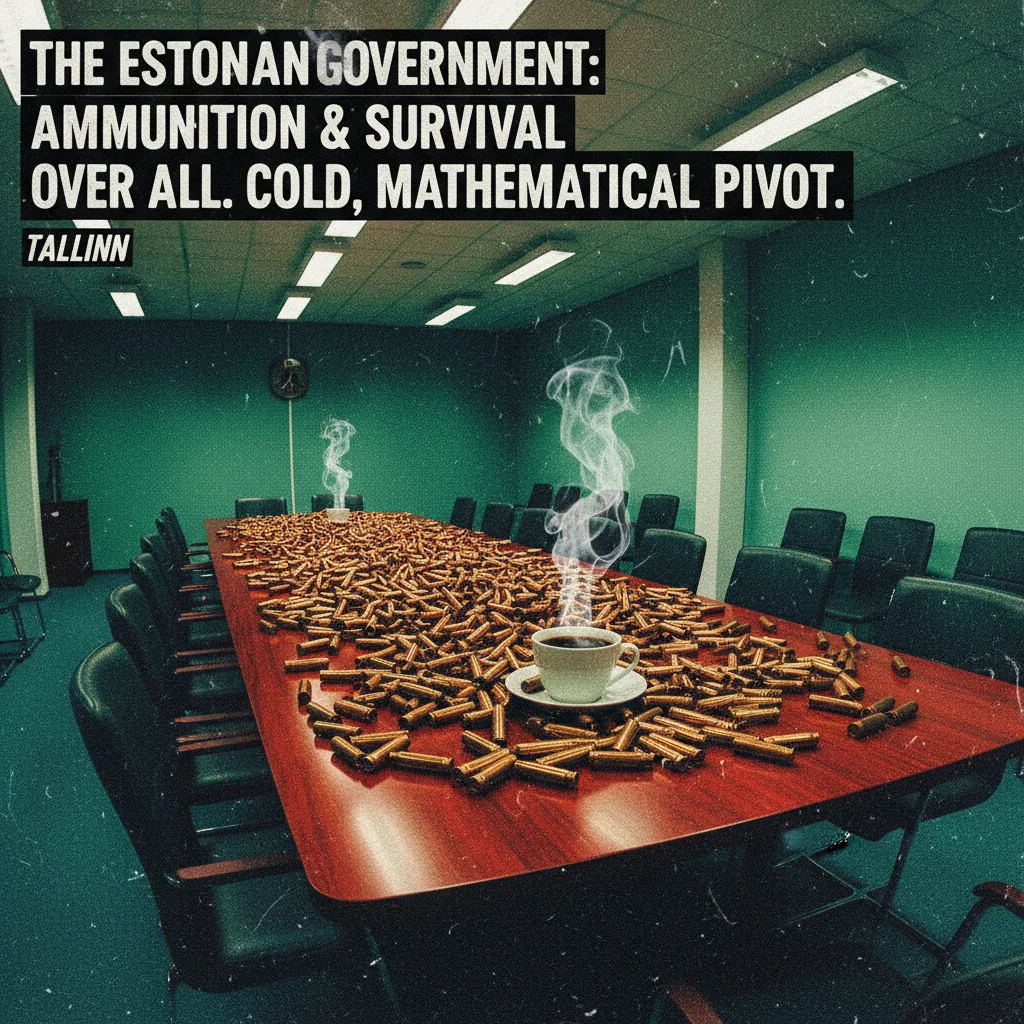
On May 7, 2026, the Estonian government ratified the new National Security Concept, setting a bold defense spending target of 5% of GDP. This decision by the Reform Party and Eesti 200 coalition includes €110.7 million in aid for Ukraine and additional funding for the eastern border, replacing previous agreements with a more pragmatic national defense strategy focused on long-term resilience and military innovation.
Estonia’s 2026 security policy is a response to an existential threat, elevating defense funding to a level intended to secure Estonia’s independence in a rapidly changing world. It is a moment where geopolitical anxiety and the national budget collide in the dim corridors of Tallinn—places where the coffee is strong and humor has been replaced by cold mathematics. This is no longer merely policy; it is a survival instinct, packaged in official press releases and presented to the public as a necessary, if somewhat bitter, pill to swallow.
This is an unprecedented step that reshapes the Estonian defense funding model in ways we have never experienced before. The world around us seems caught in a strange fever dream—one where GameStop makes multi-billion dollar bids for eBay and hantaviruses spread on cruise ships. In this context, Estonia’s decision to funnel every twentieth euro earned into national defense feels almost like an existential declaration.
Estonia’s 2026 Security Policy: Five Percent as the New Reality
Five percent of the Gross Domestic Product is a figure that demands a total reshuffling of national priorities. It is akin to deciding that your apartment's security system now costs more than your rent, food, and utilities combined because you’ve noticed the neighbor’s house has been on fire for some time. Estonia has taken a path where defense spending is no longer just about meeting NATO standards, but a conscious and massive investment in the nation’s survival.
This 5% threshold is a significant leap, placing us within a very narrow and specific circle on the global stage. It is a political decision requiring the kind of discipline usually reserved for elite athletes. It means that every state investment—every new road or schoolhouse—must now compete with ammunition and radar systems.
"We are no longer just buying weapons; we are buying time, a sense of security, and a seat at the table where the world’s fate is decided."
Allocation and Focus of Defense Spending
This isn’t just about purchasing tanks and aircraft; it’s about building an entire ecosystem capable of withstanding the darkest scenarios. The government’s plan dictates that a large portion of these funds be directed toward long-term capabilities intended to make the Estonian defensive wall impenetrable.
Here is a brief overview of the priorities:
- Stockpiling Ammunition and Equipment: A significant portion of the new budget goes directly into warehouses, ensuring we don’t have to rely solely on supply chains in a moment of crisis.
- Technological Innovation: Investments in anti-drone technology and cyber defense, which are critical in modern warfare.
- Human Capital: Improving the training of the Defense Forces and the Defense League, as even the best technology is useless without motivated people.
Governing Without the Social Democrats
May 7, 2026, will also go down in history as the day the governing coalition became more compact. The removal of the Social Democratic Party means that decisions are now made by the Reform Party and Eesti 200. This new dynamic has allowed the government to move faster and more decisively, without having to constantly seek compromises on social issues.
The political landscape is now clearer, but also more tense, as criticism from the opposition has sharpened. Kristen Michal must now steer the country in a situation where every decision is under a magnifying glass. It’s like trying to ride a bicycle with one wheel removed—it’s possible, but it requires remarkable balancing skills.
The Reform Party and Eesti 200 have found common ground specifically on security issues, where pragmatism has become the key watchword. This is a coalition that believes there is currently no luxury to argue over trifles. The cooperation between these two parties is aimed at solutions that ensure a rapid increase in Estonia’s defense capabilities in the coming years.
Supporting Ukraine as a Component of Our Own Defense
In 2026, Estonia will allocate military aid to Ukraine worth €110.7 million, continuing a long-term strategy. This is not charity; it is a pragmatic contribution to our own security. Every euro that goes toward supporting Ukraine is an investment in ensuring we never have to fight those same battles in our own backyard.
| Sector | Amount (millions of €) | Objective |
|---|---|---|
| Military aid to Ukraine | 110.7 | Direct support in weaponry and equipment |
| Eastern border additional funding | May 11 decision | Construction of physical infrastructure and surveillance systems |
| Total defense spending | 5% of GDP | Raising the overall defensive capability of the state |
The Eastern Border: A Physical Fortress in a Digital Age
On May 11, 2026, additional funds were redirected through budget restructuring to complete the eastern border. This project has gained new momentum to prevent any surprises on our frontier. Building the eastern border means creating a high-tech surveillance system that provides us with early warning and peace of mind.
Finding the money for the eastern border was not easy; it required difficult choices at the expense of other sectors. The government’s decision to prioritize border security over other expenditures clearly reflects the strategic view of the current coalition. This additional funding allows for accelerated construction and the implementation of modern solutions that were not originally in the plans.
Lennart Meri Conference: "Fortune Favours the Brave"
While decisions involving millions were being made in Tallinn, some of the world's most influential politicians gathered for the Lennart Meri Conference. Prime Minister Kristen Michal emphasized the new reality of security and the need for decisiveness. The conference title, "Fortune Favours the Brave," is a direct call to action at a time when uncertainty has become the new normal.
Transatlantic relations have always been the backbone of our security, but now more is needed than just diplomatic smiles. Concrete actions and investments are required, which Estonia has already demonstrated with its 5% GDP target. This is a signal to our allies that we take our obligations seriously and expect the same from others.
Global Chaos and Domestic Concerns
While we deal with our border and defense budget, the rest of the world is not resting. GameStop has made a $55 billion bid to buy eBay, financing it with massive debt. It’s like watching your local video game store try to buy the entire city mall, while everyone pretends this is normal.
All this global turmoil confirms only one thing: the systems we have grown accustomed to relying on are often more fragile than we care to admit. Estonia’s decision to focus on tangible defensive capabilities and a physical border seems almost soothingly conservative in this madness. We cannot control global markets, but we can control how well our own home is protected.
The approval of the new National Security Concept is just the beginning of a long and costly journey. Five percent of GDP is not a one-time expense, but a new standard that will stay with us for years. We are building a border, we are supporting friends, and we are arming ourselves, because the world has shown that this is the only language that is truly understood. Although the plan is expensive, Estonia’s 2026 security policy confirms that we are ready to pay the price for our freedom.