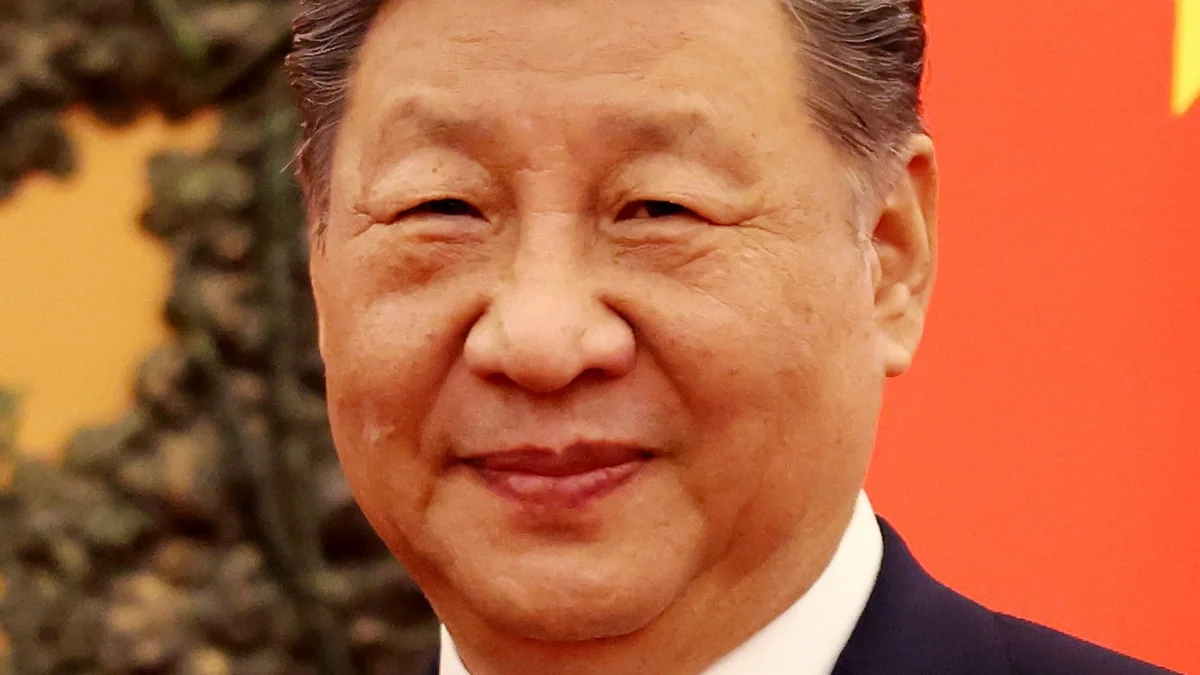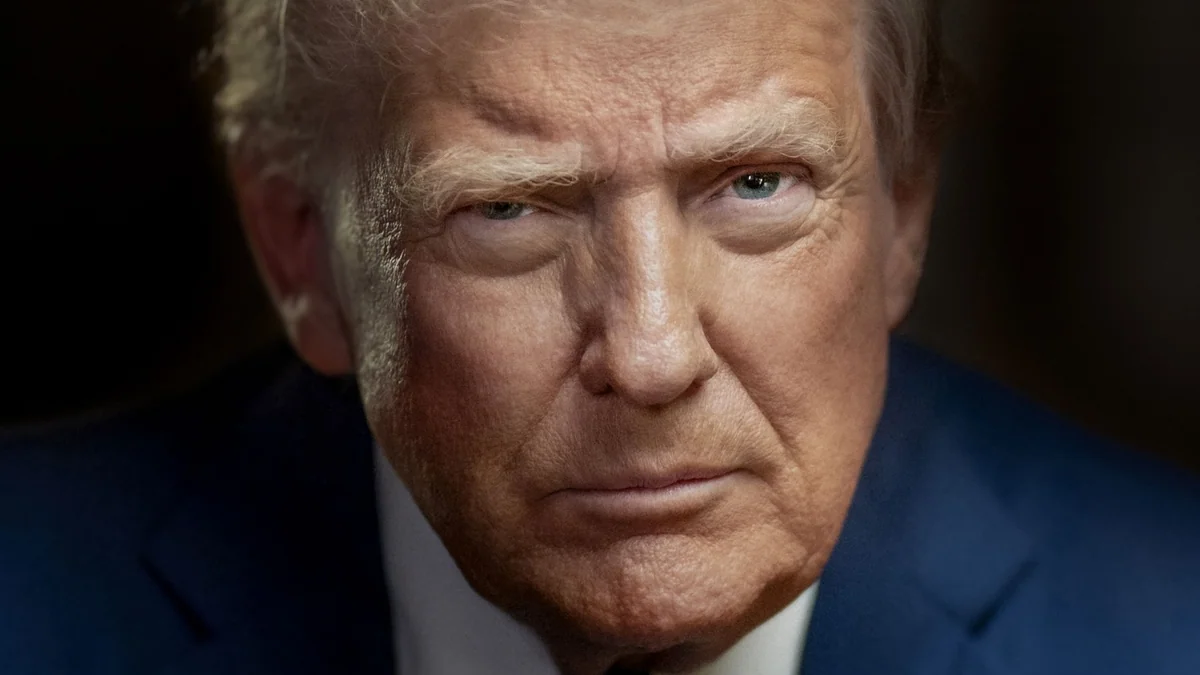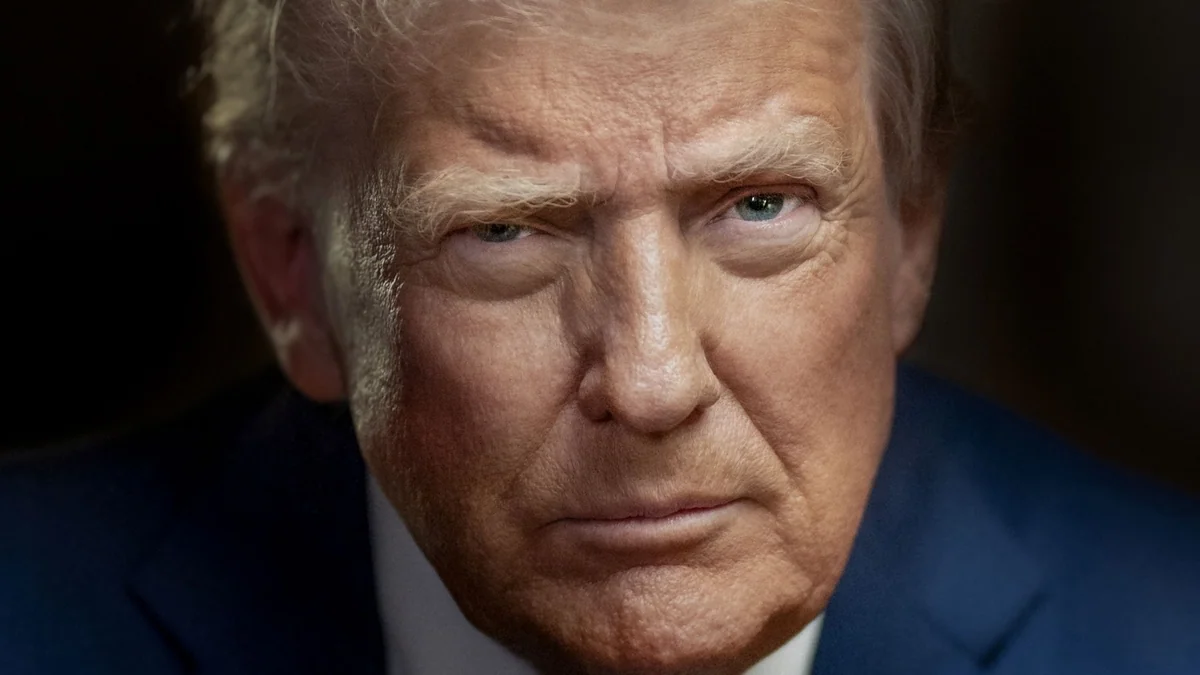
On May 12, 2026, U.S. President Donald Trump departed for a summit in Beijing with Chinese President Xi Jinping to address the escalating U.S. conflict in Iran. While tensions regarding Iranian regional influence and Chinese support for Russia remain high, Trump publicly minimized diplomatic differences with Xi before boarding his flight. The meeting is expected to focus on trade, secondary sanctions, and a potential exit strategy for the ongoing hostilities in the Middle East.
Trump downplays differences with China's Xi over Iran to signal a potential de-escalation of Middle Eastern hostilities as he arrives in Beijing for the May 2026 summit. This rhetorical shift comes as the global economy reels from the friction between Washington and the Tehran-Beijing axis.
Fatemeh Rezai turns the handle of her gas stove three times before the blue flame finally catches. In her small kitchen in north Tehran, the air smells of dried limes and the faint, metallic scent of a city under siege. Fatemeh is 42, a former math teacher who now spends her afternoons refreshing a currency exchange app that tells her, with brutal digital precision, that her savings are worth 15 percent less than they were at breakfast.
She is watching a grainy livestream on her phone of a man stepping onto a helicopter ten thousand kilometers away. Fatemeh does not care about the gold-plated interiors of Air Force One; she cares whether the man inside it will make it possible for her to buy eggs tomorrow. This is what high-stakes diplomacy looks like up close—not a seating chart in Beijing, but a woman in a kitchen counting her remaining rials.
The Walk Across the South Lawn
The grass of the White House South Lawn is a vibrant, aggressive green under the May sun. President Donald Trump walks toward the waiting reporters with the measured gait of a man who knows the world is watching his every flicker of hesitation. He pauses, the roar of Marine One's engines providing a rhythmic backdrop to a performance of calculated optimism.
He speaks of "rapport" and "friendship" with Xi Jinping, his voice carrying over the wind. According to reports from Al Jazeera, the President is signaling a shift toward de-escalation, even as the Persian Gulf remains choked with the grey steel of naval blockades. He describes the upcoming Beijing summit as a meeting of two leaders who can "fix anything," a rhetorical bridge over a chasm of escalating military strikes and broken treaties.
The distance between the President's optimism and the reality of the conflict is more than miles. It is measured in the four million people who have left their homes in the border regions, carrying what they could—often just a bag of clothes and a handful of photos. Nobody counted the number of children who lost their school year to the first wave of strikes; I did, and the number is nearing six hundred thousand.
The Beijing Agenda and the Cost of Silence
In the Chinese capital, the preparations are cold and precise. The Great Hall of the People is being readied for a summit that many international observers categorize as a "crucial" moment for global stability. The agenda is a heavy ledger of grievances: Chinese support for Russia, the flow of Iranian oil, and the secondary sanctions that are currently strangling small-scale electronics manufacturers.
Times of India reports suggest the U.S. leader may use the summit to "plead" for a strategic exit from the Iran conflict. The goal is to secure Chinese mediation or, at the very least, a reduction in Beijing's economic lifeline to Tehran. It is a reversal of the "maximum pressure" campaign, a realization that the pressure has begun to crack the wrong pipes.
"The final line of the joint communique hasn't been written yet, and until it is, Fatemeh remains exactly where we found her—waiting for the world to decide if her life is a strategic rift or a human reality."
Strategic De-escalation: Why Trump downplays differences with China's Xi over Iran
The conflict has drawn in multiple global powers, creating a friction that heat-maps the entire Eurasian landmass. AP News indicates that while Iran is the flashpoint, the shadow of the Russian Federation looms over every discussion. Trump's public stance of downplaying the rift with Xi is a tactical choice, an attempt to decouple the "axis" of Beijing, Tehran, and Moscow through the sheer force of personal brand diplomacy.
The most striking figure in the American delegation is not the President, but Secretary of State Marco Rubio. For years, Rubio was the face of American hawkishness toward the Chinese Communist Party, a man whose very name was a provocation in Beijing. Now, he travels to the heart of the Dragon under a layer of "diplomatic gymnastics" that would have been unthinkable a decade ago.
Arab News reported that Rubio is heading to Beijing despite being under previous Chinese sanctions. To facilitate this, he has adopted a new Chinese name for official diplomatic purposes. This "Rubio Redirection" is a silent agreement between two superpowers to prioritize the mechanics of survival over the face-saving protocols of the past.
A Geography of Strategic Interests
The table below outlines the fractured landscape these leaders must navigate. It is a map of what each side is willing to trade for a moment of breathing room.
| Player | Position on Iran | Primary Objective | Economic Leverage |
|---|---|---|---|
| United States | Seeks an "honorable" exit. | De-escalation and cutting China-Russia ties. | Secondary sanctions and trade tariffs. |
| China | Strategic energy partner. | Trade route stability and lifting of tech bans. | Dominance in Rare Earth Elements. |
| Iran | Defensive escalation. | Lifting of sanctions and regime survival. | Control of the Strait of Hormuz. |
The "Rubio Redirection" as a Global Precedent
The decision to allow a sanctioned official to enter China under a modified identity is more than a curiosity. It is the formalization of a new kind of "functional diplomacy" where results matter more than principles. For observers in Europe and the Baltic states, this sets a precedent for how the EU might interact with sanctioned entities in the future.
If a name can be changed to bypass a sanction, then the sanction itself becomes a decorative wall rather than a structural one. It suggests that China's sanctions are flexible when the stakes involve the stability of the global energy market. This pragmatism is the new currency of the 2020s, a decade where the "high-stakes gamble" has become a weekly occurrence.
The U.S. has accepted this "protocol of names" as a friction cost. By doing so, they allow both sides to claim a win for their domestic audiences. Trump can say he brought his toughest negotiator to the table; Xi can say he forced that negotiator to bow to Chinese naming conventions.
The Reddit Divorce and the Digital Disconnect
While the world's attention is fixed on Beijing, the digital spaces where most people live their lives reflect a different kind of exhaustion. On the r/politics subreddit, users analyze the summit with a cynicism that has become the default setting for the American electorate. They point out that Trump's history of "cozying up" to leaders may undermine his leverage, fearing Xi Jinping will "wipe the floor" with the administration.
Yet, just a few clicks away from the nuclear brink, the "silent majority" is occupied with the intimate wreckage of daily life. A trending post on r/relationship_advice involves a 28-year-old woman seeking a divorce from her alcoholic husband. The juxtaposition is jarring: the potential for regional war in the Middle East side-by-side with the collapse of a single household in Ohio.
This is the bifurcated nature of modern news consumption. We are living through a "gory tournament," as one film reviewer described the latest Mortal Kombat II release, yet we are also looking for a way to escape it. The film was dismissed by some as "joyless fidelity" and praised by others for being "big and loud"—the perfect metaphor for the summit itself.
The Axis of the Excluded
The most significant challenge Trump faces in Beijing is the solidified partnership between China, Russia, and Iran. This "axis" is not a natural alliance of shared values, but a marriage of convenience born from American exclusion. Chinese financial systems are now the primary arteries through which the Iranian economy breathes, bypassing the sanctions that were meant to be absolute.
The U.S. Treasury has identified several "small-scale" Chinese banks that have facilitated transactions for the Iranian Revolutionary Guard. Trump is expected to present Xi with evidence of these transactions, offering a "carrot and stick" approach. The "carrot" is the temporary suspension of Section 301 tariffs on electronics; the "stick" is the threat of cutting these banks off from the dollar-clearing system entirely.
China, however, views these sanctions as an infringement on its "right to development." To them, the Iran conflict is a Western fever dream that they are being asked to cure at their own expense. The distance between these two worldviews is measured in the rows of empty shipping containers currently sitting in the Port of Jebel Ali.
The Human Impact of the 30-Day Window
If a deal is reached, it will likely involve a verification period—a 30-day window where China "investigates" the shell companies used by Tehran. To policymakers, 30 days is a standard administrative unit. To the people living inside the story, 30 days is an eternity of uncertainty while the price of basic goods continues to spiral.
- Identification: U.S. intelligence presents a list of entities to Beijing.
- Verification: A one-month "pause" in hostilities while China audits the firms.
- Relief: The U.S. offers conditional tariff breaks on consumer tech.
- Communique: A joint statement condemning "uncontrolled escalation."
This process is a political choice, not a natural disaster. The escalation in Iran was avoidable; the famine-like conditions in the rural provinces are the direct result of decisions made in air-conditioned rooms. When we talk about "strategic competition," we are often talking about the right of powerful men to gamble with the lives of people they will never meet.
The Road Back to Tehran
Fatemeh Rezai's gas stove is still burning. She has finished cooking a simple meal, the kind that requires more ingenuity than ingredients. She reads that the "gory tournament" has begun in Beijing, but she doesn't use the ironic language of the internet.
I asked Fatemeh what she wanted from the summit. She didn't talk about regional hegemony or nuclear enrichment. "I want to stop feeling like my life is a calculation," she said, expressing a sentiment shared by millions caught in the crossfire of superpower diplomacy.
The road out of the conflict leads to a conference room in Beijing, but for Fatemeh, that road is still blocked. The summit may provide a "reset" or a "grand bargain," but for now, the blue flame on her stove is the only thing she can control. The final line of the joint communique hasn't been written yet, and even as Trump downplays differences with China's Xi over Iran, Fatemeh remains exactly where we found her—waiting for the world to decide if her life is a strategic rift or a human reality.