Two Britons self-isolating in the UK after leaving the hantavirus cruise ship early
Two British nationals are currently self-isolating at home following potential exposure to hantavirus aboard the MV Hondius, a Dutch-flagged vessel where a viral outbreak has already claimed three lives. While the individuals show no symptoms, they represent a complex epidemiological puzzle. They disembarked in St Helena in late April.
The two Britons self-isolating in the UK after leaving the hantavirus cruise ship early are now under the supervision of the UK Health Security Agency (UKHSA) while authorities trace their travel history from South Africa to London. This precaution follows their early departure from the vessel during a stop in St Helena, weeks before the ship entered emergency transit.
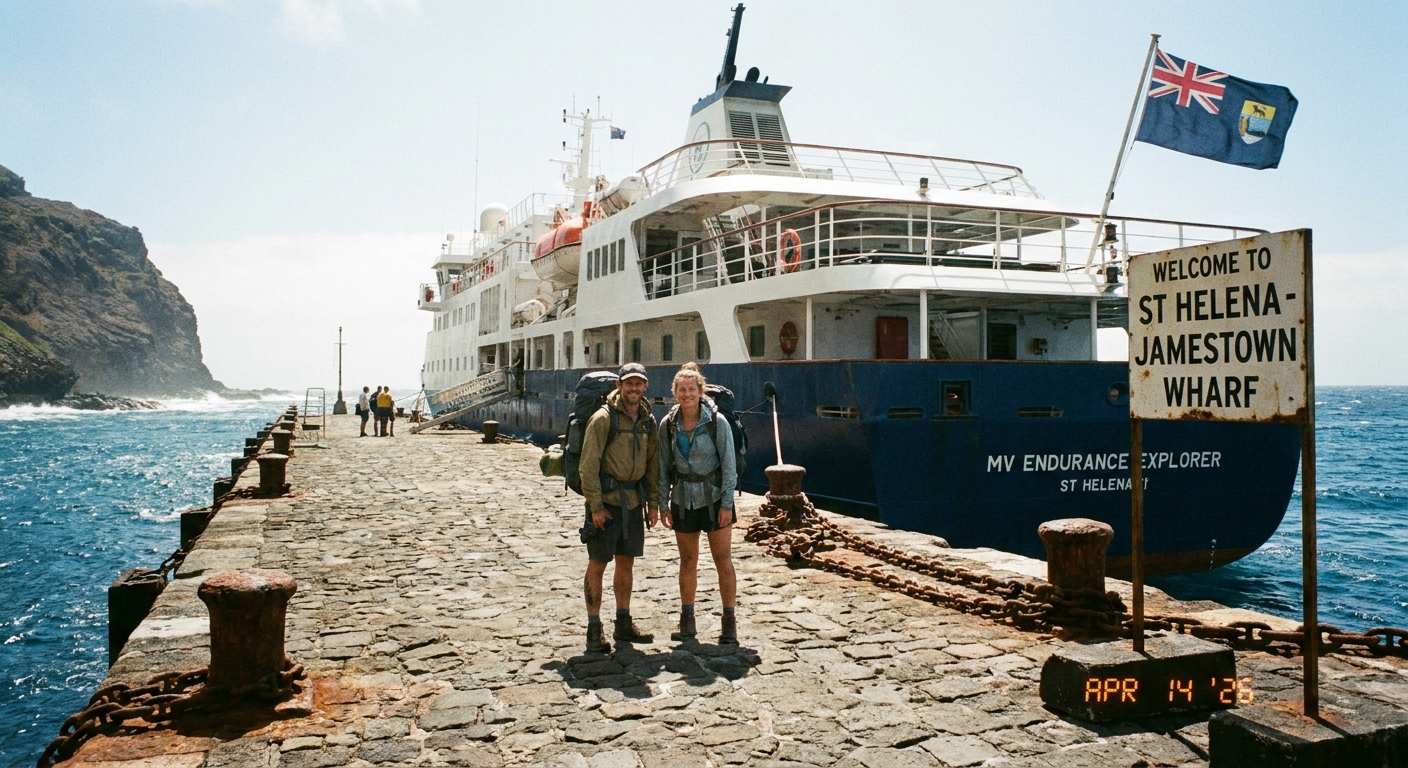
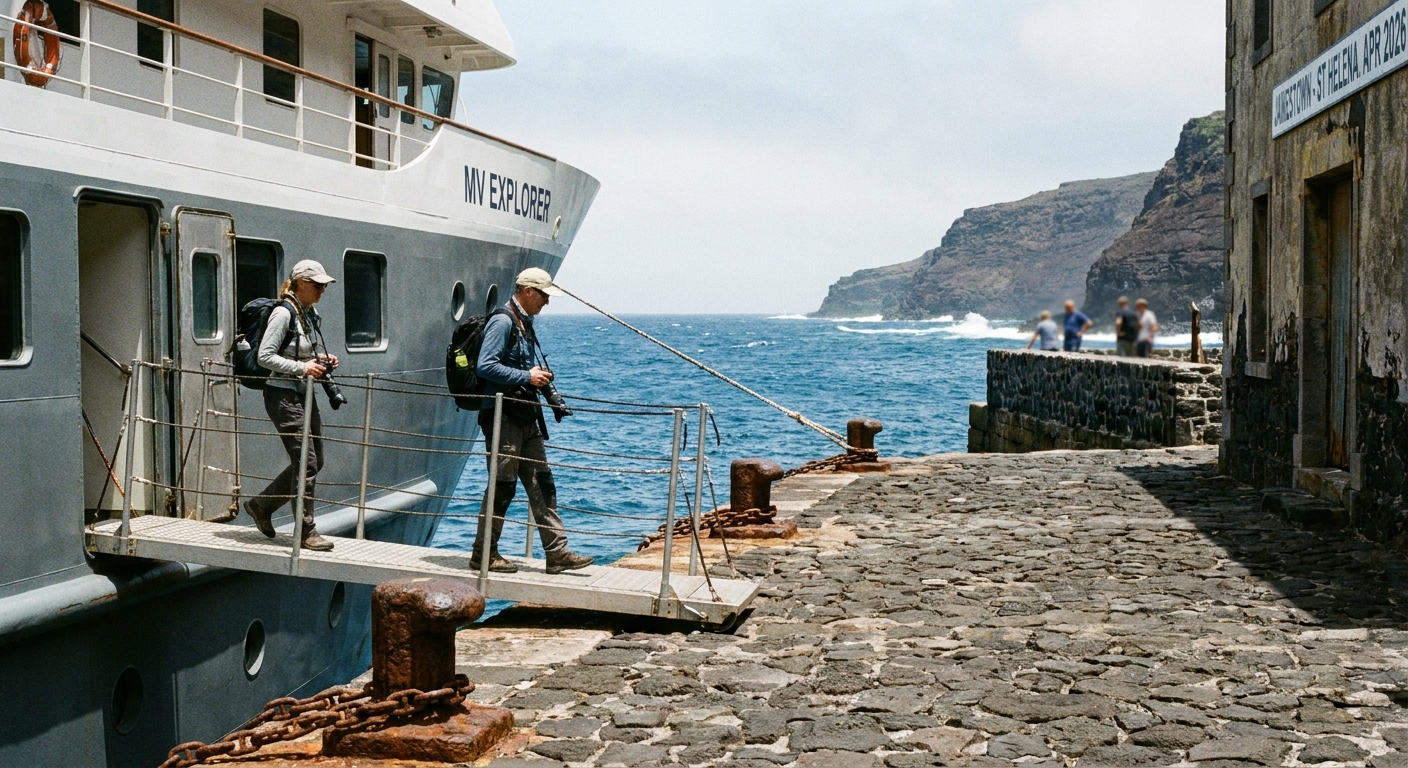
The air at the Jamestown wharf on St Helena is thick with salt and the faint, metallic scent of rusted iron. It is 12:15 PM on 22 April 2026, and the temperature holds at a steady 24 degrees Celsius. Two British passengers step off the MV Hondius, their boots meeting the solid, volcanic rock of one of the most isolated places on Earth.
They are leaving a month-long expedition early, moving from the enclosed ecosystem of a cruise ship toward the open sky of a flight to Johannesburg. The UKHSA is now running the numbers on a contact-tracing operation that spans three continents. They are looking for anyone who sat near these two travelers on their journey home.
The Mechanism of the Spillover
Hantavirus does not behave like the respiratory pathogens we have grown accustomed to fearing. It is a zoonotic pathogen, a biological stowaway that hitches a ride in the excreta of rodents. In the cramped, climate-controlled corridors of a vessel like the Hondius, the mechanism of infection is often aerosolization.
Dried particles of rodent urine or droppings are disturbed, becoming airborne mists that a human lung accepts without protest. The technical term is "inhalation of viral-laden aerosols." The human reality is breathing in the ghost of a mouse that was never supposed to be there.
Once inside, the virus begins a slow, methodical expansion. Unlike the frantic replication of a seasonal flu, hantavirus often takes its time, settling into the lining of the blood vessels. This is where the physics of the body begins to fail.
A Timeline of Biological Failure
The tragedy of the MV Hondius did not happen all at once. It unspooled over weeks, a quiet accumulation of fever and fatigue that eventually sharpened into a crisis. By the time the ship reached the waters near Cape Verde, the casualty count had hit three.
| Date | Event | Location |
| :--- | :--- | :--- |
| Early April 2026 | MV Hondius departs for a multi-week expedition. | Argentina |
| 22-24 April 2026 | Two Britons disembark early; fly home via Johannesburg. | St Helena |
| Early May 2026 | Three passengers confirmed dead; outbreak identified. | At Sea |
| 6 May 2026 | Three critically ill passengers (UK, NL, DE) evacuated. | Near Cape Verde |
| 6 May 2026 | Spanish authorities grant permission to dock. | Tenerife |
| Mid-May 2026 | Planned repatriation of 150 remaining passengers. | Tenerife |
The evacuation of the critically ill was a high-stakes exercise in maritime logistics. Among those lifted from the deck was a 56-year-old British man, now stabilized in a Dutch hospital. The viral progression can lead to Hantavirus Pulmonary Syndrome, where lungs fill with fluid as capillaries lose their integrity.
Risks Facing Two Britons Self-Isolating in the UK after Leaving the Hantavirus Cruise Ship Early
The two passengers who left the ship at St Helena are currently living in a state of biological suspension. They disembarked before the fatalities began, but the viral clock was already ticking. St Helena, Ascension, and Tristan da Cunha are remote names where local knowledge is the only thing that keeps a community afloat.
The UK government is coordinating with these remote territories to trace any local staff who may have come into contact with the ship's interior. In Jamestown, the geography provides a natural barrier, but the virus doesn't care about distance once it finds a host. The timescale of this virus is inhuman, with incubation periods stretching to eight weeks.
The passengers are currently asymptomatic. However, "asymptomatic" is a temporary label rather than a permanent diagnosis in this context. The UKHSA has mandated strict self-isolation because the virus's slow burn makes a single negative test today almost meaningless.
The Elegant Mercilessness of Hantavirus
In the laboratory, hantaviruses are beautiful and terrifying. They are enveloped viruses, their genetic material wrapped in a fatty membrane that makes them vulnerable to soap but stable in dry, dark environments. Environmental stability describes how long a virus can wait for a pair of lungs to find it.
The mechanism is elegant and merciless. The virus targets the endothelial cells—the thin layer of cells lining our blood vessels. As the immune system responds, the "leakiness" of these vessels increases.
In the American West, where the Sin Nombre strain of hantavirus lives in deer mice, the mortality rate can hover near 40 percent. The strain currently circulating on the MV Hondius is being treated with the same gravity. Public health officials are not just monitoring a cough; they are monitoring the structural integrity of the human circulatory system.
Information Gain: The Longitudinal Penalty
There is a fundamental difference between how we managed COVID-19 and how we must manage the Hondius outbreak. During the pandemic, the standard 14-day quarantine was a response to a fast-moving target. Hantavirus forces us into a "longitudinal" observation period that can last two months.
This creates a secondary crisis: the psychological and economic stand-down. For the two Britons at home, the next six weeks will be a slow-motion wait for a fever that may never come. The "connection-less" penalty of hantavirus means that a passenger's health status is not a snapshot, but a long-exposure photograph.
Researchers like Simret Araya Gebreegziabher have explored how we align human health with long-term data tracking. We are seeing that play out in real-time. A single negative PCR test for hantavirus in week two does not guarantee a negative result in week six.
The Ship as a Closed Ecosystem
The MV Hondius is more than a cruise ship; it is a floating laboratory. At 107 meters long, it is designed for polar exploration, built to withstand the isolation of the Southern Ocean. But the features that make it safe from the exterior—recirculated air and sealed hatches—make it an ideal theater for zoonotic spillover.
Investigators from the WHO are now looking for the source of the infection. Was it a rodent infestation that began in an Argentinian warehouse before the food was loaded? Or did an infected animal board during a shore excursion in the Falkland Islands?
The vessel is currently steaming toward Tenerife, where the Spanish government has prepared the Granadilla port. The ship has been granted permission to dock only under "strict precautionary measures," turning a luxury vessel into a quarantined island. Spanish Health Minister Monica Garcia has outlined a triage plan for every passenger.
The Human Scale of the Crisis
Foreign Secretary Yvette Cooper has described the situation as "deeply stressful" for the 19 British passengers and four crew members still aboard. It is easy to look at the numbers and see a manageable risk. It is harder to be the person in a cabin wondering if the dust they inhaled near the air vent contains a viral load.
On social media and developer forums, the conversation has turned toward how we track these longitudinal risks. There is a growing frustration with the manual nature of contact tracing. Some suggest that AI-driven monitoring—what some call "AI Butlers"—could better manage the eight-week data window for exposed individuals.
But the physical world remains the primary story. While we discuss digital alignment and automated agents, the reality is a 56-year-old man in a pressurized room, fighting for breath. This is what an outbreak looks like at eye level; it looks like a ventilator and a quiet room.
The Physics of the Quarantine
When the Hondius docks in the Canary Islands, the process will be dictated by thermodynamics and biology. Passengers will be segregated by nationality and symptom status, a physical manifestation of the data layers used to track disease. Those showing even a mild elevation in temperature will be moved to specialized hospitals in Tenerife.
For the rest, the journey home will be on charter flights, followed by the same grueling isolation period. The timescale is inhuman, but the protocols must be followed. We have seen what happens when we ignore the slow-burn risks of zoonotic disease.
The source of the infection remains invisible for now. It is likely a trace of dust, a microscopic remnant of a rodent's life that intersected with a human holiday. The mechanism of our modern world—global travel and dense communal living—is exactly what allows a localized biological event to become a transcontinental emergency.
The Return to the Scene
I think about the two passengers who left in St Helena. They stepped off the ship and into the trade winds, likely feeling the relief of solid ground. They didn't know they were carrying the potential for a crisis in their luggage, or perhaps in their own cells.
They are home now, in a UK spring that feels worlds away from the South Atlantic. They are watching their own temperatures, waiting for the eight-week window to close. They are living through the "sequential" model of public health, where safety is tied to memory.
The ship will eventually be cleaned and the MV Hondius will return to the ice. The lesson of the Hondius is that the environment is not a backdrop; it is the context in which every breath is a negotiation with the microscopic world. The water in the Granadilla port will be calm when the ship arrives, but the world continues to monitor the two Britons self-isolating in the UK after leaving the hantavirus cruise ship early as the physics of the virus decides the ending.