
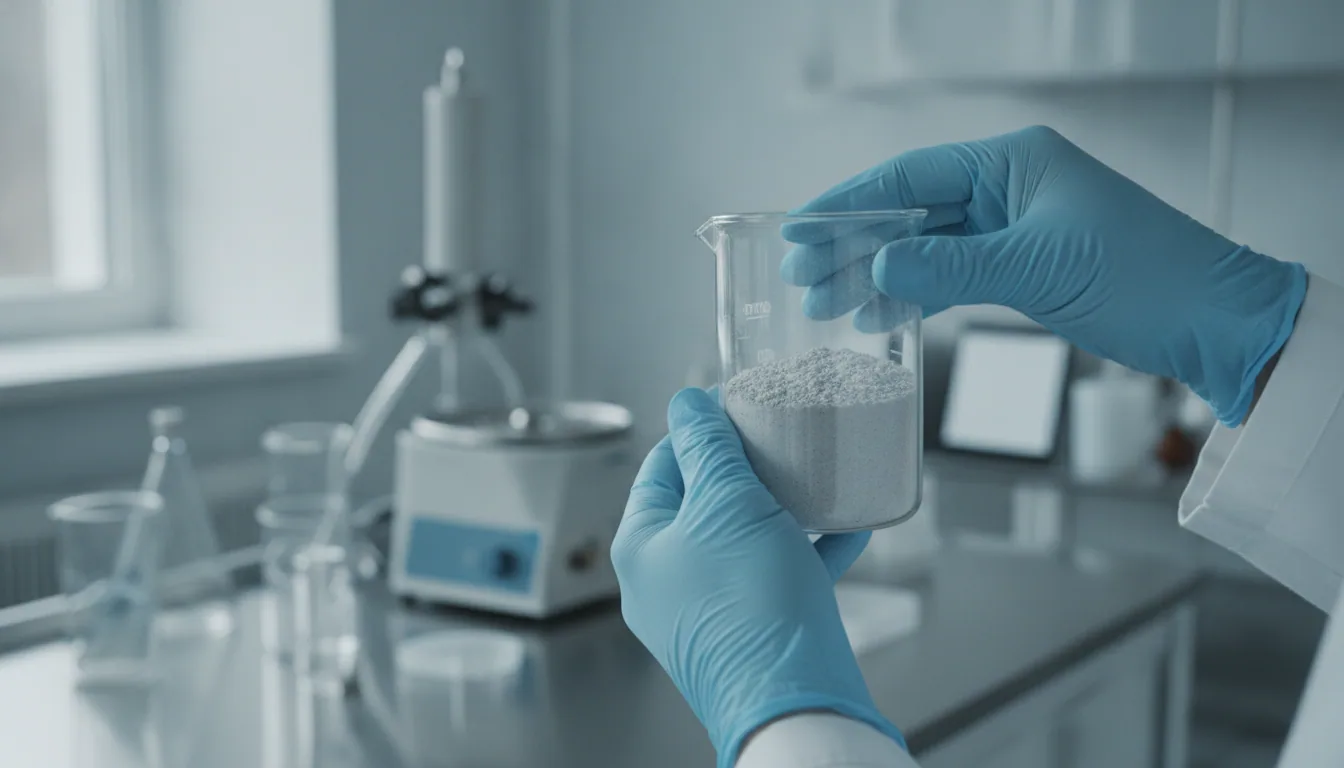
Estonia's hydrogen industry is moving from laboratory theory to hardware by utilizing 5 million tons of annual oil shale ash. Using TalTech's SEG-CaL technology, industrial waste replaces expensive chemicals to capture carbon dioxide during production, potentially reducing hydrogen costs by 40% and repurposing decades of legacy mining waste.
In a laboratory at Tallinn University of Technology (TalTech), the future of Estonian energy doesn't start with a clean slate. It starts with ash. Specifically, the millions of tons of calcium-rich residue left behind by decades of oil shale mining in Ida-Virumaa. This isn't a theoretical thought exercise; it is a working prototype.
The researchers here are developing SEG-CaL technology—a calcium-looping process that uses industrial waste to do the heavy lifting of carbon capture. It is a fundamental system change. Instead of buying expensive industrial chemicals to scrub emissions, the process uses what we already have too much of. The result is a solution where the waste of the past becomes the catalyst for a cleaner fuel.
From Waste to Feedstock: The 5-Million-Ton Opportunity
We do not have a raw material shortage in Estonia. Every year, our industry produces roughly 5 million tons of oil shale ash. To put that in human terms: your personal energy consumption effectively generates nearly four tons of mineral waste every year. Currently, most of that sits in massive, grey plateaus in the northeast of the country.
TalTech's approach moves this resource into the circular economy. The validation for this didn't come from a marketing brochure, but from years of chemical and environmental analysis, including Mari-Liis Ummik's 2026 doctoral thesis on the safety and potential of shale ash. This validation is critical. The complex chemical composition of ash raises legitimate questions about environmental impact, and we need data, not optimism, to answer them.
The Reality of the Mine: A 30-Year Overlap
Oil shale is a sedimentary rock that functions as both a fuel and a chemical feedstock. It is objectively inefficient—its heating value is two to four times lower than natural gas—but it persists because it is a local source of chemistry. We need to be honest about the timeline: oil shale mining is not stopping tomorrow.
The opening of the Uus-Kiviõli mine in September 2026 sent a clear signal: mining will continue for at least another 30 years. This means the old production system and the new hydrogen economy must coexist for decades. This overlap is not a failure of policy; it is the window of opportunity. The goal is to use the existing industrial infrastructure as the cradle for the new technology.
The Engineering of a Lower Price Tag
There are two specific levers currently being tested to make Estonian hydrogen competitive.
First, there is the calcium loop. By integrating SEG-CaL directly into the gasification chain, the calcium-rich ash absorbs CO2 during the process itself. This eliminates the need for a separate carbon capture plant. In industrial accounting, removing that single piece of infrastructure typically cuts the total cost of hydrogen production by 20% to 40%.
Second, there is SOEC, or high-temperature electrolysis. This addresses the massive electricity demand that usually makes hydrogen expensive. By working at high temperatures, the system can use waste heat from the existing oil industry to power the reaction. Companies like Enefit and H2Electro are betting that turning industrial waste heat into a competitive advantage is the only way the numbers will eventually add up.
Meanwhile, Ragn-Sells is developing a method to extract calcium from that same ash to produce calcium carbonate (PCC). They take ash from the plant and CO2 from the stacks to create a product with a real market price. This is circular economy in its most concrete form: turning a liability into an asset.
The Financial Scorecard: Who Actually Decides?
Hydrogen Valley Estonia is a massive undertaking with a total budget of 259.1 million euros. It is important to look at where that money comes from. The state is contributing only 27 million euros; the rest must come from private investors.
This means the future of the industry won't be decided in ministry press releases. It will be decided in boardrooms. Enefit aims to end oil shale power generation by 2030, while the government's deadline is 2035. This five-year gap is a source of mixed signals that investors generally dislike. Ultimately, the future of plants like Auvere depends on whether hydrogen becomes a viable feedstock for plastic chemistry, and whether the internal rate of return satisfies the accountants, not just the politicians.
A Question of Scale: Gesture or Lever?
By 2030, Estonia's projected hydrogen production is 5,494 tons. In a global market that consumes 90 million tons, this is a rounding error. But we must distinguish between a gesture and a lever. Moving from zero to 5,494 tons isn't about global market share; it's about proving the technology and the unit cost on the ground.
The real scale comes later. Elering is currently involved in planning the Nordic-Baltic Hydrogen Corridor, with feasibility studies due in 2027. If that corridor is built, Estonia's production becomes exportable. The technology we develop for our specific ash problem then becomes an exportable commodity for any region dealing with similar mineral waste.
The Honest Scorecard
As we look toward 2035, the geography of Ida-Virumaa is its greatest asset. The high-voltage connections, the industrial footprint, and the workforce of engineers are already there. We have ten years to reposition, not to pull the emergency brake.
The honest scorecard:
- The Lever: SEG-CaL could cut production costs by up to 40% using existing waste.
- The Catch: We still have unanswered questions about the long-term environmental footprint of large-scale ash processing and the actual market price of the final hydrogen.
- The Scale: 5,494 tons is a pilot, not a total solution.
Despair is just procrastination with better PR. The next step isn't a new slogan; it is the 2027 investment decisions from heavy industry. That is what will determine if our history of ash becomes our future of fuel.