
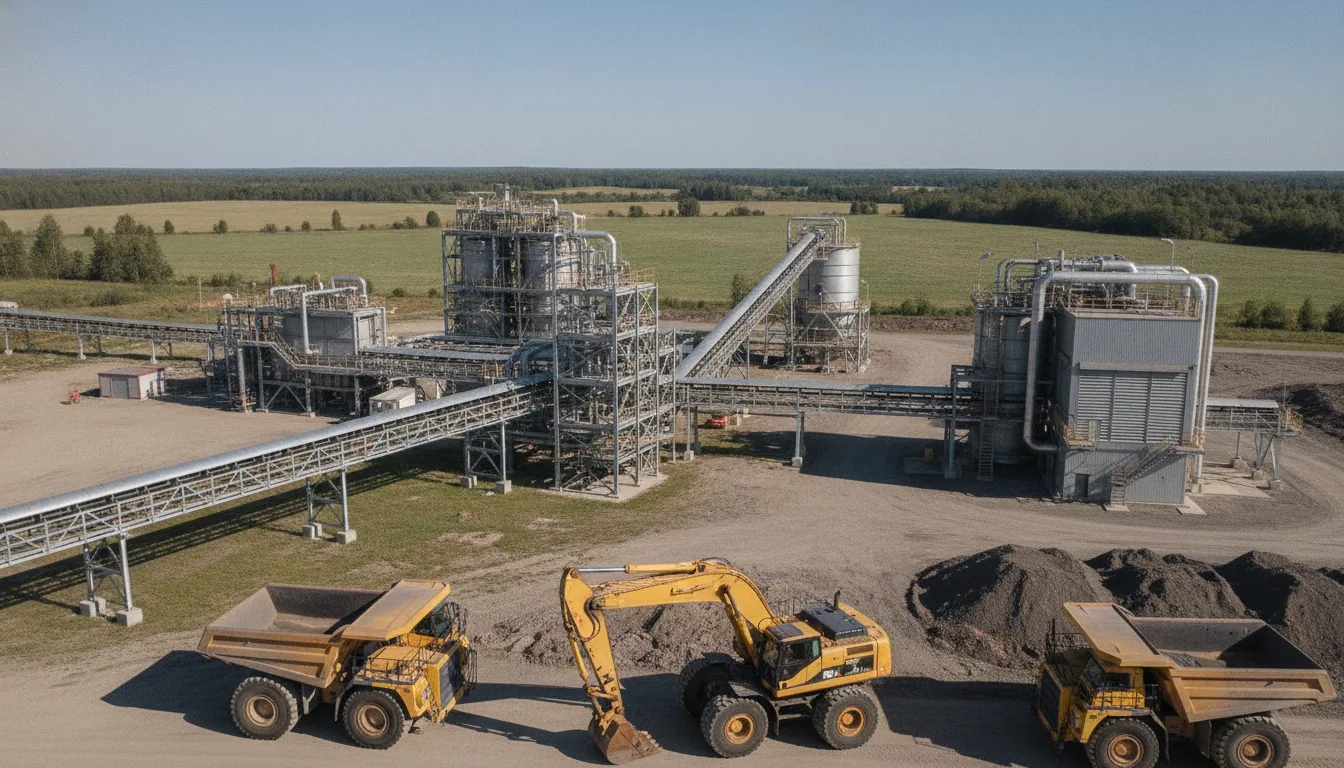
On September 29, 2026, a new chapter began in Estonia's industrial history with the opening of the Uus-Kiviõli mine. It is a move that feels contradictory: a new fossil fuel excavation site launching even as national climate targets loom closer. This is not a story about an industry disappearing overnight, but one pivoting from power generation toward chemical production, while the state-owned giant, Eesti Energia, writes down its assets by hundreds of millions of euros.
The New Mine and the 2026 Milestone
Uus-Kiviõli was built to replace the Ojamaa mine, which is scheduled to reach exhaustion in 2027. According to estimates from VKG (Viru Keemia Grupp), this new site secures their raw material supply for the next thirty years. It is a bold timeframe when placed alongside the 2040 legal deadline that bans the use of oil shale for energy purposes.
We are seeing a significant shift in the corporate landscape. In 2025, the private firm VKG surpassed the state-owned Eesti Energia for the first time to become Estonia's largest oil shale miner. Simultaneously, Eesti Energia devalued its assets by a total of 359 million euros.
While the legislative clock is ticking on using oil shale for energy, VKG is betting on shale oil and the chemical industry. Whether this is a calculated long-term play or an expensive illusion will depend on the final wording of the Climate-Resilient Economy Act.
The Century-Long Footprint: The Arithmetic of Oil Shale
Estonia's oil shale sector has operated for over a century, born out of the 1916 fuel crisis. It has long been the cornerstone of national energy security, but today it represents the single largest obstacle to climate targets.
The math is unsentimental. The oil shale industry generates 45% of Estonia's total emissions. As long as this sector operates in its current form, Estonia cannot reach its 2050 climate neutrality goal, regardless of what happens in the rest of the economy. In this context, exiting the sector is not a political preference; it is an arithmetic necessity.
To understand the scale of the transition, we have to look at the 2018 baseline. That year, the sector employed an average of 7,303 people and generated over 772 million euros in revenue. These are not abstract statistics—they represent the primary incomes for families and the budgets of entire municipalities.
The Timeline: 2035, 2040, and 2050
Three distinct dates govern the future of this industry, dictating how funding and investment decisions are made.
The year 2035 marks the end of oil shale electricity production in Estonia. Five years later, in 2040, the use of oil shale for energy must cease entirely. Finally, 2050 is the deadline for full climate neutrality, by which point the rest of the economic transition must be complete.
The government has already signaled its intent by pausing the processing of new mining permits until the end of 2025. As Europe continues to reduce free CO2 quotas, the production of electricity from oil shale will only become more unprofitable.
Two Strategies, Two Risks: The Divergent Paths of EE and VKG
Eesti Energia and VKG are responding to these pressures in opposite ways. Eesti Energia is executing what looks like an organized retreat, directing investment only into projects that can survive stricter environmental regulations. The state-owned company is factoring the next decade of regulations directly into its balance sheet through asset write-downs.
VKG has taken the opposite bet. The thirty-year resource horizon at Uus-Kiviõli extends well beyond the 2040 restriction. VKG interprets that deadline as the end of electricity production—not the end of their business.
The trade-off here is clear: the private company carries the risk with its own capital, while the state company's write-downs impact the national treasury. Both strategies are more expensive than they appear on the surface, and the next decade will reveal which one is more resilient.
11,000 Workers and 354 Million Euros
Approximately 11,000 workers in the oil shale sector will require retraining, representing one of the largest labor market shifts in Estonian history. In the context of Ida-Virumaa, this accounts for one in every five workers in the region.
The Just Transition Fund has allocated 354 million euros to diversify the regional economy. This breaks down to roughly 32,000 euros per person—a figure that is higher than the European average per worker.
This capital is intended for new businesses and training programs to create jobs once the mines close. However, there is a catch: if the new jobs are created in the capital rather than locally, the positive impact remains only on paper. This is a challenge that Ida-Virumaa is still working to answer.
The Honest Scorecard: What Works and What Is Next
The structural shift has begun. Eesti Energia is moving toward renewables, while VKG is doubling down on refining and fine chemicals, which can still produce export revenue after electricity production ends.
However, significant variables remain. The economic viability of Carbon Capture and Storage (CCS) technology is not yet proven, and the level of emission quotas after 2030 remains a political wildcard. These factors will determine how long oil shale oil remains competitive on the global market.
The final act of the oil shale industry is underway. Success now depends on the precision of investments and the transparent use of transition funds. The quality of retraining for those 11,000 people and the permanence of the new jobs they fill will require independent and rigorous monitoring.