
How the Nvidia Blackwell Sanctions Breach Triggered a CEO Exit, a Presidential Intervention, and a Senate Hearing
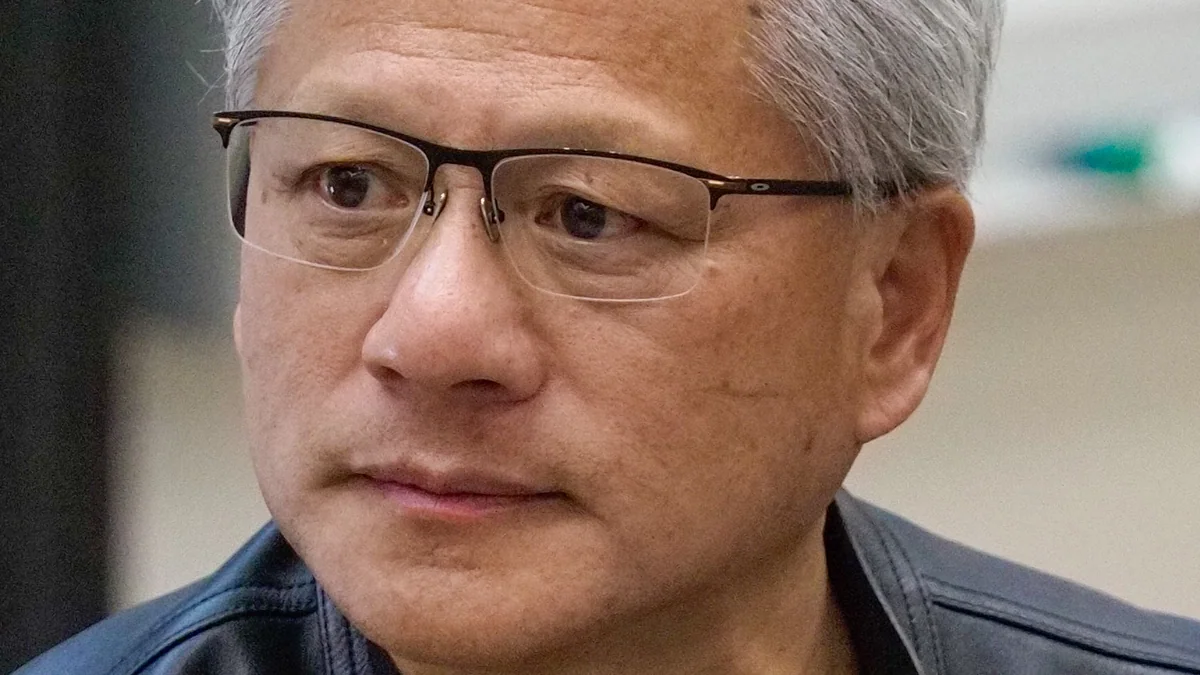
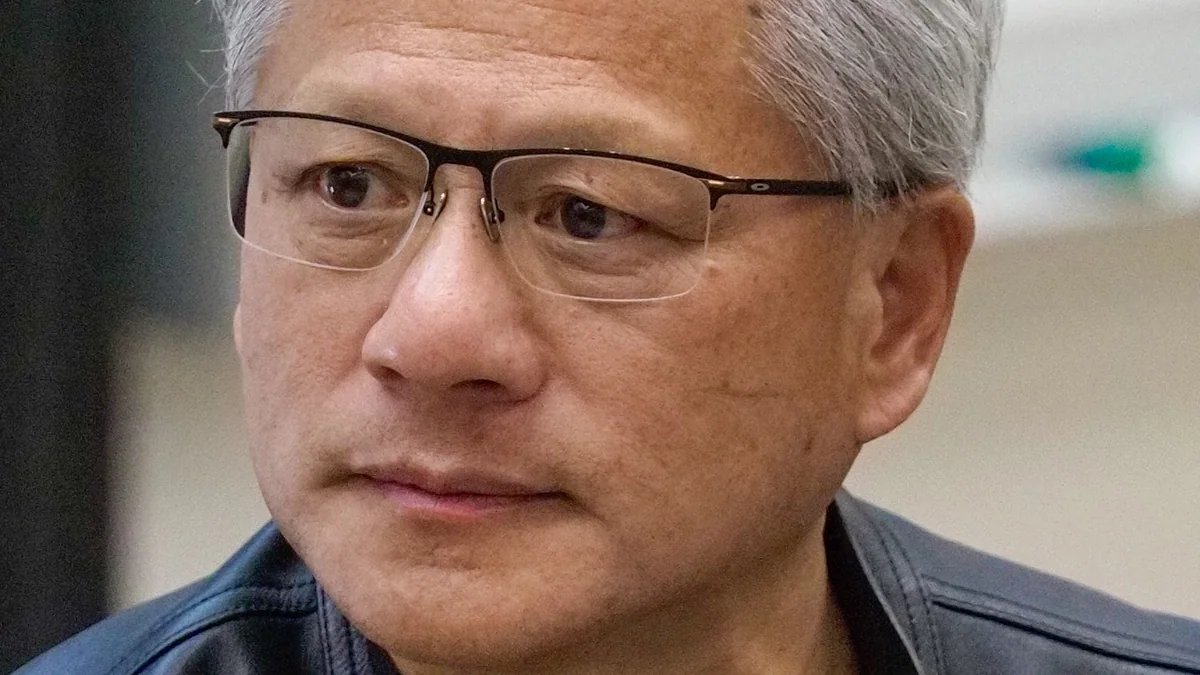
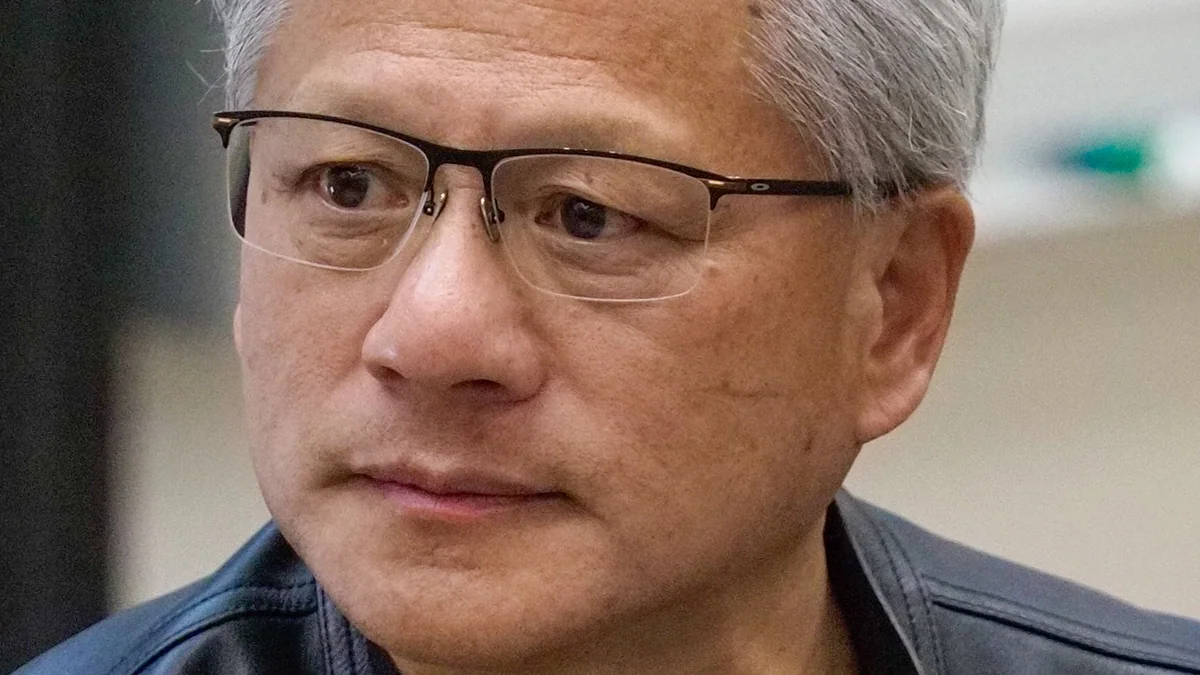
The Nvidia Blackwell sanctions breach placed the world's most valuable chip company, in November 2026, simultaneously at the center of a federal investigation and a presidential press conference. That paradox - a national security crisis resolved by executive fiat - signals something structurally significant about how the United States now governs its most critical technology assets. On November 12, 2026, Jensen Huang resigned or was suspended from Nvidia's leadership amid reported personal ties to Alice Huang, founder of Singapore-based distributor Megaspeed International, the entity now blacklisted by the Bureau of Industry and Security for allegedly diverting billions in restricted Blackwell hardware to sanctioned Chinese entities.
Twelve days later, the story took a turn that no governance textbook anticipates. President Donald Trump publicly reinstated Jensen Huang on November 24, 2026, declaring him "not a security threat" - a presidential characterization that bypasses the board, the audit committee, and standard fiduciary process entirely. If the state can override corporate governance structures in a national security context, then the boundary between private executive accountability and public sovereign interest has effectively dissolved. That is not a legal edge case; it is a paradigm shift in how tech-state relations are being renegotiated in real time.
The institutional drama now moves to Capitol Hill. Jensen Huang is scheduled to testify before the Senate Banking Committee on December 3, 2026, a forum where the questions will likely be less about chips and more about what Nvidia's compliance apparatus knew, and when. For policy architects and corporate boards alike, the central unresolved tension is this: at what point does a CEO's personal network become a material risk disclosure obligation, and who bears liability when that line is crossed?
The Anatomy of the Blackwell Export Control Breach: Megaspeed, Shell Affiliates, and $4.8 Billion in Restricted Hardware
A Singapore-registered distributor purchasing nearly five billion dollars in controlled semiconductor hardware through a Malaysian affiliate does not look like an oversight. It looks like architecture. Between June 2024 and February 2026, a Megaspeed International affiliate in Malaysia acquired $4.8 billion in Nvidia equipment - a volume that strains any credible interpretation of legitimate commercial demand. On November 23, 2026, the Bureau of Industry and Security formalized what investigators had long suspected, adding Megaspeed International and six affiliated entities to the Entity List.
The physical evidence of where that hardware ended up is unambiguous. Restricted Blackwell hardware, including GB300 NVL72 units and GB200 server racks, was discovered at the Yangtze River Delta Project data center in Shanghai. These are not consumer-grade components misrouted by administrative error - they are among the most export-controlled compute assets in existence, and their presence inside Chinese infrastructure signals a diversion network operating with structural sophistication, not opportunistic improvisation.
The network did not rely on a single channel. US-based firms with Chinese ownership emerged as a primary acquisition vector, exploiting the jurisdictional ambiguity of domestic procurement to sidestep export licensing triggers entirely. Nvidia's own preferred partner ecosystem compounds the exposure: RiCloud AI and Aivres, both carrying Chinese ownership links, are now under federal scrutiny for systematically bypassing export controls. Aivres itself is a subsidiary of Inspur, a previously sanctioned entity, raising the question of whether compliance vetting at the partner tier was structurally inadequate or selectively blind.
What the Megaspeed case reveals is a layered bypass methodology: neutral-jurisdiction intermediaries, US-domiciled acquisition fronts, and embedded preferred-partner relationships. Each layer adds deniability. Each layer also adds evidence of premeditation - and if export control enforcement is to function as more than a delayed paper trail, the compliance architecture must catch volume anomalies, not just destination flags.
When Contraband Becomes Collateral: The Financialization of Restricted Silicon
Contraband is not supposed to have a credit rating. Yet in Shanghai, two Chinese firms - Shanghai Shuoyao and Shanghai Kezhan - walked into Shanghai Innovation Bank and secured a 96 million yuan loan using restricted Blackwell GPU systems as collateral. If that transaction cleared standard underwriting, sanctions enforcement faces a category problem it has not yet named.
The numbers clarify the structural logic. Blackwell B300 servers were selling openly in Shenzhen's Huaqiangbei electronics market at $3 million to $3.4 million per unit. At that price point, the hardware is not just powerful compute; it is a liquid store of value.
Banks can price it, lend against it, and recover it. The gray market has, in effect, transformed export-controlled silicon into a recognized asset class.
The gray market has, in effect, transformed export-controlled silicon into a recognized asset class.
This matters far beyond Shanghai Innovation Bank's loan book. Once restricted hardware acquires collateral-grade market value, the enforcement calculus changes fundamentally for every actor in the chain. Front companies gain a secondary financial incentive for acquisition entirely independent of operational compute needs - the hardware does not need to run to generate returns.
For policymakers, this is the practical question the Huaqiangbei price signal forces into the open: when contraband achieves pricing depth and institutional acceptance inside a sanctioned financial system, can export controls still function as a deterrent? Deterrence assumes cost. A $3.4 million gray-market GPU that also serves as bank collateral has inverted that assumption entirely.
The Intelligence Layer: Alice Huang, DeepSeek, and Beijing's Strategic Play
Picture a boardroom in Singapore, 2024. A founder signs off on another nine-figure purchase order for restricted American hardware. Across a secure channel, U.S. intelligence analysts are already watching.
What appears to be aggressive commercial distribution, they suspect, is something else entirely. Alice Huang, the founder of Megaspeed International, is under active suspicion by American intelligence agencies of functioning as a Chinese intelligence asset, passing technology secrets directly to Beijing.
The commercial paper trail grows stranger the deeper investigators look. Entities linked to Huang participated in a 105.5 billion yuan funding round for DeepSeek, the Chinese AI firm that rattled Western markets with its low-cost model releases. Access to Blackwell compute infrastructure - the very hardware Megaspeed was diverting through its network - was reportedly a central objective, making corporate investment and state-directed technology acquisition functionally the same transaction.
If the intelligence picture holds, it reframes the entire Megaspeed operation. What looked like gray-market opportunism from the outside was potentially a structured state-adjacent acquisition campaign with venture capital as its cover. The Department of Justice is now leading a criminal probe into international chip smuggling networks, a designation that signals the federal government views this as organized, cross-border infrastructure - not isolated arbitrage by rogue actors.
The line between a commercial distributor and a procurement arm of strategic policy had not blurred accidentally. The question that intelligence analysts, policymakers, and Nvidia's board will all need to answer is the same: at what point does a distribution agreement become a national security event, and who bears responsibility for failing to see it sooner?
Corporate Accountability and the Investor Exposure Question
Corporations are not supposed to mislead their shareholders about the robustness of their own compliance infrastructure. Yet California's investigation into Nvidia probes precisely that contradiction: whether the company presented investors with a materially false picture of how effectively it monitored the downstream fate of its most restricted hardware. As California's state attorney framed it, the scandal 'raises bright red flags.'
The comparison to past securities enforcement cases is instructive. In Enron, WorldCom, and even Volkswagen's emissions affair, the legal unraveling began not with the original operational failure but with what management chose to disclose, and when.
The commercial fallout is already measurable. Moonshot AI scrapped a $150 million Indonesian cloud deal that had been structured around Blackwell chips, unraveling after tightened U.S. computing service rules made the arrangement legally untenable. Moonshot had reportedly offered 50% prepayment to secure chip access - a signal of how supply-constrained demand had become, and of the fragility now embedded in contracts built on sanctioned technology infrastructure.
The legal doctrine governing these losses is unforgiving. Under classical contract law principles, every material breach gives the injured party the right to recover expectation damages - what they would have earned had the deal completed. If Nvidia's compliance failures contributed to the conditions that forced deal cancellations, the chain of legal liability may extend beyond regulators to civil courts.
The strategic question for boards and institutional investors is therefore structural: when a company's compliance function cannot match the sophistication of its own distribution network, how much of its stated market opportunity is, in effect, uninsurable?
The Geopolitical Reckoning: Can Export Control Architecture Survive Adversarial Capitalism?
A single distributor purchasing $4.8 billion in restricted Nvidia equipment, undetected, across twenty months. That figure, reported by the New York Times, is not an operational oversight. It is a structural indictment of KYC-based compliance as a governance instrument when adversarial capital operates at sovereign scale.
The logic of 'Know Your Customer' presupposes that purchase volumes, beneficial ownership structures, and final-use declarations are legible to private firms operating under commercial incentives. They are not, when state-backed networks design specifically for opacity. Megaspeed's Malaysian affiliate moved nearly five billion dollars through the system while remaining, formally, a compliant distributor. The BIS Entity List addition arrived on November 23, 2026 - well after the hardware had moved.
This is precisely why the proposition of government equity stakes in strategic hardware firms merits serious institutional analysis rather than dismissal. If a state holds partial ownership, disclosure thresholds and compliance triggers become binding governance obligations, not reputational preferences. The behavioral logic of the firm shifts accordingly.
For European and Estonian policymakers, the Blackwell breach maps three plausible strategic postures: dependency on U.S. supply chains governed by increasingly politicized executive intervention, active diversification toward allied semiconductor architectures, or deliberate disengagement from compute markets where provenance cannot be verified. None is costless. Huang's December 3 Senate testimony will reveal whether Washington itself has diagnosed the problem correctly.
The Nvidia Blackwell sanctions breach has exposed the precise limit of compliance architectures built for commercial actors when confronted with adversarial capital operating at sovereign scale. If that architecture cannot process what Megaspeed demonstrated is possible, then the infrastructure governing AI primacy is not a legal framework. It is a suggestion.