Record Revenue, Absent Founder: The Contradiction at the Heart of Nvidia's Crisis
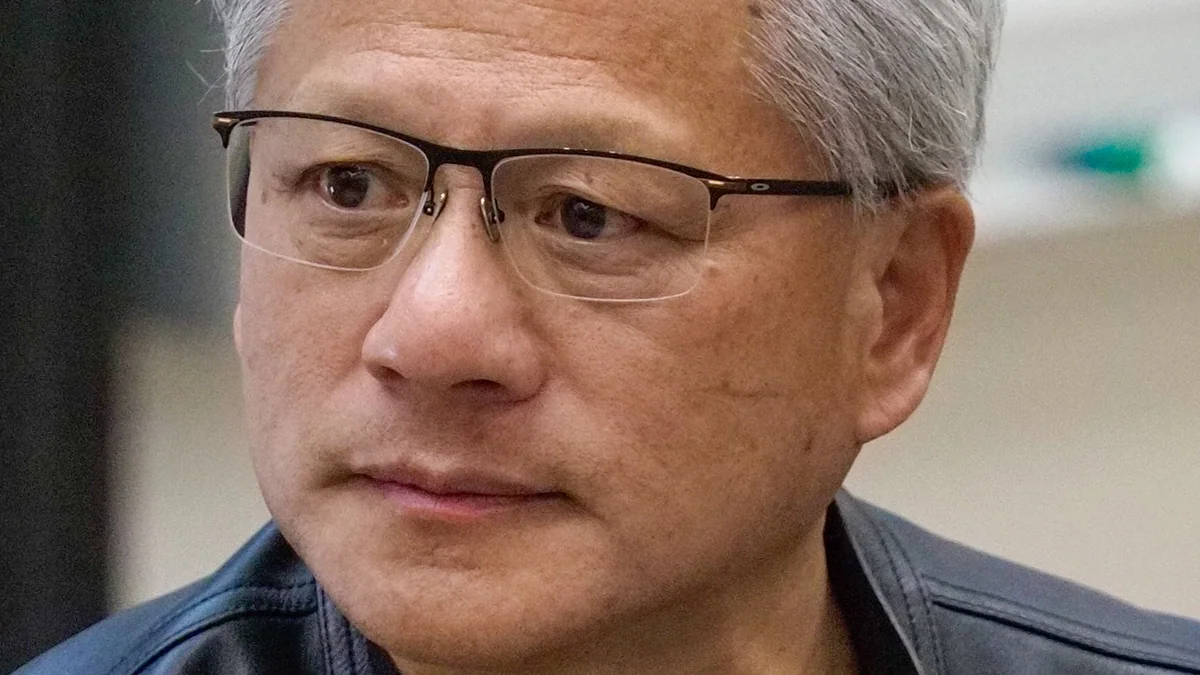
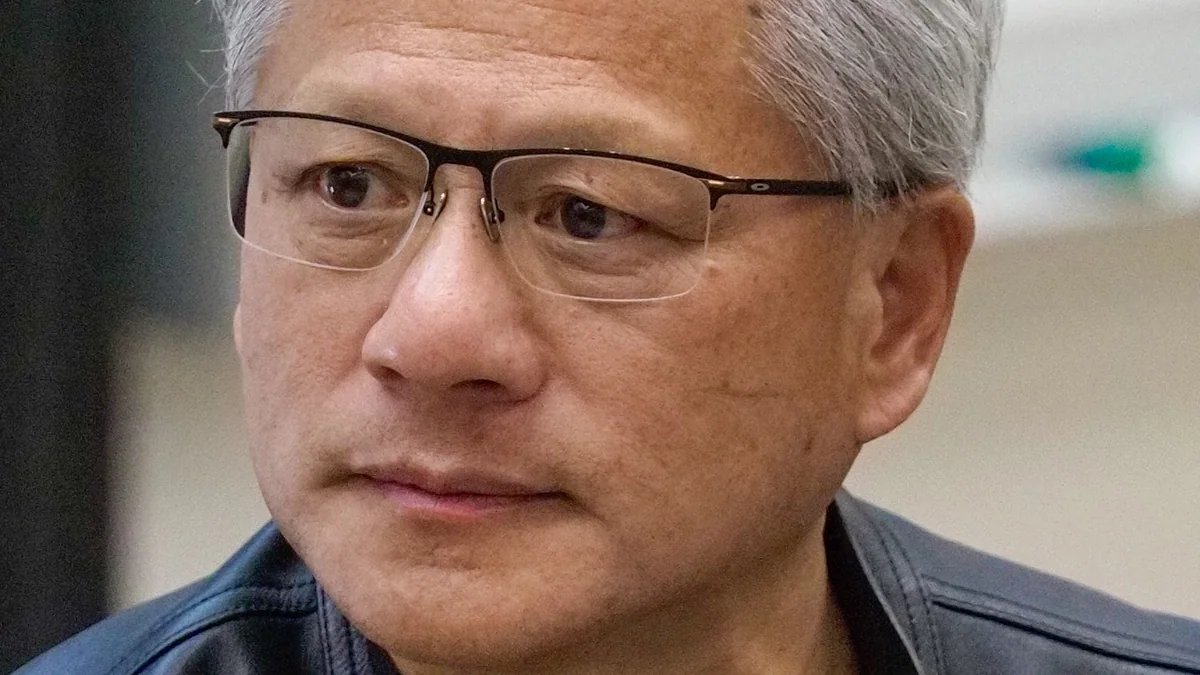
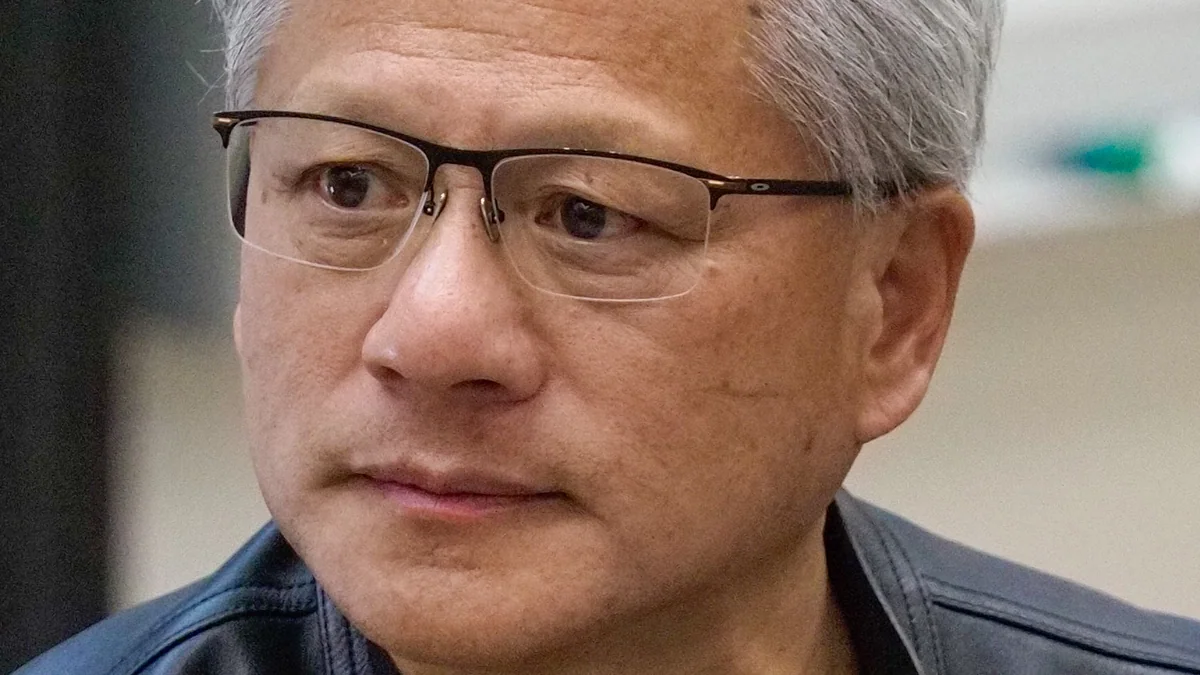
A company does not ordinarily face its deepest institutional crisis at the precise moment it reports the largest quarterly revenue in its history. Yet on November 12, 2026, Jensen Huang resigned as CEO of Nvidia, the company he co-founded with Chris Malachowsky and Curtis Priem in 1993, while the firm's financial results told a story of near-total market dominance. Total quarterly revenue had reached $96.2 billion. The numbers were not a sign of health under pressure. They were the measure of how much was now at stake.
The architecture of that revenue matters. Data Center operations generated $89 billion, accounting for 92.5 percent of the total. That single figure describes the transformation Huang spent three decades engineering: from a graphics chip startup into the primary hardware substrate of global artificial intelligence. Nvidia did not stumble into this position. It was constructed, deal by deal and architecture by architecture, under a founder who understood before most institutions did that the GPU would eventually displace the CPU as the central engine of computational progress.
This is what makes the timing structurally significant, not merely dramatic. When a founder with a 33-year tenure departs, the question is never simply about succession planning or interim appointments. The behavioral mapping of institutional actors shows that companies built around a singular founding identity carry a form of embedded organisational logic that no org chart fully captures. If that logic dissolves with the departure, the financial peak becomes not a launch pad but a high-water mark. The board, the shareholders, and the policymakers now watching Nvidia closely will each have to answer the same uncomfortable question: what is the company without the person who invented what it became?
The Affair, the Investigation, and the Singapore Connection: How a CEO Falls
On November 8, 2026, Jensen Huang sent an internal message admitting to an extramarital affair. Four days later, he was no longer CEO of the most strategically valuable semiconductor company on earth. The sequence matters: the board did not act impulsively.
What unfolded between November 8 and November 12 was a disciplined institutional response. The board opened a formal investigation not into the affair itself, but into a more consequential question — whether Huang had been deliberately targeted through it. At the center of that inquiry sat Alice Huang, an executive at Megaspeed International, a Singapore-based Nvidia customer. The relationship between a founding CEO and a client executive, viewed through a counterintelligence lens, transforms from a personal failing into a potential national security vulnerability.
The Singapore connection gave the board little room for deliberation. If a customer relationship was the vector, then the exposure was structural. Investigators examined whether Chinese intelligence had used Megaspeed as a channel to cultivate proximity to Nvidia's leadership. What they concluded formally has not been disclosed. The distinction between an active intelligence asset and a social acquaintance remains, for now, unresolved.
The board's response was precise. Colette Kress, Nvidia's Chief Financial Officer, was named interim CEO — an internal appointment signaling continuity over disruption. Harvey Jones was simultaneously installed as the board's first-ever independent chair, a structural reform that rebalances governance at the exact moment the company requires it most. These are not incidental choices. In the Estonian context, we recognise this pattern: when institutional behavior comes under scrutiny, the architecture of accountability gets rebuilt in public, often faster than the underlying facts are established. The board moved to close the governance gap before the market could price it in further.
Chips as Contraband: The Geopolitical Stakes Hiding Inside Nvidia's Corporate Scandal
Consider the disparity: a corporation generates $96.2 billion in a single quarter while its hardware moves through shadow networks like restricted ordnance. Investigators tracked over 1.5 gigawatts of banned AI compute power smuggled into China, a figure that maps not to petty customs fraud but to what security analysts treat as hardware arms trafficking. When a GPU cluster carries the same geopolitical weight as a weapons shipment, the company producing it has crossed a threshold that corporate law was never designed to govern.
The numbers behind the export regime make this concrete. Under a 2025 arrangement, the US government took a 25 percent cut of China-bound chip revenue, transforming Nvidia from a private technology vendor into a revenue-sharing partner of the federal state. That is not a licensing agreement. It is profit-sharing with a sovereign, a structural arrangement that blurs the line between corporate interest and national policy in ways that will outlast any single CEO.
The Trump administration's reported plan to designate Nvidia a National Champion formalises what that arrangement implied. Quasi-sovereign corporate status means preferential treatment, coordinated export licensing, and alignment with the Genesis Mission, the federal initiative designed to pool R&D resources across industry and government. Treasury Secretary Scott Bessent's public pressure on the board to consider outside CEO candidates follows the same logic: if Nvidia is a national asset, succession is not purely a board matter.
Microsoft and Amazon, both major customers, have actively supported export restrictions to China. Their position reflects a customer layer that benefits from US technological primacy. The practical implication for any reader with business exposure to AI infrastructure is straightforward: the supply chain you rely on is now partially administered by geopolitical calculus, not market competition alone. If that calculus shifts, so does your access.
The Forgotten Sixteen Billion: What Gaming Tells Us About Nvidia's Strategic Identity
Walk into any university dormitory in Tallinn or Toulouse and you will find the same scene: a GeForce card pushing pixels through a monitor at three in the morning, its fan whirring like a small turbine. That machine, multiplied across tens of millions of households, generated $16 billion in Nvidia's fiscal 2026 revenues, a 41 percent year-on-year increase that most analysts mentioned once and then moved past. The number deserved more than a footnote.
Here is the structural paradox. Gaming built Nvidia's engineering culture, its brand loyalty, and the GPU architecture that Data Center clients now repurpose for trillion-parameter models. If the company earns 92.5 percent of its revenue from data centers, the question is not whether gaming still matters financially — it does — but whether it still matters strategically to the people setting resource allocation priorities.
National Champion status, if granted by the Trump administration, accelerates this drift. A corporation repositioned as a quasi-sovereign AI supplier has little political incentive to defend the interests of a consumer base that votes with shopping carts rather than procurement contracts. The GeForce community becomes a silent stakeholder: profitable enough to retain, peripheral enough to deprioritize. Jensen Huang understood the origin story; his successors will inherit the valuation logic. Whether those two things can coexist inside a single corporate identity is the question the next CEO will answer — not in a press release, but in a product roadmap.
When a GPU cluster carries the same geopolitical weight as a weapons shipment, the company producing it has crossed a threshold that corporate law was never designed to govern.
The Market Verdict and the Cult of Jensen: 160,000 Signatures and a 20 Percent Decline
A company does not lose a fifth of its market value in a month because of an affair. It loses that value because the market has concluded, correctly or not, that the company and the person are the same entity. Nvidia shares fell 4.34 percent on the day Huang's resignation was confirmed, November 12, and the decline arrived not as a shock but as the final punctuation on a month-long erosion exceeding 20 percent. Compare this to Steve Jobs's 2009 medical leave, which triggered an immediate single-digit drop before Apple recovered — the pattern is not new, but the speed and depth here signal deeper founder dependency.
The public response followed its own logic. A "Stand with Jensen" reinstatement petition surpassed 100,000 signatures by November 14, within 48 hours of the resignation. A secondary petition climbed beyond 160,000. These are not trivial numbers; they are sociological data points describing how a semiconductor executive accumulated the kind of affective loyalty typically reserved for political figures or cultural icons.
The Chinese internet's reported mourning adds a cross-border dimension that analysts risk underestimating. In a nation where Nvidia chips remain the preferred hardware for AI development despite export restrictions, Huang represented accessible technological ambition. His departure reads, abroad, as a systemic rupture rather than a personnel change.
Reports indicate Huang has been weighing a return, with discussions ongoing. Any comeback scenario would require the board to resolve the intelligence investigation cleanly, establish governance structures that separate the man from the mission, and convince markets that reinstatement is a correction, not a capitulation.
The Corporate Sovereign: What Nvidia's Next Chapter Rewrites About State and Market
A $5.7 trillion influence node does not change hands quietly. When the Trump administration moves to formalise Nvidia's National Champion status, it is not conferring a title — it is acknowledging an existing condition. Nvidia already functions as critical infrastructure: 92.5 percent of its quarterly revenue flows from data centers that underpin sovereign AI ambitions across allied and rival states alike.
The Genesis Mission deepens this entanglement. By pooling federal R&D resources with Nvidia's engineering capacity, Washington is effectively writing a corporation into the architecture of national security. This is not antitrust law's familiar terrain of market dominance. It is something structurally new — a firm so embedded in state power that its CEO succession becomes a civilizational decision.
Treasury Secretary Scott Bessent's public call for an outside candidate signals precisely this tension. An engineer-founder builds products; a government-aligned executive navigates clearances, export licences, and diplomatic calculus. The board is not simply hiring a manager. It is choosing between two incompatible operating models for an entity that now behaves more like a central bank than a consumer electronics company.
For European and Estonian policymakers, the strategic question is blunt: if Nvidia operates as a quasi-sovereign actor accountable primarily to Washington, what legal framework governs its obligations to allied markets? Existing competition law was designed for companies that compete. It was not designed for companies that govern. The battle for Nvidia's soul — between its founding engineering identity and its emerging role as an instrument of state power — is the question the next CEO will not be able to defer.