The Oldest Instrument in the Kit
The KGB called it kompromat — the cultivated vulnerability, the relationship that becomes a lever. The practice predates the acronym. What changed in the AI era is the target class: the men who control the architectures that control everything else have become, by structural logic, the highest-value marks on the board.
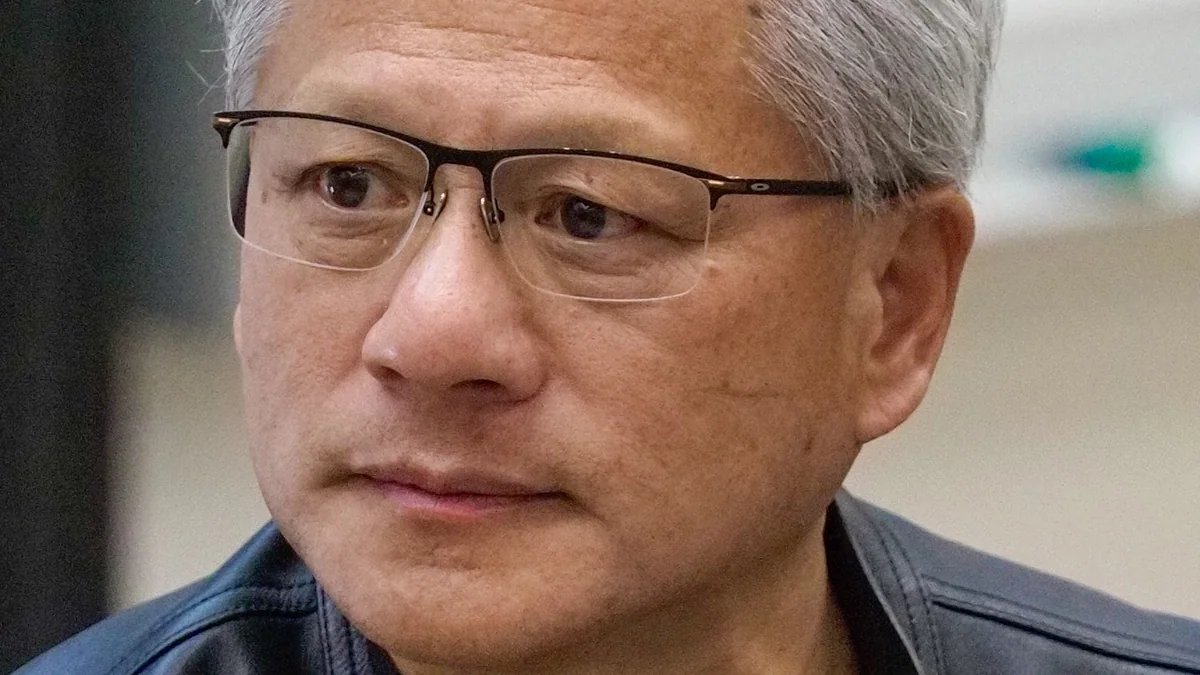
On November 8, 2026, the Jensen Huang investigation opened when Nvidia's board announced an independent probe into its 63-year-old co-founder and CEO, following his admission of an extramarital affair with Alice Huang — identified by U.S. intelligence as a Chinese intelligence asset and a senior executive at Megaspeed, a Singapore-based data centre firm that purchased over $4.8 billion in Nvidia chips between 2024 and 2026.
The New York Times had signalled the intelligence effort the previous month, in October 2026. The board's announcement came roughly two weeks later — an institutional response running visibly behind the operational event it was responding to. Huang acknowledged the affair in a memo titled "A message to our company," where he wrote that he had been unfaithful to his wife and that there was no excuse for what he did. What he did not acknowledge in the same register was that he had previously characterised his dealings with Alice Huang as a "normal" business relationship.
The gap between those two descriptions — normal business contact, then admitted affair — is not incidental. It is the opening through which every question of consequence now runs. The honeypot is the oldest instrument in the kit. The novelty is whose hand was on it.
Singapore as the Grey-Zone Hinge
Singapore is not a loophole. It is a jurisdiction built on the proposition that trade flows where law permits, and that the boundary between permitted and forbidden shifts with the contract language. US export-control architecture, which bars the direct sale of high-end AI processors to Chinese end-users, creates exactly the pressure differential that makes an intermediary node like Singapore lucrative.
The gap between the price of a chip you can buy and the price of a chip you cannot is not a moral problem. It is a business opportunity, and Singapore has the legal infrastructure, the banking relationships and the Chinese commercial networks to service it.
Megaspeed sits inside that architecture. The Singapore-based data centre company purchased over $4.8 billion in Nvidia chips across 2024 and 2026 — a volume that places it among the most significant customers on Nvidia's ledger. It now faces allegations that a portion of those chips did not remain in Singapore. The allegation, as reported, is export-control evasion: hardware acquired under one classification, moved under another, arriving in China beyond the reach of the original licence condition.
Alice Huang held a senior executive position at Megaspeed. That is the operational geometry. The personal relationship with Jensen Huang did not need to produce a single classified document to be useful — it needed only to produce access: to product roadmaps, to allocation timelines, to the informal knowledge that travels between a supplier and a preferred customer but never appears in a contract. An executive at the buying end of a $4.8 billion relationship, intimate with the man who controls supply, is structurally positioned to know things that no export-control form will ever capture.
What a $3.5 Trillion Company Looks Like Without a Succession Plan
Nvidia's market capitalisation stood at approximately $3.5 trillion before the board's announcement on November 8. That number is not incidental context. It is the measure of what rides on a single person.
Jensen Huang is 63 years old. He manages 60 direct reports, a flat architecture that is partly a philosophy and partly an organisational choice with a structural consequence: strategic knowledge does not distribute, it concentrates. Stacy Rasgon at Bernstein put the diagnosis plainly — "Jensen is not an ordinary CEO; he IS Nvidia." That is not a compliment dressed as analysis. It is a warning about load-bearing walls. Nvidia has no public succession plan and no heir apparent.
The board's statement, issued alongside the investigation announcement, said there is no reason to believe national security or secrets were compromised. Huang remains CEO while the independent committee does its work, and he has committed to full cooperation. Both facts are true simultaneously, and neither resolves the structural question the episode has forced into the open.
The legal vocabulary here is fiduciary duty. A CEO of a publicly traded company owes the board, and through the board the shareholders, a duty of care that extends to personal conduct when that conduct intersects with material business relationships. Megaspeed was not a minor vendor.
It purchased over $4.8 billion in Nvidia chips. Whether the Nvidia board probe ultimately finds a security breach or not, the question of whether Huang's undisclosed relationship with a senior Megaspeed executive constituted a breach of that duty is a separate matter entirely — and one the independent counsel will not easily sidestep. Somewhere a corporate governance textbook just became required reading in Santa Clara.
The security of intimacy is not measured only in documents passed. It is measured in access granted, in judgment shaped, in what a person does not ask because the relationship made certain questions uncomfortable.
Fiduciary Duty, National Security, and the Question the Jensen Huang Investigation Cannot Avoid
The committee of independent directors and outside counsel has a mandate that sounds precise: determine whether Jensen Huang breached his fiduciary duty to Nvidia or compromised US national security. Those are two separate questions, and the board's own language carefully does not collapse them. The November 8 statement reads that national and economic security is "paramount to the interests of NVIDIA and its shareholders" — which is a construction worth reading twice, because it makes security an instrument of shareholder interest rather than an obligation that stands apart from it.
That framing matters for what the committee can and cannot foreclose. A confirmed intelligence transfer — a blueprint handed across a dinner table, a roadmap forwarded to a Ministry account — would trigger a different set of consequences than a structural vulnerability created by proximity and affection. So far, the board states it has no reason to believe secrets were compromised. That sentence carries enormous weight, and it is not a clearance.
Senator Marco Rubio warned officials about Huang's entanglement before the board moved. The House Foreign Affairs and Intelligence Committees have since requested a briefing from Huang directly on security protocols. Those requests do not wait for the internal review to conclude. Huang has committed to cooperating fully — a phrase that in Washington means very different things depending on who controls the room.
The legal distinction the committee must navigate is real but narrow. The security of intimacy is not measured only in documents passed. It is measured in access granted, in judgment shaped, in what a person does not ask because the relationship made certain questions uncomfortable. That is harder to audit. It is not harder to name.
Political Weather and the Weight It Does Not Carry
President Trump called Jensen Huang an honourable guy. That is political weather. It passes across the board investigation without leaving a mark, because an independent committee and outside counsel answer to fiduciary law and to the record, not to a presidential character vouching issued before the facts are assembled.
The commercial stakes underneath the scandal are not small. Huang has staked Nvidia's next chapter on OpenClaw, his agentic AI strategy, and on a $500 billion AI infrastructure initiative that the company has positioned as the architecture of the next computing era. These are not decorative moulding. They are the reason a 2.9% drop in Nvidia-linked perpetual futures on Hyperliquid registered as a signal worth watching, even if a single afternoon of blockchain volatility tells us almost nothing about institutional confidence in a company carrying a $3.5 trillion valuation.
The story the news cycle is running is a scandal story. The structural question underneath it is whether the man who is, by one analyst's plain assessment, Nvidia itself, can remain the undisputed architect of that $500 billion vision while a board committee works through what he disclosed to whom, and when. Presidential endorsements do not resolve that question. Only the investigation does.
The Load-Bearing Wall and the One Marker Worth Watching
Separate the structure from the scandal. The scandal is personal: a CEO, a honeypot operation, a memo of apology. The structure is this: Megaspeed purchased $4.8 billion in Nvidia chips across 2024 and 2026, Singapore provided the routing, and US export controls barred those chips from reaching Chinese military AI programmes directly. Whether Megaspeed demonstrably enabled Chinese military AI capability is the load-bearing question. Everything else — the affair, the apology, the presidential character reference — is moulding.
What is not yet known matters as much as what is. No confirmed transfer of trade secrets or technical blueprints has been established in the public record. The outside independent counsel assisting the board's committee has not been named.
The timeline of Alice Huang's recruitment by Chinese intelligence remains unconfirmed, and therefore so does the question of whether the relationship was active at the precise moment the New York Times first reported the intelligence effort in October 2026. The board's own statement on November 8, 2026, acknowledged they had no reason to believe national security was compromised — a carefully passive construction.
Ask the small question first: who is the borderland here? Taiwan fabricates, the Netherlands equips, Singapore routes, and smaller states absorb the consequences of a semiconductor contest they did not choose. The one marker worth watching in the Jensen Huang investigation is the independent committee's referral — or non-referral — to the Department of Justice. A referral means the export-control regime has teeth. A non-referral means the $4.8 billion moved through a gap, the gap remains, and somewhere a spreadsheet was quietly updated.