The Court That Has Never Spoken the Word
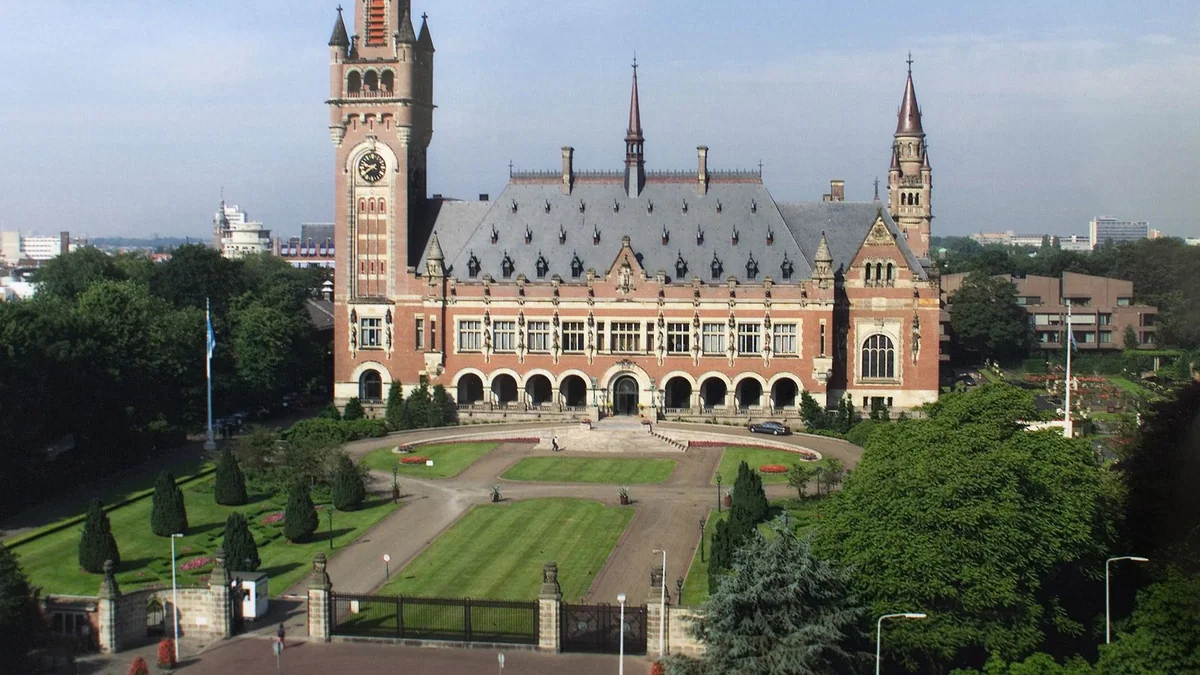
The Genocide Convention turns seventy-eight this year — and the ICJ Myanmar genocide ruling set for November 19, 2026, may force the International Court of Justice to apply the word it was written to enforce for the very first time. In all that time, through Bosnia and Cambodia and Darfur and every other proceeding the court has entertained, it has never once found a state responsible for committing the crime the Convention was written to name. Not once. On November 19, 2026, that changes, or it does not, and there is no procedural middle ground left to occupy.
The case is The Gambia v. Myanmar, filed in 2019 with the backing of the Organisation of Islamic Cooperation's fifty-seven member states. Its subject is the Tatmadaw's 2017 operations in Rakhine State, which Myanmar's military called clearance operations and which Doctors Without Borders estimated killed at least 6,700 Rohingya in the first month alone. The court itself, in its 2020 provisional measures order, was already sufficiently persuaded to tell Myanmar to take all measures within its power to prevent genocidal acts — a binding instruction the junta has acknowledged in writing twelve times without discernible effect.
What sits before the fifteen permanent judges today is the harder question: whether the specific intent to destroy a group, the dolus specialis that separates genocide from mass atrocity, can be attributed to a state. The ICJ has circled this category for decades, finding violations, finding breaches, finding failures to prevent, and declining, every time, to reach the word itself. The legal category has existed since 1948. The court has simply never applied it.
That is the threshold the judges cross today, or quietly step back from. The distance between those two outcomes is not procedural — it is the difference between a living convention and a beautiful document.
The Gambia v. Myanmar: Seven Years Toward an ICJ Genocide Ruling
The Gambia filed its application in November 2019 — a small state of two million people, backed by the 57-member Organisation of Islamic Cooperation, invoking the erga omnes partes principle to establish standing before the court. The legal logic was precise: every signatory to the 1948 Genocide Convention bears an obligation to prevent and punish genocide, regardless of direct injury. That argument gave The Gambia its seat at The Hague.
Myanmar's response has been consistent across seven years of proceedings. The 2017 operations in Rakhine State were, in Naypyidaw's framing, a legitimate counter-insurgency against the Arakan Rohingya Salvation Army — clearance operations, not extermination. The court will decide whether the evidence compels a different reading, and specifically whether the Tatmadaw acted with dolus specialis, the specific intent to destroy a group as such.
The court did not wait for final arguments to act. In January 2020, it issued provisional measures ordering Myanmar to take all measures within its power to prevent genocidal acts and to preserve evidence. Those orders were binding.
Myanmar submitted its 11th compliance report in May 2025. Compliance reports submitted by the accused are, by definition, not independent audits.
Eleven states — among them the United Kingdom, France, Germany, and Canada — were authorised to intervene in the proceedings, filing legal interpretations of the Convention's scope. Their presence narrows the judgment's isolation, though it does not guarantee its enforcement. The procedural arc, from filing to this week's ruling, spans seven years. The events it concerns took place in a single season.
The Proof of Intent: What Dolus Specialis Actually Requires
Genocide is not mass killing. That distinction is the entire legal architecture of this case. Under the 1948 Convention, a state bears responsibility for genocide only when the evidence establishes dolus specialis — specific intent to destroy a national, ethnic, racial, or religious group as such.
Proving that the Tatmadaw killed Rohingya is not enough. The court must determine that it killed them in order to destroy them. That bar is deliberately high — and it has never been cleared against a state at the ICJ.
The question now is whether the bench reads the 2017 "clearance operations" — 392 villages burned, 6,700 dead in the first month alone — as evidence of a pattern so systematic that specific intent is the only reasonable inference from the record. Eleven states, including France, Germany, the United Kingdom, and Canada, were authorised to intervene, submitting their own interpretations of what the Convention requires. Their collective reading of the intent threshold matters: it is a signal to the bench about how the Convention's principal custodians understand the standard they are being asked to apply.
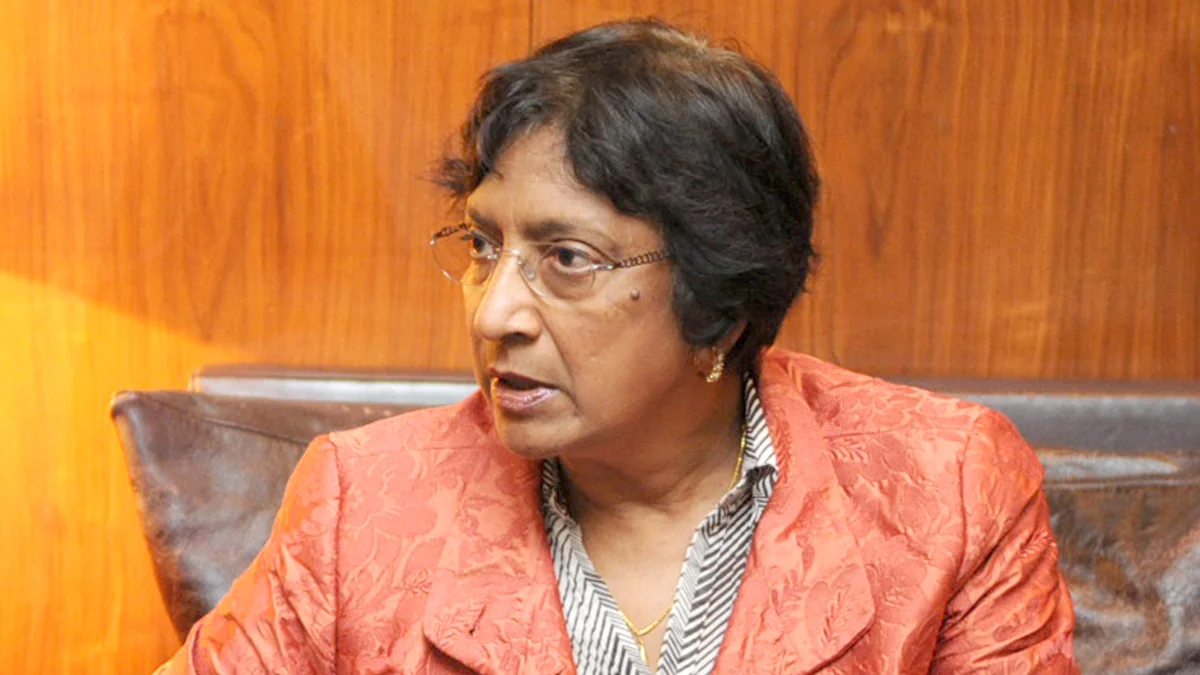
Then there is Navi Pillay. The South African lawyer serving as Myanmar's ad hoc judge was awarded the Nobel Peace Prize in October 2026. Washington's reaction was immediate.
Ambassador Mike Waltz accused her of "tipping the scales" and "intending to lower the legal threshold for proving genocide." The accusation is worth noting not because it is credible but because of what it reveals: the United States and Israel understand that a lowered intent threshold in this case will travel directly to South Africa v. Israel.
The Myanmar ruling is not a verdict about one country. It is a definition that will govern the next case, and the one after that.
The Myanmar ruling is not a verdict about one country. It is a definition that will govern the next case, and the one after that.
Washington Reaches for the Sanctions Lever
Before the judges had spoken, Washington began drafting the response. US Ambassador Mike Waltz did not wait for the verdict's reasoning. He warned publicly that the United States may impose sanctions on ICJ judges, singling out ad hoc judge Navi Pillay — a Nobel laureate as of October 2026 — as someone "tipping the scales" to lower the legal threshold for genocide.
The accusation was concrete and the implied threat was financial: the court's bench made into a sanctions list.
Secretary of State Marco Rubio supplied the doctrine behind the threat. International law, he argued, is "an instrument to advance their interests under the pretence of universal principles" — a tool of a global elite, not a universal standard. The Foundation for Defense of Democracies added operational specifics: a genocide finding, it predicted, would trigger US sanctions against the court itself.
Together, the three statements amounted to a coherent position, stated in the open.
The contradiction the administration prefers not to name sits in the public record. In 2022, the United States government formally determined that Myanmar had committed genocide against the Rohingya. That determination was Washington's own — not the ICJ's, not The Gambia's.
The current posture is therefore not a disagreement about facts on the ground in Rakhine State. It is a disagreement about who holds the authority to say the same word out loud.
Ask the small question first: who is the borderland here, and who is the empire? The court's small member states — The Gambia among them — built this case across seven years.
What Washington is now reaching for is not a legal argument. It is the lever that makes the architecture irrelevant regardless of what the judges write.
Cox's Bazar, November 2026: 1.2 Million People the Verdict Cannot Move
Between July and August 2017, somewhere between 700,000 and 740,000 Rohingya crossed into Bangladesh. They came on foot, by boat, through the mud of the Naf River. The camps around Cox's Bazar were already there; they simply filled past any imagined limit.
As of October 2026, UNHCR counts over 1.2 million Rohingya in those camps. That number has not fallen during seven years of proceedings at The Hague. It has risen.
The comparison the court's defenders need to make — between a binding ICJ ruling and any instrument that could physically move a refugee home — exposes the gap the judgment cannot close.
The 2017 crisis is not the only source of that number. Since late 2023, fighting between the Tatmadaw and the Arakan Army in Rakhine State has pushed an additional 150,000 people from their villages, adding a fresh layer to a catastrophe the court was still deliberating.
A genocide ruling addresses state responsibility under the 1948 Convention. It does not address a road, a transit corridor, or a government in Naypyidaw willing to receive anyone.
The camps at Cox's Bazar are the ledger entry behind all the jurisprudence. Dolus specialis, erga omnes partes, compliance reports: each is real, and none of it has reduced the population sheltering under plastic and bamboo on the Bay of Bengal.
The Marker to Watch: One Word in One Operative Paragraph
The ICJ binds states. It commands no army, controls no treasury, and has no mechanism to compel a government that simply refuses. That enforcement gap has always been the institution's structural fact, not its pathology.
What changes today is the identity of the state threatening non-compliance: not a military junta in Naypyidaw, but a permanent member's closest security partner in Washington.
The eleven intervening states, among them France, Germany, and Canada, are now the load-bearing wall. If they defend the court's authority against US sanctions, the judgment survives as precedent. If they defer, the architecture shifts from law to preference.
One word will tell you which way the majority held. Read the operative paragraph. If it says the parties shall comply, the court found the full case proven; if it says should, someone on the bench blinked.
The South Africa v. Israel docket is already forming behind this one, and the threshold for dolus specialis set here will govern it. The ICJ's Myanmar genocide ruling reaches beyond Rakhine State — it is the precedent that determines who can be named next.
Watch that verb. The 1.2 million people at Cox's Bazar will not be watching it as a jurisprudential curiosity.