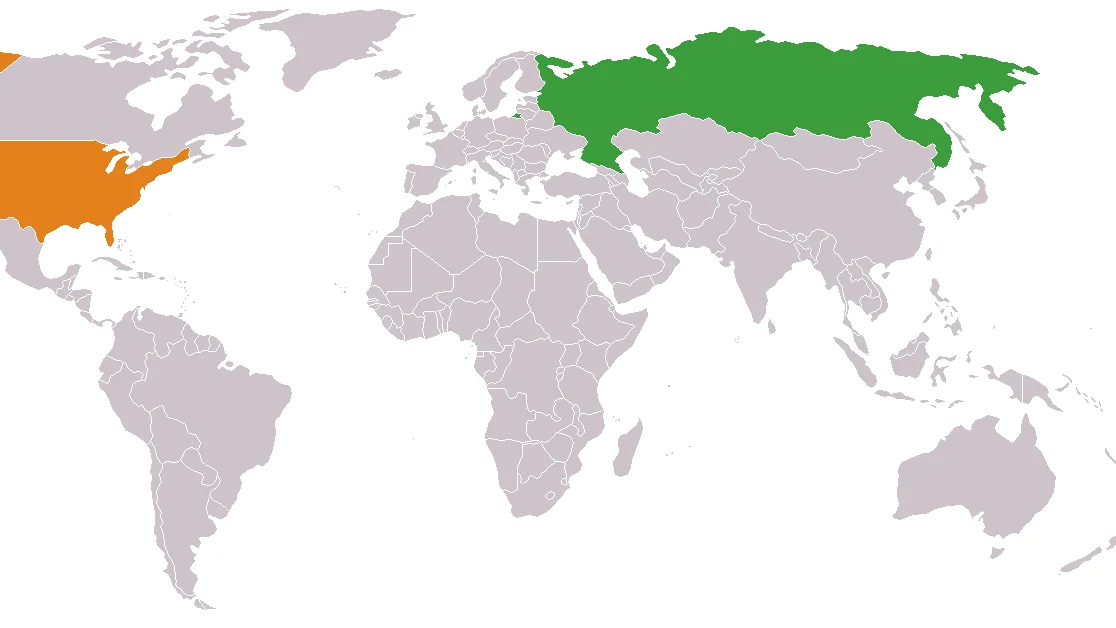
Nine Months of Silence, Then Abu Dhabi: What the Resumption Actually Means
Ukraine peace diplomacy returned to the table on November 10 and 11, 2026, when US-mediated talks between Russia and Ukraine resumed in Abu Dhabi after nine months of silence — a resumption whose terms will matter more than the fact of it.
The Dayton talks in November 1995 are remembered for what they produced: a map, a ceasefire, a set of annexes most of the parties immediately began to erode. What is less often remembered is what the mere fact of Dayton meant before anyone read a word of it — that the belligerents had agreed to sit in the same building. The comparison to Abu Dhabi is inexact, and that inexactness matters.
On November 10 and 11, 2026, American envoys Jared Kushner and Steve Witkoff facilitated the first direct US-mediated negotiations between Russia and Ukraine in nine months. The gap alone is the structural fact. Talks that do not happen cannot fail, but they also cannot build the procedural infrastructure that any eventual settlement requires — the agreed formats, the backchannel habits, the bureaucratic sediment of prior contact.
The session produced one concrete early deliverable: an agreement on a prisoner exchange described as the largest since the 2022 invasion. How many individuals, precisely, remains unquantified. That ambiguity is familiar from every conflict where prisoner numbers become a propaganda instrument before they become a humanitarian record.
Kushner and Witkoff proceeded to the Kremlin on November 12. The anchoring document on the table was a 19-point US framework, condensed from an earlier 28-point draft. Nine points were removed between drafts; what was cut is not yet public, and what was cut is almost always more revealing than what remains.
None of this is Dayton. The 1995 talks arrived after a military shift that had exhausted all three parties and redrew the map on the ground. No equivalent exhaustion exists here — at least not one both sides are willing to name.
The resumption of contact is real. Its terms are what will count.
Moscow's Floor in Ukraine Peace Negotiations: Four Regions, No Buffer, No Western Troops
Putin's territorial position is not an opening bid. He has stated it in terms that leave no procedural exit: full Russian control of Luhansk, Donetsk, Zaporizhzhia, and Kherson as the demarcation line, full stop. That is approximately one-fifth of Ukraine's internationally recognised territory.
It is also the minimum — not the aspiration.
The Kremlin has further refused any demilitarized zone within those four annexed regions. The refusal matters structurally. A DMZ, however thin, would imply a contested edge, a residual Ukrainian claim, a line that might one day move.
Moscow is not offering a frozen conflict with ambiguous margins. It is offering a border, recognised or not, behind which Russian sovereignty is treated as settled.
The third condition compounds the first two. Putin warned that any post-peace deployment of Western troops in Ukraine would trigger a resumption of fighting. The warning is not new, but its restatement here, in the context of active negotiations, functions as a veto on the security guarantee that Kyiv and the European capitals regard as the minimum ratifiable outcome.
Ask the small question first: who is the borderland here, and who is the empire? Ukraine cannot sign a peace that leaves it without protection; Russia will not sign one that provides it.
The gap between these positions is not procedural. No drafting adjustment to the 19-point US framework closes it.
The load-bearing wall on the Russian side is sovereignty over the four regions, uncontested and unguarded. The load-bearing wall on the Ukrainian side is a security guarantee with teeth. Those two walls hold up different buildings.
The Satellite as a Lever: Starshield and the Geometry of Compliance
Zelensky welcomed the European seat at the table. He also said, in the same breath, that US-imposed restrictions on Starshield satellite communications were costing Ukraine drone intercepts — specifically, that the throttled data flow had cut the reaction speed of Ukrainian air-defence units below the threshold needed to down Russian jet-powered drones. Both statements are true.
The juxtaposition is the story.
Starshield is the military-grade variant of Starlink, operated under US government contract. Its battlefield utility is not in question.
What is in question is who controls the dial. The restrictions do not appear to be a technical ceiling; they are a policy choice, and a policy choice is a lever.
The practical meaning for Ukraine is blunt. A drone your interceptors cannot reach in time is a drone that lands. The territorial concession that shapes a negotiation sometimes arrives not at the table but on the ground, before anyone sits down. What the battlefield loses, the diplomat inherits as a reduced hand.
The territorial concession that shapes a negotiation sometimes arrives not at the table but on the ground, before anyone sits down.
Zelensky's public criticism was precise: “If someone in America is making decisions that basically treat Ukrainian territory as if it is not Ukrainian, then it tells us where things are going.” That sentence deserves to be read slowly. It is not a complaint about hardware.
It is a complaint about sovereignty — who decides how hard Ukraine is permitted to defend itself, and by extension, what Ukraine is permitted to call its own.
The diplomatic concession, in this framework, follows the battlefield concession. The sequence is not incidental.
Europe at the Table — or at the Door?
The Elysée Palace put it plainly enough: “the pursuit of peace in Ukraine and security in Europe are inextricably linked.” Paris and Berlin have been saying some version of this for months, with mounting anxiety, into a room that until last week contained only Americans, Russians, and Ukrainians.
Then Kushner and Witkoff asked Putin. Putin said yes. The E4 Group — Britain, France, Germany, Italy — was told it would have a seat at the next round.
What kind of seat remains the question no one has answered on the record. Whether the E4 will hold voting weight or sit as observers has not been disclosed. It is not a small distinction; the difference between a party and a witness is the difference between a security guarantee and a photo opportunity.
Secretary of State Rubio was careful with his phrasing. The administration's goal, he said, is to ensure Europeans are represented directly at the negotiating table.
Directly is doing a great deal of work in that sentence. It answers the complaint without specifying the mechanism, which is precisely the kind of drafting that keeps everyone in the room until the structure is revealed.
The Europeans, for their part, have not been idle. The Readiness 2030 plan — the continent's push to build independent military capability without waiting for Washington's permission — moves forward in parallel.
It is both a contingency and a signal: that Paris and Berlin are preparing for the possibility that the table they are invited to sit at may already have the tablecloth pulled. That preparation is the one piece of leverage Europe holds that cannot be restricted by a software update in California.
Kostiantynivka: The Humanitarian Mission and What It Claims
Compare it to Mariupol in 2022, and the structure is familiar: a city named, a civilian population cited, an offer extended. The Mariupol “humanitarian corridors” routed people toward Russian-held territory and collapsed when the terms proved unworkable. Putin's proposal for a joint Russian-Ukrainian mission to Kostiantynivka follows the same grammar, with the same load-bearing assertion buried inside the concern.
The assertion is territorial. Putin describes Kostiantynivka as a city under Russian control. Approximately 400 to 500 residents remain.
Russia requires five days to clear mines before any mission can proceed. Each of these elements performs a function: the five-day demining request signals operational seriousness; the resident count signals humanitarian scale; the name of the city, placed in that sentence, signals something else entirely.
The city's name is doing diplomatic work. Accepting the framing of the proposal means accepting, at least provisionally, the jurisdictional claim embedded in it. No humanitarian communiqué is neutral about sovereignty when the sovereignty is contested.
The gesture differs from a genuine evacuation in exactly the way a map legend differs from a map: it tells you whose terms you are reading under. The mission, if it proceeds, does not rescue the residents of Kostiantynivka. It records who owns them.
Watch Shenzhen, November 18
The Abu Dhabi round produced a prisoner exchange, a European seat, and a framework trimmed from 28 points to 19. Whether it produced anything structural will not be known until November 18, when Trump and Putin meet at the APEC summit in Shenzhen — the first head-of-state contact in this diplomatic cycle, following the envoy-level rounds in Abu Dhabi and Moscow.
Three rounds of contact are not a process. It is a beginning, or it is a stage set. The Shenzhen meeting will determine which, and the determination will not come from the communiqué's summary paragraph but from one specific grammatical choice buried inside it.
Read the verb. If a joint text says the parties shall withdraw to a demarcation line, or shall permit monitoring, someone made a binding concession. If it says should, the architecture has no load-bearing walls, and the whole construction is decorative.
That single modal verb — carried forward from the envoys' 19-point draft into whatever emerges from Shenzhen — is the one checkable marker in an otherwise unverifiable process. If the language is permissive rather than obligatory, Ukraine peace diplomacy will cycle back onto your screen by spring, and the question of who was sold in the interval will answer itself.