A cloud-free smart home keeps every command inside your own walls — no manufacturer server, no monthly subscription, no kill switch held by someone else. When the company behind your devices shuts down, your lights stay on. That is the promise, and in 2025, two million active installations suggest it is working.
The Day the Hub Stopped Listening
One morning in 2023, thousands of people woke up to find their homes had forgotten them. Not a power cut, not a fire. The lights still had power. The smart locks still had batteries.
Insteon, one of the oldest names in home automation, had quietly shut down its servers overnight, and without those servers in California, nothing worked. A thermostat that had cost three hundred dollars became a small plastic rectangle that displayed the wrong temperature and accepted no commands. This is not a metaphor for something. This is what actually happened.
Insteon was not alone in this. Google had already set a precedent with Revolv, a hub it acquired and then killed in 2016, pushing out a software update that permanently disabled every device in every home that depended on it. The pattern is always the same: a company sells you hardware, ties its soul to a remote server, and retains the right to pull the plug. The hardware was never really yours. You were renting it, without knowing the terms.
Here is the strange part. None of this was technically necessary.
A local smart home — one where commands travel only between your phone and your own devices inside your own walls — maintains full control of lighting, heating, and locks whether the internet is up or not. No server in California required.
The lock locks. The light switches on. The thermostat reads the room.
These are not complicated operations, and your home's local network is fast enough to handle them without asking anyone's permission on the other side of the world.
The bricked Insteon hub was not a glitch. It was a design philosophy made visible. And it is exactly the thing a generation of engineers decided to fix.
The Speed of a Light Switch
Press a switch on your wall and the light responds before the thought has finished crossing your mind. That response time — roughly 150 milliseconds — has been the benchmark for "instant" since Edison. A local smart home command comes in at 0.5 to 1.0 seconds; a cloud-routed command takes anywhere from 2 to 15 seconds.
The difference doesn't sound dramatic until you're standing in a dark kitchen, tapping your phone, waiting for a server in Virginia to agree that yes, you would like the overhead light on.
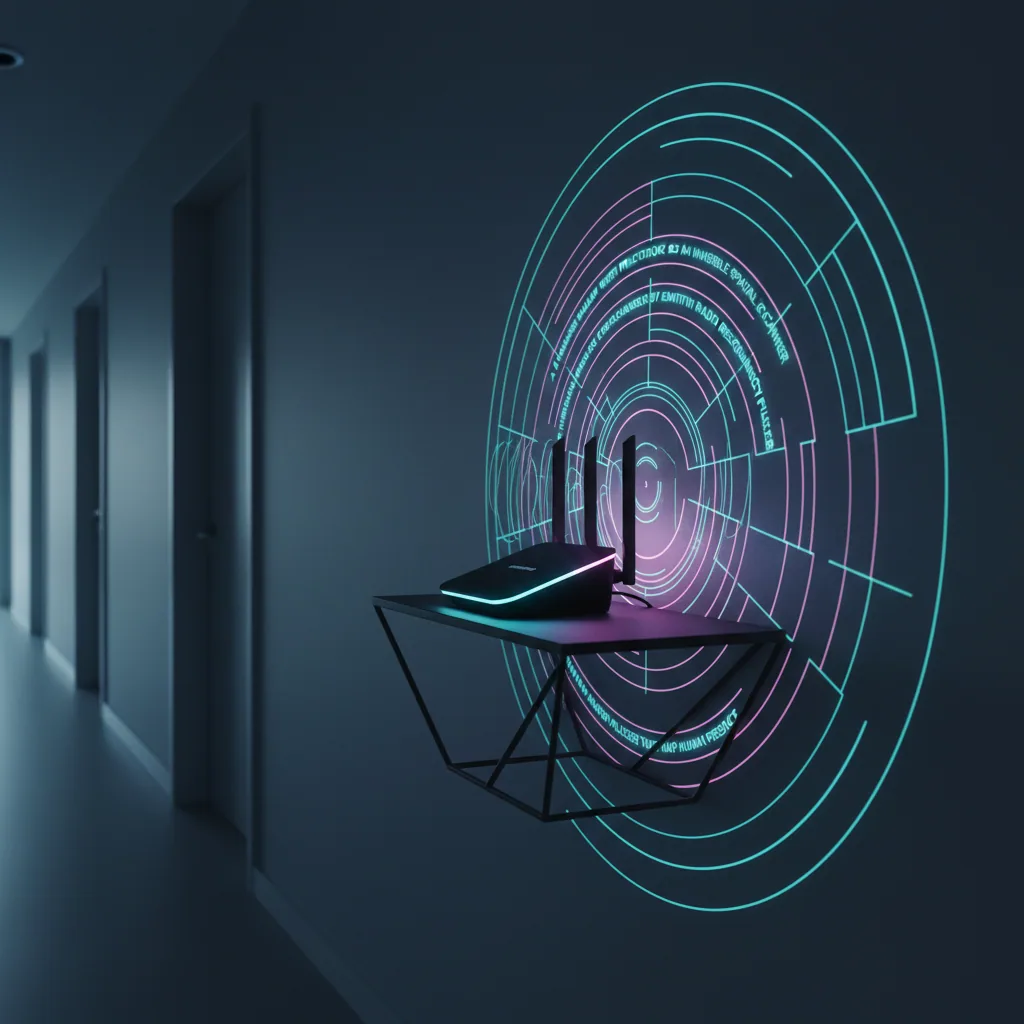
The reason for that gap is geography, in the most literal sense. When a local-first home automation system processes your command, the signal never leaves the building. It travels from your phone to a hub on a shelf somewhere nearby, and from there directly to the device.
No manufacturer server, no data centre handshake, no round-trip across the Atlantic. The command lives and dies inside your four walls, which turns out to have an unexpected side effect.
Because the command never leaves the house, there is nothing to log on the other end. Local processing eliminates usage records from reaching manufacturer servers entirely. Your morning routine — lights at 6:47, kettle at 6:48, blinds at 6:52 — remains exactly as private as a notepad on your kitchen counter.
This is not a privacy feature added on top of the system. It is a consequence of the physics: data that never travels cannot be intercepted, sold, or subpoenaed.
data that never travels cannot be intercepted, sold, or subpoenaed
One description of this, which I have not been able to improve on, is blunt and accurate: cloud lights feel like waiting for a slow website; local lights feel like a light switch. That sentence sounds like a low bar. After two decades of treating latency as the unavoidable cost of convenience, returning to something that simply works at the speed of intention turns out to feel genuinely radical.
Five Hundred and Fifty Companies Agree on Something
That almost never happens. Five hundred and fifty competing companies, from Apple and Google down to manufacturers whose names appear only on spec sheets, are all members of the Connectivity Standards Alliance — and in 2022, they finished agreeing on a common language for smart home devices called Matter. The problem they were solving is older than smart homes themselves: your thermostat spoke one dialect, your light bulb spoke another, and neither had any interest in learning the other's.
Think of it like power sockets before international standards. Every country had its own design, every device needed its own adapter, and travelling with electronics was an exercise in frustration and mild electrocution risk.
Matter is the universal socket — a single IP-based protocol that runs locally, inside your home network, without touching a manufacturer's server. The key word is 'locally.'
Getting five hundred companies to agree took years, which is why Matter only arrived in 2022. Matter 1.4, released in November 2024, expanded into solar energy systems and heat pumps — the devices that actually define a home's energy budget, not just its ambiance. Matter 1.6, released in October 2026, pushes toward deeper coordination between devices, so your solar panels, heat pump, and thermostats can reason together rather than simply coexist.
By 2026, more than 800 products had achieved Matter certification. That number matters because standards live or die by the size of their product library. A protocol supported by fifty devices is a curiosity; eight hundred devices is a foundation.
This is what practical progress looks like in a fragmented industry: slow, negotiated, occasionally tedious — then suddenly, almost enough of it to build on.
The 124 Percent Problem
Picture every front door in your neighbourhood. Now picture someone quietly trying each one, all night, every night, with an automated lockpick that never gets tired. That is roughly what happened to smart home devices in 2024, when recorded cyberattacks against them rose by 124 percent in a single year. The cloud is not just a convenience; it is a surface, and surfaces can be hit.
The attack vector is almost elegant in its simplicity. Your motion sensor registers movement at 2:17 a.m. That event travels from your hallway to a server in another country, gets logged, gets processed, and comes back as an instruction. Somewhere on that round trip, it is exposed.
The log — a detailed record of when you sleep, when you leave, when you open the fridge — lives on hardware you have never seen, governed by a privacy policy few people read even once.
Data sovereignty sounds like a phrase from a policy seminar. What it means in practice is simpler: who actually holds the history of your house?
Local-first architecture gives a blunt answer: the log never leaves. The inference happens inside your own walls, on a small computer sitting on a shelf next to the router.
That same local mini PC can now run a large language model for voice assistance, handling your spoken requests without sending a single syllable to an external server. The unglamorous engineering underneath uses three open-source tools: Assist, which coordinates the home's response; Whisper, which converts your speech to text; and Piper, which speaks back.
None of them require a subscription. None of them report to a distant data centre. They are, in the quietest possible way, a small act of reclamation.
Two Million Cloud-Free Homes, One Green Box
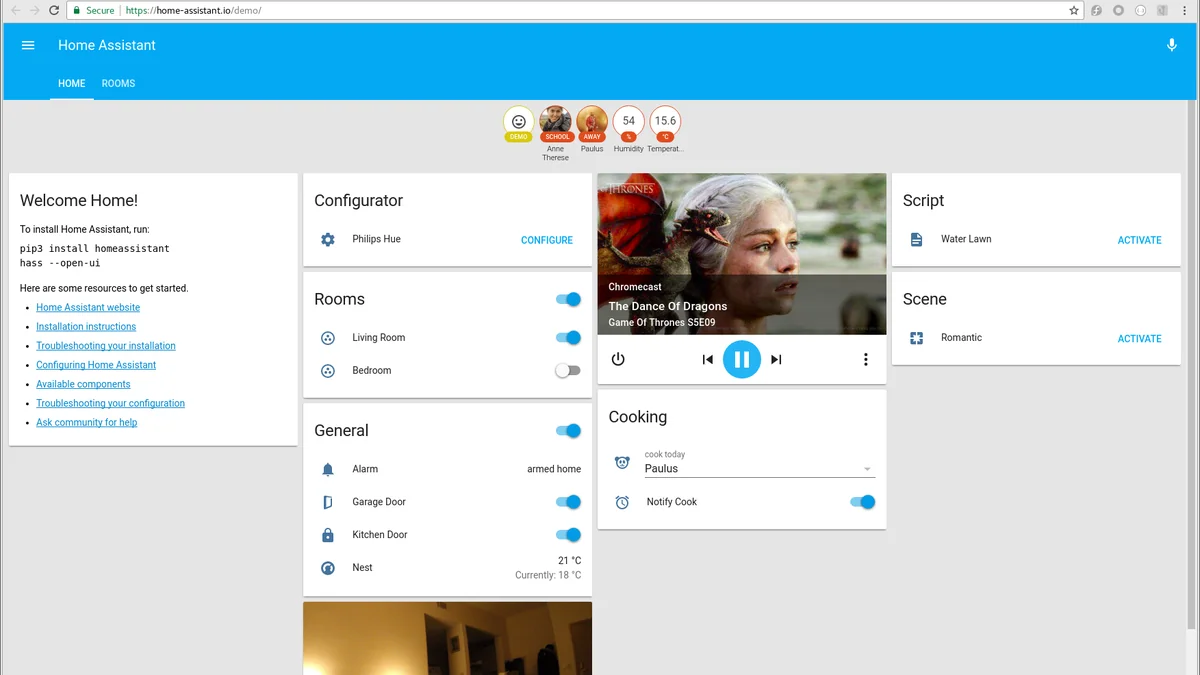
Two million. That is not a niche community of hobbyists soldering circuits in basements on weekends. By April 2025, Home Assistant had crossed two million active installations worldwide — a number that puts it in the same breath as mid-sized national broadband programmes. For comparison, Netflix launched its streaming service to fewer paying subscribers than that in its first full year.
The scale matters because it marks a threshold where a movement becomes a market.
What drove those two million households there is not hard to find: subscription fatigue. The smart home industry spent a decade selling hardware at thin margins and recovering the difference through monthly fees, cloud storage charges, and "premium" automation tiers.
Buy the camera, then pay to actually see the footage. Buy the hub, then pay for the automations. At some point, the arithmetic stopped making sense, and people started looking for the exit.
The exit, increasingly, looks like a small green box. Home Assistant Green costs €179, plugs into the wall, and runs your entire home locally without a subscription, ever. The pitch is almost aggressively simple: buy it once, own it forever.
No server in California needs to agree that your lights can turn on. That is a genuinely different economic model from the one that bricked Insteon and Revolv devices when their companies walked away.
The long-term health of this model gained an institutional spine in 2024, when the Open Home Foundation was established to hold the platform's open-source code in trust. It is the kind of quiet organisational move that rarely makes headlines and almost always matters more than the ones that do.
The foundation means no single company can buy Home Assistant and lock it behind a paywall. The two million homes have a lease, not just a licence.
What Bisly Knows — and What Nobody Does Yet
Tallinn is not the first city you think of when the subject is smart home innovation. That may be changing. Estonian company Bisly has spent recent years building cloud-independent building automation that continues working whether the internet is up or not, its local controller making decisions independently of any manufacturer's server.
TalTech researchers were still analysing exactly why that matters in 2025, publishing work on local-first protocols through the lens of security and long-term autonomy. The conclusion was not surprising, but having the data makes it concrete.
The energy numbers are where the story gets interesting. Integrated local systems that coordinate heating, lighting, and appliances together rather than separately can cut household energy costs by 40 to 50 percent. That figure earns scrutiny, because 40 to 50 percent is a range wide enough to hide a great deal of variation in house size, climate, and baseline habits.
It also assumes the coordination is genuinely tight, not just a few smart plugs on a schedule.
Which brings the honest questions into view. Nobody has cleanly measured the total energy footprint of running a local mini PC or dedicated hub continuously against the share of cloud server load a single home represents. The long-term hardware lifespan question remains open too; Matter 1.6 is barely months old, and ten-year reliability data does not exist yet because ten years have not passed.
The simplest question of all — what percentage of Estonian homes have actually made this shift rather than merely considered it — has no published answer.
That gap in the data is not an embarrassment. It is an invitation.
The cloud-free smart home revolution may be real, or it may still be a movement of enthusiasts waiting to become a majority. We will know in about a decade, once the hardware either holds or doesn't.