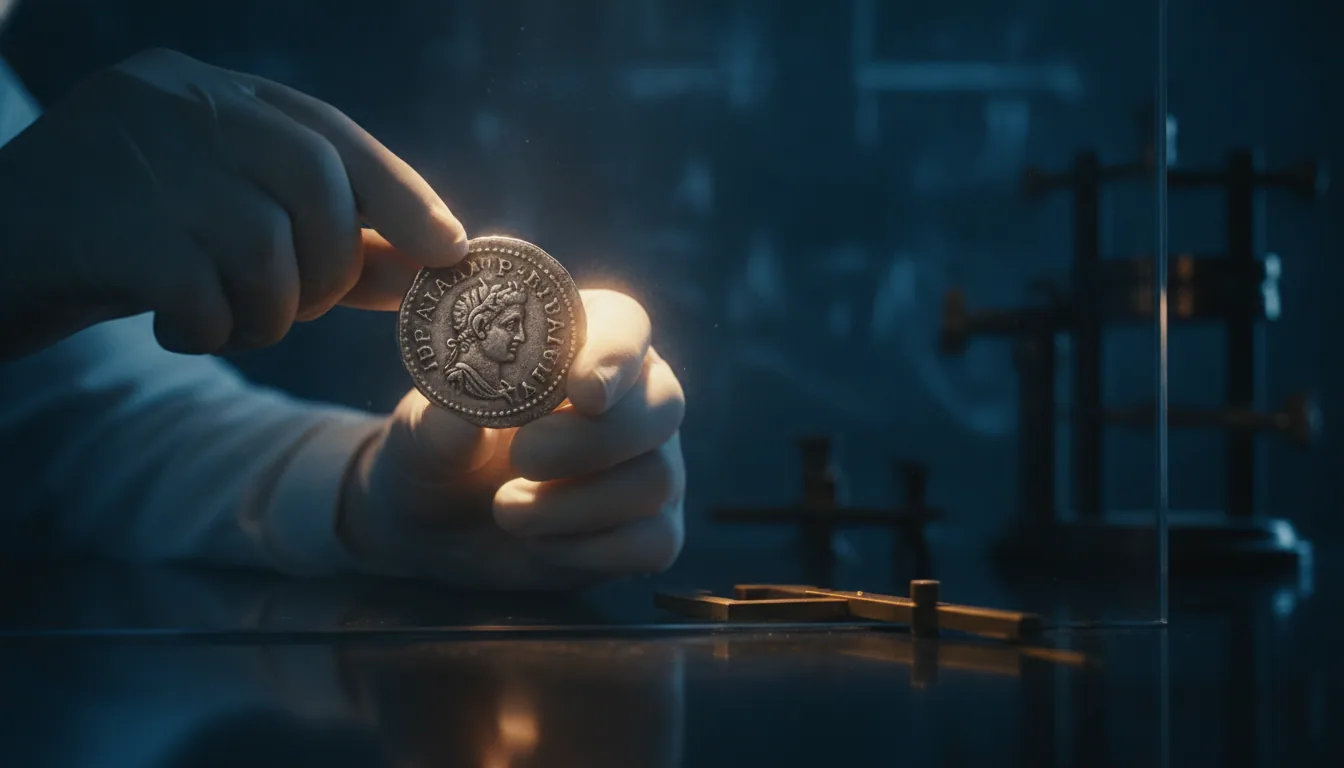
The coin nobody read correctly
An Iron Age female ruler has been hiding in plain sight for over a century. Look at the coin closely enough and something stops making sense. The rider stamped into the metal is slender, bare-chested, unmistakably female.
The coin was minted under Verica, ruler of the Atrebates tribe in what is now southern Britain, around 40 AD. For well over a century, everyone who catalogued it, taught it, or put it in a glass case had already decided Verica was a king, so the rider on the coin was a king too. The image never changed. The assumption did all the work.
On November 4, 2026, Miles Russell of Bournemouth University and his colleagues announced what the coin had been saying all along. Verica was almost certainly a woman. The research did not arrive with dramatic new excavations or a trove of previously unknown material. It arrived with something harder to come by: a willingness to look at old evidence without the conclusion already loaded into the question.
Here is the strange part. The iconography was always there, in museum drawers and academic catalogues, patiently misdescribed. A female rider does not become a male rider because a scholar assumes the ruler was a man.
But assumptions are remarkably good at making inconvenient data invisible, and the Iron Age, filtered through two centuries of scholarship shaped by men who took male power as the default, had accumulated a great deal of that invisible data. Russell's team did not overturn the archaeology. They read it.
What they found, once they read it plainly, was not an outlier. It was the beginning of a much larger reckoning.
The Iron Age Female Ruler Who Called the Romans
Verica ruled the Atrebates, a tribe occupying what is now southern Britain, sometime around 40 AD. The Atrebates were not a marginal group. They controlled valuable farmland and trade routes, and their ruler carried enough political weight to reach across the Channel and address the most powerful man in the Western world. What Verica sent Emperor Claudius was not a request so much as a pretext.
The appeal worked. In 43 AD, Roman legions crossed the Channel and began the conquest of Britain. Claudius needed a justification that would play well in Rome, and a displaced ruler begging for restoration provided exactly that. The invasion reshaped the island's language, infrastructure, religion, and law for the next four centuries.
Now read that again, with one correction: the ruler seeking military backing was almost certainly a woman.
That single change in pronoun pulls on a thread that runs through everything. The Roman invasion of Britain, one of the pivotal events in European history, was not triggered by a displaced king. It was triggered by a female refugee ruler, possibly fleeing a rival claim to a matrilocal throne.
The diplomatic machinery that Rome set in motion, the letters, the negotiations, the massing of legions, all of it began with a woman asking for her kingdom back.
Historians have always known Verica mattered. They simply assumed, without much examination, that Verica was a man. The assumption did its usual quiet work, and nobody looked at the coin closely enough to notice the rider was not.
What the name knows, and what the tribe remembered
The clue was always in the name. "Verica" ends in "a," and in the naming conventions of Iron Age Britain, that terminal vowel was a reliable marker of female identity. Miles Russell of Bournemouth University points this out with the quiet satisfaction of someone noting that the answer was sitting on the label the whole time. For generations, scholars saw a powerful ruler and read the name right past it.
The linguistic signal does not stand alone. Archaeological analysis of the Atrebates suggests the tribe may have been matrilocal, meaning power followed the female line rather than the male. In matrilocal societies, it is the women who stay and the men who move. That is not unusual in the global historical record, but it is a detail that reframes everything about how Verica held authority and why a Roman emperor would take her plea for help seriously.
This matters beyond one reclassification. If the Atrebates had a structured system of female succession, then Verica was not a Boudica, not an extraordinary exception whom history remembers precisely because she was exceptional. She was a product of normal politics, doing what rulers of her kind did. That is a larger revision to the story of Iron Age Britain than any single coin.
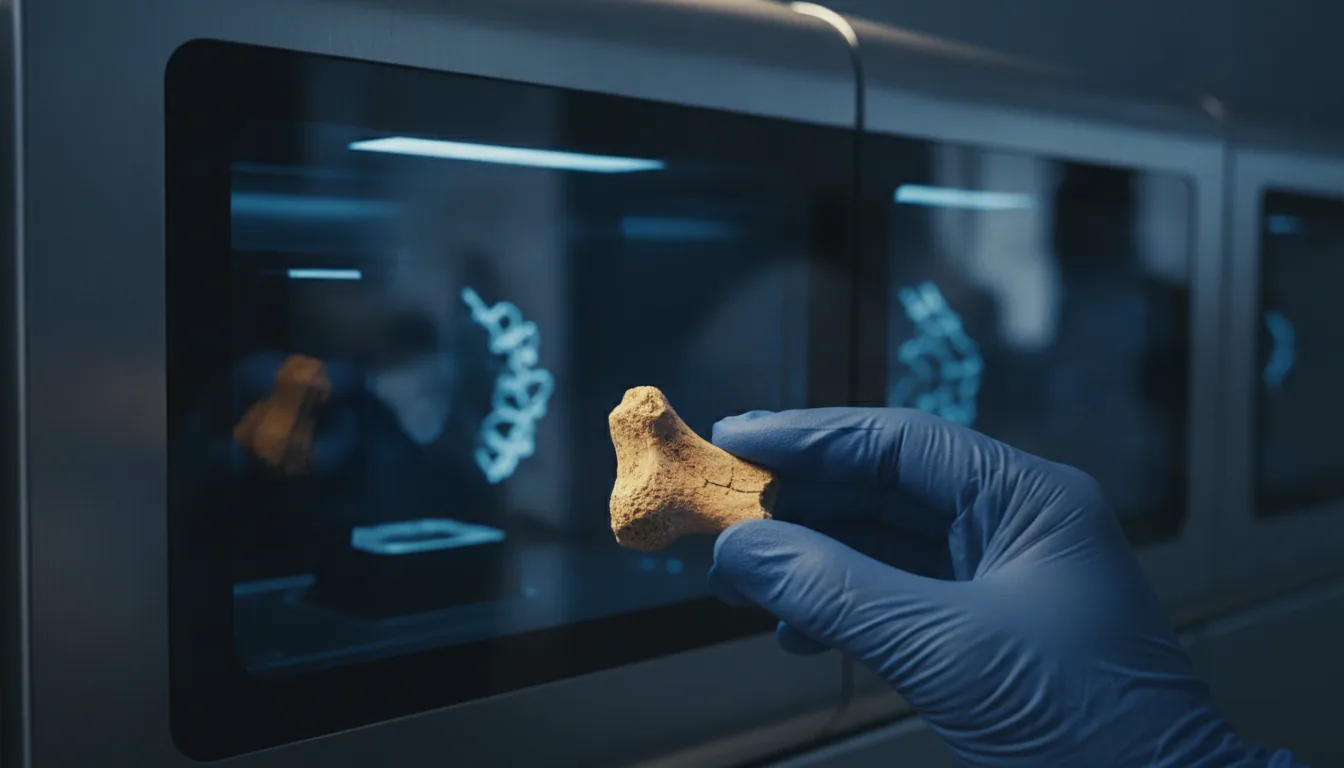
There is an honest limit here too. The physical remains associated with Verica are fragmentary or lost entirely, so biological confirmation through DNA or proteomics has not been possible. The case rests on coins and linguistics. Strong evidence. But not yet the final word.
The bone readers: how science learned to ask the skeleton a different question
For most of the twentieth century, the question archaeologists asked of a grave was answered before they finished digging it. Weapons meant warrior; warrior meant man. The logic felt airtight. It was, in fact, a mirror held up to the excavators themselves.
The mirror cracked in 2017. Grave Bj 581 at Birka, Sweden, had been cited in textbooks since the 1880s as the definitive Viking warrior burial: a sword, a war axe, two horses, a full tactical kit. Male, obviously.
Then a research team ran DNA from the teeth and bones. The warrior was biologically female. Not ambiguously, not marginally. Female. The finding arrived like a loose thread tugged on a sweater.
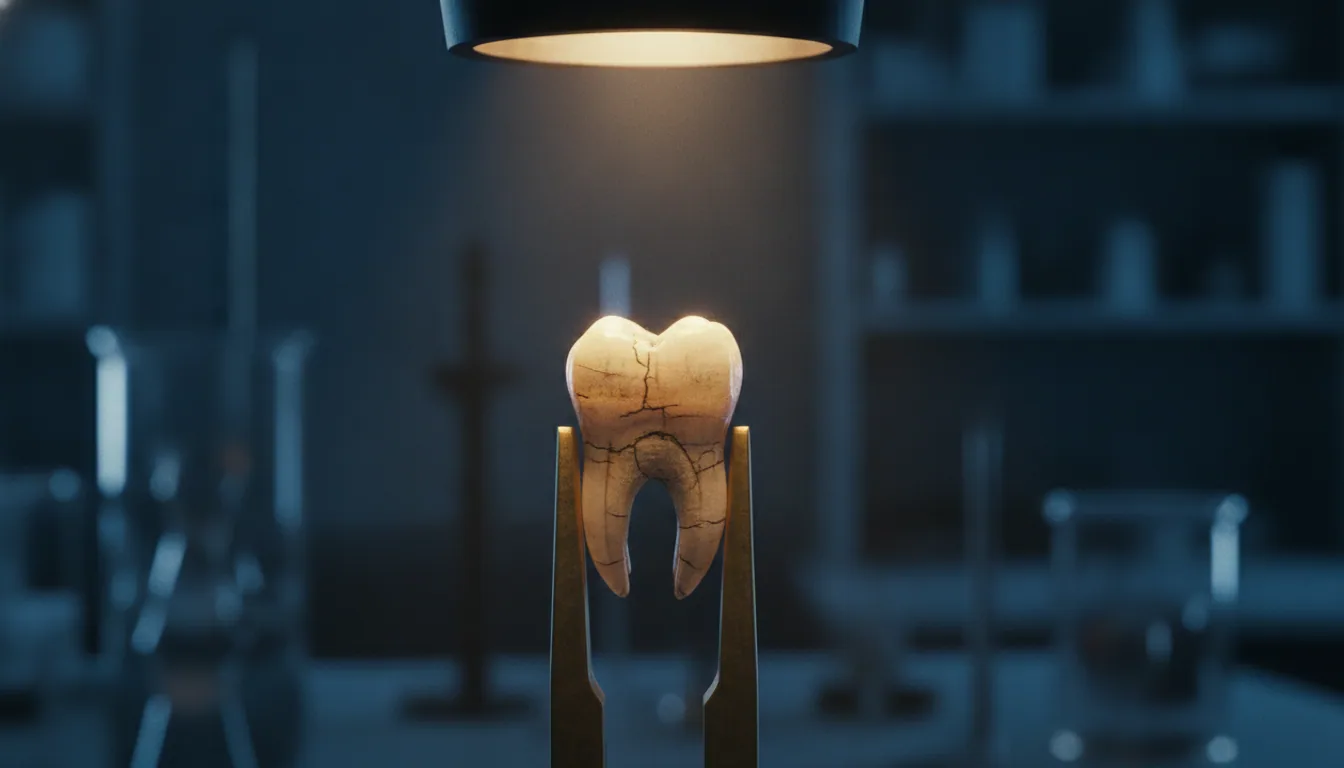
What do you do when the knitter is gone and the original label is wrong? You read the fabric differently. Advances in biomolecular archaeology have handed researchers a new instrument: proteomics, specifically the analysis of amelogenin proteins in tooth enamel. Tooth enamel survives almost everything. Where ancient DNA has degraded to noise, amelogenin proteins hold their shape across millennia, still carrying the biological sex of the person who grew that tooth. It is a message in a bottle that no flood can ruin.
The Suontaka burial in Finland, dated 1040 to 1174 AD, is perhaps the most demanding case the new tools have confronted. When Ulla Moilanen of the University of Turku led the DNA analysis, published in 2021, the results named something that defied both the original Victorian catalogue and any simple update to it. The individual had Klinefelter syndrome, an XXY chromosome pattern, a body that did not map neatly onto a binary.
And yet the community had mapped them onto something. Buried in female attire, with two swords laid close, this was a person the Iron Age apparently had a word for, even if we have lost it.
The methodological lesson is almost embarrassingly general. Add a new class of evidence to an existing model and the picture improves, dramatically. That principle holds in any science. The skeleton has always known the answer. We only recently learned to ask the right question.
The other side of the coin: women, violence, and an Iron Age we did not expect
A picture is emerging of Iron Age society, and it refuses to be tidy. In 2026, a study published in Nature on an Iron Age mass grave documented levels of organized violence directed specifically at women and children — unprecedented in scale, systematic in pattern. Hold that finding next to Verica: a female ruler, a probable matrilocal society, women buried with swords. Both things are true at once.
This is not a contradiction the evidence needs to resolve. The same era that produced female rulers and high-status female warriors also produced organized lethal violence targeting women. Neither fact cancels the other; together they sketch a world more complex than the Victorian binary ever allowed for.
The 19th-century archaeologists who built our interpretive frameworks were not careless — they were systematic. Weapons meant warrior meant male. The logic was internally consistent and entirely wrong, and it calcified into the foundation of every museum label written since.
Gender bias was not a rounding error in archaeology. It was load-bearing infrastructure.
The crisis this creates is practical and enormous. Thousands of "warrior" graves across Europe were assigned male by grave goods alone, never subjected to biomolecular review. Proteomics and DNA analysis can now ask the skeleton directly — and the skeleton, it turns out, has been waiting patiently to be asked. Dismantling it means revisiting not just individual graves but entire catalogues, entire narratives, entire textbook chapters about who built, ruled, and fought in the ancient world.
How many kings are still waiting to become queens?
Verica is one. How many others are there? Nobody knows, and that is the most useful thing we can say right now. The Atrebates were not the only Iron Age tribe minting coins and naming rulers; neighboring groups produced similar series, and no systematic biomolecular review of their associated burials has been completed. The numismatic record alone, coins read through Victorian assumptions about who rides and who rules, is a catalogue of questions we have not yet thought to ask.
There is a second, sharper uncertainty underneath that one. We do not know whether Verica's own people used a gendered word for her title at all. "King" and "queen" are categories we carry from our own political history, imposed on a society that may not have drawn the distinction the same way, or may not have drawn it at all. The Latin word rex that Roman sources applied to frontier rulers was a translator's convenience, not a transcript.
What the reclassification of Verica as an Iron Age female ruler genuinely opens is not a verdict but a method. Birka fell in 2017. Suontaka fell in 2021. Verica in 2026.
The pattern is not coincidence; it is what happens when better tools meet older assumptions. Every generation has believed it understood the past, and every generation has been partly, gloriously wrong. That is not archaeology's failure. It is archaeology's engine. The question is simply which name falls next.