London Finally Hosted Its Own Coronation, and It Was Exactly as Surreal as It Sounds
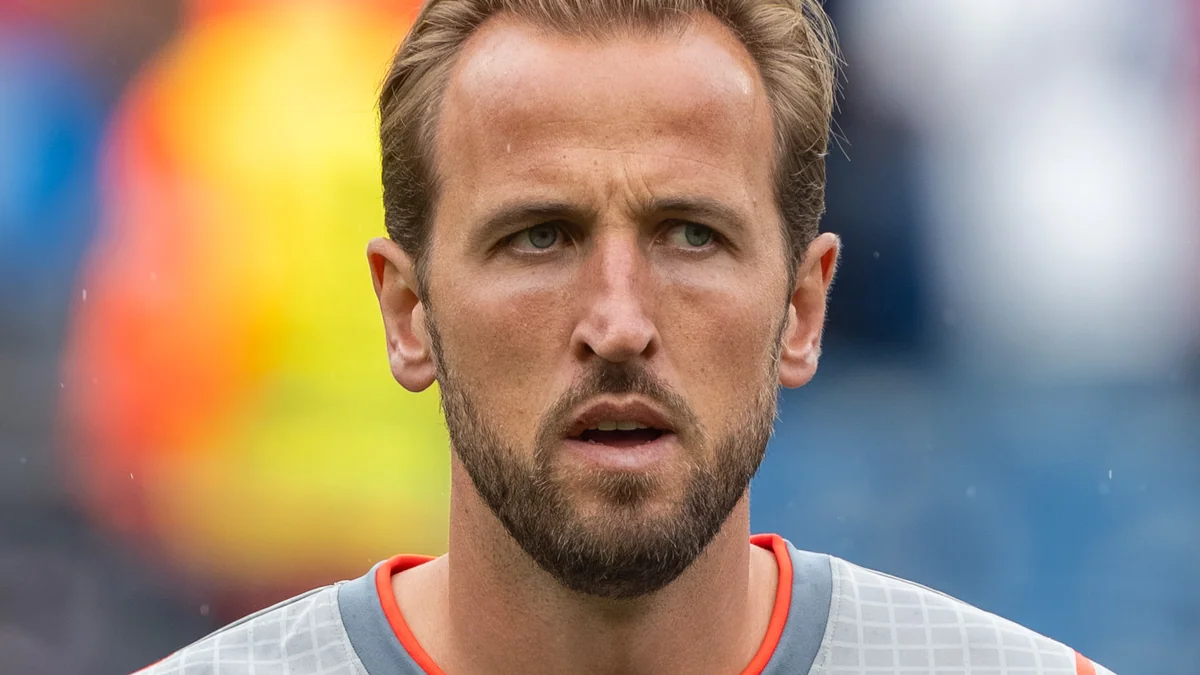
Harry Kane won the 2026 Ballon d'Or on October 26 at London's Palladium Theatre — the first Englishman in twenty-five years to claim football's highest individual honour, and the first time the ceremony has ever been held in Britain. He did it with 73 goals across 65 appearances in the eligibility window. France Football packed up the golden ball and shipped it across the Channel, and whether this was poetic symmetry or the universe finally writing a satisfying sentence after decades of bad ones is genuinely unclear.
Picture the Palladium Theatre on that night: a building that has hosted everything from music hall legends to Kylie Minogue's comeback tours, now tasked with handing football's most French award to an Englishman, for the first time in its seventy-year history of staged spectacle. Kylian Mbappe was there. Lamine Yamal was there. The whole gang, assembled in a West End theatre, watching a man who once went on loan to Leyton Orient collect football's highest individual honour. The optics were, to put it generously, a lot.
Alexia Putellas also won the Women's Ballon d'Or at the same ceremony, which means the evening produced at least two genuinely historic moments and approximately one thousand thinkpieces by morning. London had never hosted this before. An Englishman had not won this in twenty-five years. Both things happened on the same night, in the same building, and if that doesn't feel like a sentence from a novel someone already wrote, you haven't been paying attention to how strange this sport gets when it decides to be meaningful.
Seventy-Three Goals, Five Hundred Career Milestones, and a Man Who Simply Refused to Stop Scoring
Here is a number that will make you feel things: 73. That is how many goals Harry Kane scored across 65 appearances in the Ballon d'Or eligibility window, plus 8 assists, which means he also occasionally remembered other humans exist on the pitch. You can check the spreadsheet. The spreadsheet is real. The spreadsheet is having a better year than most of us.
Of those 73 goals, 61 came in the 2025/26 club season for Bayern Munich alone, which is the kind of statistic that reads like a typo until you search it three times and then sit quietly for a moment. For context, 61 goals in a single club season is a number most strikers do not reach in a career. Kane reached it in nine months, presumably while also eating lunch.
He also won the Torjagerkanone for the third consecutive year with 36 Bundesliga goals. The Torjagerkanone is the German award for the league's top scorer, and the name translates roughly to "top scorer cannon," which is appropriate, because Bayern's opponents spent this entire season being fired at. Three consecutive wins — the same man, every year — the committee apparently just writes "Kane" and goes home.
Then there is the 500. Career goals in official competition. Five hundred. That is a number most people do not reach in FIFA Career Mode on Easy, and Kane reached it playing against actual professional defenders who were actively trying to stop him. He also collected the Gerd Muller Trophy for the second time as the world's most prolific striker, an award named after a man who set records people assumed were geological features, permanent and immovable. Kane is moving them. Quietly, efficiently, with the energy of someone who has a very organized spreadsheet and absolutely intends to fill it.
The Guy Who Was Never Supposed to Be Here: Loans, Doubts, and Refusing to Get the Memo
There is a certain type of career trajectory that does not traditionally end with the Ballon d'Or. It involves Leyton Orient. It involves Millwall. It involves being shuffled around the lower tiers of English football on loan spells that look, in retrospect, less like a development plan and more like a filing system for players nobody was quite sure what to do with yet.
Kane did all of that. He did it quietly, without the benefit of a viral skills compilation or a narrative arc that anyone was pitching to documentary producers. The resume entry that precedes "best footballer on earth" apparently used to include "did a season at Norwich City in the Championship," which is either the most inspiring thing you've ever heard or an argument against every talent identification system currently operating in professional football. Possibly both.
He spent the peak years of what should have been his trophy-collecting window at Tottenham, a club that wins nothing with the commitment of a method actor who refuses to break character. When he finally moved to Bayern Munich in 2023, the explicitly stated reason was trophies. He looked at the problem, identified the problem, and relocated to solve the problem. That's not a football transfer, that's project management.
His own quote — "I was never the person people thought would be a superstar" — is doing two things simultaneously: functioning as a humble self-assessment, and serving as the most efficient roast of every scout, pundit, and Football Twitter account that filed him under "good but not that good" for six consecutive years. The New York Times called him not a born Ballon d'Or winner. They meant it as a compliment. They were right. Born winners don't have to survive the Championship to become one.
A Domestic Treble in Germany, Six World Cup Goals, and the Sequence of Events That Actually Won Him the Trophy
Bayern Munich won the Bundesliga. Then the DFB-Pokal. Then the German Super Cup, which is technically three trophies and also, for context, three more trophies than Kane had collected across his entire Tottenham career combined. Picture the man who couldn't win a cup final in London, lifting silverware in Munich, repeatedly, like someone discovering the fridge has food in it every single time they open the door.
That was the club half. The country half had its own particular texture.
At the 2026 World Cup, Kane captained England to a bronze medal, which is the kind of result that sounds like a consolation prize until you remember England's relationship with tournaments historically involves words like "penalty shootout" and "we thought this time was different." He scored six goals in the tournament and became England's all-time leading scorer in World Cup finals, surpassing Gary Lineker — which carries the specific emotional weight of a country that has been measuring itself against the ghost of 1966 for sixty years and finally, in some small and technically countable way, moved the needle.
Here's the thing about France Football's voting that nobody wants you to understand: it rewards a calendar, not a moment. The eligibility window asks journalists to weigh a full body of work, club and country, stacked together. Kane handed them a domestic treble and six World Cup goals in the same argument. Mbappe handed them a Champions League run. Yamal handed them a breakout season. Kane handed them receipts. Plural. And in a ballot decided by accumulation, not highlights, the man with the most receipts usually wins.
Kane handed them receipts. Plural. And in a ballot decided by accumulation, not highlights, the man with the most receipts usually wins.
Twenty-Five Years, Four Predecessors, and a Margin So Thin It Could File a Noise Complaint Against Mbappe
Michael Owen won this thing in 2001. Think about that sentence for a moment. Owen, who at that point was essentially a football-shaped comet that briefly lit up the sky before gravity remembered it existed, was the last Englishman to hold the Ballon d'Or. Kane is the fifth English winner in the award's entire history — a list that reads: Stanley Matthews, Bobby Charlton, Kevin Keegan, Michael Owen, and now Harry Kane. That is not a dynasty. That is a very awkward family reunion where everyone arrived in a different decade.
The gap between Owen and Kane is not merely long. It is long in the way that geological epochs are long — technically just a number, but experientially a whole civilisation of disappointment. England produced world-class players throughout those twenty-five years and somehow sent zero of them home with the trophy, which is either a deeply revealing statement about the award's criteria or a deeply revealing statement about England.
Kane finished ahead of Kylian Mbappe in second place and Lamine Yamal in third. The voting margin between Kane and Mbappe was described as extremely narrow — genuinely, historically close — and yet the technicality that separated them was seventy-three goals, a domestic treble, and six World Cup strikes. Narrow is a generous word. Narrow suggests a coin flip. This was a coin flip where one coin had been training since 2003 and simply refused to lose.
What Kane's Ballon d'Or Win Actually Means — Which Is Complicated, and Also Funny, and Also Kind of Wonderful
England had not produced a Ballon d'Or winner since 2001. Twenty-five years of world-class players, Premier League money, tournament heartbreaks, and precisely zero trophies of this particular kind. Then a man who spent his early career on loan at Leyton Orient and Millwall goes to Germany, scores 73 goals in a single eligibility window, and fixes it. That is either inspiring or deeply stupid, and the difference between those two words is approximately 73 goals.
Kane said "anything is possible" at the ceremony, which is the kind of sentence that sounds like a motivational poster until you check the underlying evidence, at which point it sounds like a documentable claim. The story is fundamentally about ignoring the conventional timeline — the one that says you peak at 23, win everything by 26, and collect your award before anyone notices you're mortal. Kane ignored that timeline so comprehensively it filed a missing persons report.
England hasn't solved football. One man solved it for himself, in a foreign city, at an age when most narratives had already written him a graceful decline. The ceremony was in London, the winner was English, and the golden ball was real. Harry Kane's Ballon d'Or is the document. Whether any of it means something is honestly your problem now.