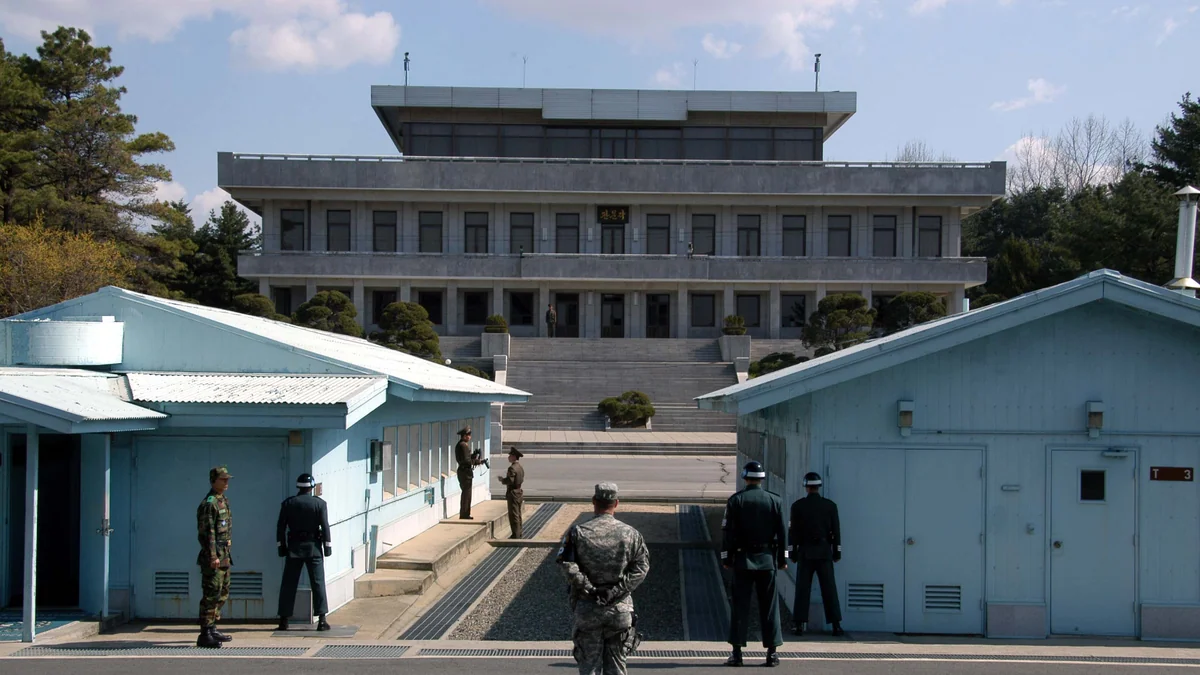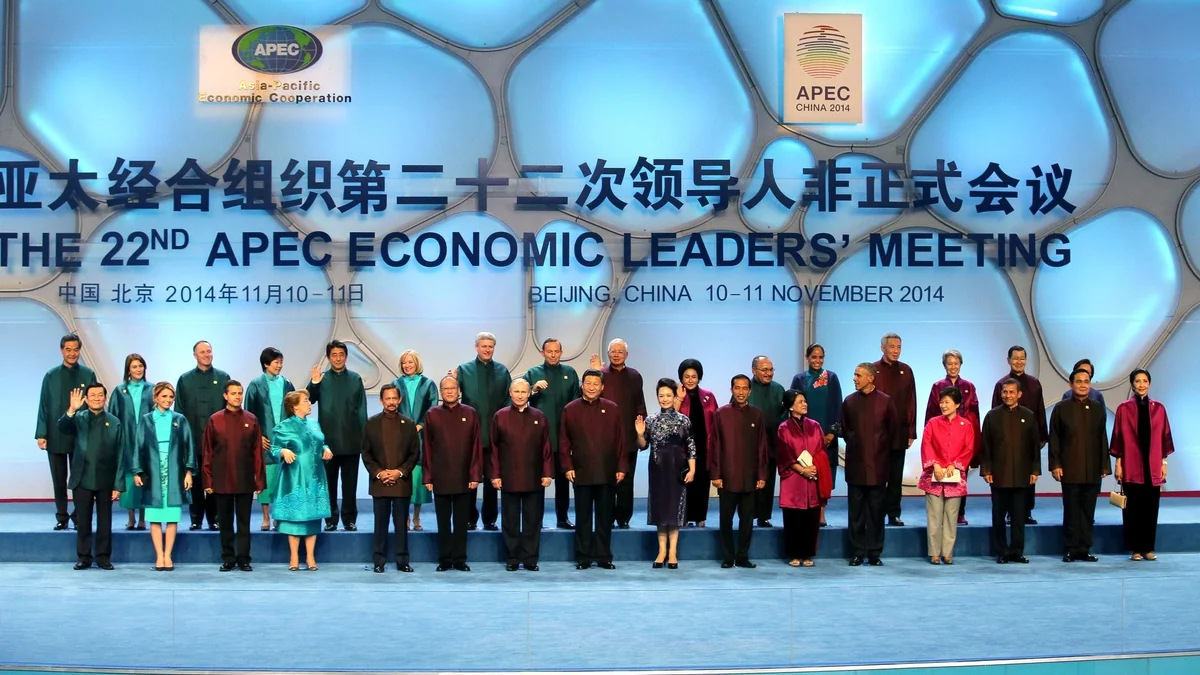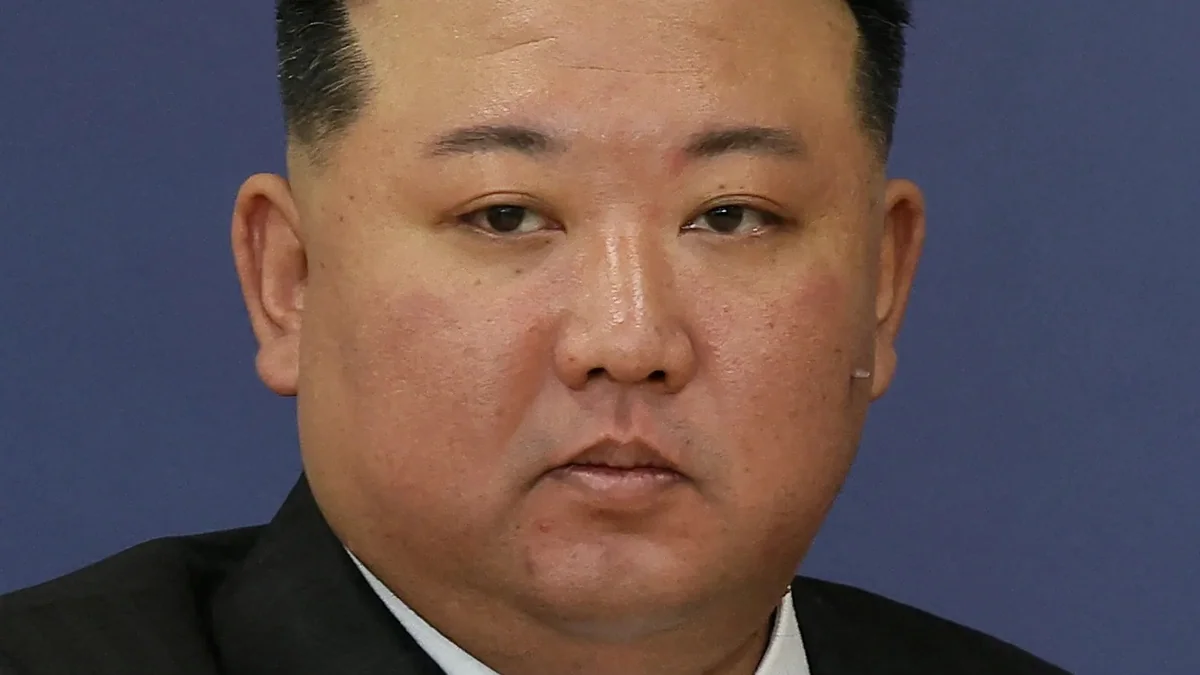
Kim Jong Un crossed into China on October 24, 2026, en route to Beijing, using the New Yalu River Bridge to reach Dandong in the first confirmed motorcade transit across this span. The crossing ended four days of false health rumours, with a summit with Xi Jinping expected ahead of the APEC gathering in Shenzhen.
The Rumour That Ran for Four Days
In April 2020, Kim Jong Un vanished from public view for three weeks, and a reliable North Korean source told several wire services he had undergone cardiac surgery. The surgery was never confirmed and never denied; Kim reappeared, the story dissolved, and the structural condition that produced it changed not at all. Six years later, the cycle ran again.
Between October 19 and 22, 2026, a claim circulated that Kim had suffered a brain haemorrhage and fallen into a coma. Ukrainian National News carried the initial report; The Sun and BBC amplified it into English. A single social media account, Wanjun Xie, added the detail that Kim was receiving secret medical treatment in Beijing.
Neither claim produced a primary source of the kind a news organisation could name and stand behind.
South Korea's Ministry of Unification called the reports baseless. KCNA released photographs that served, in the North Korean information economy, as the official counter-signal. Seoul's dismissal was brisk and categorical, which itself tells you something: when a neighbour that watches the border radar every hour shrugs, the analyst should shrug too.
The recurring pattern is structural, not anomalous. The DPRK's information architecture guarantees that any absence of Kim Jong Un from public view will generate health speculation, and that speculation will find outlets willing to carry it before a single verifiable fact arrives. The cycle is a feature of opacity, not evidence of crisis.
It is worth naming clearly before reporting what actually happened on October 24, because the noise was loud enough to obscure the signal.
Dandong, Saturday, Three O'Clock
Reuters confirmed it on October 24, 2026: Kim Jong Un had crossed into Dandong. Seoul's Ministry of Unification put the time at approximately 3:00 p.m. KST. From the moment that confirmation landed, the four-day death-rumour cycle became, officially, noise.
The crossing used the New Yalu River Bridge - reported by Yonhap, known variously as the Amnok River Bridge or the Sinuiju-Yanggang Grand Bridge. The bridge had stood largely dormant for years after construction, a completed span connecting Sinuiju to Dandong that waited while pandemic-era border closures and diplomatic inertia kept it ceremonial. On Saturday it carried a motorcade.
NK News published footage of the convoy moving across the bridge on October 24; the images are unambiguous.
The Chinese side had prepared. Kyodo News reported strict traffic controls imposed across Dandong in advance of the arrival. That detail is worth holding: traffic controls of that scale require coordination hours or days prior, not minutes.
Someone in Beijing authorised the reception before the motorcade left Pyongyang.
Ask the small question first: who is the borderland here, and who is the empire? A new bridge, dormant for years, used for the first confirmed crossing of this kind. Dandong cleared its streets.
That is not a spontaneous diplomatic encounter. That is a choreographed opening of a logistics corridor, staged as a state visit. The infrastructure carried the argument the communiqué has not yet made.
The rumour machinery ran for four days on the absence of a man who was, the record now shows, preparing to travel. Whether that preparation explains his silence during October 19 to 22 is not established. What is established is the time, the bridge, and the empty streets of Dandong.
The infrastructure carried the argument the communiqué has not yet made.
A Year Away From Beijing: The Diplomatic Ledger
One year elapsed between Kim Jong Un's September 2025 Beijing trip and the October 2026 crossing - a gap that tracks almost exactly with the period in which Pyongyang's most visible external partnerships ran through Moscow rather than Beijing. The ledger matters because it tells you what the visit is correcting, not just what it is celebrating.
The 2025 trip carried its own signals. Kim arrived in Beijing for the 80th Victory Day commemorations, accompanied by his daughter Kim Ju-ae - a succession-cue appearance on an international stage, the kind that gets filed away in every foreign ministry that watches Korean peninsula politics. He stayed at the North Korean embassy, not a state guest house.
The public photographs were warm; the protocol was not.
Beijing did not wait passively for the reciprocation. Xi Jinping conducted a state visit to Pyongyang in June 2026 to discuss trade and technology - China going to Kim before Kim came back to China. Wang Huning, fourth in the Chinese leadership hierarchy, followed in July 2026, reinforcing the diplomatic ties in person.
That makes three senior-level contacts in fourteen months, a tempo that is not accidental.
The practical reading is straightforward. North Korea needed Russian military and economic cover after the pandemic years; it also needs Chinese trade infrastructure now that the New Yalu River Bridge is operational. Neither relationship cancels the other, but the sequencing suggests Pyongyang is recalibrating the balance - ensuring it does not arrive at any table entirely dependent on one sponsor's goodwill.
The embassy lodging in 2025 was the moulding. Xi traveling to Pyongyang and Wang following weeks later - that was the load-bearing wall. By October 2026, Kim was ready to walk across the bridge in a motorcade rather than wait for Beijing to make another house call.
The Bridge Is the Argument
The New Yalu River Bridge had been finished for years before anyone used it for anything that mattered. China completed the span connecting Dandong to Sinuiju in 2014, at a cost of somewhere around 3.5 billion yuan, and then watched it sit.
No customs post on the Korean side. No traffic. The bridge became a standing joke in the diplomatic literature - a monument to the gap between what Beijing announced and what Pyongyang would permit.
On October 24, 2026, a motorcade crossed it. That is the argument. Not the communiqué about regional security and economic cooperation - those phrases are moulding, not load-bearing wall.
The bridge is the wall. Its activation as the crossing point for the highest-profile bilateral visit in recent years signals something the diplomatic language is built to avoid saying plainly: that border normalisation is now the material business between these two governments, and that Beijing is prepared to open the trade architecture to support it.
Sanctions do not disappear when infrastructure opens, but they flex. Every container that crosses that span has to be routed around the Security Council resolutions, which means Beijing is managing the ledger quietly, choosing what to invoice and what to overlook. The crossing makes that choice visible in a way a communiqué does not.
Kim Jong Un did not take an armoured train through the old Friendship Bridge because the old Friendship Bridge carries the old relationship. The new one carries the terms under negotiation.
The timing concentrates the mind. The APEC summit in Shenzhen is near, and the bridge crossing arrives as a statement addressed to a specific audience - the delegations preparing for that gathering, and the American one among them. Beijing and Pyongyang are signalling coordination before the room fills.
Kim Jong Un in Beijing: What to Watch Before Shenzhen
A summit with Xi Jinping in Beijing is expected before Kim returns north. The agenda, as reported, covers regional security and the state of US-North Korea dialogue. That pairing is worth holding against its 2018 equivalent: then, Kim's Beijing consultations preceded direct Trump overtures, and both sides were auditioning for leverage.
Now the APEC summit in Shenzhen is the forward horizon, and the choreography is similar - China and North Korea arriving at the frame before Washington does.
The signal this visit is meant to transmit is not subtle. A Pyongyang-Beijing axis positioned ahead of APEC reads as a joint instruction to Washington: any renewed dialogue passes through this architecture first. Whether Trump, or whoever chairs American policy toward the peninsula in this period, receives that instruction is a separate question.
What matters structurally is that Beijing and Pyongyang are issuing it together, in public, via a border crossing that carries its own argument.
Two markers are worth watching. Read the language of any joint communiqué released after the Beijing meeting. If it names US-North Korea dialogue as a bilateral matter between Pyongyang and Washington, Kim retains some room.
If it frames all future contact as a regional multilateral question - China's preferred formulation since 2003 - Beijing has moved the goalpost, and Kim has agreed to stand behind it.
The second marker is simpler: whether Kim Ju-ae appears alongside her father during Kim Jong Un's Beijing visit. In September 2025, she was present. If she is present again, the succession signal is no longer incidental - it is policy.