One Cleat, Two Flights, and a Diagnosis Nobody Expected
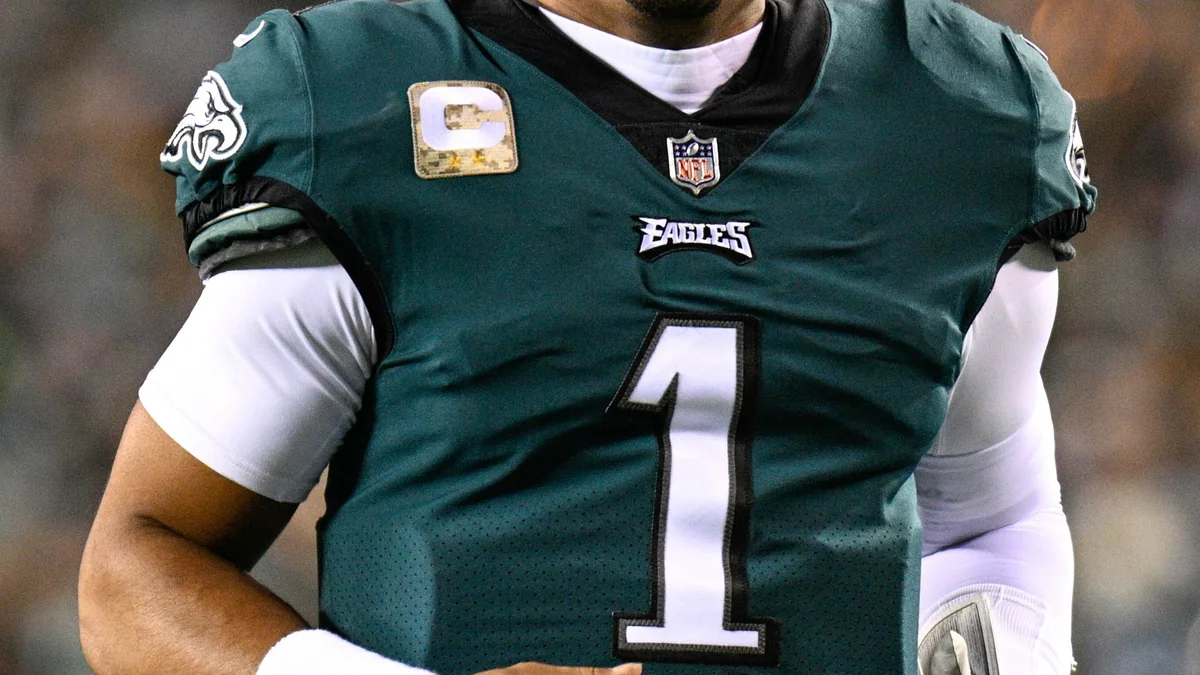
Pulmonary embolism in elite athletes looks impossible until the moment it doesn't — and on October 19, 2026, that moment arrived for one of the most physically prepared humans on the planet. Jalen Hurts, quarterback for the Philadelphia Eagles, had spent years building a body that could absorb punishment from men the size of refrigerators. None of that fitness mattered in the slightest to the clots quietly assembling in his pulmonary arteries.
The chain started small. On October 4, during a game against the Los Angeles Rams, a cleat came down on Hurts' left calf. The kind of thing that happens dozens of times a season. A bruise, some swelling, the usual calculus of minor athletic damage — play through it or don't.
He played through it. Then he flew to London. Then he played another game. Then he flew home.
By October 19, the diagnosis was bilateral pulmonary emboli: clots lodged in the blood vessels of both lungs, with deep vein thrombosis in his leg at the origin of the whole cascade. Here is the strange part. Pulmonary embolism kills roughly one in four people before any other symptom appears.
The first sign, in a quarter of cases, is also the last. No warning, no chance to act. A supremely fit 27-year-old had arrived at the edge of a condition that does not negotiate with VO2 max scores.
This is not a story about bad luck. It is a story about a biological trap that fitness actually helps conceal, a sequence of decisions made under incomplete information, and a question that sports medicine has not yet answered cleanly: why do healthy bodies sometimes turn against themselves in exactly this way?
From Superficial to Systemic: How a Minor Calf Clot Travels to the Lungs
On October 10, while the Eagles were already in London, an MRI found a blood clot in Hurts' left calf. The initial classification mattered enormously: it was superficial, meaning it sat in a smaller vein above the deep venous system, the kind of finding that earns a note in the chart rather than a flight home. The next day, Hurts played every snap against the Jacksonville Jaguars.
That sequence — diagnosis, then full game — is where the timeline begins to tighten into something uncomfortable. The logic behind clearing him was not unreasonable on its face: activity and mobility are genuinely preferable to immobility when a clot is superficial and the patient is otherwise healthy.
One reported instruction taken to its extreme was that Hurts should remain awake for 36 hours before the game, the idea being that wakefulness keeps a person moving. Whether that instruction reflected standard protocol or an improvised solution remains unclear.
What the biology does not leave unclear is what happened next. The round trip between Philadelphia and London involved two flights of seven to eight hours each, completed within roughly 48 hours. Cabin air is dry, cabin pressure is reduced, and a seated body is a largely stationary body.
Even for a passenger in a wide premium seat, the physics of venous return — the uphill work the legs must do to push blood back toward the heart — become harder at altitude with limited movement. For a leg already harboring a clot, that is close to ideal conditions for propagation.
A follow-up ultrasound on October 14 confirmed what those conditions can produce: the clot had moved. It had not dissolved. It had migrated.
The journey from calf to lung is not a dramatic rupture in most cases; it is a quiet transit through widening veins into the pulmonary circulation. By October 19, both lungs were involved.
The Super-Athlete Paradox: Why Pulmonary Embolism Hides Behind Elite Fitness
Elite athletes are, in a precise clinical sense, victims of their own conditioning. When a highly trained body runs short of breath or feels sluggish, the brain files it under "overtraining" long before it considers a clot in the lungs.
That diagnostic blind spot is not carelessness. It is the body's own vocabulary turning against the person who built it.
The fitness paradox runs deeper than perception. A quarterback's resting heart rate and lung capacity are so far above the population average that early warning signs of a clot — the mild breathlessness, the creeping fatigue — simply vanish below the noise floor of ordinary hard practice. The National Blood Clot Alliance has flagged this delay repeatedly: fit patients arrive later, sicker, because nothing felt unusual enough to stop them.
Anatomy adds its own complications. Tall athletes — basketball players are the clearest example — carry longer veins, which means blood returning from the legs must work harder against gravity over a greater distance. More distance, more opportunity for flow to slow and a clot to seed. This is not metaphor; it is simple plumbing physics.
Then there is Paget-Schroetter syndrome, a condition almost tailor-made for sport. It is a clot that forms in the upper-body veins of athletes who repeat the same powerful arm motion thousands of times — pitchers, swimmers, rowers — compressing the vein at the thoracic outlet until the vessel walls inflame and a thrombus grows. The body's strength, directed inward, becomes the source of damage.
Dehydration tightens everything further. Intense exertion concentrates the blood — thicker fluid, slower flow, higher clot risk from the inside out. And then comes the figure that should stop everyone cold: roughly 30% of blood clot cases have no identifiable external cause at all.
No long flight, no injury, no compression syndrome. The body simply turns on itself. That is not a rounding error. That is the honest edge of what medicine currently knows.
They Have Been Here Before: Athletes Who Lost Seasons, Careers, or Nearly Their Lives
The number is small enough to seem reassuring and large enough to stop you cold. Over twenty years of NCAA competition, from 2002 to 2022, eleven college athletes died suddenly from pulmonary embolism. Not from collision injuries. Not from heart defects.
From a clot that found its way into a lung. Eleven families. Eleven athletic careers that ended not at the final whistle but in a hospital.
These are the cases that make the statistics personal.
In September 2011, Serena Williams collapsed at her home after a blood clot reached her lungs. She had just won the US Open. She was, by any clinical measure, one of the fittest human beings alive.
The clot did not care. She survived, returned to tennis, and won four more Grand Slams, but the episode left a permanent mark on how sports medicine thought about fit women and clotting risk.
Chris Bosh was 30 years old and at the height of his career when the first clot arrived in 2015. He returned. The second came in 2016.
After that, the NBA's medical rules were unambiguous: anticoagulants and contact sport do not coexist safely. One of the great power forwards of his generation never played another game.
And then there is Ott Kiivikas, an Estonian bodybuilder who had built his body into something close to architectural, only to have recurring clots end his competitive career in 2021. The condition crosses every sport. It crosses every border. A quarterback in Philadelphia, a tennis champion in New York, a bodybuilder in Estonia — the blood does not distinguish between them.
The Treatment Trap: Blood Thinners, Contact Sports, and the Minimum Three Months
The medicine that saves your life may also be the medicine that ends your career. That is not a paradox unique to Jalen Hurts, but his case makes it unusually visible.
Standard treatment for pulmonary embolism is anticoagulant therapy — blood thinners — for a minimum of three months. No exceptions, no negotiating it down because the patient runs a forty-yard dash faster than almost anyone alive. The clotting system does not care about the draft combine.
The medicine that saves your life may also be the medicine that ends your career.
Here is where the treatment becomes its own kind of trap. An athlete on anticoagulants cannot play contact sports. The reason is straightforward and brutal: blood thinners suppress the body's ability to stop bleeding.
A hard tackle, a helmet to the ribs, a knee to the thigh — any of the ordinary collisions of an NFL Sunday — could trigger catastrophic internal hemorrhage. Compare that to the risk the clot itself poses, and you understand why doctors do not blink. The anticoagulants stay.
Chris Bosh faced exactly this arithmetic in 2015 and again in 2016, and the NBA eventually did the math for him: recurring clots plus contact sport equals retirement. The equation has not changed.
For Hurts, Nicole Lynn's statement that his prognosis is "very good" and that a "full recovery" is anticipated is genuinely encouraging. But full recovery is measured in months, not weeks, and return to contact sport cannot begin the clock until the anticoagulant course is complete. The treatment that repairs the damage is the same treatment that holds the athlete on the sideline.
What Medicine Still Cannot Tell You
Nobody can pinpoint the exact hour the superficial clot in Jalen Hurts' left calf stopped being a nuisance and became a bilateral pulmonary embolism. That moment happened somewhere between October 10 and October 19, inside a body that by every external measure looked like a professional instrument built for punishment.
The transition was silent. Medicine did not catch it in real time; it caught it after.
Two questions remain genuinely unanswered. Whether Hurts carries an undiagnosed genetic clotting disorder — a thrombophilia — is still unknown. Nobody has confirmed that testing has been done, and roughly 30% of blood clot cases have no identifiable external cause at all.
The long-term picture for his aerobic capacity is equally uncertain. Bilateral emboli leave scar tissue. A quarterback's game depends on oxygen delivery to muscles under extreme load.
What two emboli, one in each lung, do to that delivery over three seasons is not yet a number anyone can give you.
The CDC estimates that 900,000 Americans are affected by DVT or pulmonary embolism every year. Between 60,000 and 100,000 die. That is roughly the population of a mid-sized European city, gone annually, from a condition that travels invisibly through the bloodstream.
The Hurts case may yet force the NFL and other global leagues to build mandatory no-fly windows for players with acute limb injuries. Or it may not. What pulmonary embolism in athletes makes undeniably clear is that the science of prediction, for all its power, is still catching up to the quiet, ordinary scale of the problem. The clot does not wait.