A Glint of Metal, a Decade of Hope, and One October Morning
Look at a satellite image of Nikumaroro long enough, and the lagoon floor will start telling you stories. In 2020, researchers studying aerial photographs spotted something near the Taraia Peninsula that reignited the Amelia Earhart plane discovery search: a shape, a glint, a configuration of shadow and reflection that looked, to eyes already primed by hope, unmistakably like an aircraft fuselage. They named it the Taraia Object, and for six years it sat at the center of one of aviation history's most tantalizing open questions.
On October 19, 2026, that question received an answer. Just not the one anyone wanted.
A 17-person team led by Purdue University and the Archaeological Legacy Institute spent four days on the atoll, sifting through its lagoon with metal detectors and magnetometers. What they found beneath the water was not the wreckage of Amelia Earhart's Lockheed Electra. It was trees — fragments of driftwood coated in carbonate veneer, a natural shell of coral sand and calcium carbonate that gives wood a metallic sheen under certain light. The satellite image had not lied exactly. It had simply shown the truth in a costume.
The mystery itself is 89 years old. On July 2, 1937, Earhart and her navigator Fred Noonan vanished somewhere over the central Pacific, departing from Lae, New Guinea, on what was meant to be the most ambitious leg of her circumnavigation attempt. The U.S. Navy searched 250,000 square miles of ocean and found nothing.
Nikumaroro, a remote uninhabited atoll in the Republic of Kiribati known until 1938 as Gardner Island, later emerged as the prime candidate for what happened next. The 2026 expedition was the latest, and most technically equipped, attempt to settle the argument.
Four Days Searching for Amelia Earhart's Plane, and the World's Most Disappointing Trees
The seventeen-person team from Purdue University and the Archaeological Legacy Institute arrived at Nikumaroro already behind schedule. Severe weather and the treacherous business of navigating coral reefs had eaten into their window before they had even set foot on the atoll. And when night fell, the island itself refused them: giant coconut crabs — land-dwelling scavengers the size of a small dog — drove the entire expedition back to sleep aboard their ship.
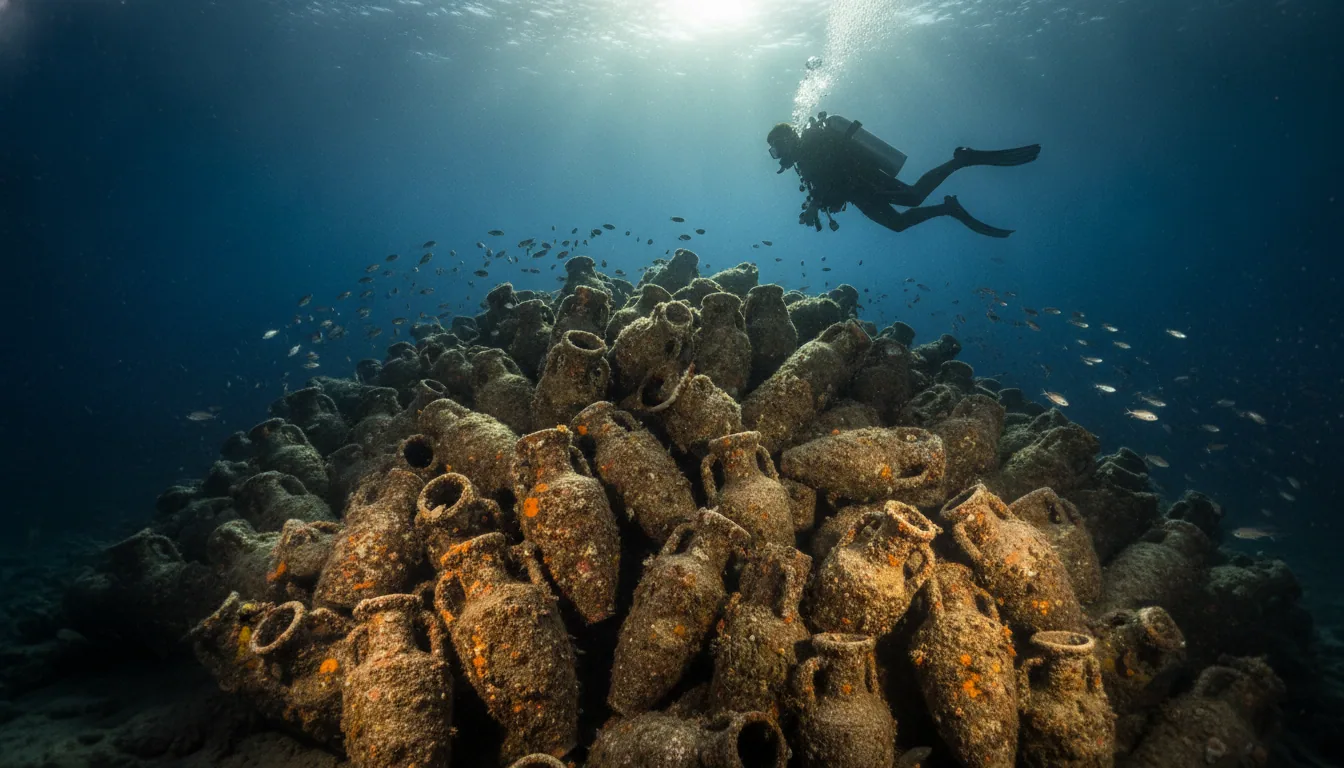
They spent four days onshore working the ground with metal detectors and magnetometers, instruments designed to sense the faintest whisper of buried metal. The target was the Taraia Object, a shape in the lagoon floor that 2020 satellite imagery had made look tantalizingly like an aircraft fuselage. The metallic glint that had seduced researchers for six years turned out to be a carbonate veneer: coral sand and calcium carbonate had slowly coated a pile of washed-up tree fragments, giving rotting wood the reflective signature of aluminum alloy.
Nature had built something that looked exactly like what everyone desperately wanted to find.
The team did recover one genuinely puzzling object: a 76-centimeter steel tube, pulled from the sediment and carefully documented. It could not be conclusively linked to Earhart's Lockheed Electra. It could not be conclusively linked to anything.
The tube sits now in the evidence catalog alongside everything else from Nikumaroro — evocative, unresolved, filed under "unknown."
Steve Schultz, general counsel for Purdue and a member of the expedition, offered the summary that expeditions of this kind always seem to produce: "Unfortunately, we weren't able to find that smoking gun." The equipment worked. The team was thorough. The island simply had nothing to confess.
What the satellite had seen as evidence was, in the end, the ocean doing what the ocean has always done: covering things in the patient chemistry of calcium, until even the trees look like aircraft.
Eleven Million Dollars and a Very Convincing Rock
In January 2024, a company called Deep Sea Vision released a sonar image that made aviation historians sit up very straight. The image showed what appeared to be an aircraft-shaped silhouette resting on the ocean floor near Howland Island, roughly 4,900 meters down. That depth, for scale, is approximately three Eiffel Towers stacked base to tip, then pushed beneath the surface.
Tony Romeo, a former US Air Force intelligence officer and the CEO of Deep Sea Vision, had funded the Earhart wreck search personally. Eleven million dollars. His own money, on a single bet that the ocean had been keeping a secret for 87 years.
It is worth pausing on that number: eleven million dollars is not a rounding error, it is a conviction.
Romeo returned to the site in November 2024 for a closer look. The sonar image, it turned out, was a rock. A natural rock formation sitting at the bottom of the Pacific, shaped by nothing more conspiratorial than geology.
Romeo reportedly called it nature's cruelest formation. That is a generous description. The ocean floor is full of shapes, and sonar, for all its sophistication, reads acoustic echoes rather than objects. It cannot distinguish between a twin-engine Lockheed Electra and a basalt lump that happens to scatter sound in the same way.
Here is the practical point. Both the 2024 DSV expedition and the 2026 Nikumaroro mission followed the same basic logic: a remote-sensing image suggested something, and an expensive follow-up mission was required to find out it was something else entirely. Satellite and sonar resolution have improved enormously in recent decades.
But "better than before" is not the same as "good enough." The gap between a promising anomaly and a confirmed wreck remains, for now, exactly as wide as the Pacific itself.
Why the Ocean Floor Keeps Lying to Us
Side-scan sonar works like a bat navigating a dark room: it fires pulses of sound downward and sideways, then listens for the echoes. The returning signal builds a grayscale image of the seafloor, resolving shapes with enough precision to distinguish a wing from a ridge at 4,900 meters depth. Here is the problem: sound tells you geometry. It tells you nothing about what a thing is made of.
Calcium carbonate does not care about your hypothesis. When organic matter — wood, coral rubble, sea-soaked tree trunks — sits long enough on a reef flat, it accumulates a mineral crust called a carbonate veneer. That coating reflects radar and visible light at almost exactly the same intensity as polished aluminum alloy.
To a satellite sensor, or a sonar return, a tree dressed in carbonate looks startlingly like an aircraft fuselage. The Purdue team's own statement confirmed it: the Taraia Object's reflective surface was the veneer, not metal.
So every promising anomaly triggers an expensive choreography. An Autonomous Underwater Vehicle must be deployed, guided down, and recovered before anyone can say what the shape actually is. Each such follow-up mission costs time, fuel, and hundreds of thousands of dollars, simply to confirm that geology is still geology.
Underneath all of it runs the quieter problem: pareidolia. The human brain is a pattern-finding engine built for survival, not accuracy. When researchers have spent years, or eleven million dollars, hunting a specific shape, the neural machinery starts seeing it in noise.
Eighty-nine years of absence does not sharpen perception. It distorts it, softly and almost irresistibly.
The mystery does not diminish Earhart. It insists she is not yet finished with us.
What the Island Has Actually Given Up
Nikumaroro is not a place that has kept entirely silent. Earlier expeditions returned from the atoll carrying quiet, tantalizing fragments: a woman's shoe from the 1930s, a small glass jar of the kind that once held cosmetics. Neither object is conclusive. Both fit a story.
That story is the castaway theory. It holds that Earhart and her navigator Fred Noonan did not simply run out of fuel and spiral into the ocean near Howland Island. Instead, they found Nikumaroro's reef, landed on it, and survived for some time before dying there.
The theory has a navigational foundation worth taking seriously. Earhart's final radio transmission reported a line of position of 157-337, placing the aircraft along a known navigational corridor that runs directly through Nikumaroro. She was looking for land. There is a thin, serious case that she found it.
Among the theory's most careful advocates is Ric Gillespie, a researcher who has spent decades building the Nikumaroro argument piece by piece — and who, notably, predicted before this expedition that the Taraia Object would turn out to be a tree. He was right about the tree. That does not mean he is wrong about the island.
It means the shoe, the jar, the line of position, and the bones found on Nikumaroro in 1940 and subsequently lost, all still sit in an open file, waiting.
The Things We Still Cannot Say
Here is the ledger as it stands on October 19, 2026. The exact coordinates of the Lockheed Electra's final resting place remain unknown after 89 years of searching, two major expeditions, and tens of millions of dollars in combined effort. The 76-centimeter steel tube recovered from the Nikumaroro dig sits in a catalogued bag with no confirmed origin, a small metal fact that proves nothing and refuses to disprove anything.
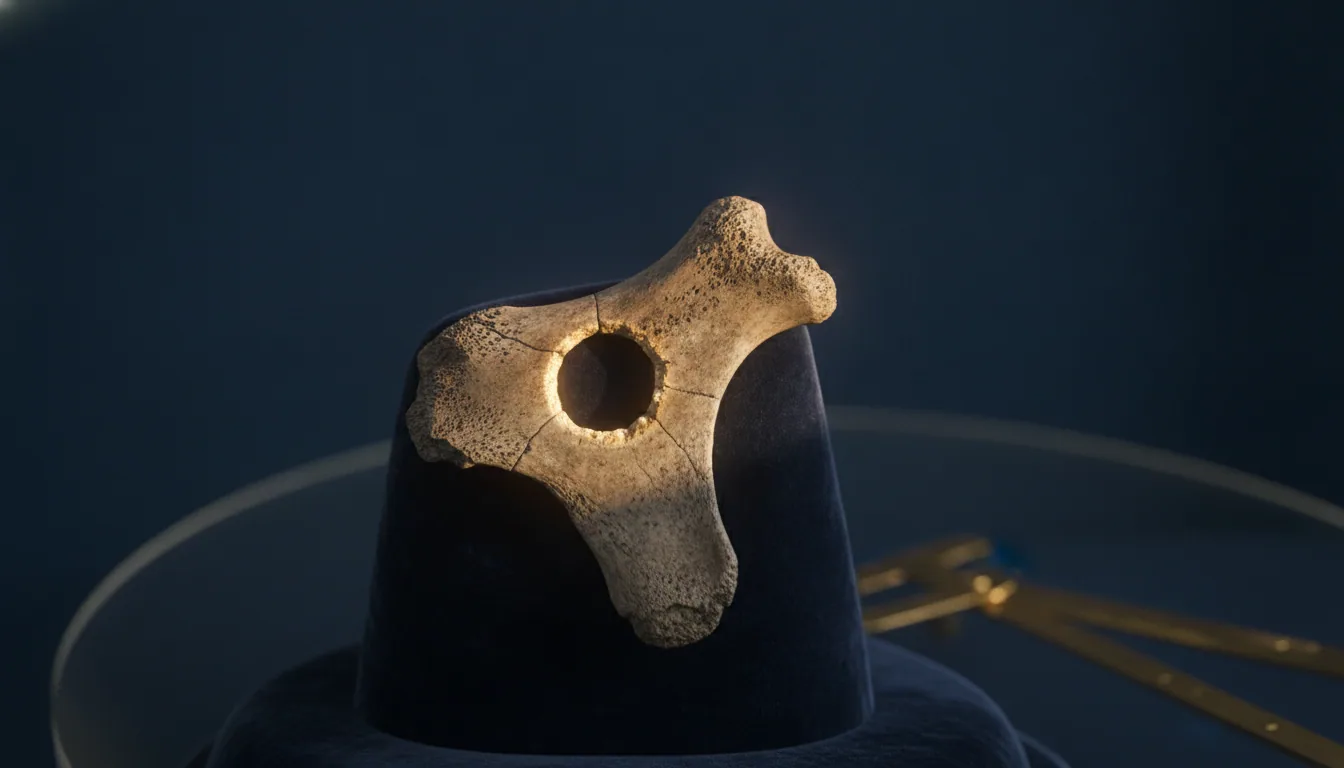
The situation with the 1940 bones is, if anything, more maddening. Human remains found on Nikumaroro that year were consistent with a tall woman of northern European descent, according to the original medical report. Then the bones were lost. Not destroyed, not reanalyzed. Lost.
A potentially definitive piece of evidence simply slipped out of the evidentiary record the way a name slips from memory, and no amount of modern forensic technique can examine what no longer exists.
The deepest question in the Amelia Earhart plane discovery story remains stubbornly open: did Earhart and Noonan die on impact, fuel exhausted and the ocean floor waiting, or did they survive long enough on a coral reef to scratch for water and watch the horizon for ships that never came? We still don't know. That, honestly, is the best part.
Not because suffering is romantic, but because the open question keeps the full weight of two human lives in the story, rather than reducing them to coordinates on a seafloor map. The mystery does not diminish Earhart. It insists she is not yet finished with us.