The Base That Trains for Danger Met It on a Saturday
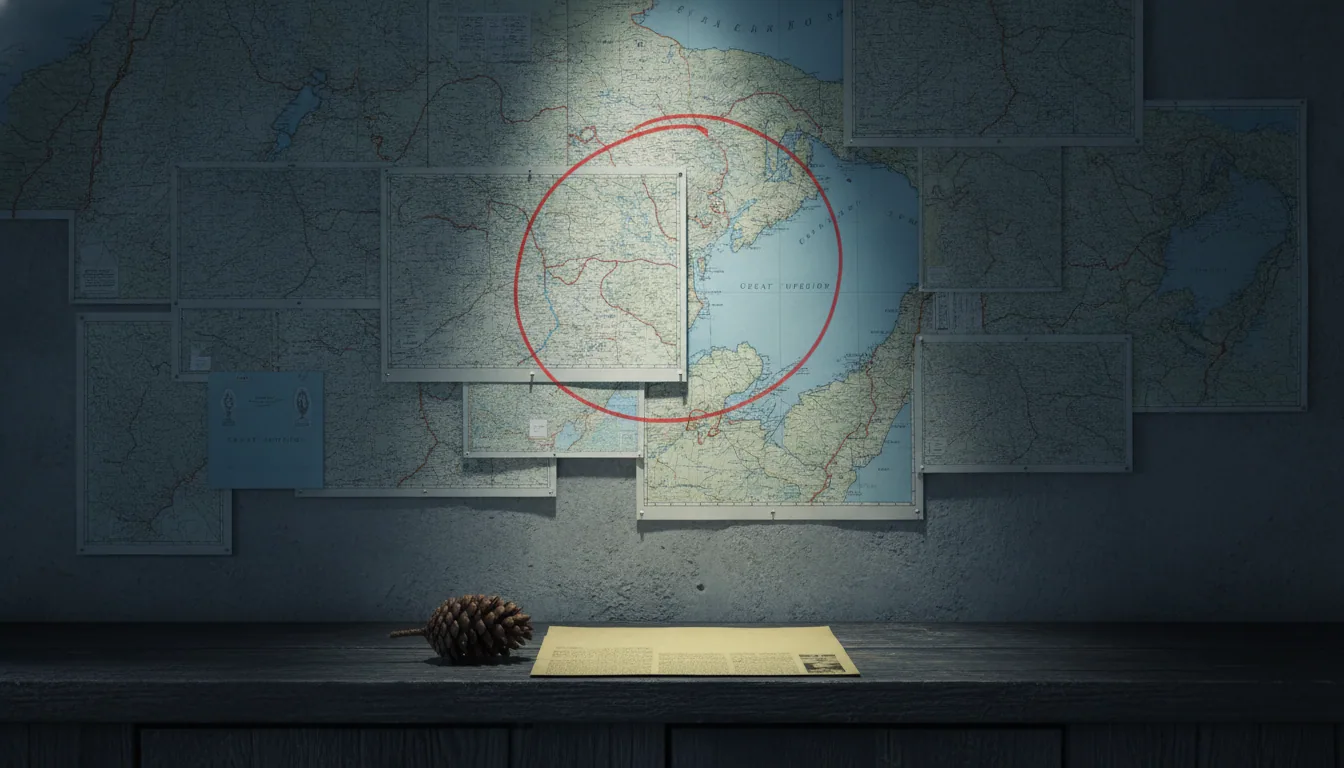
CFB Wainwright's safety manual is, in one sense, a document about controlled catastrophe — how to produce the conditions of war without producing its consequences. Sitting roughly 200 kilometres southeast of Edmonton on the flat Alberta plain, the base has spent decades perfecting that exercise. On Saturday, October 17, 2026, the conditions stopped being simulated.
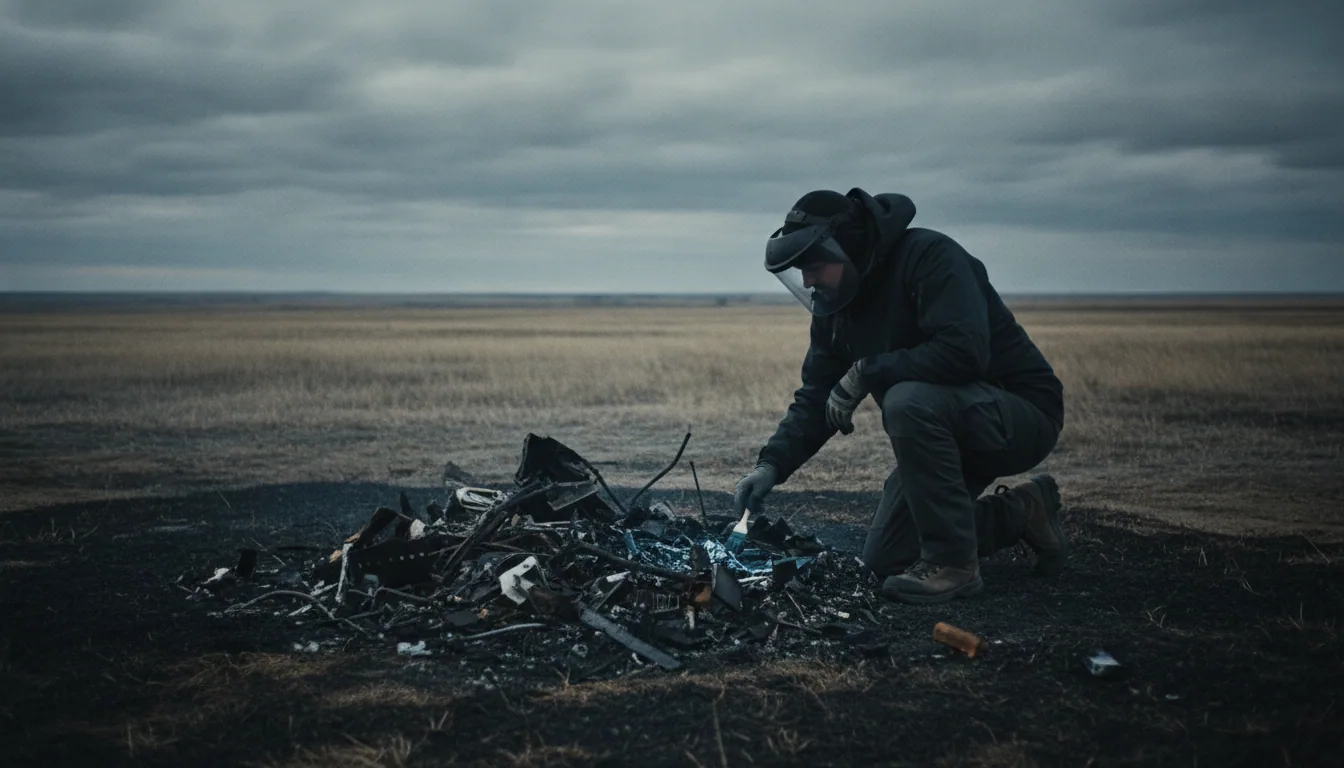
A serious incident preceded the fire — the explosion came first, and the fire followed. That order matters for every investigator who will now comb the range, because it separates the question of ignition from the question of spread. Wind gusts reaching 100 km/h were the amplifying variable: they drove the blaze across the base perimeter and into surrounding areas, turning a contained disaster into something that required joint military and civilian fire suppression.
The wind did not cause whatever happened. It only ensured that whatever happened could not be easily contained.
Defence Minister David McGuinty confirmed both fatalities and injuries among personnel. His characterisation of the situation as "active and delicate" is the language of a ministry still in the middle of next-of-kin notification, still without a full count. The Royal Canadian Mounted Police is investigating alongside military police, which signals that the cause is not yet established and the jurisdictional perimeter is deliberately wide.
General Jennie Carignan named the welfare of military members and their families as the immediate priority — a statement that is as much procedural as it is humane, and which will be measured against what the investigation eventually discloses.
What the Politicians Said, and What Remains Unsaid
McGuinty spoke first, and he spoke carefully. His formal statement carried the institutional grammar of military sorrow: a serious incident, fatalities confirmed, families notified in the proper sequence before the public learned anything. The original Estonian-language wire rendered his announcement with due solemnity — "Pean kurbusega teatama" — which translates, without remainder, as I must sadly announce.
That phrasing is not decorative. It is the load-bearing formula of a minister who has been briefed on the legal exposure and knows that every subsequent word is on the record.
Prime Minister Carney issued a condolence statement. It extended sympathy to victims and families. It said nothing operational, because there was nothing operational a Prime Minister's Office could yet safely say.
Alberta Premier Danielle Smith called the fire "tragic and significant." MP Dane Lloyd reported "significant losses." General Jennie Carignan stated that the current priority is the welfare of military members and their families.
Three statements, three registers, one shared characteristic: none of them named a number. The exact death toll remains undisclosed. The cause of the initial explosion — equipment failure, training error, something else entirely — has not been established in any public document.
The extent of property damage, inside the perimeter and beyond it, is still unquantified. This is not unusual in the first hours after a mass-casualty event at a military installation. What matters is what comes next — whether the gap between the political register and the operational record closes, or widens.
The Load-Bearing Question: CFB Wainwright's Safety Protocol in a 100 km/h Wind
Live-fire training at CFB Wainwright is not an occasional event. It is the base's primary function — one of the most active military training centres in Canada, where the use of real ammunition and explosive charges is routine, not exceptional. That structural fact matters when you read the incident report.
The question is not whether fire risk exists at the Wainwright military base; the question is whether the protocols governing that risk account for 100 km/h winds.
Range safety protocols on Canadian military land typically include wind-condition thresholds: points at which live-fire exercises are suspended because the probability of uncontrolled ignition exceeds acceptable limits. Whether those thresholds existed for October 17 conditions, and whether they were observed, is precisely what the RCMP and military police joint investigation will have to determine. Everything else — the statements, the condolences, the assurances of thoroughness — is moulding.
The wind made the base perimeter irrelevant. When gusts reach 100 km/h across the Alberta plains, the fence line between military land and civilian land is a legal boundary, not a firebreak. This is the Wildland-Urban Interface problem in its starkest form: a fire that begins in a controlled military zone becomes a civilian emergency the moment conditions exceed containment capacity.
Local fire departments and the Wainwright municipality were drawn into suppression operations — not by invitation or pre-planned partnership, but by the fire's own logic. That civilian mobilisation carries a cost the Department of National Defence does not bear alone. Municipal crews and resources were committed to containing a blaze that originated from military activity.
The accounting will come later. For now, the practical question is whether the wind threshold was written into the protocol at all — and if it was, what the log shows for the morning of October 17.
A Pattern Behind the Single Event: Canada's Bases Under Strain
Ten days before Wainwright, CFB Gagetown in New Brunswick went into lockdown over a shooting threat. Two incidents at two bases inside a fortnight. That is not a chain of causation — it is something harder to dismiss: a pattern asking to be named.
Go back three years. In 2023, a Chinook helicopter crashed at CFB Petawawa in Ontario, killing both pilots. The investigation report arrived in December 2024, finding crew disorientation as the cause — a finding that took eighteen months to reach the public, and which prompted no visible revision of the training calendar.
Three bases. Three serious incidents inside three years. Gagetown, Petawawa, Wainwright. Each was treated as its own weather, its own local failure, its own contained grief. The auditors who should have been looking for the connecting tissue — overstretched maintenance cycles, staffing pressures, the slow erosion of safety margins under a defence budget only recently brought back to seriousness — were not, by any public record, looking at all.
The Royal Canadian Mounted Police is now investigating alongside military police at the Alberta training base, which raises a question that Ottawa will find uncomfortable. The RCMP's presence signals that civilian authorities do not consider this a purely internal matter. Joint jurisdiction is also divided jurisdiction — and divided jurisdiction is where accountability goes to wait indefinitely.
The question of who controls the investigation, and therefore the narrative, is not procedural furniture. Watch whether the final investigation mandate is written to include systemic review across all three bases, or confined to the events of a single Saturday in Alberta.
Collapsing them into a single classified report is a known institutional move, and it forecloses accountability without producing it.
The Families, the Process, and the Distance Between Them
Before any number reaches the public, the military runs its own sequence. Next-of-kin notification comes first: a knock at a door, a uniformed figure, a phrase rehearsed to carry the unbearable. General Jennie Carignan named the welfare of military members and their families as the current priority — a phrase that describes a specific, procedurally governed machinery that must complete its work before the official count is disclosed.
The gap between a confirmed death and a confirmed number is not evasion. It is the distance between institutional obligation and public accountability, and it is measured in hours.
The municipality of Wainwright sits beside the base the way a port town sits beside a naval yard. Local fire departments were among those helping suppress the blaze that crossed the perimeter. Geography made that bond; October 17 tightened it in the way no one chooses.
Compare this with the 2023 Petawawa Chinook crash: the investigation concluded fourteen months after two pilots died, and training resumed on a revised protocol long before the findings were public. That precedent is instructive, not reassuring. The duration of the current training suspension at the Wainwright military base remains unknown, and the cost of that stoppage — operational, institutional, human — has not been named.
What Carignan calls welfare and what readiness planners call throughput are, in the end, the same balance sheet with different column headers.
The One Marker Worth Watching
The RCMP and military police are now jointly investigating the October 17 explosion and fire at the Alberta installation. That joint mandate is itself the first thing to watch: whether its terms of reference are published in full, and whether civilian safety findings are formally separated from any classified operational component. Two distinct questions require two distinct tracks.
Collapsing them into a single classified report is a known institutional move, and it forecloses accountability without producing it.
The second signal is narrower and closer. Before Alberta's next live-fire training season opens, the Department of National Defence will either revise its wind-condition protocols for range operations or it will not. Wind gusts reached 100 km/h on October 17 — whether that number exceeded any standing threshold for suspending exercises is a question the investigation must answer on the public record.
Watch the parliamentary defence committee. If it publishes a hearing date and a terms-of-reference document before the next training cycle at CFB Wainwright begins, the institution is moving. If it does not, the fire jumped the fence once, and the conditions that allowed it have not changed.