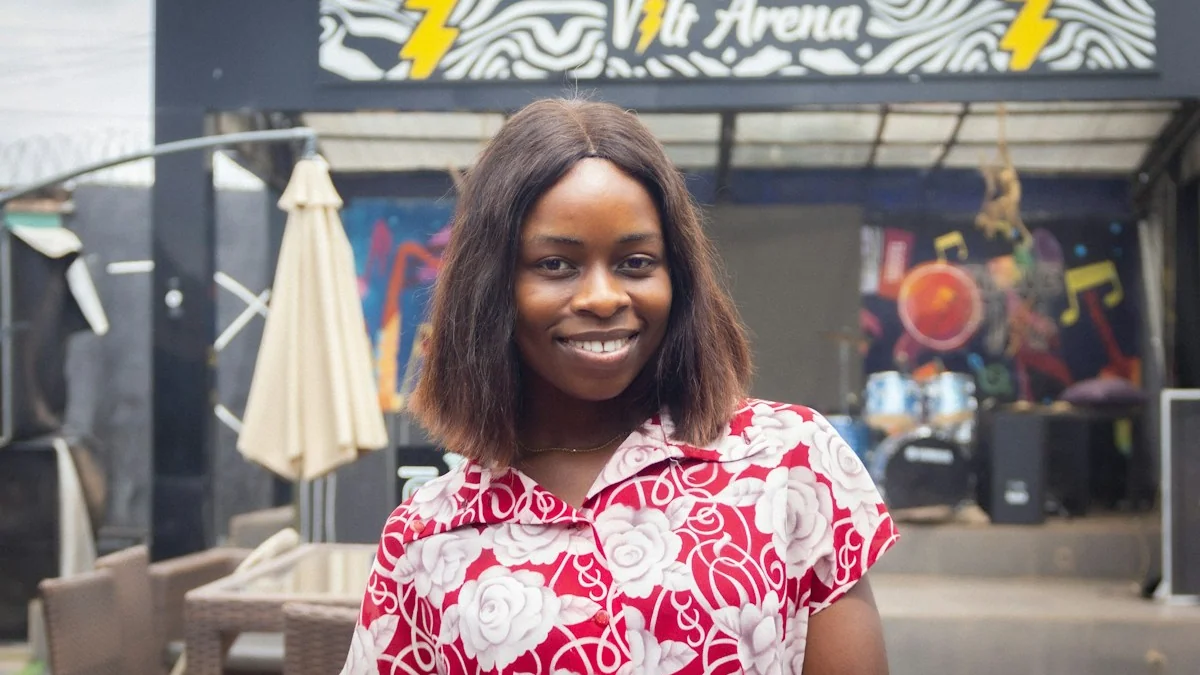
Estonian swimmer Eneli Jefimova has taken the American collegiate circuit by storm, securing an NCAA title in the 100-yard breaststroke with a historic time of 56.30 seconds. Competing for the NC State Wolfpack, the 19-year-old also dominated the College Swimming League in California, proving her mastery of the short-course yards format.
Walnut, California. It is the 17th of October, 2026, and the sun is doing that thing it only ever does in Southern California—it is a little too bright, a little too certain of its own importance. The water in the pool doesn't just sit there; it sparkles with a hard, expensive glint, and the stands are a vibrating sea of red and black, the unmistakable colors of the NC State Wolfpack. This is the stage where Eneli Jefimova steps out, not just to participate, but to take ownership of the room. By the time the afternoon is over, she has won all four grueling rounds of the "skins" competition, set a massive personal best in the 200-yard breaststroke, and walked away with the Most Valuable Player title for the fifth stage of the College Swimming League.
She is nineteen years old. She is from Estonia. And she very clearly did not come to the United States just to look at the scenery.
The College Swimming League (CSL) is not your standard university swim meet. Launched in 2026, it is a high-octane project that gathers twelve of the most prestigious programs in America—Stanford, California, and Indiana among them—and puts a cool million dollars in prize money on the line. There is a professional weight to the atmosphere here. The "skins" format, where the slowest swimmer is cut after every round until only one remains, is exactly as nerve-wracking as it sounds. For the crowd, it is pure theater; for the swimmer, it is a test of recovery and raw nerve where a backup plan won't save you if your lungs are on fire.
Jefimova represents the NC State Wolfpack, the powerhouse team from Raleigh, North Carolina. They finished this specific stage with a total of 544.83 points, comfortably ahead of the heavyweights from Indiana, Cal, and Stanford. When Jefimova swims in that Wolfpack suit, she doesn't look like a newcomer still trying to find the locker rooms or adjust to a different culture. This is her debut year in the States, but if you were standing poolside in Walnut, you would never have guessed it.
Atlanta, March 2026: A Title at the McAuley
To understand the momentum she brought to California, you have to look back to March 19, 2026, in Atlanta. The water at the McAuley Aquatic Center is a deep, deceptive blue, usually still and silent before the first buzzer. That silence didn't last.
Eneli Jefimova touched the wall in the 100-yard breaststroke with a time of 56.30 seconds, and just like that, the NCAA national title was hers. Now, here is the thing about that number: it isn't just a fast time for a college student. In the all-time history of the sport, there are only two names listed above hers: Lilly King and Jasmine Nocentini. These are the absolute titans of breaststroke on the planet. To be third all-time in the NCAA means Jefimova wasn't just competing against the girls in the lanes next to her; she was swimming against the history of the sport itself.
People sometimes mistake the NCAA championships for a domestic American affair, but that is a mistake born of not paying attention. The pools in American universities are where the people who win Olympic gold and World Championships sharpen their teeth. The depth of talent is brutal, and the demand for excellence is relentless. When a "freshman"—a first-year student who has barely been in the country for six months—walks away with a title like this, people in coaching offices start talking, and they don't stop for years.
At NC State, there is a tradition: good swimmers arrive, and they leave better. Jefimova's debut season proved that this isn't just a recruiting pitch; it's a factory setting. At the McAuley pool, she didn't just win; she left a pool record on the board, a permanent reminder of a date she likely knows by heart. The numbers were clear, the context was undeniable, and she walked into the autumn with a spring title already tucked in her bag.
The Geometry of the Pool: Why 56.30 Matters
We need to pause for a moment on that 56.30, because in the swimming world, numbers require a bit of translation. American collegiate swimming happens in yard pools. A 25-yard lap is not the same as a 25-meter lap—it's actually 22.86 meters—and since world records and international medals are decided in metric pools, the math doesn't move in a straight line. What makes an NCAA crowd scream isn't always easy to explain to someone used to international short-course meters.
But Jefimova started doing that translation work long before she stood on the podium in Atlanta. In October 2025, almost immediately after she arrived to begin her studies, she began systematically dismantling records. She broke the Estonian yard-pool marks that had been held for fourteen years by Jane Trepp. To put that in perspective, fourteen years is almost half of Jefimova's entire life. Those records had been standing since long before most of her current classmates had even considered a competitive swim lane.
For Estonian swimming, this represents a massive closing of the gap. We have seen great names—Triin Aljand, Jane Trepp—each stepping a little higher than the one before. But Jefimova's jump is steeper, more vertical. She isn't just "Estonian-scale" good; she is world-scale good, sitting third all-time in the very system she is currently navigating. The next challenge is to take the speed she found in Walnut and Atlanta and translate it back into meters for the international stage. December 2026 is approaching quickly.
Dominance in Walnut: The Masterclass
Back in Walnut on October 17, the stands were packed to the rafters. Jefimova had finished her warm-up, and the main event of the day was the 200-yard breaststroke. She didn't just win; she carved out a personal best of 2:06.19. Addie Robillard from Stanford, a formidable competitor in her own right, touched the wall a full 2.12 seconds later.
In the world of elite swimming, where we usually talk about victories in hundredths of a second—the blink of an eye, the thickness of a fingernail—two full seconds is a chasm. It is the swimming equivalent of winning a marathon while the second-place runner is still three blocks away.
Then came the "skins." The CSL format is simple and quietly cruel: swim, rest for a few minutes, repeat. The slowest person is out. For the spectators, it is high-energy entertainment, but for the athlete, it is about keeping your head while your muscles are screaming. Jefimova went into the water four times and came out first four times. In the final head-to-head, she dispatched the Italian Anita Bottazzo with a time of 26.65 seconds.
She also picked up a second-place finish in the 100-yard distance at 58.74 and helped the NC State 4x50 medley relay team to another second place. For almost any other athlete, two second-place finishes against that level of competition would be the highlight of their month. For Jefimova, they were almost like side notes to her individual dominance.
By the end of the day, NC State had banked those 544.83 points, leaving Indiana, Cal, and Stanford in the rearview mirror. The Wolfpack won the stage, but the numbers tell the story of who, exactly, was doing the heavy lifting. The CSL format demands a relentless level of excellence throughout the entire day, not just one lucky moment. Jefimova proved she has the nerve for it.
"In the 200-yard swim, I learned a very important lesson," she noted afterward. Considering that this particular lesson involved a personal best and a two-second lead over a Stanford star, it is fascinating to imagine what she might do once she really feels she's mastered the event.
A Debut for the History Books
In May 2026, NC State officially named Eneli Jefimova their Women's Rookie of the Year. It is a title reserved for the athletes who arrive, look around, and figure out the game faster than anyone expected.
But think about what that debut season actually required. A new country, a new language, and a completely different pool dimension. She had spent her entire life training in 25-meter or 50-meter pools; switching to 25 yards changes every turn, every breath, every timing of the walls. Most athletes spend their first year in the U.S. just trying to adapt—learning how to manage a heavy course load, getting used to a new roommate, and trying not to get lost in the transition.
Jefimova didn't just adapt; she conquered. An NCAA title, an MVP, and Rookie of the Year. If you saw this season written on a fictional CV, you'd think the author was being unrealistic.
She says her 200-yard swim gave her the most important lesson—not just through the win, but through the process that followed. This is the hallmark of a great athlete. They don't just celebrate the result; they analyze what the result is trying to tell them. Most international-level swimmers need at least one full season just to get a handle on the yard system before they start contending for titles. Jefimova was shattering records by October 2025, at the very start of her first season. The numbers are impressive, but it is that context that makes them extraordinary.
The Road to Beijing: December 2026
Now, the calendar turns toward December 2026. Beijing. The Short Course World Championships. This is the next major marker on Jefimova's schedule, and it is looming large.
Her entire debut season has been spent in the SCY (short course yards) pools of the American system. Now, on the international stage, everything shifts back to meters. This transition requires a recalibration of the internal clock—a different rhythm for the turns and a different sense of the finish. But the foundation is speed, and speed doesn't care about the unit of measurement.
All the work put in throughout the American autumn, the pressure of the CSL skins format, and the record-breaking performances in California are essentially energy being stored up for Beijing. Every fast lap has been a preparation for what comes next. Jefimova's American triumph hasn't just been about winning in the States; it has been a masterclass in preparation for the world stage. December is coming, and it's going to be fast.