A Sunday Prayer and an Unexpected Disclosure
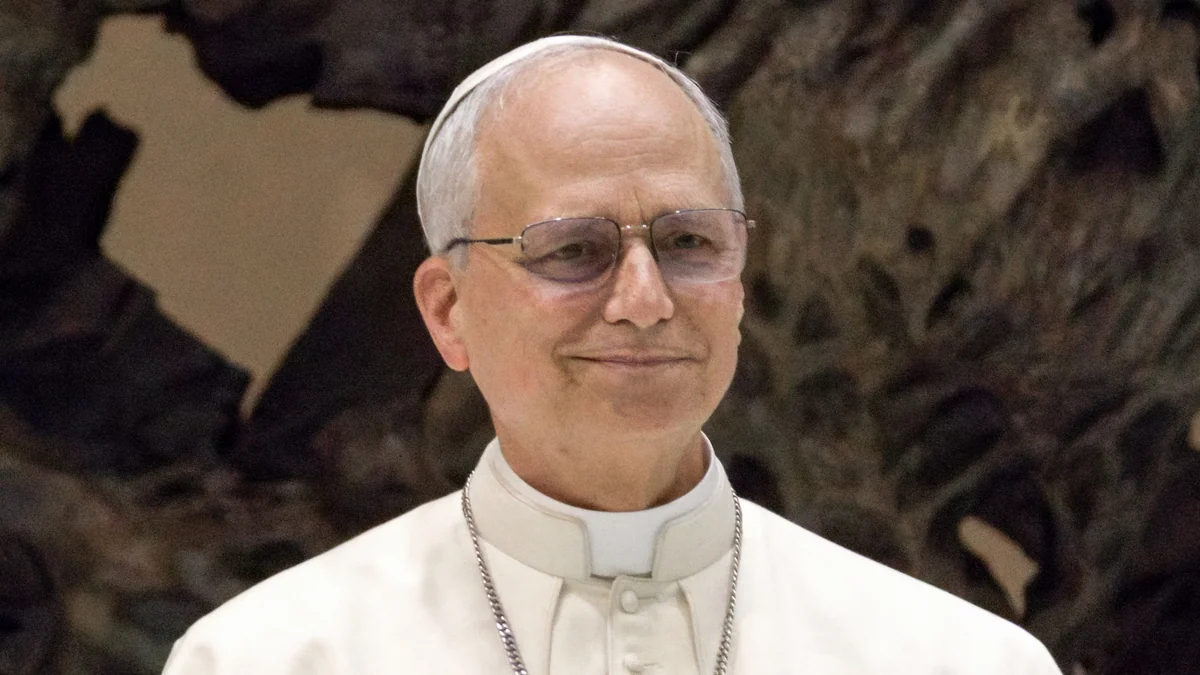
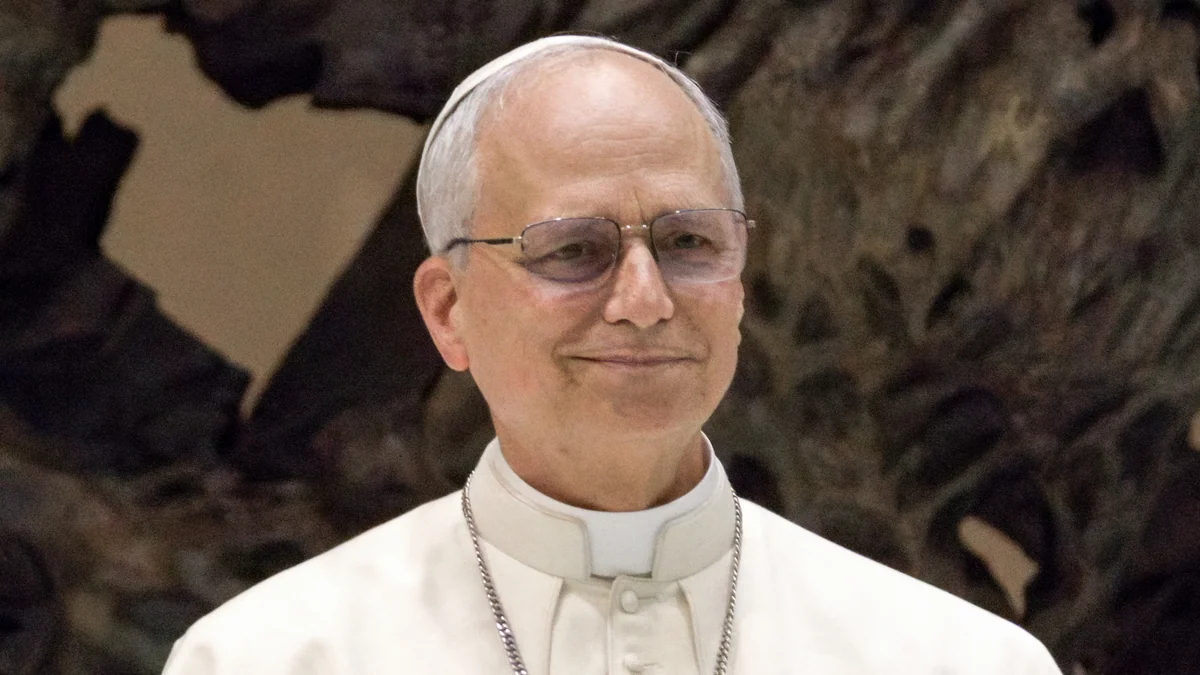
Pope Leo XIV's lung surgery entered public view on a Sunday, mid-Angelus — not in a press statement, but from the Pope's own mouth. The Angelus is a ritual so old and so settled into the Roman Sunday that it almost disappears into routine. The Pope appears at the window of the Apostolic Palace, the crowd gathers in St. Peter's Square, prayers are said, blessings are given. Then, on October 11, 2026, Robert Francis Prevost — the man the world now calls Leo XIV — kept the crowd a moment longer and told them about his lung.
He said that doctors had found a nodule during a recent examination. He said it was discovered early, that it looked well-defined, that his doctors believed they should act. He said this calmly, from the same window where he ordinarily speaks of scripture and peace. That same morning, he also renewed his appeals for a resolution to the conflict in Ukraine, specifically around grain export routes. The range of that single Sunday hour, from geopolitics to pulmonary medicine, is itself something worth sitting with.
Vatican spokesperson Matteo Bruni confirmed that surgery would take place at the Agostino Gemelli University Polyclinic in Rome, with an expected hospital stay of roughly one week. Bruni offered no more specifics than that, but the announcement itself was specific enough to be striking. Here is the strange part: in an institution that spent centuries managing information about papal health with extraordinary caution — sometimes hiding illness until it was impossible to hide — this disclosure came fast, came plainly, and came directly from the Pope's own mouth.
What the nodule actually is remains, for now, an open question. But the manner of the telling already says something about this pontificate.
What Leo XIV's Lung Surgery Actually Involves — and What the Doctors Found
Start with what the word means, because it carries more precision than the headlines suggest. A nodule is a small, well-defined mass of tissue, distinct enough from its surroundings that it shows up on a scan as its own thing rather than a blur. Think of it as a firm island in a sea of softer lung tissue. The word "localized" is the medically meaningful one here: it means the growth has not spread beyond its origin site.
The Vatican's statement noted that doctors found the nodule during a routine medical examination, not because the Pope walked in complaining of breathlessness or chest pain. That distinction carries real weight. Tumors caught by routine screening are, by definition, found before they have announced themselves to the body — and the difference, in terms of what medicine can do, can be enormous.
What is not known is what, precisely, the nodule is. The Vatican has not disclosed its pathology. It could be malignant. It could be a benign growth. It could be an infectious granuloma, the kind of calcified scar that a long-ago tuberculosis exposure sometimes leaves behind in lung tissue, harmless but tidy evidence of a past skirmish. Doctors saw it, assessed it, and concluded that intervention was warranted. That is all the official picture shows.
The lung operation is scheduled for the week of October 13, 2026, at the Agostino Gemelli University Polyclinic in Rome. Two broad approaches exist: robotic-assisted resection, which uses small incisions and a faster recovery arc, or traditional thoracotomy, which opens the chest wall directly. The Vatican has confirmed neither. Those two paths are not equivalent. Recovery from one is measured in days; from the other, in weeks. That difference matters considerably when November is on the calendar.
Robert Francis Prevost: The 267th Pope and a Doubly Historic Conclave
Seventeen days. That is how long the world waited between the death of Pope Francis on April 21, 2025, and the white smoke that announced his successor. When Robert Francis Prevost stepped onto the balcony of St. Peter's Basilica on May 8, 2025, he carried two firsts at once: the first American pope in the Church's two-thousand-year history, and the first member of the Order of Saint Augustine ever elected to the papacy. Two ceilings, broken simultaneously, in a single conclave.
He was born in Chicago on September 14, 1955. That makes him 71 at the time of the surgery, an age that sounds significant until you ask a thoracic surgeon about it. Medicine sets no sharp line at 70; what matters is fitness, and by all accounts Prevost arrived at this diagnosis in good physical condition, known to play tennis and swim regularly. Seventy-one, for a man in good shape, is relatively young for major thoracic surgery. That context matters.
His pontificate motto, "In illo uno unum" — In that one, we are one — announces his program in four Latin words. The papacy he has built in roughly 17 months has orbited three gravitational centers: social justice, ecumenism, and something newer on the papal agenda, the ethics of artificial intelligence. The third item alone marks the era. He is the 267th person to hold this office, and the first to govern a Church whose congregants are already living inside algorithmic systems he considers a moral question. That is the man now preparing for a week at Gemelli Hospital, not as a symbol or a statistic, but as a 71-year-old patient with a nodule that needs removing.
Medicine does not negotiate with calendars.
The Hospital They Call the Third Vatican
There is a running joke among Vatican correspondents that the Agostino Gemelli University Polyclinic maintains a suite that should appear on the Holy See's official map. John Paul II was brought there after the 1981 assassination attempt, and again in his final years as his body slowly gave way. Pope Francis spent weeks inside its walls across multiple surgeries, including a colon operation in 2021 and a hernia repair in 2023 that stretched his absence from the public square long enough to feed real anxiety. By the time Leo XIV was announced as its next papal patient, Gemelli had earned its informal title — the third Vatican — not as a joke but as a description of something true about how the papacy and illness have become intertwined.
That recent memory matters. Francis's respiratory troubles and abdominal surgeries trained a generation of Vatican watchers to read medical bulletins with sharper attention than they once did. The scrutiny that now follows Leo XIV into Gemelli is, at least partly, borrowed worry.
But the numbers here point in a different direction. Dr. Annalisa Bilotta, commenting on the procedure, cited the Pope's age — 71, relatively young for a pontiff — and his overall physical condition as genuine grounds for optimism. This was not diplomatic softening. Before the diagnosis arrived, Leo XIV was regularly playing tennis and swimming, the kind of habitual physical activity that speaks directly to surgical resilience: lung capacity, cardiovascular reserve, recovery speed. The body going under the scalpel is not a fragile one.
November in South America: Why the Calendar Is Tight
Three weeks. That is the gap between the surgery window and the November 6 departure date for Leo XIV's Apostolic Journey to Uruguay, Argentina, and Peru, a trip scheduled to run through November 17. In surgical recovery terms, three weeks is not comfortable. It is the distance between a smooth outcome and a canceled flight.
The symbolic stakes of the journey make the arithmetic more uncomfortable. Latin America holds the world's largest Catholic population, and Leo XIV is the first American pope in the two-thousand-year history of the office. His first formal visit to the continent is not a routine pastoral tour; it is the kind of event that organizing committees, local bishops, and heads of state begin preparing for the moment the announcement is made. Postponement is not a logistical inconvenience. It would be read as a signal.
The Pope himself made his intentions plain. After announcing the surgery at the Angelus on October 11, he explicitly asked the gathered crowd to pray for the success of the South American trip, naming the journey in the same breath as the operation. That is not the language of a man hedging his schedule. It is a public commitment.
But medicine does not negotiate with calendars. Any unforeseen complication after the lung surgery — an infection, prolonged drainage, a slower-than-expected return of respiratory function — and November 6 becomes unreachable regardless of intention. The Vatican scheduling team is almost certainly running two sets of plans right now. Only one of them involves packing for Montevideo.
The Edges of What We Know
On October 11, 2026, Leo XIV did something popes historically did not do: he announced a diagnosis himself, before the rumor could. For most of the Church's two millennia, papal health was managed as a state secret, disclosed only when concealment became impossible. The shift is notable, and the speed of it more so.
What the disclosure does not tell us is at least as significant as what it does. A "well-defined nodule discovered at an early stage" describes a shape and a timing, not a fate. Benign nodule, malignant tumor, and infectious granuloma are three radically different stories wearing the same word. The Vatican has not released the pathology, and until the surgical specimen reaches the laboratory, neither the Pope's physicians nor anyone else can close that question with confidence.
Two procedural unknowns add further texture. The exact date of the operation, beyond "early in the second week of October," has not been confirmed publicly. And whether the Vatican's legal machinery has prepared a formal Sede Impedita protocol — the Church's mechanism for an incapacitated but living pope — remains unacknowledged.
None of this — the uncertainty around Pope Leo XIV's lung surgery, the procedural unknowns, the open pathology question — is a failure of reporting. It is the actual situation. Medicine does not negotiate with calendars, and the next several weeks will carry more information than any current statement can.
What we do know is that a 71-year-old man, standing at the head of 1.3 billion people, chose to say "I am unwell" in public, on a Sunday, after a prayer. That openness, whatever comes after it, is already its own kind of departure. The horizon beyond it remains, honestly, open.