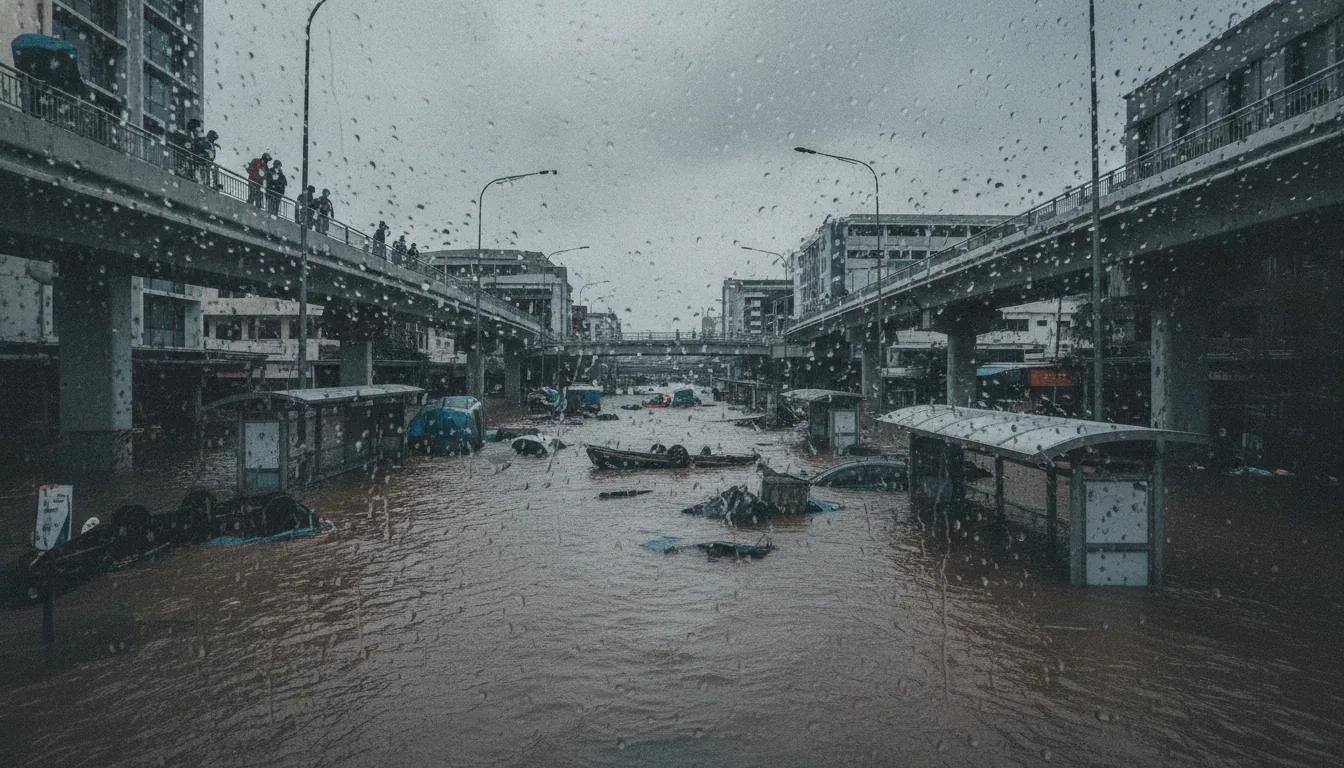
Panama's seismic crisis began on October 9, 2026, when a 7.7 Mw earthquake struck the Azuero Peninsula at 12:56 p.m. local time. The shallow, 10–13 km rupture damaged 416 structures, disrupted Tocumen International Airport, and triggered a Pacific coast tsunami warning cancelled after three hours. The Panama Canal remained operational.
A Rare Rupture in a Country That Did Not Expect One
The 1972 Managua earthquake struck a capital that had no modern seismic code worth the paper it was printed on. Engineers noted afterward that the building stock was the real killer, not the magnitude. The comparison to Panama on October 9, 2026 is tempting - and it breaks in exactly one important place.
Panama had codes, had warnings from its neighbors, and had a Canal that concentrates engineering attention like almost nothing else on the isthmus. What it did not have was a recent 7.7.
At 12:56 p.m. local time, a shallow rupture tore through the Azuero Peninsula in Herrera province, near the communities of Pitaloza Arriba and Tonosí. The United States Geological Survey finalized the moment magnitude at 7.7 Mw, with the hypocenter sitting between 10 and 13 kilometers below the surface. That depth is not incidental - shallow-focus events release their energy close to the ground, and the shaking at the surface reflects it without mercy.
Panama does not belong on any short list of countries bracing for magnitude 7.5-plus earthquakes. Its seismic profile is real but modest by regional standards; the major fault systems that make Costa Rica and Colombia chronic concerns run closer to their territory. The ground still moved in Panama City, 200 kilometres from the epicentre.
It was felt across the border in Costa Rica and Colombia - the regional footprint of a rupture that the local building stock was never quite designed to answer.
Ten Kilometres Down: The Hidden Variable in Panama's Seismic Crisis
The hypocenter sat between 10 and 13 kilometres below the surface. That number decides more than the magnitude does.
A shallow-focus event - seismology places the threshold at 70 kilometres - allows almost no distance for energy to scatter before it reaches the ground. The waves arrive dense, fast, and largely undiluted by the passage through rock.
At 7.7 Mw, the October 9 rupture was already large. At 10 kilometres depth, it hit the Azuero Peninsula the way a blow lands when the arm barely extends. Structural attenuation, the process by which seismic energy dissipates across distance, had almost no room to work.
The ground shook harder than the magnitude alone would suggest.
The aftershock sequence confirmed how much energy the fault had not yet shed. Over 140 aftershocks arrived in the first 24 hours. The largest, a 6.6 Mw event, followed at 20:25 UTC the same evening - powerful enough to rank as a significant earthquake in its own right if it had occurred in isolation.
Each aftershock reset the timeline for engineers trying to determine whether a cracked wall had stabilised or was still moving.
The Pacific coast tsunami warning, issued promptly and cancelled after three hours, ran exactly as the protocol requires. The fear was real while it lasted; the cancellation was the correct outcome of evidence, not of reassurance.
What the aftershock sequence cannot yet offer is the same clean resolution. The fault is still talking, and rebuilding cannot properly begin until it stops.
The Damage Map: Schools, Bridges, and One Cathedral Tower
416 structures damaged. The composition of that number is where the story lives. Of those, 188 were schools and 20 were health facilities - the buildings a government is supposed to maintain and a population cannot do without.
Add 142 houses and 26 government buildings, and you have a toll that reads less like bad luck than like a ledger of deferred maintenance finally called in.
The tower of San Juan Bautista Cathedral in Penonomé did not survive. Colonial-era masonry does not forgive a 7.7 at 10 kilometres depth, and the Azuero Peninsula holds a great deal of colonial-era masonry.
The cathedral is a bellwether, not an anomaly - older public buildings across the region were raised under no seismic code that would recognise itself in modern engineering. What fell in Penonomé is likely a sample, not an exception.
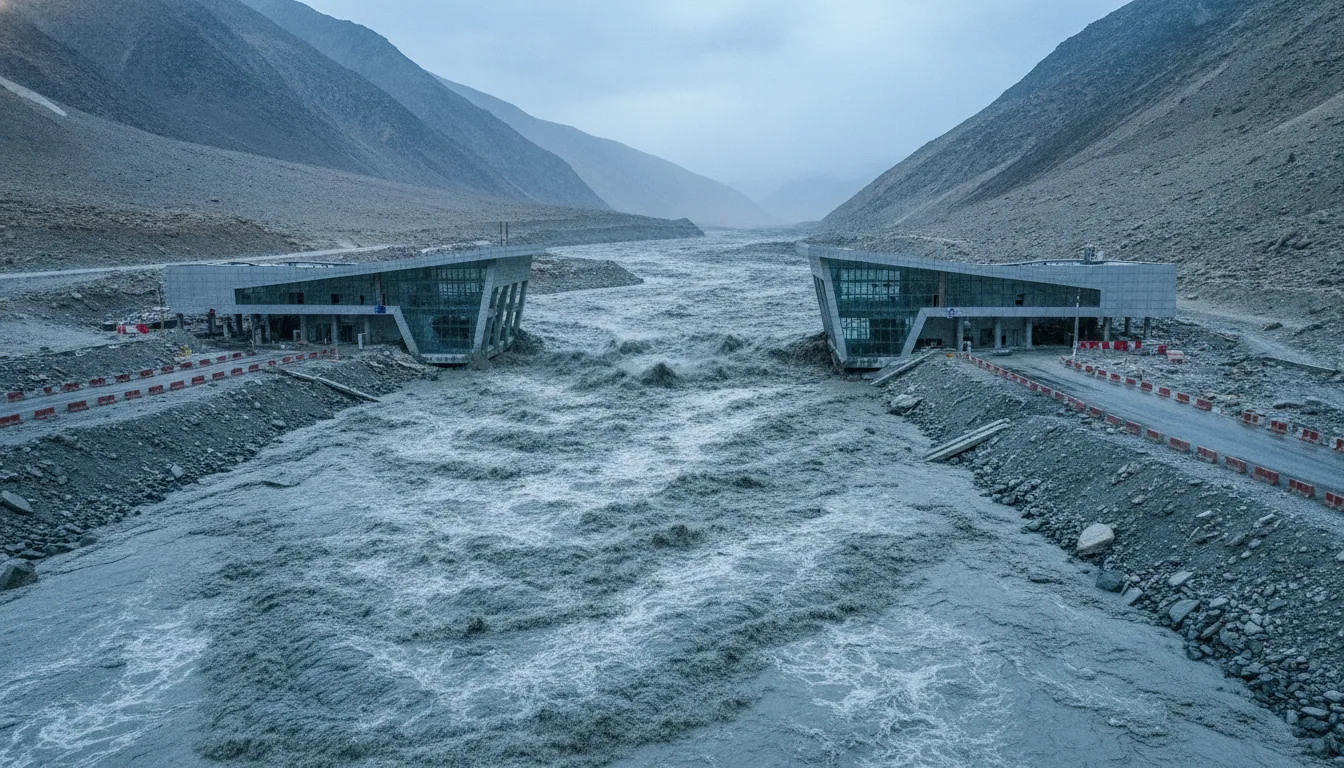
Nine bridges sustained damage. Five communities in Los Santos province were cut off from road access, which in a rural peninsula means rescue teams travel by other means or do not travel at all. SINAPROC, the national civil protection service, was managing assessments across a dispersed geography with the aftershock sequence still running - over 140 recorded in the first 24 hours.
Naturgy, the utility provider, reported power outages across six provinces. At least 27 people were confirmed injured as of October 10. The zero death toll holds for now, but five isolated communities have not been fully reached, and that number should be read accordingly - as provisional, not final.
The practical question for the next 72 hours is not the Canal. It is whether those nine damaged bridges can be bypassed quickly enough to reach the people behind them.
The Hub of the Americas Goes Quiet
At 12:56 p.m. on a Friday, the departure boards at Tocumen International Airport were cycling through the usual continental traffic. By afternoon, they were blank. The airport suspended all flight operations for structural safety audits - not a precautionary pause, but a regulatory requirement once engineers flagged the terminal fabric for inspection.
Tocumen is not merely Panama's main airport. It is the transit spine connecting North and South America, the single node through which the aviation map of two continents routes its connecting traffic. When PTY drops out, the disruption is not local.
Passengers stranded in Panama City were passengers who were supposed to be in Bogotá, Lima, Miami, São Paulo. The closure is a precise case study in what planners call single-point-of-failure infrastructure: concentrate enough regional function in one hub, and one bad afternoon in Herrera province rewrites schedules across two hemispheres.
On the ground, SINAPROC Director René García coordinated evacuations and infrastructure checks, prioritising coastal zones still under residual tsunami protocol and communities cut off by nine damaged bridges. President Mulino issued public calls for calm. Both men were working a damage map that stretched from rural Herrera to a shuttered international terminal 200 kilometres away.
The earthquake hit a rural province and paralysed a continental logistics node. That is the geometry of regional fragility, and no communiqué softens the arithmetic of it.
The Canal Holds; the Schoolrooms Do Not
Ilya Marotta's statement was the most-watched single data point of the day. The Panama Canal Authority confirmed: waterway undamaged, locks intact, 90 vessels maintained on schedule. In a country whose fiscal identity is inseparable from that channel, the announcement carried a weight no seismograph measures.
The contrast it revealed was not flattering. A magnitude 7.7 rupture at 10 kilometres depth left the Canal's concrete and steel engineering unremarked upon, while 188 school buildings reported structural damage. The locks were built to survive. The classrooms were not.
That is not a natural outcome - it is a policy choice, accumulated across decades of competing budget priorities, and it holds its shape in the damage inventory the way arguments hold their shape in documents.
Here is the load-bearing wall. The Canal infrastructure was engineered with seismic tolerance written into every specification, because failure there has an immediate, quantifiable cost in global trade. The schools were built under a different calculus, one that deferred the expensive revision of structural standards until the revision became compulsory.
Everything else in the debate about Panama's infrastructure - the public commitments, the development frameworks, the periodic upgrade announcements - is moulding. Pull it and nothing fundamental changes.
That is not a natural outcome - it is a policy choice, accumulated across decades of competing budget priorities, and it holds its shape in the damage inventory the way arguments hold their shape in documents.
The damage inventory now forces a question the Mulino government will find uncomfortable: if 188 schools failed a single event, what does the next rupture find? The Azuero Peninsula sits in a seismically active corridor. Aftershocks were still registering past the 140 mark within the first 24 hours.
The Canal's operational continuity is genuine good news. What surrounds it is the ledger of what was never built to the same standard, and that ledger does not close with the aftershocks.
The Ledger, Still Open
The USGS economic loss estimate runs from 1 to 10 percent of Panama's GDP. The lower bound alone is approximately one billion dollars. A range that wide is not imprecision - it is honesty about what no one yet knows.
What remains uncounted is not marginal. Final casualty figures are pending: rescue operations in five communities cut off by nine damaged bridges have not concluded, and a death toll reported at zero on the first day should be read as a figure still in motion. The number of long-term displaced persons - those whose homes are structurally uninhabitable - has not been established.
Underwater surveys of the Canal locks have not been completed; Ilya Marotta's assurance covered what was visible, not what lies beneath the waterline. These are not caveats. They are the open columns of the ledger.
The aftershock sequence constrains every estimate further. Over 140 tremors in the first 24 hours, the largest reaching 6.6, mean the Azuero fault has not finished adjusting.
Engineers cannot safely assess a structure that may still move. Each new tremor resets the damage count and pushes the final number further from view.
The single checkable marker Panama's seismic crisis leaves behind is the 188 damaged schools. Panama will, at some point, announce a reconstruction programme. The question is not whether it announces one - it will.
The question is the standard to which those buildings are rebuilt. If the new structures meet a code that would survive the next 7.7, the week's emergency declarations amounted to something. If they do not, the ledger simply reopens the next time the Azuero Peninsula speaks.
Watch for that specification in the tender documents. It will tell you everything the press conference will not.