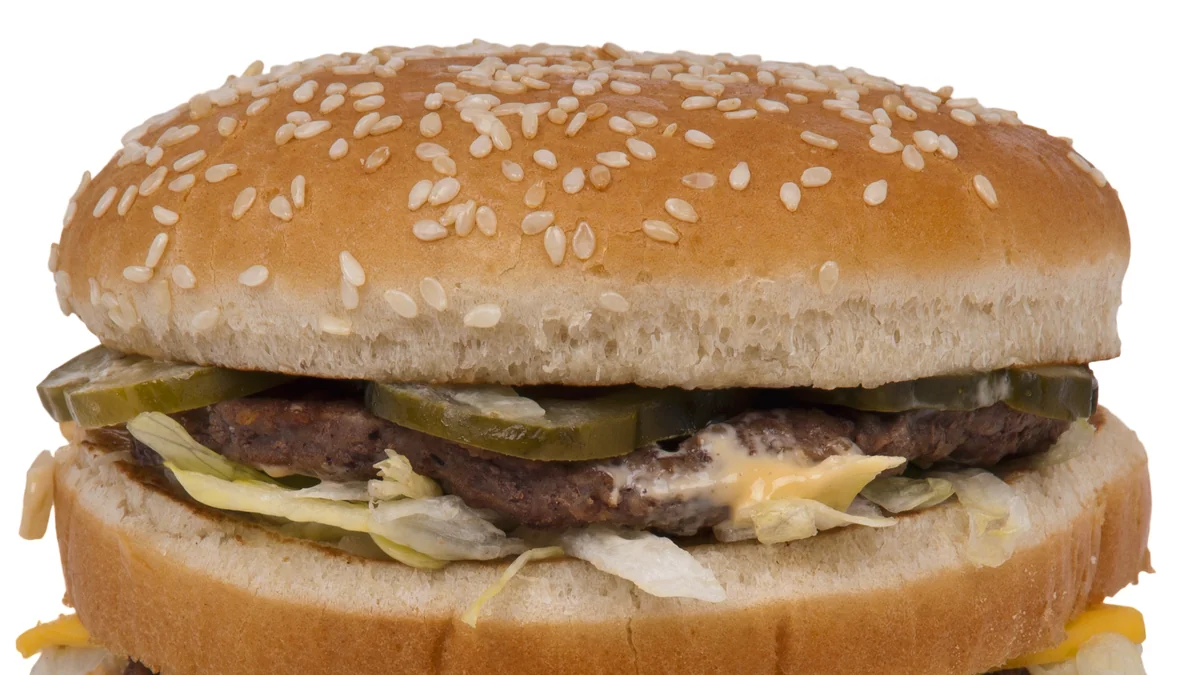
A Burger, Two Zip Codes, and a Twenty-One Percent Gap Nobody Asked You to Notice
Picture two Fresno, California, residents, two miles apart, both getting the exact same craving at the exact same time for the exact same sandwich. One pays $5.69. The other pays $6.89. Neither of them knows. Both are just trying to eat a burger.
That's not a glitch. That's a feature. McDonald's, working with a data consulting firm called Tiger Analytics, built an AI pricing engine currently deployed across 14,000 U.S. locations that analyzes transaction data to estimate what a neighborhood is willing to pay — which is pricing-consultant slang for "how much can we extract before people notice." Reuters published the investigation on September 29, 2026, which is the kind of story that should be front-page news but will mostly get buried under sports and celebrity divorces.
Twenty-one percent — that's the gap between those two Fresno locations, two miles apart, same item on the menu. Not twenty-one percent because of rent, or labor costs, or some local tax on joy. Twenty-one percent because an algorithmic pricing system looked at zip codes and transaction histories and decided that one neighborhood's customers were statistically more squeezable than the other's.
And then there's Connecticut, where franchisee George Michell implemented the AI's recommendations with enough enthusiasm that a Big Mac meal reportedly climbed toward $18. Eighteen dollars. For a Big Mac meal. A sandwich that has been the punchline of every "affordable comfort food" conversation since approximately 1975 is now priced like a casual brunch in a neighborhood with exposed brick and a chandelier made of mason jars. If that doesn't terrify you, congratulations, you're not paying attention.
The most expensive thing about your burger was never the beef. It was the infrastructure of pretending the price was fair.
How McDonald's AI Pricing Engine Turned "Optional" Into a Compliance Architecture
Here is the thing about "optional": it is a word that carries significant legal weight and almost no operational reality. McDonald's has maintained, with the confident sincerity of a man who just signed something he definitely should have read, that its AI pricing engine produces mere suggestions. Recommendations. Helpful little algorithmic nudges that franchisees are completely free to ignore, pinky promise.
Then June 2026 arrived, along with internal documents showing that McDonald's tracks exactly when franchisees deviate from those AI-recommended prices. Not in a casual, observational, "huh, interesting" kind of way. In the way that an organization tracks things when it cares about the outcomes and wants to generate a paper trail of who's behaving and who isn't. Tracking deviations is not what you do with suggestions you don't care about. Tracking deviations is what you do with expectations you're not allowed to call requirements.
Then January 2026 materialized, with a mandate requiring franchisees to engage company-approved pricing consultants to work with the system. Not any consultant. Approved ones. The architecture of optionality was quietly replaced with the architecture of compliance, and the word "optional" kept its job while its responsibilities were reassigned entirely.
This is the core of the lawsuit's antitrust allegation, and it is epistemologically sharp: the case isn't simply that prices were coordinated. The case is that nonpublic transaction data — pulled from 14,000 locations and fed through a centralized system — functioned as an invisible communication channel between nominally independent businesses. The conceptual gap between "advisory tool" and "de facto pricing authority" is doing an enormous amount of legal heavy lifting, and that gap is getting narrower by the document.
The Lawyers Have Entered the Chat, and They Have Opinions About the Sherman Antitrust Act
On October 2, 2026, three days after Reuters published its investigation, a nationwide class action landed in the U.S. District Court for the Northern District of Illinois. Lead plaintiff Michael Thomas, an Illinois resident who presumably just wanted a reasonably priced sandwich, alleges that McDonald's violated Section 1 of the Sherman Antitrust Act. The specific charge: using nonpublic transaction data to coordinate prices across nominally independent franchise locations — which is the kind of sentence that sounds boring until you realize it means "they allegedly ran a price-fixing operation and called it a recommendation engine."
The attorney for the plaintiff, Lark Turner, is not being subtle about the framing. Turner described McDonald's as "leveraging its troves of data and its franchised system to nickel-and-dime consumers down to the last French fry." The distinction between "we gave suggestions" and "we gave suggestions backed by internal deviation tracking" is exactly the kind of distinction that makes antitrust litigation very expensive for someone.
McDonald's responded with a document titled "Separating Fact from Fiction: AI Does Not Set Prices at McDonald's," which is the corporate equivalent of saying "I wasn't there" while the security footage loads. The company specifically denied using dynamic pricing that automatically adjusts throughout the day. Wendy's, sensing a competitive opportunity that cost them nothing, issued a statement in September 2026 clarifying it does not use AI to fluctuate prices based on real-time demand. The fast-food industry's legal strategy, apparently, is to watch McDonald's burn and hold a press release instead of a fire extinguisher.
Meanwhile the Robot Taking Your Order Lost Nineteen Million Dollars Learning to Say 'Would You Like Fries With That'
Somewhere inside a Hardee's drive-thru, a disembodied voice is asking you to confirm your order, and that voice does not have health insurance, does not need a fifteen-minute break, and reportedly gets your order right ninety-six percent of the time. That voice belongs to Presto Phoenix, a company that raised ten million dollars in September 2026 to keep rolling out Voice AI across Taco John's and Hardee's locations, because apparently the future of fast food is a very confident algorithm with good diction and no capacity for small talk about the weather.
Here is the part they put in the footnotes. Before Presto got anywhere near profitable, it lost nineteen-point-nine million dollars in a single quarter of 2024. One quarter. Learning. Saying "would you like to upsize that?" to people who were already annoyed about the line and then had to repeat themselves twice because the AI heard "large fries" as "large guys."
The financial logic behind all of this is not actually insane, which is the most unsettling part. Drive-thrus account for more than fifty percent of all revenue at quick-service restaurants. That is not a feature of the business, that is the business — so the incentive to automate the window, to squeeze every decimal point of margin out of that interaction, is not corporate greed dressed up as innovation. It is corporate greed with a very detailed spreadsheet and a plausible business case, which is somehow worse.
The Burger Now Costs 2,000 Liters of Water, Plus Fifteen Milliliters More If You Complained About It Online
Here is a comparison that should be framed and hung in every server room in America. A quarter-pound beef patty requires approximately 2,000 liters of water to produce — the full agricultural chain from cow-to-bun, a number so enormous it stops feeling real around the fifth zero. A single ChatGPT query uses roughly 15 milliliters. Fifteen. The volume of a mildly ambitious sip of water from a bottle you forgot in your gym bag.
So the burger wins, ecologically speaking, in the category of "most water destroyed per item consumed." Congratulations to the burger. However. One year of individual AI use — approximately 3,650 queries, which is a conservative estimate for anyone with a smartphone and a low boredom threshold — generates about 3.65 kg of CO2, compared to 2.5 kg for a single beef patty. The machine-learning pricing system, over time, laps the sandwich. This is what compound interest looks like when the currency is carbon.
And it gets more invisible from there. Research shows that model training data actually shapes the microarchitectural execution footprint of hardware during inference — meaning the physical cost of "just a recommendation" is baked into the silicon itself, invisible, continuous, and absolutely not listed on the menu board anywhere. The AI that priced your burger has its own resource price. Nobody disclosed that when they were drawing up the "optional" suggestions. You paid for the sandwich. The planet paid for the algorithm. These are, historically, different line items.
So the AI Price of a Burger Is: the Burger, Plus the Algorithm, Plus the Lawsuit, Plus Whatever the Water Bill Comes To
Stack everything up. One burger at a Fresno McDonald's runs $5.69 or $6.89 depending on which side of a two-mile radius you're standing on — a 21% gap explained by "willingness to pay," which is just a spreadsheet's way of saying "we checked, and you'll take it." That number comes from a proprietary automated pricing system built with Tiger Analytics, trained on nonpublic transaction data from 14,000 restaurants, and tracked internally when franchisees had the audacity to disagree with it. Add the litigation overhead: a Sherman Antitrust Act class action filed October 2, 2026, in the Northern District of Illinois, lead plaintiff Michael Thomas, attorney Lark Turner, full theatrical complaint included. Then add the ecological footnote nobody ordered — 2,000 liters of water per beef patty, plus 15 milliliters per query for every optimization run the system ever performed.
The franchise model is doing a lot of work here, legally speaking. Independent owners, coordinated recommendations, centralized data, accountability that dissolves the moment a lawyer asks a direct question. McDonald's says "AI does not set the price of a Big Mac" — which is technically accurate the same way saying "the gun didn't pull the trigger" is technically accurate. The most expensive thing about your burger was never the beef. It was the infrastructure of pretending the price was fair.