The Airfield Britain Lent, and Why It Mattered
RAF Fairford in Gloucestershire has occupied a peculiar category for decades — carrying a British designation, sitting on British soil, but hosting no permanently assigned UK aircraft. The US bomber withdrawal from UK soil in October 2026 ended an arrangement that had quietly expanded, without a formal treaty revision or a parliamentary vote, into the primary forward operating location for American heavy bombers in Europe.
What Washington sent in 2026 was its entire heavy-bomber portfolio. B-1B Lancers, B-52 Stratofortresses, and B-2 Spirits all rotated through Fairford under the operational frame of Epic Fury, the campaign targeting Iranian missile infrastructure. By April 2026, the base hosted 23 strategic bombers simultaneously — a number that captures, more plainly than any communiqué, how far a temporary arrangement had expanded. A standby field had become the primary forward operating location for US Air Force heavy bombers in Europe.
The arrangement required British authorisation, and that authorisation was given. Under both Keir Starmer and his successor Andy Burnham, the UK government permitted the United States to launch offensive-capable strikes against Iranian missile sites from British soil. That is not a routine basing agreement — forward presence for deterrence is one thing; the authority to initiate offensive action from another sovereign state's territory is structurally different, and the distinction matters when the politics shift.
Ask the small question first: who is the borderland here, and who is the empire? Britain lent the field. It did not always control what the field was used for.
Three Vans, Six Petrol Cans, and a Quantity of Petrol
On September 27, Counter Terrorism Policing intercepted three suspicious vans near the Fairford perimeter. Six men were arrested: five British nationals in their mid-twenties, and one 25-year-old holding dual British-Iranian citizenship. What police recovered mattered as much as what they did not. There was petrol. There were no explosives.
That distinction shaped everything that followed. British authorities released all six on bail, a decision consonant with the evidence in hand and the legal threshold required. The absence of explosive material is, in law, a fact. In intelligence assessment, it is sometimes a data point about what had not yet arrived. The gap between those two readings is where the US-UK fault line opened.
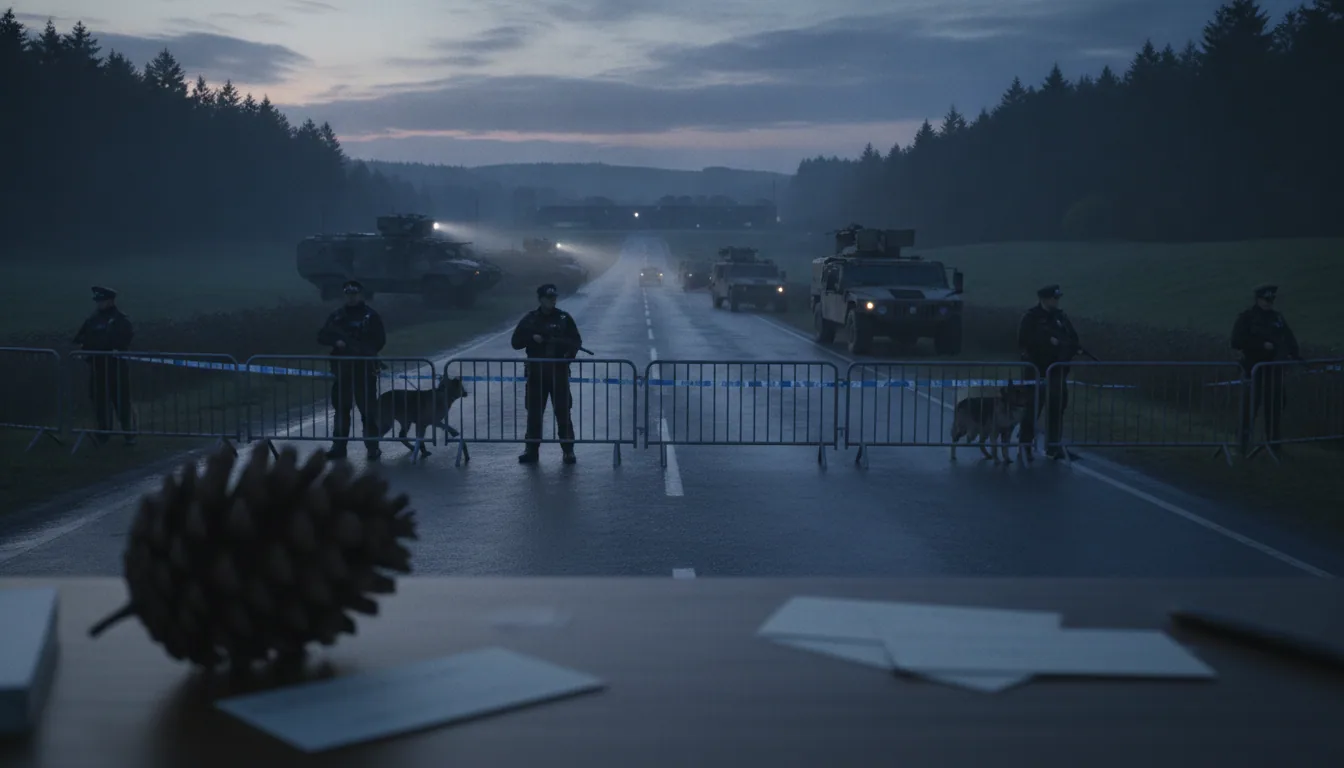
Local evacuations near the base widened the security perimeter in the days preceding the final withdrawal, a visible signal that the threat was being treated as active rather than precautionary. Prime Minister Burnham stated publicly that there were strong indications of Iranian involvement in the plot. The Iranian Embassy in London categorically rejected the allegations as baseless, which is the standard diplomatic response and carries the standard evidential weight.
The arithmetic of the arrests is worth holding plainly in mind. Five British men and one British-Iranian national, petrol recovered, no charges confirmed at the time of writing, all six at liberty. That is the factual ledger. Whether it describes a disrupted reconnaissance, a pre-operational supply run, or something more ambiguous is precisely what the public record does not yet resolve.
The Intelligence That Moved Twelve Bombers in a Single Day
U.S. intelligence reportedly received specific warnings of an Iran-backed plot against Fairford before the withdrawal order was issued. That detail, attributed to American officials, sits at the centre of everything that followed — and it is almost entirely unverifiable. "American officials on Sunday declined to specify the nature of the new information that prompted the rapid withdrawal," the New York Times noted, with the flat precision of a sentence that knows it has just described a wall.
What American officials did confirm was the character of the movement itself. The U.S. Air Force described the redeployment as abrupt and hasty. Twelve B-1B Lancers departed on October 4, coordinated by U.S. European Command and the Department of Defense — the two authorities with the standing and the clearances to authorise a decision of that speed and scale. EUCOM does not move twelve strategic bombers in a single day over a threat it considers manageable.
The gap between what the British legal system recorded and what the American intelligence system apparently concluded is the practical problem here. Six men arrested on September 27, no explosives recovered, all released on bail — on paper, a contained incident. The intelligence assessment read it differently enough to clear an entire forward operating location within days. What changed between the bail decision and the withdrawal order is precisely what no official will name.
When the coordinating authorities decline to specify the nature of fresh information, the reader is being told something, even if not quite told what.
What the Pentagon Said About the Departure — and What It Chose Not to Say
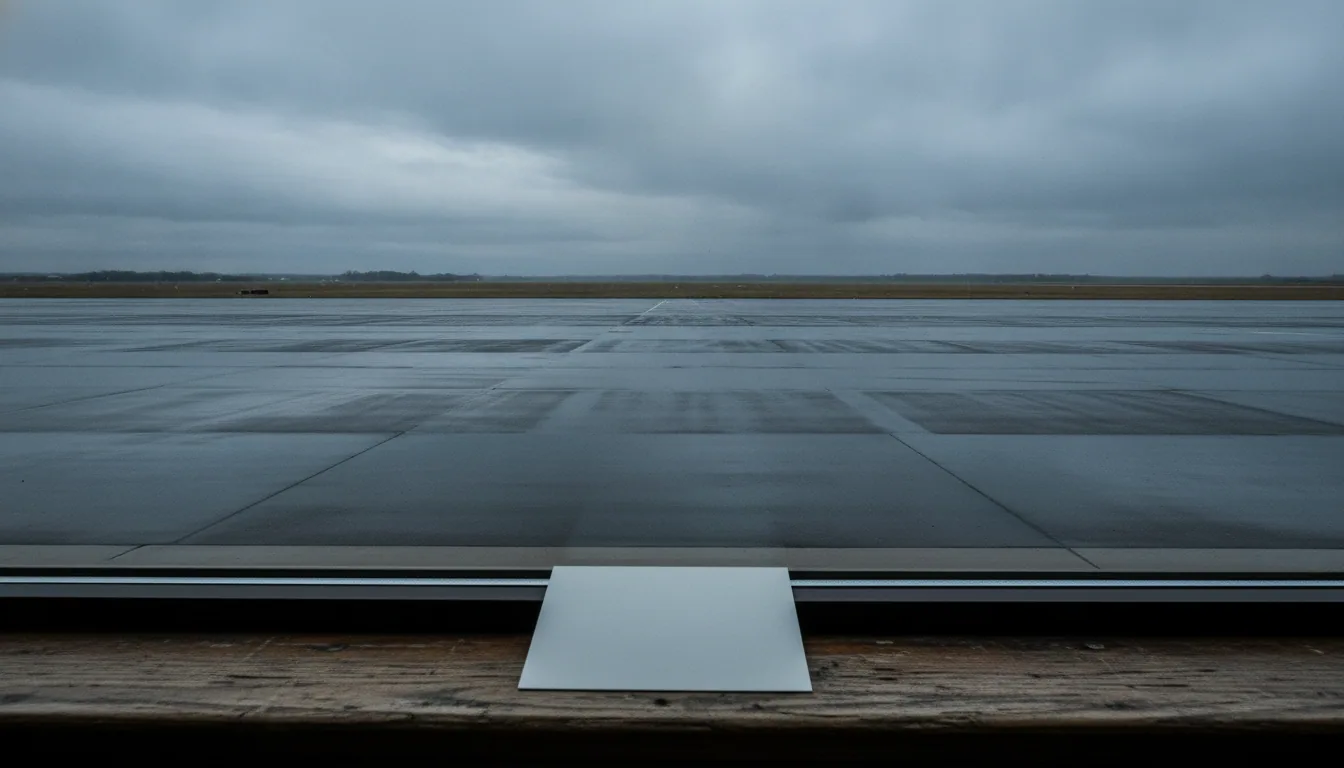
On October 4, 2026, the last twelve B-1B Lancers lifted off the Fairford runway and turned west. The total withdrawal was complete. A spokesperson for the Pentagon confirmed it in a single sentence: "All U.S. bombers that were deployed to RAF Fairford have re-deployed to their home stations."
That verb choice — re-deployed — deserves a moment's attention. It carries the grammar of routine rotation, the kind of orderly drawdown that gets scheduled in a spreadsheet. It does not carry the grammar of an unscheduled departure driven by a suspected Iran-backed plot and six men released on bail the week before.
The Pentagon's formal position was that Global Strike capabilities remained entirely unaffected. Aircraft can fly non-stop from the continental United States with aerial refuelling; Fairford, in this framing, was always one option among several. The logic is not wrong — but it is the logic you reach for when the option you had yesterday is no longer available, and you would prefer the audience not notice the sequence.
The Bail Decision and the Alliance Fault Line It Exposed
Trump's public criticism of the British courts was, by any measure of alliance protocol, unusual. A sitting American president intervening in a partner nation's bail proceedings is not a routine feature of the special relationship — the Hague Convention, the extradition treaties, the Five Eyes framework all rest on a presumption of mutual legal respect. Trump dispensed with that presumption in a single statement.
The structural problem beneath the theatrics is harder to dismiss. US intelligence had assessed the six arrested men as sufficiently dangerous to justify moving twelve strategic bombers across the Atlantic in under a day. British courts, working on the evidence presented to them under domestic evidentiary standards, found no grounds for continued detention. Both decisions were legally coherent within their own systems. That is precisely the fault line.
Prime Minister Burnham had already told the public there were strong indications of Iranian involvement. His government's political read and its judicial system's procedural threshold pointed in opposite directions simultaneously — a position that is not hypocritical so much as structurally honest about the gap between intelligence and evidence that any court will weigh.
The small-nation floor question applies here, though the United Kingdom does not normally occupy that floor. A mid-sized power that hosts American strategic bombers by permission, authorises their use against third-country targets, and then watches Washington publicly rebuke its judiciary is learning, in real time, what the terms of that hosting arrangement actually contain. Legal sovereignty and alliance dependency rarely collide so visibly. They collided on October 4. The bill has not yet arrived.
One Marker to Watch Before the Next Communiqué
The single fact that resolves the open question is not a flight schedule or a diplomatic statement. It is a charging sheet. Six men are currently on bail; the statutes under which formal charges are eventually brought, if they are brought, will tell you precisely how seriously the Crown Prosecution Service assessed what those three vans were doing near the Fairford perimeter on September 27. Conspiracy to attack a military installation carries a different weight than a lesser public-order finding. The distance between those two outcomes measures the gap between what British law determined and what American intelligence believed.
The Pentagon's framing is already on record: Global Strike capability is unaffected, because B-1Bs can reach any target from the continental United States with aerial refuelling. That is structurally true. It is also the language of a command that has already made a different calculation and would prefer you not call it a retreat.
Whether the American redeployment from Gloucestershire marks a force-protection pause or the quiet end of forward-basing heavy bombers in the United Kingdom is, at present, genuinely unknown. Watch the next EUCOM operational statement. If it says the assets will return to Fairford, this was a pause. If it does not mention return at all, the era of the US bomber withdrawal from UK forward operations closed on October 4 — and the communiqué was simply written to avoid saying so.