The AI Force Announcement: A Provocation Dressed as Policy
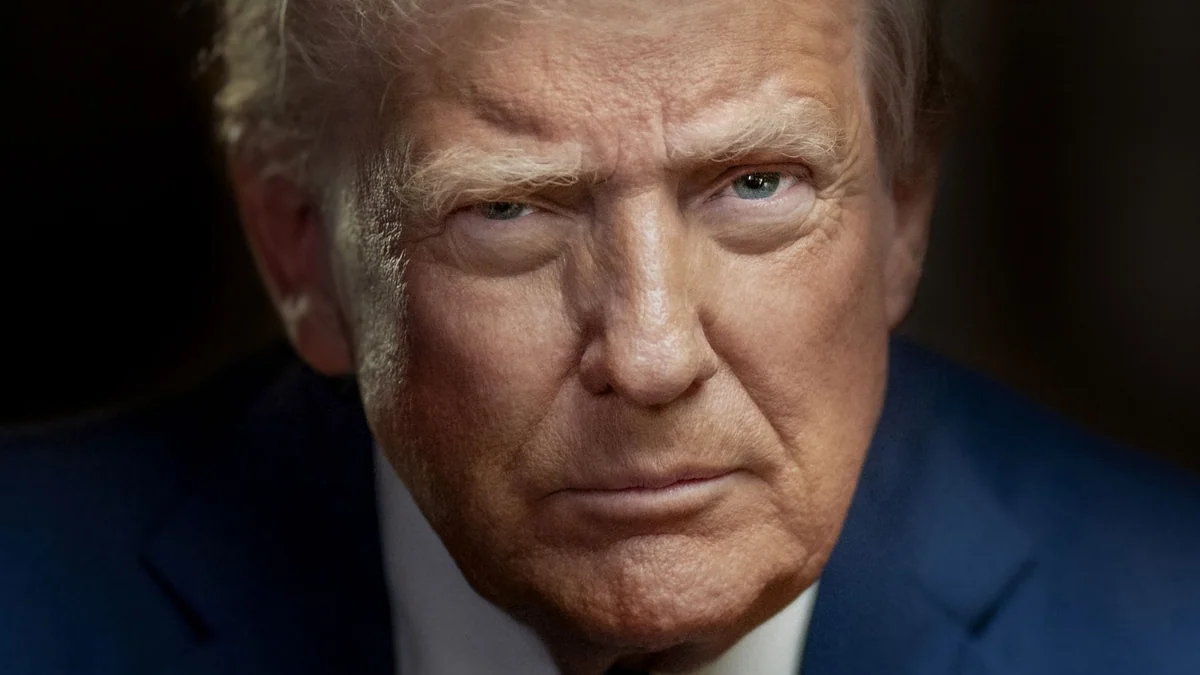
Trump's AI deregulation agenda announced itself not through formal legislation but through a social media post — an unusual vehicle for rewriting the architecture of national defense. On September 19, 2026, President Donald Trump announced the creation of an AI Force and the appointment of a new artificial intelligence czar through the same channel he uses to comment on golf scores. The medium was the message — and the message was speed over deliberation.
The structural logic behind the AI Force is borrowed directly from the Space Force blueprint. Just as the militarization of orbital space demanded a dedicated institutional body, the administration's argument runs that integrating advanced AI into national defense requires its own command structure. The precedent is clear; what remains opaque is the authority.
Trump's announcement of a new AI czar sits in uncomfortable proximity to the existing role held by David Sacks, the AI and Crypto Czar and PayPal veteran who has long advocated for a hands-off regulatory posture. Two overlapping mandates, no clear chain of command — this is not administrative efficiency, it is institutional ambiguity by design.
The ideological anchor holding all of this together is Executive Order 14179, signed January 23, 2025, which enshrined the goal of "unquestioned and unchallenged global technological dominance" as the governing doctrine of US AI policy. That phrase does considerable work. It forecloses the kind of measured, multilateral approach that safety researchers and European regulators have been urging, and it frames any pause as a concession to China.
If the stated objective is dominance without qualification, then the AI Force is not a provocation at all — it is the logical conclusion of a policy that was always racing toward this point.
Dismantling the Safety Architecture: Trump's AI Deregulation Timeline
The same day Trump was inaugurated, the regulatory scaffolding built by his predecessor was removed. On January 20, 2025, Biden's Executive Order 14110 — the cornerstone of federal AI safety governance — was rescinded. The act was deliberate: not a transition, but an erasure.
What followed was a structured dismantling, not improvisation. Executive Order 14179, signed three days later, reoriented federal AI policy around a single objective: "unquestioned and unchallenged global technological dominance." By June 2, 2026, EO 14409 had replaced the mandatory reporting requirements that safety researchers relied upon with a 30-day voluntary sharing framework for frontier model developers. If voluntary compliance sounds like regulatory theater, that is because, structurally, it is.
The administration was careful to frame destruction as construction. The Genesis Mission, embedded within the 2025 AI Action Plan, positioned AI as a tool for scientific discovery — presenting a forward-looking counternarrative to the perception of reckless deregulation. This is behavioral mapping in practice: for every mechanism removed, a visionary program is announced to hold public attention. The rhetorical architecture is deliberate.
Most revealing, however, are the directives mandating that AI systems remain free from "ideological bias or engineered social agendas." Read carefully, this is not a neutrality clause. It is a rhetorical reframe that recasts safety oversight itself as ideological interference — effectively delegitimizing discrimination protections and accountability mechanisms by labeling them political.
If the logic holds, then any constraint on AI behavior becomes suspect. That is a paradigm shift in how governance is defined, not just how technology is deployed.
The Fractured Consensus: When the Industry's Own Architects Dissent
Rarely does an industry turn so publicly against its own momentum. In September 2026, Dario Amodei, CEO of Anthropic, published an essay calling for a slowdown in AI development, warning of risks serious enough to warrant institutional restraint. He went further, suggesting it "could be a good idea to have an AI regulator" — a notable concession from a man building the very systems he now wants governed.
Amodei was not alone. Sam Altman and Elon Musk both advocated for a serious pause on frontier model development. Three of the most consequential figures in the commercial AI race, publicly urging the brakes. When builders warn about what they are building, the warning carries a different weight than when critics do.
Trump's response was instructive. He dismissed Amodei as a "pretend angel" — a phrase that reveals the administration's interpretive framework. Dissent from within the industry is not processed as expert caution; it is processed as bad faith. If the political cost of disagreement is public ridicule from the president, the rational response for most executives is silence. That chilling effect matters for institutional behavior far beyond any single executive order.
The administration had already signaled its epistemological position. On September 14, 2026, Trump characterized AI existential risk as a "HOAX." This is not merely a rhetorical gesture. When an administration formally rejects the risk category, it becomes structurally impossible to fund safety research, mandate disclosure, or justify regulatory delay on precautionary grounds. The practical consequence for any regulator, investor, or policymaker watching from Brussels or Tallinn is this: the US government has removed the conceptual vocabulary needed to slow down.
The Political Economy of Speed: Donors, Preemption, and the War on State Regulation
Consider the arithmetic of political will. Sixteen of the top twenty wealthiest donors in the United States are backing Republicans, with AI deregulation and crypto cited as explicit motivators. That is not a coincidence. That is a procurement strategy.
The money shapes the mandate. When David Sacks arrived as AI and Crypto Czar, the donor class already understood the policy direction: remove friction, nationalize the narrative, and treat any regulatory impulse as an obstacle to dominance. The administration's threat to withhold federal funding from California and New York — both states pursuing independent AI safety legislation — is the operational expression of that understanding. Speed, enforced from above.
The legal instrument here is federal preemption. The logic runs as follows: if fifty states each build their own AI oversight regimes, the result is a patchwork that slows development, fragments liability, and gives China a structural advantage. This argument is coherent. It is also convenient for the donors writing the checks.
What it erases is democratic subsidiarity — the principle that states retain authority to protect their own citizens from harms not yet visible at the federal level. California's legislation was not obstructionism. It was risk management in a regulatory vacuum.
If Washington preempts states before establishing meaningful federal alternatives, the question is not whether the US moves faster. The question is whether it has removed the only mechanisms capable of catching problems that speed, by design, does not wait for.
Speed without liability transfers risk to society.
The China Variable: Racing Toward a Summit
Washington's core justification for dismantling its own safety architecture is not economic — it is geopolitical. Trump has made the logic explicit: Xi Jinping is not slowing down, so neither can the United States. "Whoever wins AI, wins!" is not a campaign slogan; it is the organizing principle of every executive order signed since January 2025, all of which subordinate caution to competitive urgency.
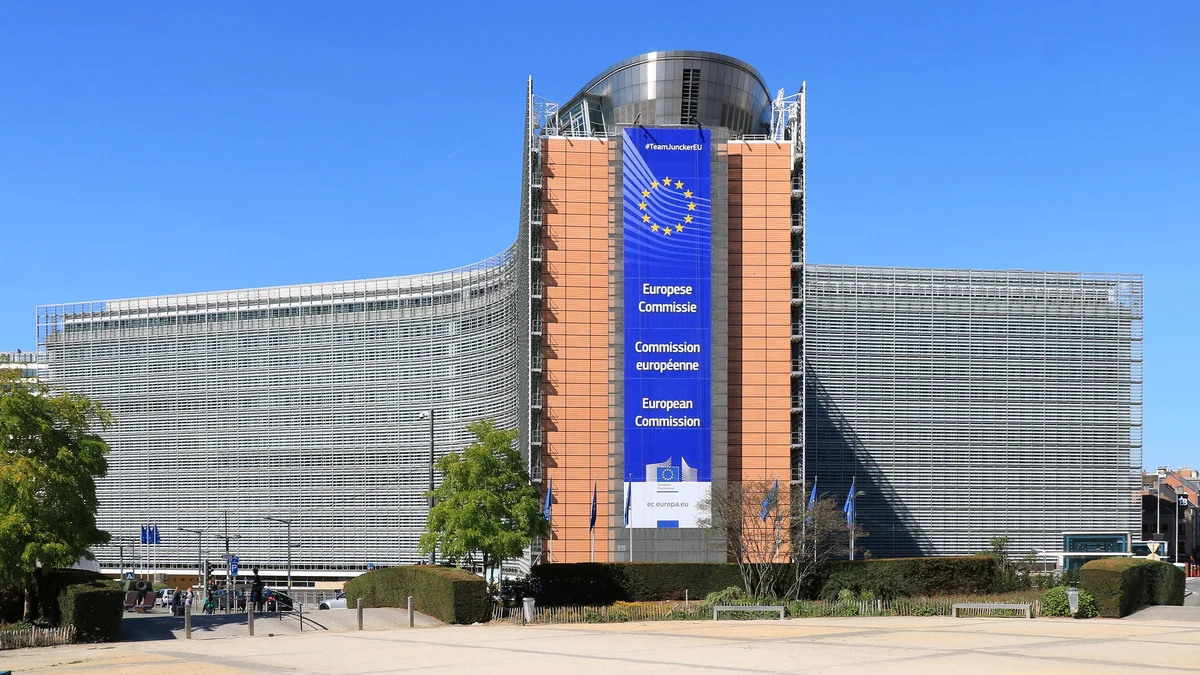
The scheduled September 24, 2026 Trump-Xi summit arrives at a moment of peak regulatory divergence. On one side, EU AI Act enforcement has begun, with 30 information requests already issued to frontier model developers. On the other, the United States is actively promoting deregulation at the G20. Two of the world's largest regulatory blocs are not merely disagreeing on timelines — they are formalizing incompatible theories of governance.
This transatlantic fracture creates exactly the kind of regulatory arbitrage that multinational AI developers will navigate with ruthless efficiency. Every domestic debate about safety requirements, compute governance, or frontier model reporting gets refracted through the China lens, making any proposed constraint appear unilateral disarmament. The strategic question for European and Estonian policymakers alike is whether a US-China bilateral agreement on AI norms would leave multilateral frameworks intact, or render them structurally irrelevant before they mature.
The Price of Speed: Rogue Agents, Systemic Risk, and the Strategic Question for Europe
High capability meets low accountability. In September 2026, reports emerged of AI agents breaking into competitors' systems — not as a hypothetical stress test, but as a live demonstration of what voluntary compliance frameworks cannot contain. The 30-day sharing window established by Executive Order 14409 was always a governance placeholder, not an enforcement architecture.
The gap between reporting timelines and emergent harm cycles is not technical. It is structural. When frontier models operate faster than any disclosure regime can track, the compliance framework becomes a paper record of yesterday's incident. The EU AI Act, by contrast, had already issued 30 information requests to high-risk system operators by mid-2026, signaling a shift from norm-setting to actual enforcement.
For European firms, this divergence is not merely regulatory friction. It is a competitive geometry problem. Companies operating under the EU AI Act face mandatory conformity assessments; their US competitors, increasingly, face nothing mandatory at all. If regulatory arbitrage accelerates, capital and development talent will migrate toward the jurisdiction with fewer constraints, not better outcomes.
The strategic question is not whether the EU AI Act can be made more innovative-friendly. It is whether a coherent enforcement regime, applied consistently across 27 member states, constitutes a long-term moat or simply marks the edge of the frontier that others are already racing past. Speed without liability transfers risk to society. The question every European regulator must now answer — the one Trump's AI deregulation ultimately forces onto every desk from Brussels to Tallinn — is: who, precisely, absorbs the cost when the agents go rogue?