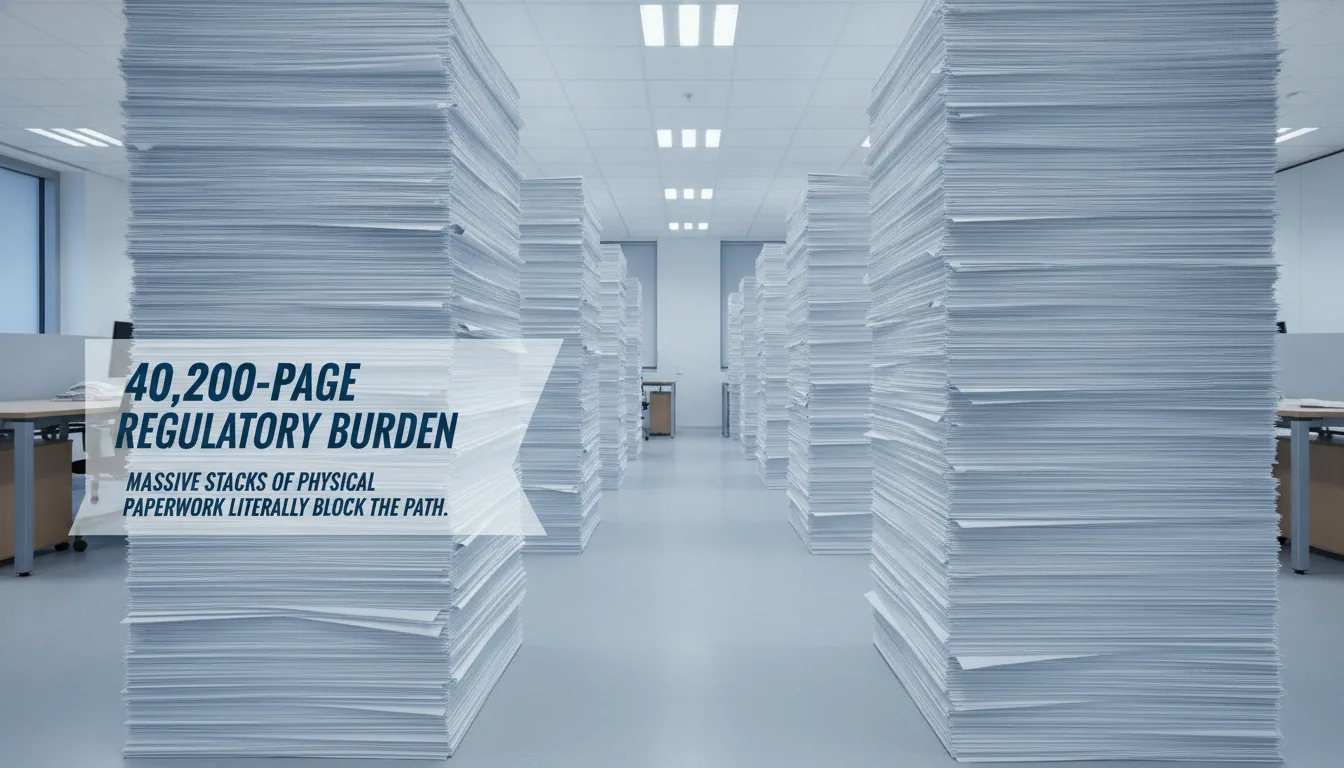
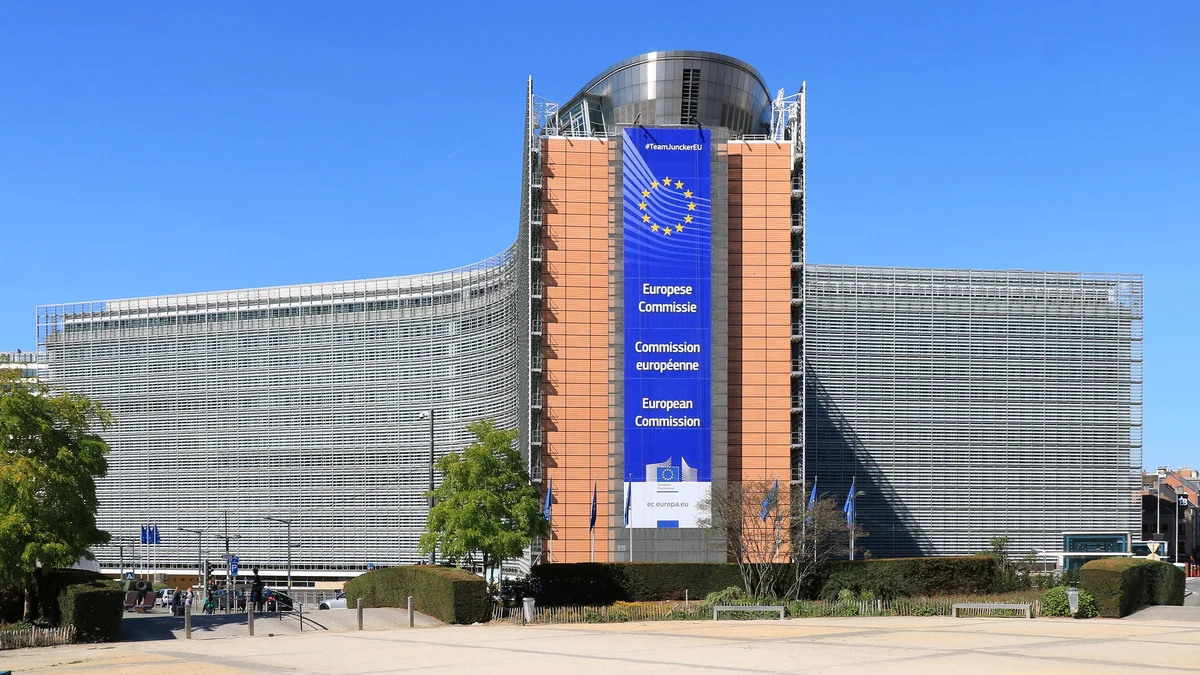
The EU AI Act establishes the world's first comprehensive legal framework for artificial intelligence, ensuring that digital systems operating within the European Union are safe, transparent, and under human oversight.
Today, August 2, 2026, the era of the invisible machine officially ends. Under Article 50, the transparency section of the regulation, every customer-facing chatbot and every synthetic image must now carry its own digital birth certificate to prove its origin. It is a mandatory ingredient list for the digital mind, marking the first step in a much larger human adventure of understanding.
The End of the Invisible Machine
Have you ever had a conversation and realized, halfway through, that the "person" on the other side didn't actually have a pulse? It is a disorienting moment where the digital mirror flickers and reveals a machine behind the curtain. For years, we have lived in this uncanny valley of doubt, never quite sure if we were being heard or simply processed.
Knowing exactly who, or what, is speaking is not just about bureaucracy or avoiding fines. It is about maintaining the boundary between our physical reality and the artificial reflections we have built to serve us. Transparency is just the beginning of this transformation.
To someone standing here in 1610, this ability to summon voices from the void would have been indistinguishable from magic. We have reached a point where software mimics the human spirit so effectively that it challenges our shared perception of reality.
A Risk-Based History of the EU AI Act
The law usually chases technology like a person sprinting after a departing train. However, the EU AI Act (Regulation 2024/1689) took a different path when it officially entered into force on August 1, 2024. To someone standing here in 1610, this attempt to map the future would have been indistinguishable from magic.
We think of laws as starting all at once, but this one climbed a ladder of understanding rung by rung. By February 2, 2025, forbidden practices like social scoring were relegated to the pile of tools we decided were far too sharp for society to handle.
The European Commission established the European AI Office to oversee general-purpose AI models, making the oversight feel personal. Now hold that thought. While the headlines focus on the big bans, the true rigor is often found in the legal plumbing.
Regulation 2026/1864 recently arrived to set the technical formats for data collection on ICT usage. This ensures the 2027 observation year is built on concrete numbers rather than guesswork. We still don't know if this scaffolding will hold as the technology evolves, but that is the best part of the adventure.
The Calculus of Compliance: Numbers That Matter
When we talk about legal consequences, we often drift into a territory of zeros where the numbers stop meaning anything. If I told you a company could be fined 35 million euros, your brain might register "expensive" and then go back to sleep. Let's try looking at it another way.
That amount is roughly what it costs to build a state-of-the-art secondary school in Tartu, including all the labs and furniture. Under the law, this is the maximum penalty for using prohibited practices like social scoring or manipulative systems. For a tech giant, a fine of 7% of global annual turnover is less of a penalty and more of an amputation.
The law also scales down for smaller infractions, with general AI obligations carrying a ceiling of 15 million euros. Even providing incorrect information to a regulator like Estonia's TTJA has a specific price tag that can reach 7.5 million euros.
In this new digital frontier, ignorance is expensive, but deception is a luxury no one can afford.
In this new digital frontier, the regulators have essentially calibrated the cost of a lie. Here is the strange part: the fine for being dishonest is often higher than the cost of simply fixing the system. Now hold that thought, because transparency is just the beginning of this transformation.
The Strategic Pause: High-Risk Realities
Imagine a surgical robot or a car that thinks for itself. If a chatbot hallucinates a dinner recipe, you end up with a salty soup and a bit of frustration. But if a medical device misreads a heart rhythm, the consequence is no longer a glitch—it is a tragedy.
Here is the strange part. While transparency rules for chatbots are now active, the most critical "high-risk" systems have been granted a strategic pause. Stand-alone high-risk software, such as algorithms used in law enforcement, now has until December 2, 2027, to fall in line.
Systems integrated into physical products like vehicles or medical devices have even longer, until August 2, 2028. To someone standing here in 1610, a self-driving carriage would have been indistinguishable from magic. Today, we know it is a human struggle to harmonize fast-moving code with the stubborn requirements of physical safety.
From Paper to Power: The Giga-factory Gamble
For years, the European approach to technology felt like writing a strict rulebook for a game we were not playing. While others built the engines, we perfected the safety manual. On July 31, 2026, the strategy shifted from paper to power.
The European Commission launched a billion-euro competition to establish up to seven "AI Giga-factories." These are not just offices for programmers but massive, energy-hungry temples of computing.
The number is so large it stops meaning anything, so let's try it another way. This initiative uses public funds to pull in private investors, totaling 30 billion euros dedicated to the architecture of thought. That total is roughly the cost of building ten world-class particle accelerators.
Henna Virkkunen sees this as the foundation of an "AI continent." This transition marks a pivot from purely regulating software to subsidizing the physical hardware of the future. It is a gamble that rules alone cannot protect a society if it does not also own the physical means of discovery.
The Watchmen at Home: Estonia's Frontier
In Estonia, the task of watching the machines falls to the Consumer Protection and Technical Regulatory Authority (TTJA). They are the designated market surveillance authority, or the digital inspectors on the beat. Their job is making sure the AI follows the law while keeping the market fair for everyone.
But a small nation cannot police a global frontier alone. Estonia is one of 18 member states that have signed joint procurement agreements for AI computing resources. By pooling our strength, we are buying the massive processing power needed to stay relevant in a world of giants.
This collective effort of 18 nations is about more than just hardware. We are balancing the protection of human rights with a necessary drive for innovation. These resources will ensure our oversight is based on more than just guessing.
The Unanswered Horizon
We have the blueprint and the billions, but the map itself is still blank. The specific locations of the proposed Giga-factories remain a mystery, hidden behind the veils of future competitions. It is a strange wait for the physical reality of silicon and steel to catch up to the transparency we now demand.
Since early 2025, the law has demanded AI literacy from everyone using these systems. Rules are only half the battle; if the people behind the screens do not know how the machine thinks, the legal framework is just a paper shield. We are effectively trying to build a compass for a landscape that is still shifting under our feet.
The horizon remains open, and the true test is whether we can remain conscious pilots of our own inventions. Our tools have always outpaced our wisdom, and the adventure of the EU AI Act is in the catching up.