A Rocket Reaches Orbit, and Something Shifts
Germany has a rocket in orbit. Sit with that for a moment, because it is genuinely strange.
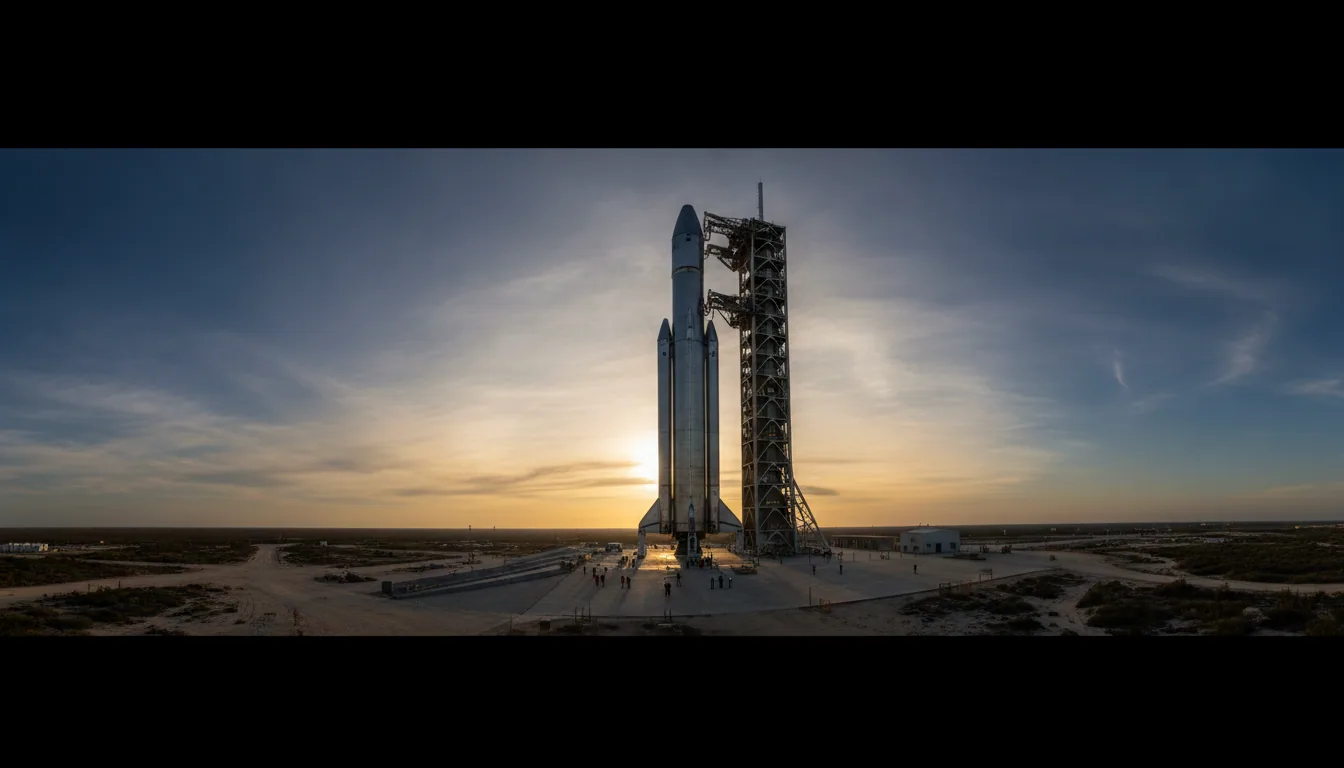
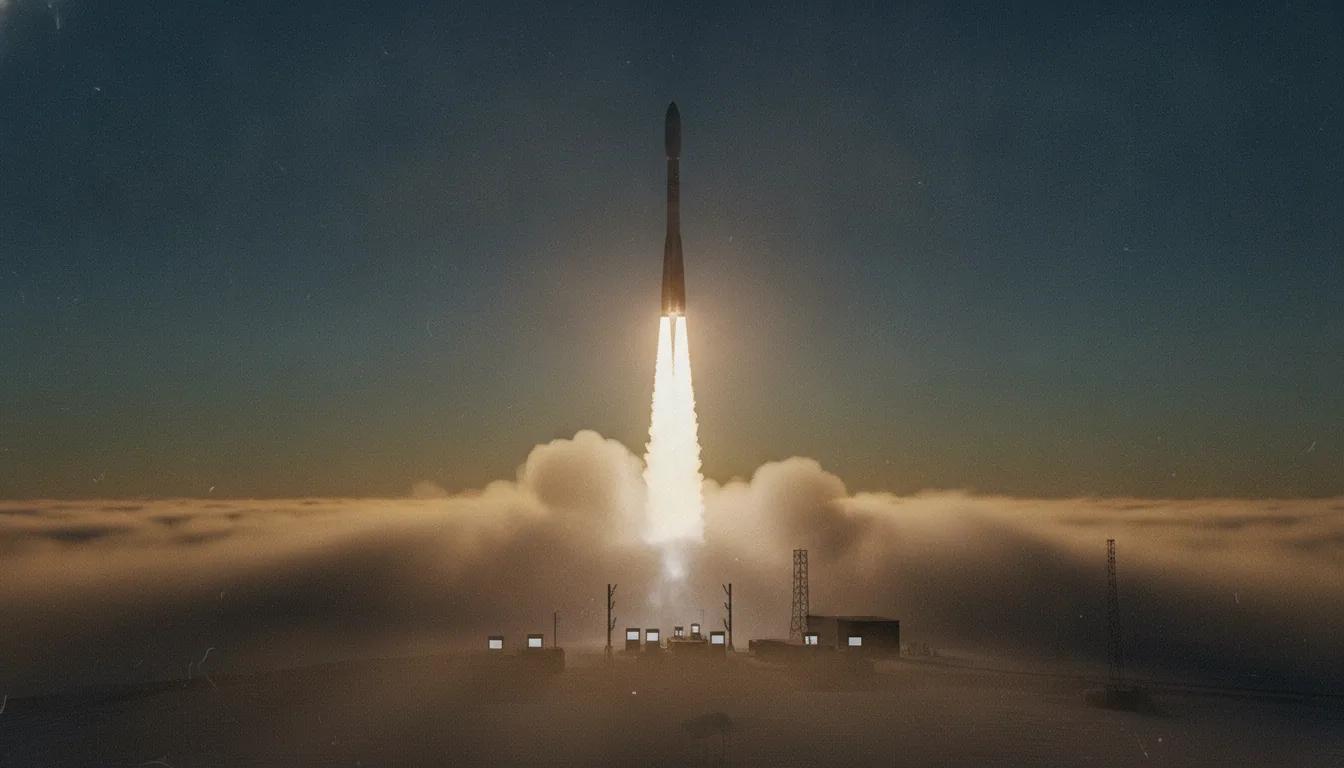
On September 5, 2026, a two-stage liquid-fueled vehicle called Spectrum lifted off, climbed past the Kármán line, and deployed its payloads. The machine was built by Isar Aerospace, a Munich startup. The launch site was Andøya, in Norway. The payload reached orbit on the second test flight. This is not the usual rhythm of European spaceflight, which has historically been measured in decades and committee meetings rather than iterative test campaigns.
Spectrum is not a general-purpose rocket. It was designed from the beginning as a precision tool for a specific and rapidly growing market: the small and medium satellite constellations that now handle everything from broadband communications to climate observation. You do not send Spectrum to haul a bus-sized telecommunications platform to geostationary orbit. You send it when you need a few hundred kilograms of hardware placed exactly where you need it, on your schedule, without sharing a ride with someone else's payload. That specificity is the point.
Here is the strange part. Germany's space program, one of Europe's largest economies and home to serious aerospace engineering for over a century, has until very recently been a passenger in the launch business. German scientists built instruments that flew on other people's rockets. German money flowed into ESA, which contracted with Arianespace, which operated French rockets. Independent German access to orbit was a policy aspiration, not a physical fact. September 5, 2026 changed the category of that sentence. What was aspiration is now, for the first time, something you can track on a radar screen.
The Policy Turn That Relaunched Germany's Space Ambitions
Before Isar Aerospace's Spectrum rocket could reach orbit, a document had to reach a cabinet table. In September 2023, the German federal government adopted what it called its "New Space" strategy — a deliberate pivot away from the old model of ponderous, state-led megaprojects toward something faster and more commercially nimble. The target was explicit: build an ecosystem of agile private companies capable of meeting both national security and economic goals, with climate monitoring named as an early civilian priority.
The strategy also named something that European space policy had long danced around without saying plainly. Germany's goal, stated without diplomatic softening, was to reduce dependence on American and French launch systems — on SpaceX and Arianespace. That is a political statement dressed in industrial language. Saying you need your own rockets is really saying you no longer trust that someone else's rockets will always be available, affordable, or pointed in a direction you control.
Capital followed conviction with notable speed. By 2025, Isar Aerospace had raised approximately 870 million euros in total funding — a number that makes more sense when you read it as a market verdict rather than just a corporate milestone. Private investors rarely stack money that high on a launch startup without believing a structural demand exists. Anna Christmann, Germany's federal coordinator for aerospace policy, framed it with the kind of directness politicians rarely manage: European independent access to space is a political objective, not merely a technical aspiration. That distinction matters. Rockets built under that framing are not products. They are infrastructure for sovereignty.
Where the Money Is Coming From
Germany's federal aerospace budget for 2025 sits at 2.3 billion euros. Of that, 944 million flows directly to ESA as a membership contribution — which means Germany is simultaneously the agency's biggest patron and the country now asking that agency to fund its domestic competitors. That is not a contradiction. That is, in fact, the whole logic of the new arrangement.
In August 2026, ESA made it concrete: over 500 million euros split among three European launch startups, including Isar Aerospace and Rocket Factory Augsburg. The agency is not being charitable — it is buying guaranteed access to launch capacity that Europe does not yet fully own, and doing so before the price of that access rises. Think of it as a government pre-ordering seats on a bus that is still being built, because the alternative is standing at the SpaceX stop indefinitely.
What has changed in the last three years is the sequencing. Traditionally, public money came first and private capital followed, cautiously, once a technology had been blessed by a government contract. Now the two streams run in parallel. Isar Aerospace had already raised roughly 870 million euros in private funding before ESA wrote its check. Venture capital arrived on the thesis; institutional money arrived on the proof. The result is that these companies are capitalized at a speed and scale that no previous European rocket program has experienced.
The money is not yet matched by launches. But the architecture of the funding — public anchors, private acceleration, and ESA acting less like a regulator and more like a strategic customer — is a structure that did not exist five years ago.
Three Rockets, Three Bets
Picture a shed in Neuenstadt am Kocher — a town so small most Germans couldn't place it on a map — where engineers are burning candle wax to reach space. Not metaphorically. HyImpulse's hybrid engine runs on paraffin, the same base material as a birthday candle, combined with liquid oxygen. In September 2026, investors decided that bet was worth 50 million euros.
That is one of three distinctly different wagers currently sitting on the table of German aerospace.
The most conventional-looking is Rocket Factory Augsburg. Their RFA ONE launcher follows a familiar logic: liquid propellant, orbital ambitions, and 220 million euros in ESA backing secured in September 2026. The first orbital flight is scheduled before the end of this year — a deadline that has the particular quality of being both close and technically terrifying. Nobody outside the company knows whether it will hold.
Then there is the question of what all three vehicles are actually built to carry. A micro-launcher is not a small version of a big rocket in the way a hatchback is a small version of a lorry — the economics are inverted. A large rocket earns money by filling its fairing; a micro-launcher earns money by going exactly where a customer needs, exactly when they need it, without sharing the ride. Precision is the product. The payload might weigh 300 kilograms. The value of putting it in exactly the right orbit at exactly the right moment can be immense.
In the old model, one dominant launcher was efficiency. In the New Space model, three competing launchers with three different propulsion philosophies are resilience. Redundancy is the point.
Rockets built under that framing are not products. They are infrastructure for sovereignty.
When Orbital Access Became a Defense Priority
For most of the Cold War, space was a place nations raced toward. Now they are also racing to defend. In November 2025, Germany adopted its first dedicated Space Security Strategy, formally designating space as the "fifth domain" of conflict, alongside land, sea, air, and cyber. The comparison is not a rhetorical flourish. It is a doctrinal shift with a price tag.
That price tag is 35 billion euros. Defense Minister Boris Pistorius announced the commitment in 2025, to be spent on space-related defense projects through 2030. To put that in context: Germany's entire federal aerospace budget for 2025 was 2.3 billion euros. The defense envelope dwarfs the science budget by an order of magnitude, and it signals clearly who is now setting the agenda.
The Bundeswehr Space Command was established in 2021, quietly, when such things were still framed as prudent rather than urgent. It was given a mission: monitor, protect, and if necessary respond to threats against German and allied satellite infrastructure. What has changed since then is not the mandate but the urgency around it. The new security strategy explicitly prioritizes the command, because the satellites it watches over are no longer just scientific instruments. They are arteries of navigation, communication, and targeting.
Germany also stopped watching from the sidelines in October 2024, when it joined Operation Olympic Defender, the US-led multinational coalition built to counter hostile activity in orbit. The coalition's name sounds almost sporting. The activity it was built to counter is not. Where the Soviet Union and the United States once competed to plant flags on the Moon, a different and less photogenic contest is now underway, played out in orbital mechanics and signal jamming rather than rocket exhaust and national pride.
A Cluster Forms — and What It Still Has to Prove
Ten thousand people. That is the current headcount of Germany's space sector, concentrated in two anchoring hubs: Bavaria in the south and Bremen in the north. The shape of a genuine aerospace cluster is visible in those numbers, not just a government wish.
The funding architecture is real. Isar Aerospace has raised approximately 870 million euros in total. ESA committed over 500 million euros across three European startups in a single August 2026 tranche. The German federal aerospace budget for 2025 stands at 2.3 billion euros, and the defense ministry has pledged 35 billion more through 2030. On paper, the runway is long.
The runway, though, is not the flight. What remains genuinely unknown is whether HyImpulse's paraffin-based engine can scale beyond demonstration hardware. Isar has not disclosed the technical specifications of the payloads it deployed on September 5. Rocket Factory Augsburg has not yet flown its first orbital mission. And no one has published a credible timeline for achieving weekly launch cadence, which is what commercial reliability actually means.
One successful orbital flight closes the distance between ambition and engineering. It does not close the distance between engineering and a mature market. The question Germany's space program is now positioned to answer — if it keeps building — is whether independent orbital access changes what Europe can decide, and for whom, without asking anyone's permission first.