
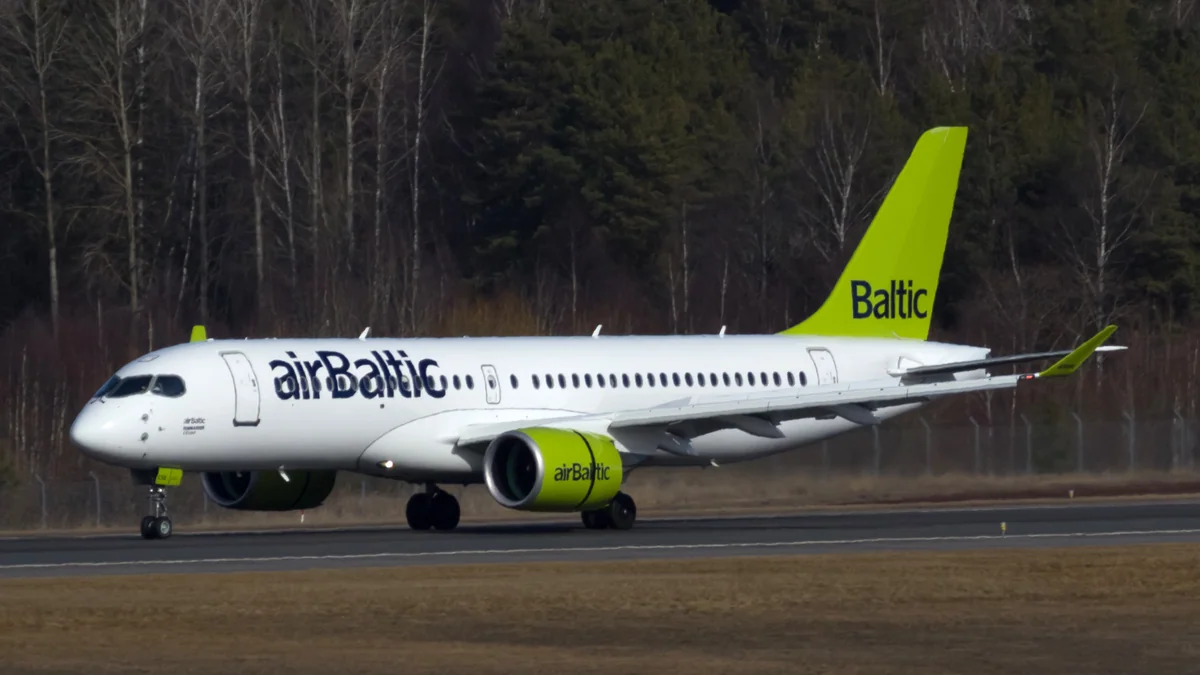
Air Baltic has secured a €257 million bridge loan at a record 25% interest rate to combat a liquidity crisis and prepare for its 2027 IPO. The high-risk financing, provided by venture capital firms, necessitates a fleet reduction from 54 to 36 aircraft, threatening regional connectivity and economic stability across the Baltics.
A national carrier preparing for a high-profile Initial Public Offering typically commands the respect of global capital markets; yet, Air Baltic is currently operating under the fiscal weight of what is effectively a high-interest payday loan. This 25% annual interest rate, agreed upon in September 2024 for a €257 million bridge financing deal, exposes a profound contradiction between the airline's expansionist rhetoric and its material scarcity of cash. While standard aviation industry lending rates generally hover well below the 10% threshold, this arrangement reflects a sharp shift in how institutional investors perceive the airline's financial resilience.
The Anatomy of the Deal: Seniority and Structural Signals
This 25% interest rate is not merely a price tag; it is a structural signal that the paradigm shift in global interest rates has left high-leverage entities like Air Baltic in a precarious position. The financing is structured as short-term bridge debt through "super senior" bonds maturing on February 26, 2027. If we examine the institutional behavior of the lenders—London's Polus Capital Management and Israel-registered Klirmark Capital 4—it becomes clear they are not strategic aviation partners. They are risk-capital actors demanding extraordinary returns in exchange for liquidity that traditional banks were unwilling to provide.
The transaction is executed in two tranches: an initial disbursement of €180 million, followed by up to €77 million once specific, undisclosed conditions are met. By granting these lenders "super senior" status, the company has rewritten the old order of its debt hierarchy. In the event of insolvency, these creditors now hold absolute priority over all others. This level of protection, coupled with a 25% yield, suggests that the lenders are factoring in a high probability of structural turbulence before the loan's maturity.
Roots of the Crisis: Cash Scarcity and Fleet Contraction
To understand this liquidity crisis, one must look beyond the immediate headline and into the cross-border correlation of the airline's debt history. The company's previous bond issue, yielding 14.5% on the Dublin exchange, was already considered expensive. However, when Air Baltic delayed two interest payments totaling €28 million in August 2024, it signaled that the pressure was no longer just an accounting exercise but an acute cash shortage.
If the airline is to survive until its 2027 redemption date, it must implement a drastic socio-economic blueprint for survival. The current plan involves reducing the fleet from 54 aircraft to just 36—a one-third reduction in capacity. Every aircraft removed from the hangar represents a loss of market flexibility and a direct hit to revenue potential. This contraction is the only viable pathway to generating positive cash flow before the 2027 deadline, yet it simultaneously weakens the very growth story that an IPO requires.
Strategic Risk in the Estonian Context
In the Estonian context, the health of Air Baltic is an issue of critical infrastructure rather than just corporate finance. For the Latvian state, which holds a majority stake, the collapse of the airline is not an option; it would result in an estimated 1.1% contraction of Latvia's GDP, or roughly €450 million. For the Ministry of Finance in Riga, a 25% interest rate was not a preference, but the only alternative to insolvency.
However, the pressure of this debt will inevitably be felt at Tallinn Airport. The new business plan, born under the duress of these loan terms, suggests that Air Baltic will cull several routes from its Summer 2027 schedule. As the airline focuses exclusively on its most profitable corridors, regional connectivity is likely to suffer. For Estonian travelers, a reduction in competition on direct routes could lead to temporary price spikes, creating a vacuum in the market that may take years for a new entrant to fill.
The Circular Logic of the IPO
Ultimately, this bridge financing is designed to carry the airline to its IPO, but therein lies a dangerous circularity. The loan was taken to avoid insolvency before going public, yet going public is the only credible way to refinance the loan. If the market does not show appetite for the IPO by early 2027, Air Baltic will find itself at the mercy of lenders who have already demonstrated they will only provide capital at predatory rates.
We must ask ourselves: is the state facilitating a genuine turnaround, or is it simply buying time at a cost that undermines the airline's future competitiveness? If the paradigm shift toward a profitable, public Air Baltic does not materialize, the 25% interest rate will be remembered not as a bridge, but as the final toll for a business model that could no longer sustain its own weight.