She Lived the Whole Thing, and She Did It Well
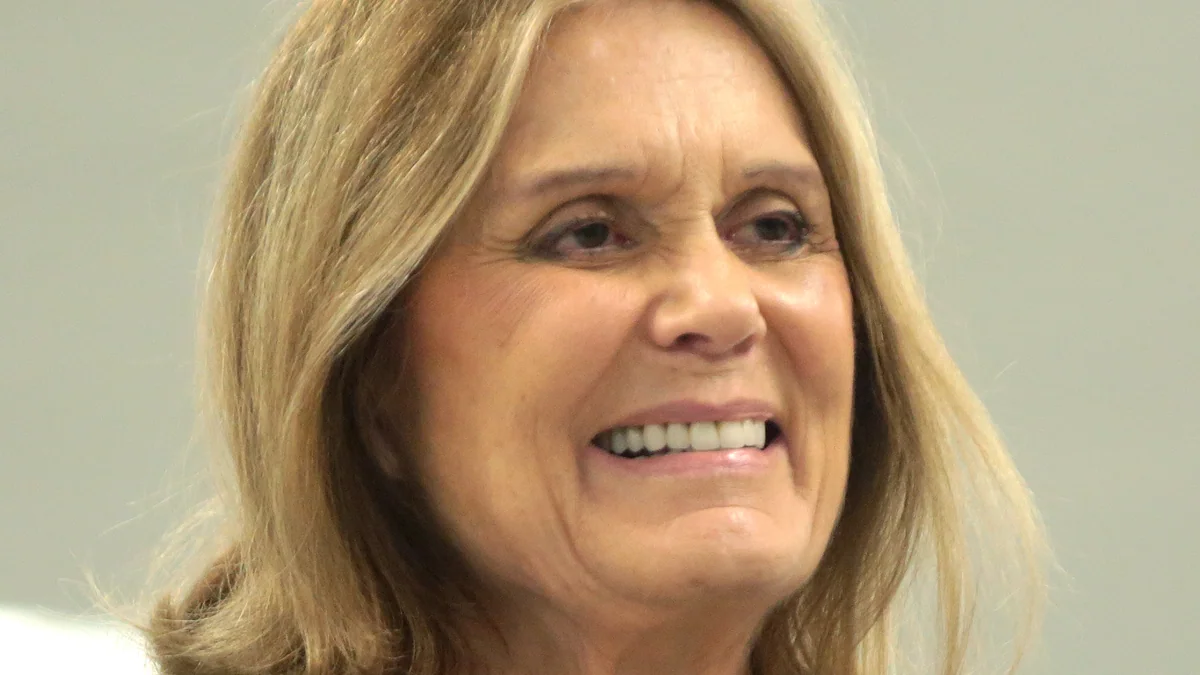
Gloria Steinem's legacy is this: she died the way she lived, quietly insisting on her own terms. Gloria Steinem passed away on September 2, 2026, at home in New York City. She was 92.
There is something right about that sentence. Not sad, exactly, not in the way you might expect, because a life that ran that long and burned that bright does not feel like something stolen. It feels finished, in the best sense, the way a good meal ends when you are full and grateful and already a little nostalgic for it.
Her death marks something real in the history of how women have fought to be seen as full human beings. But it does not mark an ending.
She had just published her final memoir, "An Unexpected Life," in early 2026, timed to her 92nd birthday, because of course she had. Still writing. Still showing up. The book arrived weeks before she died, which feels less like coincidence and more like a very deliberate last word from a woman who always knew where to place them.
The Gloria Steinem Foundation confirmed that her "Talking Circles" gatherings will continue in her memory. Those small rooms where women sat together and listened to each other, properly listened, were perhaps the most honest expression of what she believed organizing actually looked like. Not a stage and a microphone. A circle, and enough time.
Her foundation said it simply: "Gloria's near-century on earth was years well-lived, and she continued working for equality until the very end."
Years well-lived. That is the whole biography right there, and also the dare she leaves us with.
A Waitress in Heels and a Magazine That Said the Quiet Part Out Loud
The year was 1963, and Gloria Steinem put on a bunny costume and went to work. Her undercover exposé of the Playboy Club, published in Show magazine, did something that polite journalism had been carefully not doing: it put a real woman inside the myth and showed you exactly what it felt like. The piece launched her public career not because it was a stunt, but because it was rigorous.
She named the indignities specifically, the way she always would.
Eight years later, she co-founded Ms. Magazine, the first national publication in the United States to lead with feminist issues rather than recipes and husband-management advice. The first issue, in 1971, sold out in eight days. It ran features on domestic violence and reproductive rights when those were still considered unspeakable in glossy print.
The magazine didn't report on the conversation — it started one.
The establishment took fifty more years to catch up formally. In 2013, Barack Obama awarded Steinem the Presidential Medal of Freedom, the highest civilian honor the United States gives. She was 79. The timing matters: the recognition came long after the work had already reshaped the country.
Here's the through-line. She used whatever tool was in her hand — a notepad, a bunny tail, a printing press — and made it do something it had never been asked to do before. No single gesture was the point.
The accumulation was. A career built not from one brave moment but from decades of specific, named, documented insistence that the ordinary experience of being a woman was worth examining seriously.
The Things She Built So You Would Have Somewhere to Stand
Here is what separates a symbol from a strategist: a symbol gets remembered, and a strategist leaves you something you can actually use. Steinem was both, but it's the second part that matters most right now.
She did not just march and speak and write. She built infrastructure, the way a carpenter builds load-bearing walls, not for show but so the ceiling doesn't fall on your head.
In 1971, she helped found the National Women's Political Caucus alongside Bella Abzug and Shirley Chisholm, two women who understood that inspiration without access to power is just a very beautiful dead end. The Caucus was blunt in its purpose: get women into government, into the rooms where decisions happen, into the seats at the table rather than the chairs outside it.
It still exists. It is still working.
In 2005, she co-founded the Women's Media Center with Jane Fonda and Robin Morgan, because she had been a journalist long enough to know that who tells the story determines what the story is. Better female representation in newsrooms is not an aesthetic preference. It is a matter of which realities get named and which ones disappear.
And she understood, well before the vocabulary caught up with her, that race and gender are not separate problems taking turns. Her partnerships with Dorothy Pitman Hughes and Flo Kennedy were not gestures of solidarity. They were a working theory of how power actually operates, one that scholars like Kimberlé Crenshaw would later name intersectionality.
She already knew.
Institutions outlast individuals. This is the practical point, and it is the one that should make you breathe slightly easier today.
The Numbers That Should Make You Angry
Picture a woman getting dressed this morning somewhere in Alabama, or Mississippi, or Texas. She is not a statistic. She has a specific coffee mug she prefers, a particular way she parts her hair.
And yet, whether she can access basic reproductive healthcare depends entirely on which side of a state line she was born on. As of 2024, 41% of American women of reproductive age live in states with severe abortion restrictions — a legal reality that arrived four years before Gloria Steinem died, and one she spent her final years fighting with everything she had left.
Here is the thing nobody tells you: the numbers don't get easier the further you zoom out. They get worse. According to WHO data from 2024, one in three women worldwide will experience physical or sexual violence during their lifetime. One in three. That is not a distant crisis. That is the woman behind you on the train, the colleague in the next room, possibly you.
And then there is this: every ten minutes, somewhere on earth, a woman or girl is killed by a family member. Not a stranger. Family. That sentence should land like a stone dropped from a height, because it is that heavy and it falls that regularly, with or without anyone paying attention.
Steinem named things plainly because euphemism is a form of permission — permission for the unbearable to continue undisturbed.
So here are the numbers, plainly. No softening. No "challenges" or "concerns." Just the temperature of the thing, exactly as it is.
What Thirty Years of a Promise Looks Like Right Now
In 1995, 189 governments signed the Beijing Declaration and committed, on paper, to global gender equality. That was thirty years ago. The children born the week those signatures dried are now adults, and we are still arguing about whether women should control their own bodies.
Here is what thirty years of a promise looks like in practice. In 2024, one in four governments worldwide faced coordinated political pressure to roll back women's rights — not scattered resistance, not a fringe opinion held by a handful of angry people, but a named, organized, globally networked anti-gender movement that treats equality as an ideology to be defeated. That is the honest comparison point for Beijing+30.
The contrast to 1995 is not subtle. When the Beijing Declaration was signed, the threat to women's rights looked like institutional neglect, slow bureaucracy, underfunded programs. Today it looks like a strategy.
Well-funded, well-coordinated, and fluent in the language of democratic grievance.
So the 2025 summit — the formal review of three decades of commitments — arrives as something between an audit and a reckoning. Do the words signed in Beijing still mean anything when a quarter of the world's governments are actively being pressured to unmake them?
That is not a rhetorical question. It is the actual question on the table.
Steinem spent fifty years asking whether promises made to women would be kept. Beijing+30 asks the same thing, only louder, with worse odds, and without her in the room.
Carrying Gloria Steinem's Legacy Forward: One Thing You Can Do This Week
Steinem's model was never the stadium. It was the circle: eight women around a kitchen table, a bottle of something open, everyone talking and everyone heard.
The Gloria Steinem Foundation has said these Talking Circles will continue in her memory, and that is not a eulogy detail. That is an active invitation.
Here is the thing nobody tells you: you do not need a platform, a credential, or a march permit to carry this forward. You need a date in the diary and a few people you trust to be honest in a room together. That is genuinely all she ever asked of anyone to start.
So this week, find one conversation that is worth having. Invite three people to dinner — or coffee, or a walk — and name something real: abortion access, equal pay, whatever is sitting heavy in your particular city right now.
The data is stark enough: one in three women has experienced violence, 41% of American women of childbearing age live under abortion restrictions, and a femicide happens somewhere in the world every ten minutes. Those numbers exist whether or not you talk about them. They get smaller only when people do.
Gloria Steinem's legacy is ninety-two years of it looking like a calling. You can make one Tuesday look like a start.