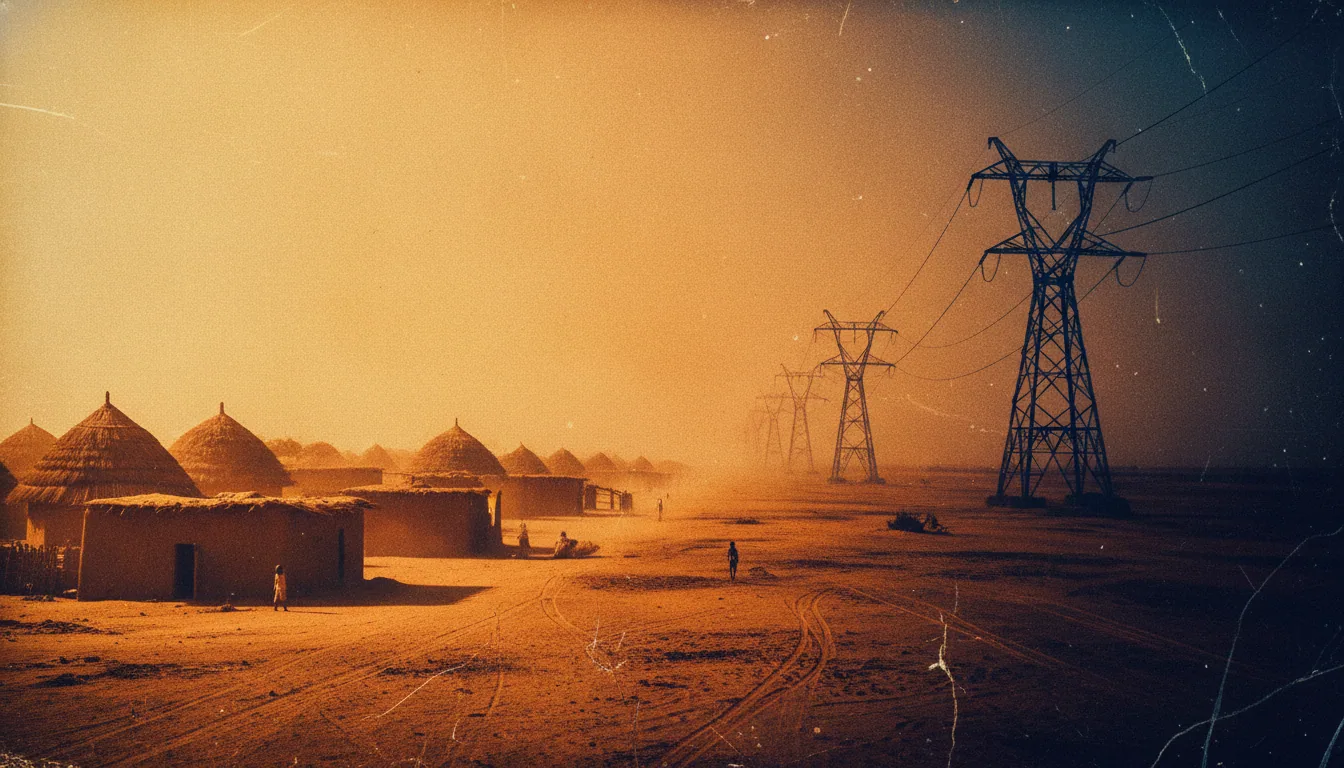

242 Million Students Couldn't Go to School Because of the Heatwave School Calendar
Last June, a parent in England got the call most working parents dread on a Tuesday morning: school's closing early, come pick up your child. Then another parent got it. Then, across England and Wales, more than a thousand schools sent children home because the classrooms had become too hot to sit in.
That was June 2026. Not a pandemic. Not a strike. A heatwave.
UNICEF counted what this looks like at scale. In 2024, extreme heat disrupted education for 242 million students across 85 countries. That number is staggering enough to stop you mid-sentence. Nearly a quarter of a billion children, sitting in rooms that were too hot to learn in, or sent home because there was no other choice.
UNICEF said it plainly: heatwaves were the predominant cause of school closures globally. Not illness. Not conflict. Heat.
Mexico did the arithmetic before the 2026 school year was even over. Faced with an extraordinary heatwave, the government cut six weeks from the calendar. Six weeks of instruction, gone. Teachers, parents, children, all absorbing a loss that nobody planned for and nobody budgeted for.
This is the new shape of the school year. Not an emergency that interrupts the calendar, but a structural force that now writes it. The calendar that parents plan their childcare around, that employers expect their workers to accommodate, that children depend on for routine and food and sometimes the only air-conditioned room they will enter all day — that calendar is being redrawn.
Not by choice. By temperature.
What Happens to a Child's Body — and Brain — When the Classroom Hits 26 Degrees
A 2026 study put a number on something teachers have known for years: 26 degrees Celsius is the upper comfortable limit for learning. Above that, the classroom stops being a classroom in any meaningful sense.
The attendance data confirms it. On days when temperatures exceed 90 degrees Fahrenheit, school attendance drops by 16 percent. That is not children playing hooky. That is families making a calculation — keep them home, or send them somewhere they cannot function.
Because heat does not just make children uncomfortable. It makes them perform worse. Students score lower on exams in hot conditions, and while air conditioning can mitigate that effect, most schools do not have it. The damage is quiet and cumulative: a test failed, a concept not retained, a school year fractionally lost.
Phoenix, Arizona, recorded 117 degrees Fahrenheit in July 2026 while students were still engaged in school activities. Sit with that number. 117 degrees. The kind of heat that makes asphalt soft and metal unbearable to touch.
High school sports in July and August carry a separately documented risk: elevated rates of heat-related illness. Students running drills, playing matches, practicing on fields without shade — this is where heat stops being a discomfort and becomes a medical event.
The body, especially a child's body, is not equipped to regulate in those conditions for hours at a time. Concentration collapses. Heart rate rises. Sweating depletes what a water fountain cannot fully replace.
None of this is contested science. The question is whether school policy has caught up with what the thermometer is already telling us.
The Buildings Were Never Built for This
Nine million US students had their schooling disrupted by extreme weather in the 2024–2025 academic year alone. Not a global figure. Not a projection. Nine million, in one country, in one year.
The reason is structural, and it has been coming for decades. Most school buildings were designed for a climate that no longer exists. They were built before air conditioning was standard, before July temperatures in Phoenix hit 117 degrees Fahrenheit, before anyone had to write policy guidance for headteachers on what to do when the classroom becomes a health risk. The infrastructure didn't fail. It was never built for this.
In the US, 36,000 public schools lack adequate HVAC systems — retrofitting them is estimated to cost $4.4 billion. That is not a surprise budget line. That is the bill for forty years of deferred decisions arriving all at once.
Wealthier districts can pay it. Poorer ones reschedule around it, close early, send children home. The calendar becomes the adaptation tool because the building cannot be one.
Not all fixes require billions. Shaded schoolyard areas improve thermal comfort and increase physical activity — two outcomes that matter for a child's health on a 35-degree afternoon. Trees and canopies cost a fraction of an HVAC overhaul. Some districts are planting them now, which is either encouraging or a sign of how low the bar has fallen, depending on how you look at it.
The infrastructure gap is not a mystery. It is the predictable result of choosing not to invest, year after year, in buildings that house other people's children. The heat just made that choice visible.
Rich Districts Get Air Conditioning. Poor Districts Get a Shorter School Year.
Arizona found a way to hold the line. The state pays schools additional funding to extend the academic year from 185 to 200 days, buying back time lost to heat disruptions with money. It is a real solution. It is also a solution that requires a state willing and able to fund it.
South Sudan had no such option. Planners there decided to move the entire academic calendar to February through April, escaping peak heat not by cooling the buildings but by abandoning the months that make cooling necessary. No HVAC budget. No retrofit conversation. Just the calendar, shifted wholesale, because that was what was available.
The distance between those two responses is not a climate story. It is an economics story.
When instructional days disappear, the children who feel it most are not the ones with tutors and stable homes. They are the ones who eat lunch at school because that is the reliable meal. The ones whose parents cannot take an afternoon off when dismissal comes three hours early. The ones for whom school is not just education but structure, safety, and a hot plate of food.
Wealthy districts retrofit. Poorer districts cut days. The adaptation gap is not abstract. It shows up in attendance records, in exam scores, in the quiet arithmetic of a childhood slightly shortened.
UNICEF projects that by the 2050s, eight times more children will be exposed to extreme heat than in the 2000s. The gap between districts that can buy their way through that and districts that cannot will not close on its own. It will widen, steadily, along the same lines that inequality always widens: invisibly, until it isn't.
Governments Are Moving the Calendar. Working Parents Are Left to Figure Out the Rest.
The calendar fix sounds logical on paper. Several EU member states are considering cutting the 14-week summer holiday to move instruction away from peak July and August heat. Indiana school districts have debated pushing start dates past Labor Day for the same reason. If the buildings are too hot in August, don't put children in them in August.
But the calendar is not a neutral document. It is infrastructure for working families. When it shifts, something has to fill the gap — and right now, that something is mothers, mostly. Single mothers, hourly workers, people who cannot log on from home and rearrange their afternoon because the school called.
The UK's approach shows how quickly clarity can dissolve under pressure. The Health Security Agency built a structured Heat-Health Alert framework: Yellow, Amber, Red. Each level is meant to trigger a proportional school response. But Education Secretary Bridget Phillipson left final decisions to individual headteachers. "Management remains at the discretion of headteachers." Translated: every school makes its own call, every parent waits to find out, every employer gets a different explanation.
Calendar shifts and alert frameworks are better than doing nothing. But progress that lands unevenly is still a policy gap.
UK teaching unions NEU and NASUWT have pushed for a legal maximum working temperature — a clear threshold that removes the guesswork. That would at least give parents predictability. It would also protect teachers, who are workers with their own heat exposure and their own limits.
What working families need is not just a shorter August. They need notice, backup options, and employers who accept that school closures are now a climate event, not a personal inconvenience.
What a Safer School Calendar Actually Looks Like — and Who Has to Fight for It
The structural answer is not a one-off emergency closure. It is a redesigned academic year — one built around when children can actually learn safely, not around a 19th-century harvest schedule that nobody remembers the origin of.
Some changes cost almost nothing. Morning-heavy timetables shift the hardest academic work to cooler hours. Shade structures in schoolyards both lower thermal stress and increase physical activity. Staggered start and end times reduce crowding during peak heat. These are not futuristic proposals. They are decisions a headteacher or school board can make before next August.
The harder fight is legal. UK unions NEU and NASUWT have been pushing for a statutory maximum classroom temperature — a number above which school simply cannot legally operate. Right now, in most countries, that decision falls to individual headteachers. That sounds reasonable until you realize it means a teacher in an un-cooled building has no legal ground to stand on when the thermometer hits 30 degrees.
A legal limit changes that — it gives parents and teachers a lever they can actually pull, not a request, but a right. The 26°C upper comfort threshold identified in a 2026 study gives campaigners a number to anchor to. Attendance already drops 16% on days above 90 degrees Fahrenheit. The argument writes itself in the data.
The heatwave school calendar will be reformed. Temperatures will force it, one closed school at a time, until the accumulation becomes undeniable. The only real question is whether working families will have shaped that reform or simply absorbed it. Show up to the school board meeting. Write to your local councillor. Ask, specifically, what the temperature policy is for your child's classroom next summer. The door is open. Someone has to walk through it.