Pacific Escalation: Two Ways to Re-Arm a Map
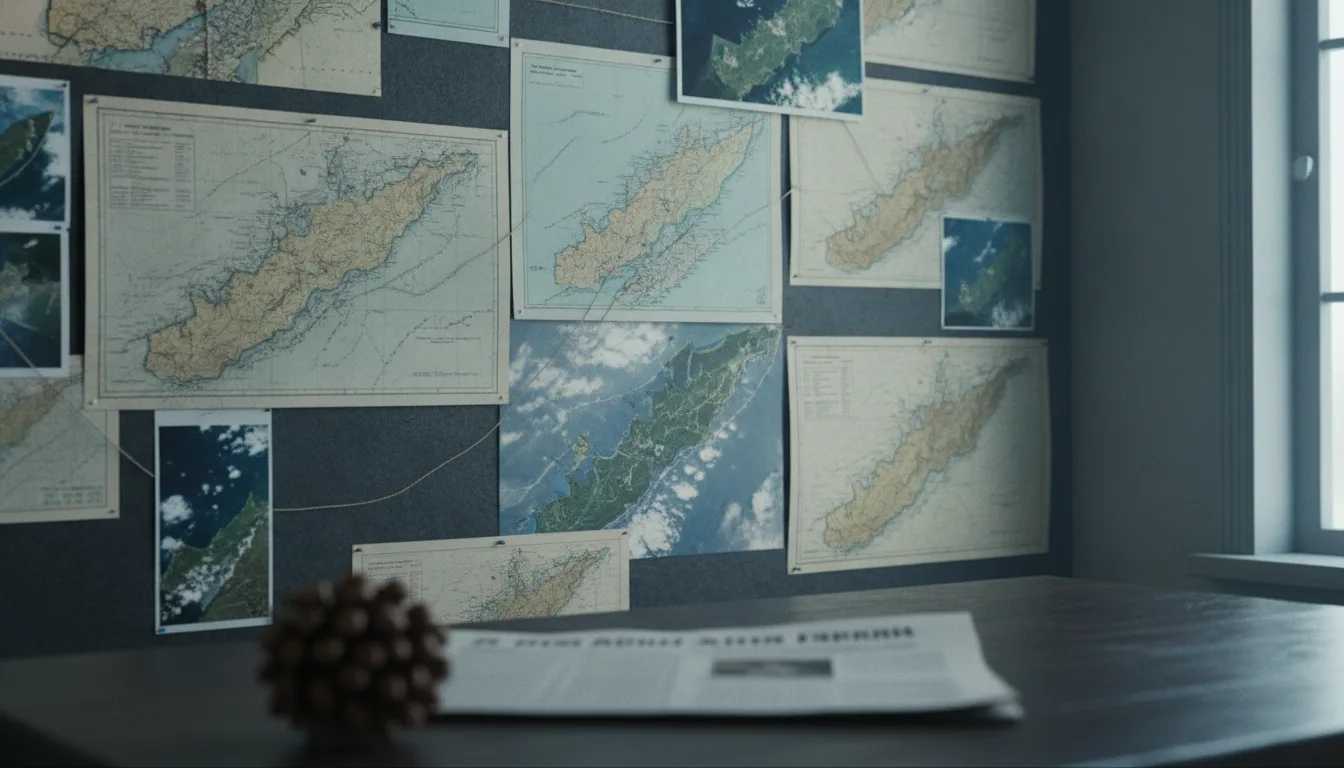
In the northern Marianas in 1944, the U.S. Navy carved runways from coral and scrub on Tinian to reach Tokyo. The distance that made those airfields necessary then is the same distance that makes them necessary now. This is where the present story of Pacific escalation begins: not with a crisis but with a geometry that has not changed in eighty years.
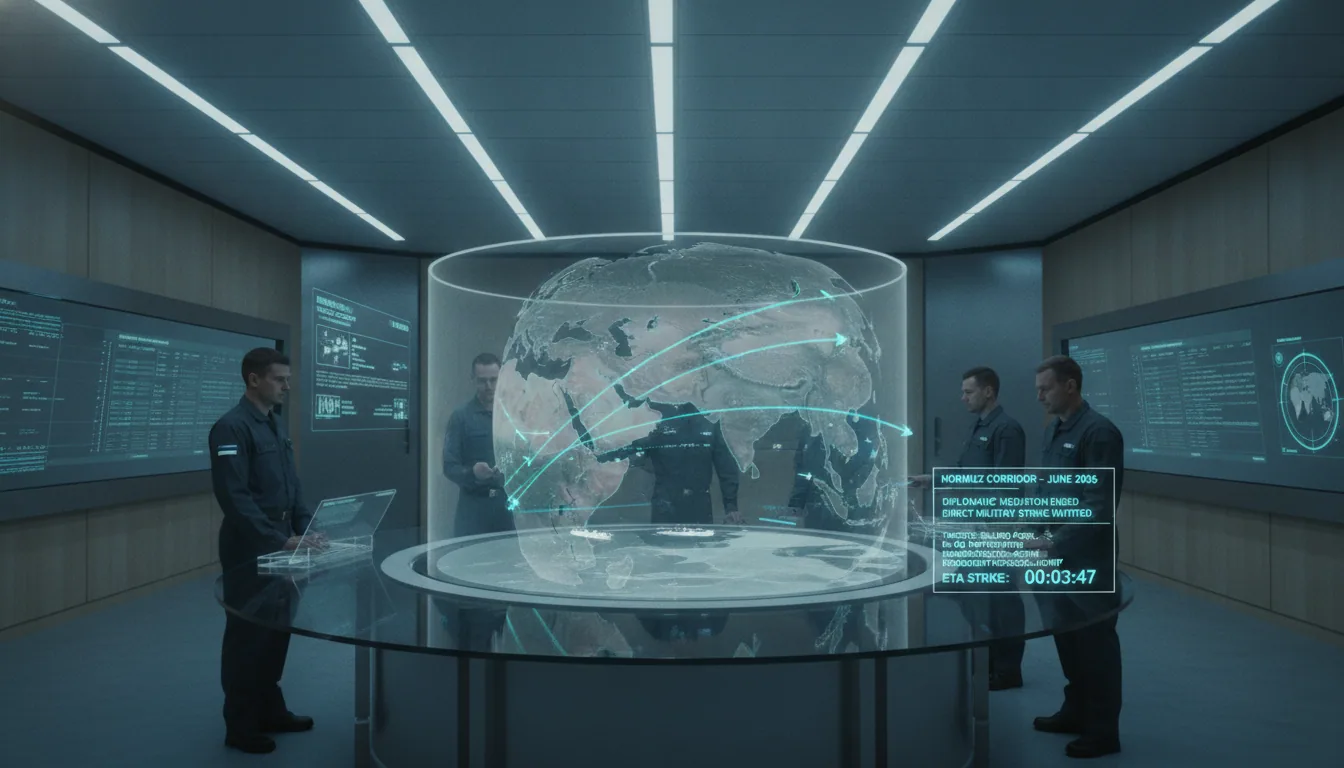
Two powers are currently re-arming that geometry by opposite methods. China completed the first construction stage of a 1,490-acre artificial island at Antelope Reef in August 2026, a facility carrying a submarine harbor and a projected 9,000-foot runway — consolidation, in a word, mass poured into the sea at a single point. The United States, under the Agile Combat Employment doctrine written into the 2026 National Defense Strategy, is rehabilitating WWII-era airfields across Tinian, Guam, Palau and the Philippines, dispersing aircraft from large hubs to smaller, harder-to-target strips.
The structural logic is plain: one answer to the missile threat is to fortify; the other is to scatter. Both are answers to the same question.
The 2026 National Defense Strategy also introduced what the Pentagon calls the Trump Corollary to the Monroe Doctrine, extending U.S. strategic primacy explicitly into the Pacific. The Corollary is the framework; the airfields are the implementation.
Meanwhile, Chinese military and coast guard movements in the South China Sea increased by 300 percent between April and June 2026. That number is not an intelligence estimate or a think-tank projection — it is a movement count. Someone is not waiting for the doctrine to settle.
The comparison to Cold War-era basing competition — or the shorthand of a "Pacific arms race" — is available, obvious and partially wrong. Then, the rival powers divided the map along agreed lines and mostly observed them. Here, the lines are the argument.
The Island That Wasn't There: Antelope Reef
On August 19, 2026, China announced the completion of the first construction stage at Antelope Reef in the Paracel Islands. The site now covers 1,490 acres. It did not exist, as land, a generation ago.
The facility includes a submarine harbor and a projected runway of 9,000 feet — sufficient for long-range strike aircraft, the kind that do not need to be close to their targets to reach them. The runway length is not an engineering footnote. It is the argument.
A 9,000-foot strip in the Paracels extends the radius of Chinese air power well past the first island chain and into approach corridors that Washington's planners have spent decades treating as contested but navigable.
This is the logic of the fait accompli, practiced with patience. Construction is the negotiation; completion is the verdict. By the time a diplomatic protest reaches Geneva, the concrete is cured and the cranes have moved on.
The method is not new — Beijing applied it at Mischief Reef, at Fiery Cross, at Subi — but Antelope Reef's position in the Paracels adds a particular geometry. It sits inside the first island chain at a point that compresses the operating space between the Chinese mainland and the open Pacific, narrowing the corridors through which U.S. carrier groups and submarine traffic would have to transit in any serious contingency.
Construction is the negotiation; completion is the verdict.
Ask the small question first: who is the borderland here, and who is the empire? The Philippines, Taiwan, and the smaller Pacific states are not observers of this geometry. They are the geography being argued over.
The submarine harbor's exact completion timeline remains undisclosed. That is the one number worth watching, because a harbor without submarines is infrastructure; a harbor with them is a position.
The Strait, the Drills, and the Shoals
On August 22, 2026, a U.S. Navy P-8A Poseidon flew the Taiwan Strait. One aircraft, one transit, and — measured against the transit rate of previous administrations — a data point inside a 50 percent decline. The frequency of that signal matters as much as the signal itself.
Taiwan read the environment accurately. Between August 5 and 14, President Lai Ching-te oversaw nationwide military exercises featuring M1 Abrams tanks and HIMARS rocket systems, the kind of hardware that tells an observer less about morale than about the specific threat the defender has calculated.
The drills were not theatre for a domestic audience. They were a structural response to the question of what, exactly, the strait guarantee now means in practice.
Further south, the question was less abstract. Chinese and Philippine forces clashed three times at Scarborough Shoal and Second Thomas Shoal in July 2026 alone.
Three incidents in one month is not a pattern of miscalculation. It is a method.
Gray-zone tactics survive on ambiguity about thresholds. A coast guard vessel rams a resupply boat; a water cannon disables a crew; a shoal fills with sand. None of these, individually, crosses the line that triggers an alliance response.
Collectively, they move the line. The practical question for Manila, for Washington, and for every smaller navy monitoring the South China Sea is not whether the next incident will happen, but whether the alliance ledger will still read the same when it does. That ledger is what the transit numbers and the drill footage are meant to reassure — and what a 50 percent decline in strait transits, quietly, calls into question.
Ask the Small Question First: Tuvalu, Vanuatu, and the Pacific Floor
In July 2026, a Chinese ballistic missile — nuclear-capable, by the public record — came down near the Exclusive Economic Zone of Tuvalu. No warning was issued.
Tuvalu, eleven thousand people on nine low atolls, filed a formal diplomatic protest. The protest was correct, procedurally sound, and changed nothing.
That is the floor. Not the runway at Antelope Reef, not the P-8A over the Taiwan Strait — the floor is the small government sending the formal note that no one answers in full.
The great powers call it a test, a routine exercise, a trajectory anomaly. The small nation calls it what it is: someone else's weapon, falling uninvited into your water.
Eight days before the missile landed, Australia and Vanuatu had signed the Nakamal Agreement, dated June 29, 2026. The text prohibits foreign military bases on Vanuatu's territory — any foreign power, the clause reads, though the operative referent is Beijing, which had spent two years probing Vanuatu's port infrastructure.
Prime Ministers Albanese and Napat called it a sovereignty instrument. It is that. It is also a competitive exclusion clause, written in the language of non-alignment and aimed at one address.
This is how small nations work the geometry they are given. They cannot match the runway footage at Antelope Reef. They cannot scramble a P-8A.
They can sign an agreement that closes one door and sends a signal to the power that wanted it open. Whether that signal holds depends entirely on how much the larger patron needs them, and how patient the excluded power chooses to be.
That calculus has not changed since 1939. The atolls are new. The structure is old.
The Alliance Ledger: Spending Demands, Kuril Tests, and the Trade That Continues Anyway
At the Shangri-La Dialogue in May 2026, Pete Hegseth asked Asian allies to raise defense spending to 3.5 percent of GDP to counter what he called China's "historic military buildup." The number is instructive less for what it demands than for what it reveals: the United States is pricing its extended deterrence, and the invoice has gone up. The NATO comparison is worth making, and worth making carefully — European allies spent a decade arguing over two percent while the frontier moved.
Japan's position here is the uncomfortable one. In January 2026, Tokyo and Ottawa signed an Equipment and Technology Transfer Agreement, deepening maritime cooperation in a theater both governments named as a priority.
The same month, the Japanese Maritime Self-Defense Force was monitoring Russian missile tests near the Kuril Islands, a chain seized at the end of the Second World War and never returned. Putin's tests carry a secondary signal the wire copy tends to soften: the Kurils are a reminder, delivered periodically, that Japan holds a territorial grievance Russia can reactivate whenever Washington's attention drifts north.
The structural tension is this: China-Japan trade stood at $292.6 billion in 2024. That number does not appear in the security communiqués, but it sits beneath every calculation Tokyo makes.
Japan can deepen maritime cooperation with Canada, absorb the 3.5 percent demand, and still watch that trade figure when it decides how far to press. The alliance ledger has two columns, and the second one is denominated in yen and renminbi. Small nations read both; so, quietly, do large ones.
The Compound Pressure: Cyber, Climate, and the Marker to Watch
INTERPOL's June 2026 report on rising cyber threats across Asia and the South Pacific did not receive the column inches it deserved, which is, of course, how these things work. Physical escalation and digital disruption are not sequential stages; they are synchronized instruments.
A 300 percent increase in Chinese military and coast guard movements in the South China Sea, running April through June, coincided with the period INTERPOL flagged. That timing is not proof, but it is a pattern worth entering into the ledger.
The resource variable sits further back, but it does not sit still. Deep learning models projecting a significant dry anomaly and moisture divergence over central China for the summer of 2026 belong in any honest account of military calculus.
Scarcity pressures do not cause wars by themselves; they compress the margin for caution. A leadership facing an internal resource stress reads the cost-benefit of delay differently than one that is not.
Which brings the analysis to its load-bearing wall. Antelope Reef's submarine harbor is either operational or it is not, and the distinction is checkable.
The concrete marker to watch is the first named People's Liberation Army Navy vessel to declare a port call there, and the date that declaration carries. If a submarine tender or a Type 093 calls Antelope Reef home before the year's end, the harbor is not a construction project. It is a forward base.
That movement, or its absence, is the clearest measure of where the Pacific escalation stands — what the evidence will force even cautious analysts to conclude, one way or the other, and on the record.