{
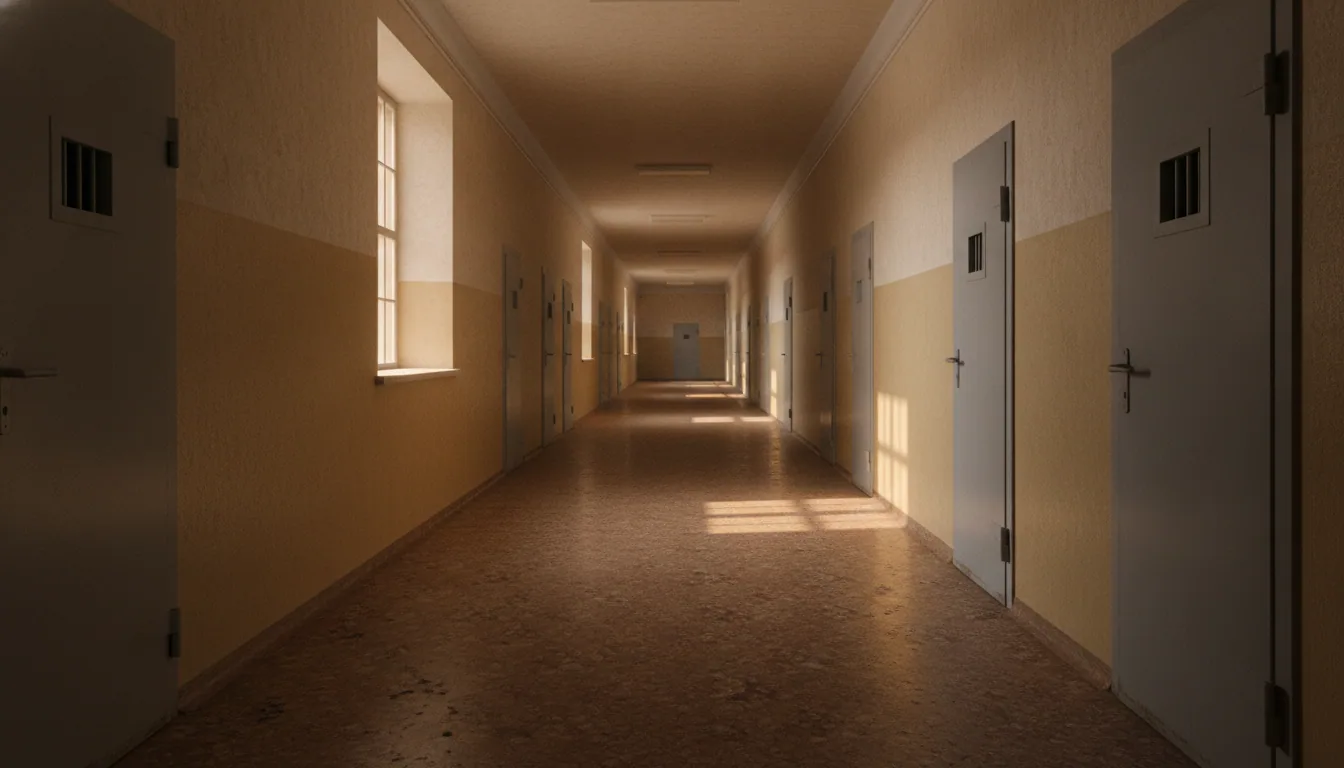
"content": "# Estonia Has 1,578 Prisoners and 3,280 Cells. Here Is What That Costs.\n\nEstonia's prisoner population fell to 1,578 by September 2025 — the lowest since independence. Tartu prison sits half-empty. Maintaining unused capacity costs taxpayers roughly €12 million a year. A deal signed with Sweden in June 2025 to house up to 600 Swedish prisoners brings in €30.6 million annually and creates up to 250 new jobs in Tartu.\n\n## An Empty Prison Is an Expensive Prison\n\nImagine a building with 3,280 places. Fewer than half are occupied. The heating runs. The guards show up. The water flows. The rooms are empty.\n\nThat is Estonia's prison system today, and that is the paradox at the centre of its reform.\n\nBy September 2025, the prisoner population had fallen to 1,578. The lowest figure since Estonia restored its independence. Compared to two decades ago, the number of people behind bars has dropped by more than half — not because the country went soft on crime, but because there is simply less crime to punish.\n\nEmpty cells are not free. Maintaining the unused infrastructure at Tartu prison alone costs Estonian taxpayers around €12 million a year. That is money spent on walls, not people.\n\nThe state faces a clear choice. Close part of the infrastructure and surrender capacity that might be needed later. Or find a use for the empty space that covers the running costs and generates something extra.\n\nEstonia chose the second option. And that road leads straight to Sweden.\n\n## Sweden Pays, Estonia Earns: The Numbers\n\nOn 18 June 2025, Estonia and Sweden signed an agreement that made Tartu prison something more than a local institution. The deal allows up to 600 Swedish prisoners to be housed there. That is a concrete number, a concrete date, and a concrete financial consequence.\n\nSweden will pay Estonia roughly €30.6 million a year for the use of 300 cells — more than €2.5 million a month. Maintaining those empty places was costing €12 million a year. The deal covers that cost more than twice over.\n\nWhy does Sweden agree to this? Because it works for them too. Housing one prisoner in Sweden costs €11,500 a month. In Estonia, the same cost runs to €8,500. Sweden saves around €3,000 per prisoner per month. Across hundreds of prisoners, that saving easily covers transport, interpreters, and the additional administrative load.\n\nSwedish prisoners will not be mixed into the general prison population. They will be placed in the separate S and E wings of Tartu prison — a contractual requirement that ensures the two countries' prisoners remain apart.\n\nThe deal creates up to 250 new jobs in Tartu. For people who live there, that means employment, not abstract foreign policy. Prison rental is a pragmatic answer to a concrete problem: Estonia has the infrastructure, the staff, and the experience; Sweden has an overcrowded system and a larger budget.\n\nBoth sides get something they need. But numbers on paper are one thing. What happens in the S and E wings day to day — and who is responsible when something goes wrong — is a separate question, and one that still does not have a complete answer.\n\n## How Estonia's Prisons Emptied — and Whether That Is Good News\n\nIn 2023, Estonia recorded 28,033 crimes. That is half the number from 2005. Do the arithmetic: two decades, the crime rate cut in half.\n\nThis did not happen by accident. Estonia spent years completing its transition from Soviet-era barracks-style detention to a cell-based system. People are no longer held in mass dormitories but in conditions that more closely resemble human dignity — which changes both what a sentence means and what a released person's prospects look like. From 1 June 2024, the entire system runs digitally; paper case files no longer exist.\n\nBut there is a question that rarely gets asked. Did Estonians actually want to put more people in prison? Analyst Mari-Liis Sööt is direct: Estonians are not as punitive as the media image suggests. That matters. Media narratives shape what politicians think voters want — and if the public is not actually demanding harsher sentences, the question becomes: who is that harshness really for?\n\nThe fall in prisoner numbers is not just a statistic. It is evidence that the society changed. A younger generation lives in a different Estonia than the one that filled the prisons in the 1990s. Economic stability, education, and social services affect crime rates more than sentence length does.\n\nEmpty prisons are the physical proof of that shift. 1,578 prisoners in September 2025. The lowest since independence. That is good news for every taxpayer, every community, every child's family. The question is what we do with the space now.\n\n## Longer Sentences Do Not Mean Safer Streets\n\nMari-Liis Sööt looks at numbers, not slogans. Her conclusion is brief: those who serve their full sentence have a recidivism rate of 25 percent. Those on electronic monitoring have a rate of around 10 percent.\n\nDo the arithmetic.\n\nA person who serves their last day behind bars walks out with no job, often no home, cut off from whatever social ties they had. A person who has spent the same period at home — working, making lunch for their family, staying connected — has remained part of something. That connection protects. Prison severs it.\n\n> The longer someone spends behind bars, the more likely they are to fail when they get out and commit another crime.\n\nThis is not a soft attitude toward crime. This is the foundational finding of criminology.\n\nAnd yet, before every election, the demand for longer sentences surfaces. Sööt is plain: toughening sentences reflects political choices, not evidence-based criminology. A longer sentence does not make the street safer. It makes the return harder.\n\nEstonia recorded 28,033 crimes in 2023 — half the 2005 figure. That fall did not happen because sentences got longer. It happened while the prisoner population dropped from over 4,000 to under 1,600. Two trends moved in opposite directions. Safety went up anyway.\n\nThat is an uncomfortable fact for anyone who believes the prison headcount is what matters. What matters is what happens when a person walks out. Is there work. Is there a home. Is there someone waiting. Electronic monitoring keeps those threads intact. Serving the full sentence cuts through them.\n\n## Tartu Gets Jobs, the Laws Need Changing\n\nThe Sweden project does not only bring 600 new prisoners to Tartu. It brings up to 250 new jobs. For context: many small Estonian towns would spend a decade hoping for a single employer of that scale to arrive.\n\nBut jobs do not appear simply because a local authority is grateful. For the deal to function at all, three laws must be amended: the Imprisonment Act, the Penal Code, and the Code of Criminal Procedure. This is not administrative tidying — it is a structural reorganisation that cannot be done in a hurry.\n\nThe sharpest open question has been put precisely by Jevgeni Krištafovitš: it must be clear who can use force, restraints, and weapons in relation to a prisoner brought from a foreign country, and under what conditions. A Swedish national in an Estonian cell, under an Estonian officer's supervision — the chain of responsibility must be written down, not assumed.\n\nIn a cross-border system, ambiguity is its own risk. If an incident occurs and accountability has not been established on paper, that protects neither the Swedish prisoners nor the Estonian officials — nor, in the end, the agreement signed last summer. Legal precision is not bureaucracy. It is the insurance policy that makes everything else possible.\n\nTartu's labour market gains from this project. The Estonian treasury gains from this project. But amending the legal framework is not a formality to be deferred. It is the precondition that determines whether the whole system holds. Do the arithmetic: 250 jobs are only real if the legal foundation is solid.\n\n## \"No. No. No.\" — Where the Line Is and What It Tells Us\n\nIn August 2026, Justice Minister Liisa Pakosta was asked about signing a prison rental agreement with the United Kingdom. She answered in three words: \"No. No. No.\" You cannot be shorter than that. You cannot be clearer.\n\nBut this is not simply a rejection of one deal. It is a line being drawn. The Sweden model works because Sweden is an EU member state — the same fundamental rights standards apply, the same legal framework holds. With the UK, the chain of legal accountability would be more complicated, the risks harder to measure.\n\nOpposition parties Isamaa and EKRE criticise even the Sweden project, citing security risks. Those concerns are not entirely invented — the question of who is responsible, and with what means, when something goes wrong, is a real question. But criticism that stops at security risks and offers no alternative to the €12 million annual loss from empty cells is not policy. It is performative anxiety.\n\nPragmatism does not mean no limits. Estonia's prison reform has said yes to one partner whose system is comparable and no to another whose accountability framework is unclear. That is what actual policy looks like: not every revenue stream is acceptable, but not every risk is sufficient reason to stand still. The calculations have to be made. Estonia has made them.",
"meta_title": "Estonia's Prison Rental Deal With Sweden: The Numbers",
"meta_description": "Estonia's prisoner population hit a record low of 1,578 in 2025, leaving Tartu prison half-empty at a cost of €12M a year. A deal with Sweden now brings in €30.6M annually.",
"excerpt": "Estonia's prisoner population fell to 1,578 by September 2025 — the lowest since independence — leaving Tartu prison half-empty and costing taxpayers €12 million a year in upkeep. A June 2025 agreement with Sweden to house up to 600 Swedish prisoners brings in €30.6 million annually and creates up to 250 new jobs in Tartu.",
"slug": "estonia-prison-rental-deal-sweden",
"tags": ["Crime", "Estonia", "Finance", "Politics", "Reform"]
}