What Happened in Clacton, or: How a By-Election Became a Democracy Crisis Wearing a Bin on Its Head
On August 14, 2026, the British electorate looked at the state of democracy, thought about it very carefully, and collectively decided to give 9,455 of its votes to Count Binface, a man dressed as an intergalactic trash receptacle. Not as a prank. Not as a spoiled ballot. As a genuine, registered, second-place political result. The man whose manifesto includes nationalizing Adele and capping croissant prices at £1.10 finished the Clacton by-election with 26.7% of the vote, which is, depending on your mood, either the funniest thing to happen in British politics this decade or an extremely loud alarm that someone really should answer.
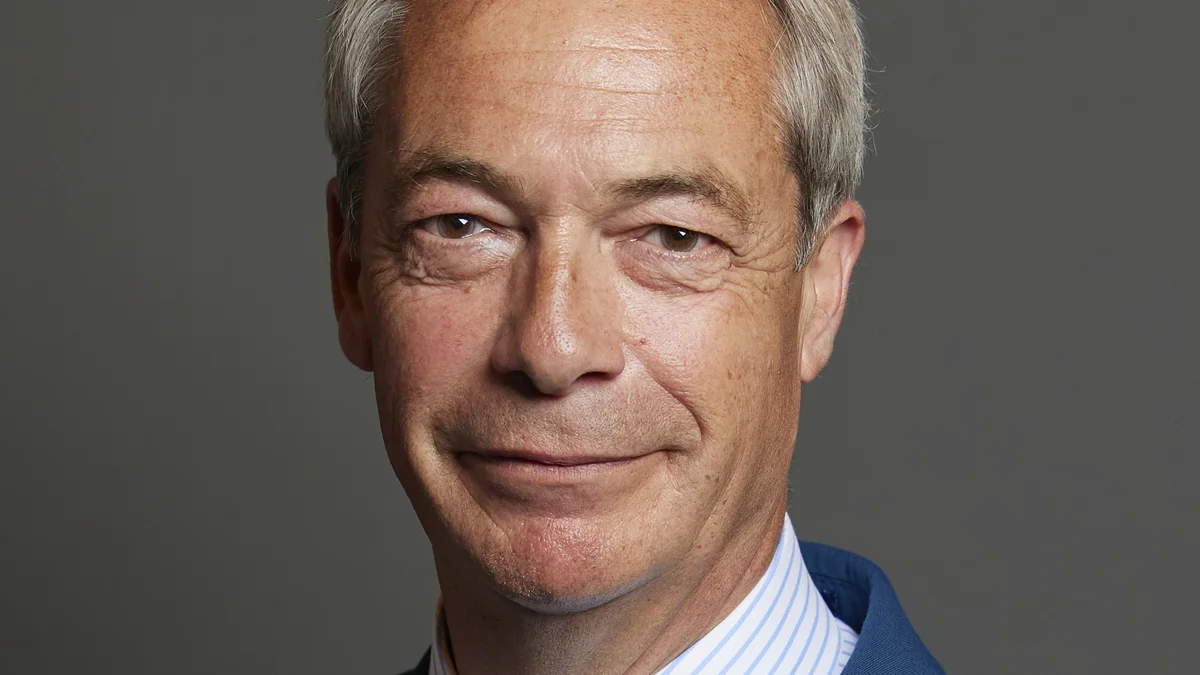
Here's the thing about that number that nobody wants you to understand: it isn't small. Nigel Farage won the seat with 22,239 votes and 62.82% of the total, which is a genuine landslide by any reasonable metric — but coming in second with over nine thousand votes isn't a protest, it's a movement. It's a chapter. It's a statistically significant percentage of an electorate telling the political establishment, in the clearest possible language, that they have checked out, packed their bags, and left a garbage can in charge.
The election itself was forced by scrutiny over Farage's personal finances, which is already the kind of sentence that sounds like the opening line of a novel nobody would believe was fiction. A forced by-election, boycotted by all major mainstream parties, in a deprived seaside town with a history of insurgent politics — and into this vacuum walked a comedian in a bin costume. Congratulations, beautiful optimistic idiots: this is what happens when the grown-ups leave the room.
A Brief and Extremely Undignified Curriculum Vitae of Count Binface, Intergalactic Space Warrior
Here's the thing about the man inside the bin that nobody wants you to understand: there is an actual human being in there. His name is Jon Harvey, born 1980, British comedian and writer for "Have I Got News For You" — a man who, at some point in his career, made the entirely rational professional decision to put a trash can on his head and run for Parliament. Multiple times. Against actual politicians who are paid to be there.
Harvey's career in electoral bin-wearing did not begin as Binface. He originally performed as Lord Buckethead, a character who stood against Theresa May in 2017 and generated the kind of election-night photograph that political historians will be explaining to confused grandchildren for the next forty years. Then, in 2019, the creators of an obscure 1984 film called Hyperspace — which had, improbably, originated the Buckethead character — came forward with a copyright dispute. Which is "intergalactic space warrior" slang for "we would like credit for this, please."
So Harvey rebranded. Renamed. Returned — now as Binface, with a new manifesto that included capping croissant prices at £1.10 and nationalizing Adele. The slogan was "Make Your Vote Count," which, in the 2024 London Mayoral race, 24,260 people decided to take literally — giving Binface more votes than Britain First, a sentence that contains multitudes and several deeply uncomfortable implications for the state of the British far right. If that doesn't terrify you, congratulations, you're not paying attention.
The Boycott, the Vacuum, and the Trash Can That Walked In
Labour and the Conservatives boycotted the Clacton by-election. Just didn't show up. Which is, professionally speaking, a fascinating strategic choice — the political equivalent of skipping your own intervention because you've decided the problem isn't real. The boycott was supposed to be a statement. It became a vacancy sign.
Here's the thing about vacuums that nobody wants you to understand: nature abhors them, and so does a polling booth. When the mainstream parties leave the room, whoever stays becomes the credible option by default. This is not a complicated theorem. This is just what happens when you remove the regular options from a menu — people order whatever's left, even if what's left is a sentient bin running on croissant policy and sheer audacity.
Local voter Chris — who is a real person, casting a real vote, in a real democracy — identified the intergalactic satirist as the "most credible candidate." Not ironically. Not as a protest. As a sincere assessment of the available field. Sit with that for a second. Then sit with it for another second. Keep sitting.
Rory Stewart, a former minister with a face that suggests he has personally witnessed several civilizational collapses, diagnosed the result as voters responding to politics becoming an "absurd performance." Which is correct. The problem is that diagnosing absurdity from inside the system that created the absurdity is itself pretty absurd — a kind of epistemological dumpster fire where the firefighters are also the dumpster. The boycott didn't prevent a result. It just decided who got to own the room. And the room, as it turned out, belonged to a man in a bin. Congratulations, everyone involved.
The Part Where a 30-Year Political Veteran Was Allegedly Scared of a Bin
Nigel Farage did not show up to the vote declaration. Police, apparently, had received warnings about a plot to disrupt the event, and Farage's camp decided the responsible thing was to simply not attend. That is the official version. The version offered by his own biographer, Michael Crick, on Times Radio, is considerably more interesting and considerably more embarrassing.
Crick said, with the calm specificity of a man who has studied Farage long enough to know exactly where the bruises are, that Farage feared being "demeaned and humiliated" by Binface. Not by a rival politician. Not by a journalist. By a man wearing a trash can on his head and campaigning to nationalize Adele.
Read that sentence again. Slowly. A politician who has survived two decades of British public life, four general election losses, a plane crash, a milkshake, and the full weight of the UK media establishment — allegedly stayed home because a very bright satirist in a garbage helmet might have taken the mickey out of him in front of cameras. Crick's precise words were that Binface "would have taken the mickey out of Farage mercilessly." Satire can't arrest you, can't defund you, can't pass a bill against you. It can only make you look small. Farage looked small anyway. He just wasn't there to see it.
The correct question is not "why did people vote for a trash can?" The correct question is "what broke so badly, for so long, that a trash can is now winning arguments?"
The Manifesto: Completely Unhinged, Somehow More Coherent Than Everything Else on the Ballot
Look, every serious political party has a manifesto. Labour has one. The Conservatives have one. They are long, expensive, professionally formatted documents that promise roughly the same twelve things in slightly different fonts, get forgotten approximately four days after the election, and accomplish the political equivalent of a firm handshake with a wet fish.
The intergalactic space warrior also has a manifesto. It proposes capping the price of croissants at £1.10.
Here's the thing about that croissant policy that nobody wants you to understand: it is economically dubious and emotionally correct. Somewhere in the rotting infrastructure of British public discourse, a satirical space warrior identified that ordinary people are being quietly bankrupted by pastry inflation and named it directly, which is more than any shadow chancellor has done in recent memory. Ridiculous? Yes. Less ridiculous than quantitative easing? Genuinely unclear.
Then there is the nationalization of Adele, which raises questions nobody asked but everyone deserves answered, and the proposal to tie government ministers' pay to nurse pay for the next 100 years. That last one is, sincerely, not the worst idea in this article. It is, sincerely, not the worst idea in any article published this decade. The platform is unhinged on its surface and a scalpel underneath: every absurd proposal is a mirror pointed at an actual policy failure, held up by a man in a bin, laughing at a room full of people who ran out of excuses. Compare this to the alternatives on offer. Congratulations, you beautiful optimistic idiot.
What 9,455 Votes for a Space Warrior in a Trash Can Actually Mean for the Rest of Us
Here's the thing about 9,455 votes that nobody wants you to understand: that is not a rounding error, that is not a meme, that is 26.7% of the Clacton electorate choosing a registered intergalactic satirist as their second-most-preferred vision for parliamentary representation. By every measurable standard, this is the strongest performance by a novelty candidate in modern British political history. That is not a punchline. That is a data point. Write it down.
A quarter of the voters in one constituency looked at the available options and selected systemic rejection wearing a helmet. That is not apathy, which is what people with nice jobs in London call it when they want to feel better about ignoring it. Apathy doesn't travel to a polling station. Apathy stays home. What showed up in Clacton was a diagnosis, and the diagnosis reads: the patient no longer believes the doctors, so the patient has started taking medical advice from a bin.
The democratic signal buried inside the Count Binface phenomenon is brutally simple: when the serious candidates leave and the funny one stays, the funny one becomes the opposition. That is not a metaphor. That is what happened. The correct question is not "why did people vote for a trash can?" The correct question is "what broke so badly, for so long, that a trash can is now winning arguments?" Anyway, we're all doomed. Sleep well.